Statewide Alert: Texas Monitors Escalating Screwworm Threat to Livestock Industry
Texas officials are tracking New World screwworm cases as the parasite poses a multibillion-dollar threat to the state's vital cattle industry.
Editorial disclaimer: Opinions and analysis on Keep TX Red are editorial content — not statements of fact. See our editorial standards.
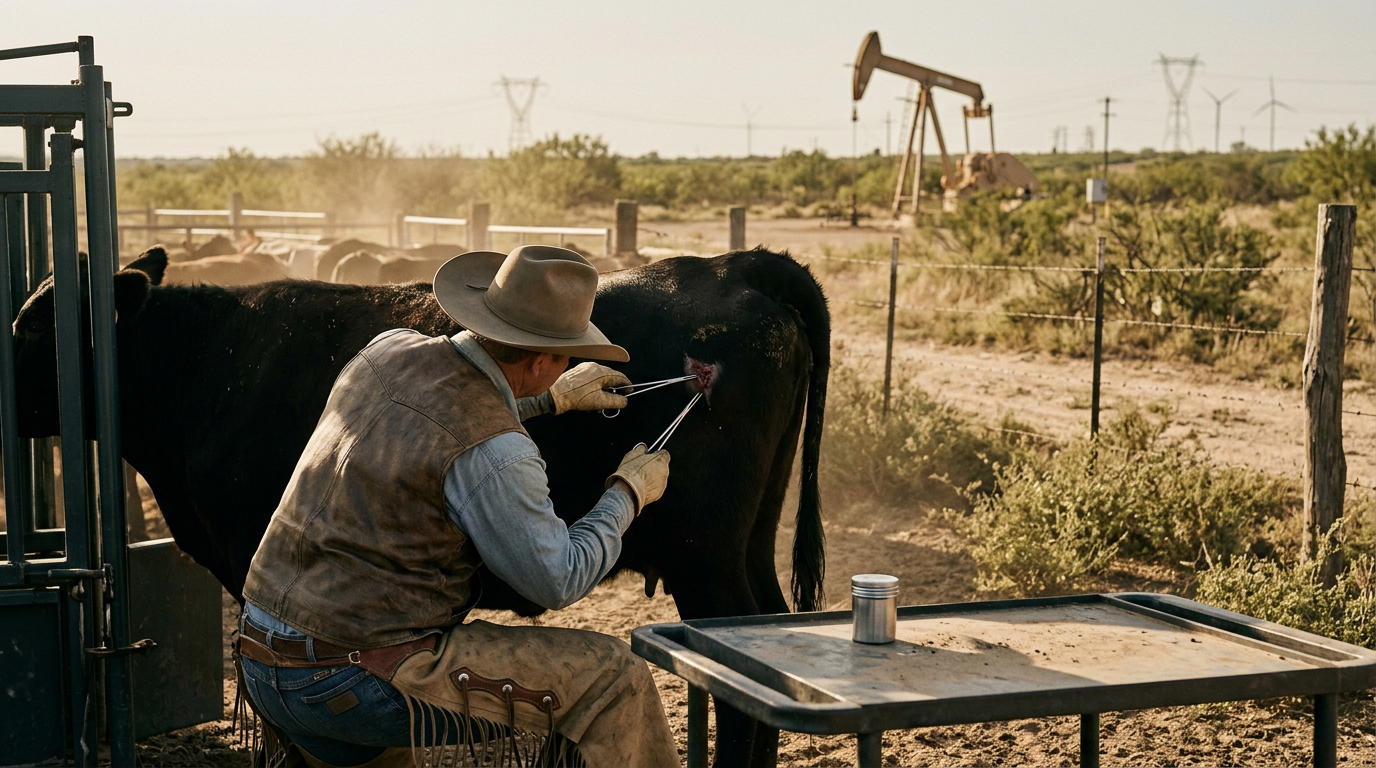
Recent reports on June 12, 2026, indicate that Texas is facing a critical biological threat with the potential re-emergence of the New World screwworm. This parasite, historically eradicated from the United States decades ago, has become a focus of intense monitoring by state agricultural entities due to its devastating impact on livestock. The situation is being treated with high priority as current tracking efforts identify specific regions where the pests may have been introduced. This is not merely a localized veterinary issue; it is a direct challenge to the safety and stability of the meat production pipeline in the Lone Star State. Texas has long maintained a defensive posture against this specific pest, knowing that the structural integrity of the agricultural sector depends on a zero-tolerance policy for its presence north of the Panama barrier. Historical precedents suggest that any delay in identifying a screwworm breach can lead to exponential growth in the fly population. In previous eras, a single undetected transport of an infested animal could spark a multi-county outbreak within weeks. Therefore, the current state-level response is geared toward high-speed identification and a 'search and destroy' philosophy regarding larvae discovery. The mapping of these cases serves as a primary tool for ranchers to gauge the proximity of the threat to their specific acreage. By centralizing this data, the state hopes to prevent the panic and market volatility that often accompany threats to the livestock supply chain.
Texas relevance
Texas is the nation's leading producer of cattle, making the state uniquely vulnerable to the New World screwworm. Any significant outbreak within Texas borders directly impacts the livelihoods of thousands of ranching families and the stability of the state's multi-billion dollar agricultural economy. Historically, Texas served as the primary battleground for screwworm eradication in the mid-20th century, and the current monitoring phase represents a return to vigilant defensive measures to protect local herds from San Antonio to the Panhandle. The economic footprint of the Texas cattle industry is so large that even a temporary regional quarantine could ripple through the state's sales tax revenue and local employment figures in rural counties.
The Biological Mechanism of the Screwworm
The New World screwworm is the larva of the fly Cochliomyia hominivorax. Unlike most blowflies that feed on dead tissue, the screwworm is distinct because it feeds exclusively on the living flesh of warm-blooded animals. Adult flies seek out open wounds, no matter how small, to deposit their eggs. Once the larvae hatch, they burrow deep into the tissue, creating painful and often fatal infestations for the host animal. This burrowing action mimics a screw, which is how the parasite earned its name, and they can consume muscle and skin at an alarming rate.
Livestock such as cattle, sheep, and goats are particularly susceptible, as routine activities like branding, ear tagging, or even minor scrapes from brush can provide an entry point for the parasite. If left untreated, a screwworm infestation can kill a full-grown steer in less than two weeks. This rapid progression is why early detection and geographic tracking are essential for Texas ranchers who are currently on high alert. The larvae are often difficult to spot at first, as they hide deep within the wound, requiring careful physical inspection by handlers.
Economic Implications for Texas Producers
The financial stakes of a screwworm outbreak are measured in the billions. For the Texas cattle industry, the presence of the parasite necessitates increased labor costs for frequent herd inspections and the expenses associated with chemical treatments. Beyond the direct loss of livestock, an outbreak can lead to strict international and interstate quarantines, effectively halting the movement of animals and disrupting the supply chain. If major trade partners refuse Texas beef due to infestation fears, the market could face a catastrophic surplus and price collapse.
When the screwworm was prevalent before the 1960s, it cost the U.S. livestock industry hundreds of millions of dollars annually—adjusted for today's inflation, those figures reach into the billions. Texas, holding the largest cattle inventory in the country, bears the brunt of these potential losses. The state's economic health is intrinsically tied to the ability of producers to ship healthy livestock across borders without the fear of spreading the parasite. This vulnerability underscores why the state treasury is so focused on prevention over cure.
Historical Context of Eradication Efforts
The history of the screwworm in Texas is one of scientific achievement and massive public-private cooperation. In the 1950s and 60s, the United States launched a program utilizing the Sterile Insect Technique (SIT). This involved releasing millions of sterilized male flies into the wild to mate with females, which only mate once in their lifetime. Because the matings produced no offspring, the population collapsed. It was one of the most successful examples of biological control in the history of modern agriculture.
This program was largely successful and eventually pushed the 'screwworm line' down to a biological barrier in Panama. However, periodic breaches occur through the movement of infested animals or unusual weather patterns. The current June 2026 tracking efforts represent a renewal of this historical vigilance, as officials work to ensure the parasite does not re-establish a permanent population on Texas soil. The older generation of Texas ranchers remembers the 'bad days' of the screwworm, and there is a concerted effort to educate younger producers on the risks.
Monitoring and Surveillance Strategies
Currently, Texas officials are utilizing a combination of field reports and geographic mapping to identify high-risk zones. Veterinarians across the state have been instructed to report any suspicious larvae found in livestock wounds. This data is then used to create a real-time picture of where the threat is most concentrated, allowing for targeted intervention and local advisories for ranchers. State labs are standing by to perform DNA testing on any samples collected to confirm whether they are indeed the aggressive New World variety.
Surveillance also extends to transport hubs and border crossings. Because insects can travel via wind or hitch a ride on moving vehicles and animals, the monitoring process is an exhaustive logistical challenge. The goal of the current tracking effort is to isolate cases before the reproductive cycle can take hold in the wild Texas landscape, which would make total eradication significantly more difficult and expensive. Authorities are also monitoring wildlife populations, such as deer, which can act as a natural reservoir and spread the pest into remote areas.
The Role of Stakeholders and Government Response
The response to the screwworm threat involves a multi-tiered approach between the Texas Department of Agriculture, the USDA, and the Texas Animal Health Commission. These agencies work in tandem to provide a safety net for producers who might otherwise be ruined by a localized outbreak. Funding for these programs often becomes a point of negotiation during legislative sessions, but the sheer economic power of the cattle block usually ensures that resources are allocated for emergency veterinary responses.
Landowners are the most critical stakeholders in this fight. Without their daily cooperation in checking herds and reporting findings, the state's mapping efforts would be incomplete. There is a delicate balance of trust between ranchers and the government; officials must ensure that reporting a case does not lead to punitive measures but rather to support and containment. Education seminars and local fly-swatting campaigns in rural towns are also becoming more common as the state attempts to keep the public informed and engaged.
Future Outlook and Preventative Measures
Looking ahead, the next several months will be critical for Texas. If the current cases are successfully isolated and no new clusters emerge, the state may avoid a larger-scale crisis. However, if the screwworm establishes itself in the feral hog population or other wild animals, the cost of control will skyrocket. The state is currently evaluating whether to request a surge in sterile fly releases near the affected zones as a preemptive strike against any expanding populations.
For now, the focus remains on biosecurity at the gate. Ranchers are being advised to limit the introduction of new animals to their herds unless they have been thoroughly vetted and cleared for wounds. The use of preventative topical treatments during calving season or after operations like dehorning is also being heavily promoted. Constant vigilance is the only way to maintain the hard-won 'screwworm-free' status that Texas has enjoyed for several decades. The state's readiness today determines whether or not a multi-billion dollar pillar of the economy remains standing tomorrow.
Analysis
The return of the screwworm is not just a biological event; it is a significant test of the state’s current veterinary infrastructure. While previous generations successfully utilized sterile fly releases, the modern landscape involves much more rapid movement of livestock across state and international lines. This mobility increases the risk of a silent spread before officials can react. The editorial perspective here is that the state must remain aggressive in its funding for the Texas Animal Health Commission and cooperative programs. Any cutting of corners in surveillance today could lead to an unfathomable taxpayer bill tomorrow to fund a new mass-sterilization campaign. This is a moment for bipartisan support of agricultural biosecurity, as the screwworm does not distinguish between political boundaries or property lines.
Source attribution
This story was reported using a public release from the Texas Tribune. Keep TX Red rewrote the coverage independently and links to the official statement for verification.
Frequently Asked Questions
- What makes the New World screwworm different from common maggots?
- Unlike common maggots that feed on dead or decaying tissue, the New World screwworm feeds exclusively on the living flesh of its host. This leads to deep, painful wounds and can result in the death of the animal within a very short timeframe if the infestation is not stopped.
- How did the screwworm reappear in Texas?
- While the parasite was officially eradicated from the U.S. decades ago, it remains present in parts of Central and South America. It can be reintroduced through the movement of infested animals or occasionally via extreme weather events that carry adult flies northward across the border.
- Can the screwworm affect household pets?
- Yes. Any warm-blooded animal, including dogs, cats, and horses, can be targeted by the screwworm fly if they have an open wound. Pet owners should be diligent about treating even minor scratches and monitoring for signs of larvae infestation.
Official Sources
Take the next step
Browse the Newsroom →Read more about Keep Texas Red → Our full guide to what Keep Texas Red means and why Texans support it.
Related Articles


Get Texas updates delivered weekly.
Independent Texas reporting on politics, policy, and daily life. One email a week. Unsubscribe anytime.
Keep TX Red Newsroom
The Keep Texas Red Editorial Staff produces nonpartisan explainers, policy breakdowns, and educational resources to help Texans understand how their government works. All content is reviewed for accuracy and updated regularly.
About Keep TX Red →