Debating Texas Social Studies Standards: The Educational Integration of Japanese American History
Texas education officials face pressure to refine curriculum standards regarding the incarceration of Japanese Americans during World War II.
Editorial disclaimer: Opinions and analysis on Keep TX Red are editorial content — not statements of fact. See our editorial standards.
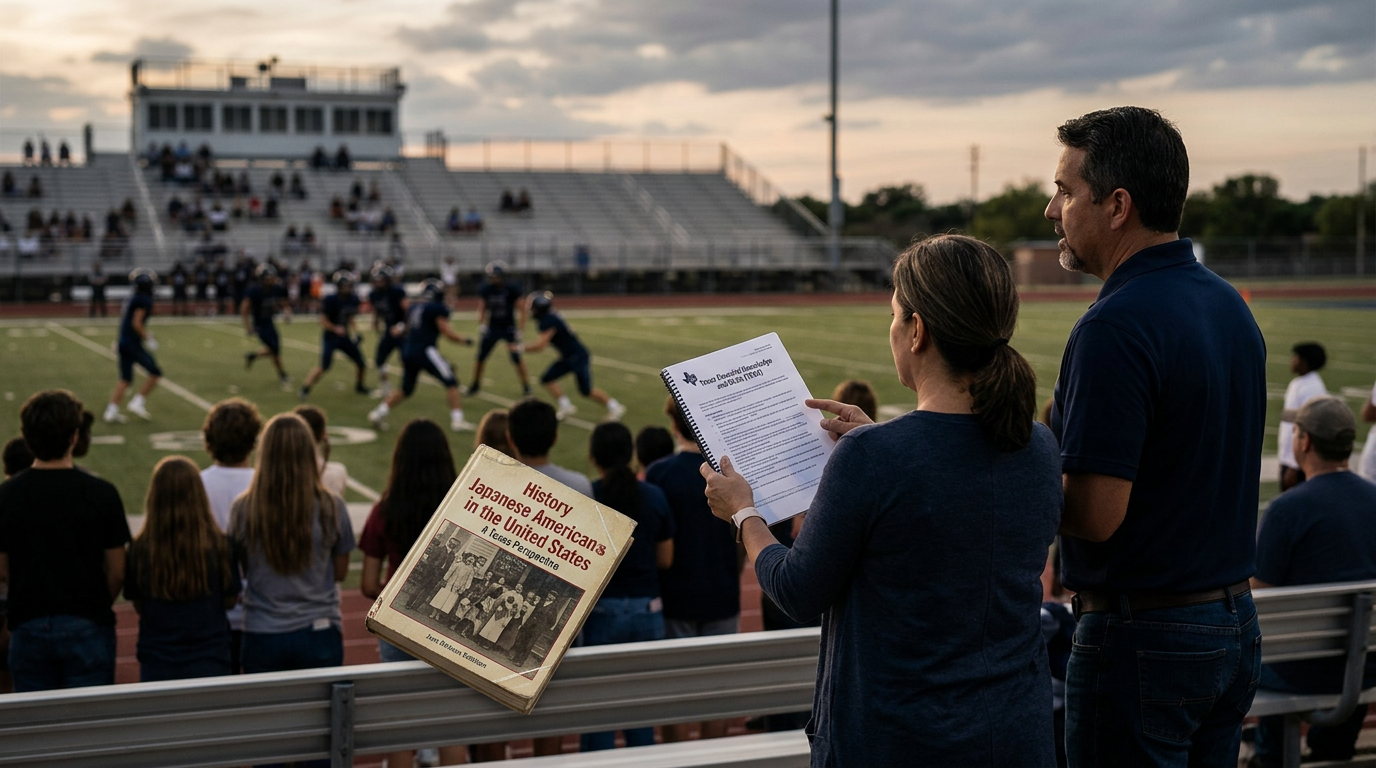
The ongoing discussion surrounding the Texas Essential Knowledge and Skills (TEKS) has recently expanded to focus on the historical accuracy and depth of Japanese American history within public school classrooms. During the mid-20th century, the United States transitioned into a period of domestic upheaval following the attack on Pearl Harbor, leading to the forced relocation of over 120,000 individuals of Japanese descent. In Texas, this history is tangible, as the state hosted several confinement sites including Crystal City, Kenedy, and Seagoville. Education advocates and historical organizations like Densho are now emphasizing that the next cycle of textbook adoptions and curriculum reviews must move beyond a cursory glance at 'internment' and instead offer a thorough examination of the legal and civil rights implications of Executive Order 9066. This shift reflects a broader national trend in history education that seeks to balance patriotic narratives with a critical analysis of constitutional failures during times of war.
Texas relevance
Texas serves as a primary geography for this historical discussion due to the specific facilities located within the state's borders. These were not mere peripheral sites but were central to the Department of Justice's operations during the 1940s. The Crystal City Family Internment Camp, for instance, remains a significant historical landmark in South Texas. As the Texas State Board of Education (SBOE) reviews social studies standards, the local history of these camps provides a direct link between global events and Texas community history. Ensuring these local stories are included in the TEKS allows Texas students to understand the national security decisions made on their own soil. Furthermore, with Texas having one of the largest public school populations in the country, the decisions made by the SBOE regarding these curriculum standards influence the textbook market nationwide.
The Evolution of Terminology in Texas Classrooms
Language plays a pivotal role in how history is perceived by the next generation of Texans. For decades, the term 'internment' has been the standard descriptor used in Texas textbooks to categorize the forced removal of Japanese Americans during the 1940s. However, historians increasingly argue that this term is legally inaccurate when applied to American citizens, as it specifically refers to the detention of enemy aliens during wartime.
Educational advocacy groups are now lobbying the Texas State Board of Education to adopt more precise language, such as 'incarceration' or 'forced removal.' This change is intended to reflect that approximately two-thirds of those detained were United States citizens. Proponents of this shift believe that using more accurate legal terminology helps students distinguish between international law and the domestic civil rights protections provided by the U.S. Constitution.
Opponents of these changes often worry that shifting terminology is part of a broader move toward a more critical interpretation of American history. They argue that the term 'internment' is widely understood and that changing it serves a political rather than an educational purpose. This tension remains a focal point as the SBOE coordinates with curriculum developers and historical experts to finalize the upcoming social studies frameworks.
The Strategic Role of Texas Detention Camps
While many Americans associate the World War II relocation program with the West Coast, Texas played a vital role in the federal government’s confinement strategy. The Crystal City camp was unique in that it was designed specifically for family groups, housing not only Japanese Americans but also German and Italian detainees. This multi-national aspect of the Texas camps provides a unique educational opportunity for students to study the complexities of wartime security.
In addition to Crystal City, the sites in Kenedy and Seagoville were used to process individuals identified as 'dangerous' by the FBI. These facilities were often under the jurisdiction of the Department of Justice rather than the War Relocation Authority. This distinction is critical for advanced history students in Texas to understand the different levels of federal government involvement in domestic surveillance and detention during the war era.
Highlighting these specific locations in the Texas curriculum creates a sense of place for students. It moves history from the abstract pages of a general textbook and places it directly into the context of Texas towns and cities. Bridging this gap is seen as essential for fostering a deeper engagement with the state's past and providing a more comprehensive view of how global conflicts affect local populations.
Impact of State Board of Education Decisions
The Texas State Board of Education (SBOE) holds significant power over the narrative taught in public schools. Because Texas is such a large purchaser of instructional materials, the standards set in Austin often dictate what publishers include in textbooks sold to other states. This makes the inclusion of specific Japanese American history a matter of national educational importance.
Currently, the SBOE is navigating a landscape where curriculum standards are heavily scrutinized by the public. Legislative efforts like SB 3, which restricts certain topics in the classroom, add layers of complexity to how teachers can discuss sensitive historical periods. Educators are seeking clear guidelines that allow them to teach the full scope of the Japanese American experience without running afoul of state laws regarding 'controversial' topics.
The board's challenge is to balance the legislative requirements with the recommendations of historical experts. Groups like Densho are providing primary source materials—ranging from letters written by detainees to official government memos—to ensure that the curriculum is supported by historical evidence. The goal is to create a standard that is robust enough to withstand political critiques while remaining accessible to K-12 students.
Historical Accuracy and Civic Responsibility
Teaching the complexities of World War II domestic policy is widely viewed as an exercise in civic education. Supporters of expanded standards argue that by studying the legal failures of the 1940s, students can better appreciate the importance of the Bill of Rights. This approach suggests that an honest look at historical errors actually reinforces a student's understanding of the value of current legal protections.
In many Texas classrooms, the story of Japanese American incarceration is currently presented as a brief sidebar to the broader narrative of the war in the Pacific. Advocates want to see this narrative integrated into the core study of civil liberties and the American legal system. They argue that understanding the Korematsu v. United States Supreme Court case is as vital as understanding the military strategy behind D-Day.
By focusing on the resiliency of those who were incarcerated, the proposed curriculum changes also seek to celebrate the contributions of Japanese Americans during and after the war. This includes those who served in the 442nd Regimental Combat Team while their families remained behind barbed wire. Presenting a complete picture ensures that the history is not just one of victimhood, but also one of profound patriotism and service under extreme duress.
Future Outlook for Social Studies in Texas
The timeline for these changes is tied to the periodic review cycles of the TEKS. As the state nears its next major social studies update, interest groups on both sides of the political aisle are increasing their engagement with SBOE members. The outcome will likely influence the classroom experience for millions of Texas students for the next decade.
Technology is also playing a role in how this history is taught. Digital archives and virtual tours of Texas camp sites are becoming more available, allowing teachers to provide a more immersive experience than traditional textbooks allow. Regardless of the final wording in the standards, the push for a more detailed local history continues to gain momentum among educators across the state.
Ultimately, the goal for many is a curriculum that prepares Texas students for adult life by teaching them how to process complex information and multiple perspectives. The debate over Japanese American history is a microcosm of the wider efforts to ensure that Texas education remains high-quality, evidence-based, and reflective of the state’s diverse past and its role in the American story.
Analysis
The debate over how to teach the incarceration of Japanese Americans often mirrors larger cultural disagreements regarding American exceptionalism and the acknowledgment of historical mistakes. Conservative viewpoints often emphasize the existential threat faced by the U.S. during World War II, while critics of the current curriculum argue that sanitizing these events does a disservice to the constitutional education of modern students. By framing the conversation around 'honest history,' advocates are pushing for a pedagogical approach that treats the events as a violation of due process rather than an unfortunate but necessary wartime measure. For Texas, the political challenge lies in satisfying diverse stakeholders who want a curriculum that is both rigorous and respectful of the nation's foundational principles without ignoring the areas where those principles were not upheld.
Source attribution
This story was reported using a public release from the Texas History Stories (Google News). Keep TX Red rewrote the coverage independently and links to the official statement for verification.
Frequently Asked Questions
- What were the locations of the primary confinement sites in Texas?
- The primary sites in Texas were located in Crystal City, Kenedy, and Seagoville. Crystal City was notable for being a family camp, while Kenedy and Seagoville predominantly held individuals classified by the government as 'enemy aliens' or security risks.
- Why is the term 'internment' being debated by historians?
- Historians argue that 'internment' is a legal term that applies to the detention of non-citizens. Since many of those held during World War II were American citizens, the term 'incarceration' is considered more legally and historically accurate.
- How do the TEKS standards influence what students learn?
- The Texas Essential Knowledge and Skills (TEKS) are the state standards for what students should know and be able to do at each grade level. They dictate the content of state-mandated tests and provide the framework for textbook publishers when creating materials for Texas schools.
- Who is responsible for changing the social studies curriculum in Texas?
- The Texas State Board of Education (SBOE) is the primary body responsible for reviewing and adopting curriculum standards. This process involves public hearings, expert testimony, and votes by the elected members of the board.
Official Sources
Take the next step
Browse the Newsroom →Read more about Keep Texas Red → Our full guide to what Keep Texas Red means and why Texans support it.
Related Articles


Get Texas updates delivered weekly.
Independent Texas reporting on politics, policy, and daily life. One email a week. Unsubscribe anytime.
Keep TX Red Newsroom
The Keep Texas Red Editorial Staff produces nonpartisan explainers, policy breakdowns, and educational resources to help Texans understand how their government works. All content is reviewed for accuracy and updated regularly.
About Keep TX Red →