Chronic Wasting Disease Risks Grow as Feral Hog Transport Policies Face Scrutiny
New findings suggest feral hogs may spread Chronic Wasting Disease, prompting a re-evaluation of swine transport laws in Texas and across the South.
Editorial disclaimer: Opinions and analysis on Keep TX Red are editorial content — not statements of fact. See our editorial standards.
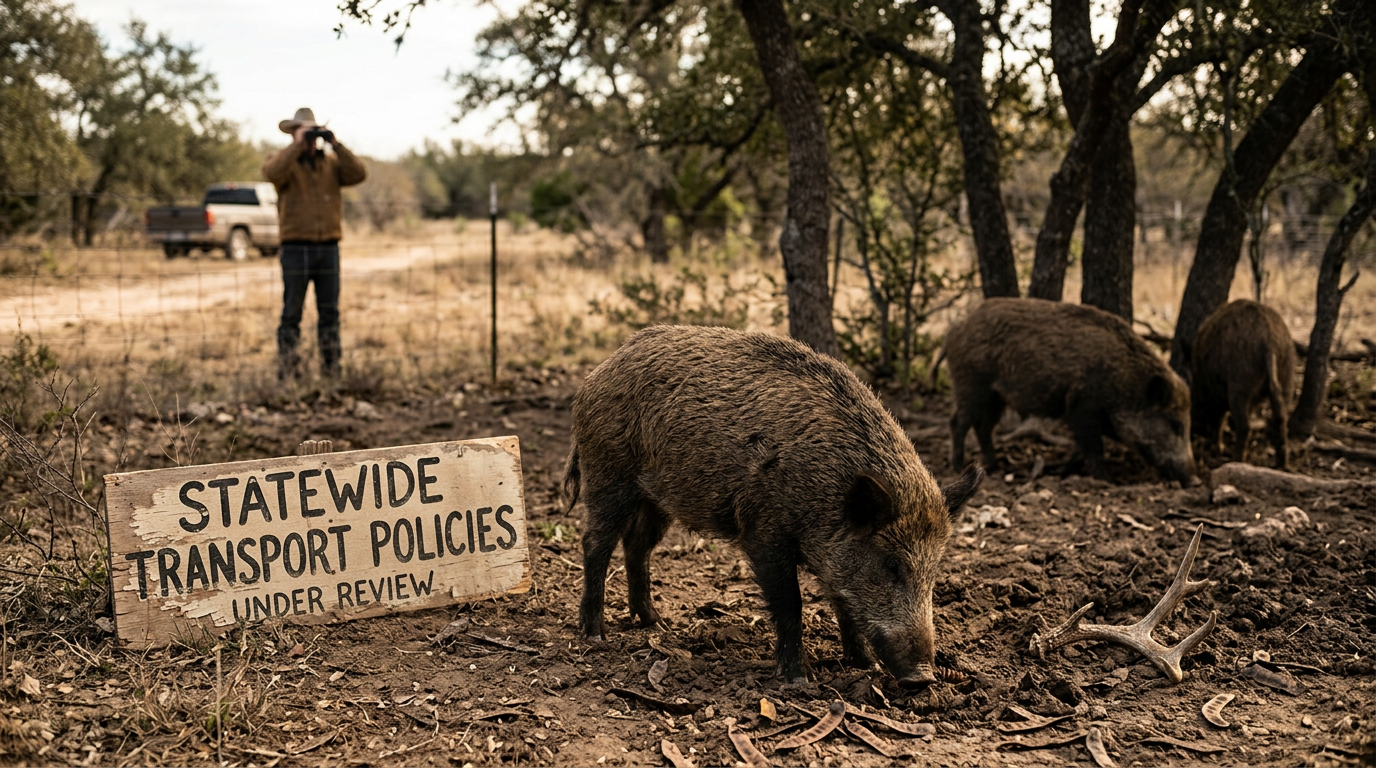
Recent ecological findings have raised alarms regarding the potential for feral hogs to act as mechanical vectors for Chronic Wasting Disease (CWD), a fatal neurological condition that typically affects cervids like deer and elk. For decades, the primary focus of CWD containment has centered on the movement of live deer and breeder operations. However, researchers are now investigating how these invasive swine, which roam across millions of acres in Texas and the southeastern United States, might be picking up and transporting the infectious prions responsible for the disease. This development introduces a complex new variable into wildlife management, especially in states where the transport of feral hogs for slaughter or hunting remains a common practice. Historically, feral hogs have been viewed primarily as a threat to agriculture and biodiversity due to their destructive rooting and high reproductive rates. Texas has long struggled to contain a population estimated at over 2.6 million head, leading to aggressive trapping and removal programs. Until recently, these efforts were largely decoupled from CWD mitigation strategies. The realization that hogs might inadvertently facilitate the spread of prions—which can persist in the environment for years—threatens to undermine decades of progress in protecting the native Texas deer population, which is 4 million strong and vital to the state’s multi-billion dollar hunting industry.
Texas relevance
Texas is the epicenter of the feral hog crisis in the United States, hosting the largest population of the invasive species of any state in the nation. The threat of CWD transmission via swine is particularly acute in Texas because the state maintains a robust infrastructure for transporting captured hogs to commercial processing plants. These transportation routes often cross counties with different CWD status levels, potentially moving prions from infected zones into previously clean territory. For Texas landowners and hunters, the intersection of hog management and CWD containment represents a significant regulatory and environmental challenge that could dictate the future of land use and recreational hunting in the Lone Star State.
The Biological Mechanism of Prion Spread
Chronic Wasting Disease is not caused by a virus or bacteria, but by a malformed protein known as a prion. These proteins are notoriously difficult to destroy, resisting extreme heat, freezing, and even standard disinfectants. When an animal dies from CWD, its carcass leaves prions in the soil, which can be absorbed by plants or remain on the surface for significant periods. Feral hogs, known for their scavenging behavior, frequently interact with these contaminated sites or consume the carcasses of dead cervids.
While there is currently no evidence that hogs suffer from CWD themselves, their digestive tracts and hides can become contaminated with the prions. As these animals travel long distances or are transported by humans for slaughter, they may shed these prions in new environments through their waste or during transportation. This mechanical transmission means a hog could effectively 'carry' the disease from a high-risk area to a pristine ranch without ever becoming sick itself.
The Commercial Feral Hog Pipeline
In Texas, trapping feral hogs is more than just pest control; it is a commercial enterprise. The state allows for the transport of live feral swine to approved holding facilities and then to specific slaughterhouses. This creates a system where thousands of animals are moved across the state each month. The economic incentive to move these animals is high, as it provides a way for landowners to offset the costs of property damage while providing a product for the exotic meat market.
However, this movement creates a map of potential infection vectors. If a hog is trapped in a CWD-positive zone in the Trans-Pecos or the Hill Country and then trucked to a facility in another region, any prions attached to that animal or inside its digestive system go with it. Critics of the current system argue that the regulatory framework for swine transport has not been updated to reflect the evolving science of prion persistence.
Historical Context of Texas Invasive Swine
The presence of wild pigs in Texas dates back to the early Spanish explorers who brought domestic swine as a food source. Over centuries, these domestic animals escaped, interbreeding with European wild boars introduced for sport in the 1930s. The result is a highly adaptable, intelligent, and prolific hybrid that has successfully colonized almost every county in Texas. The state has attempted various methods of control, from aerial gunning to hot-air balloon hunting and toxicant research.
Despite these efforts, the population has continued to grow. The shift from seeing hogs as a nuisance to identifying them as a potential biohazard for other wildlife marks a significant change in the state's ecological strategy. Previous management focused on caloric consumption and crop damage; the new focus must account for microscopic threats that could remain in the soil for a generation.
Impact on the Texas Hunting Industry
Hunting is a $2.2 billion industry in Texas, with white-tailed deer being the crown jewel of the sector. The spread of CWD is the single greatest threat to this economy, as the disease is 100% fatal and can lead to population declines if left unchecked. If feral hogs are found to be a major contributor to the spread of CWD, it could lead to stricter regulations on how hunters and trappers handle these animals, potentially increasing the cost of management.
Furthermore, the perception of CWD risk impacts land values. Ranches in CWD-positive zones often face mandatory testing requirements and restrictions on the movement of animal parts. If the movement of hogs is identified as the cause for new CWD detections on previously clean ranches, the legal and financial fallout for the state's agricultural community could be immense.
Current Regulatory Gaps and Legislative Outlook
Currently, Texas Parks and Wildlife (TPWD) and the Texas Animal Health Commission (TAHC) share jurisdiction over wildlife and livestock issues. While TAHC oversees the transport of feral swine to prevent the spread of diseases like swine flu and pseudorabies, CWD has typically fallen under the purview of TPWD because it affects deer. This jurisdictional divide has led to a lack of cohesive policy regarding the intersection of feral hogs and prion diseases.
Moving forward, there is growing pressure for the Texas Legislature to mandate stricter environmental assessments of hog transport routes. Proposals include requiring better decontamination of transport trailers and prohibiting the movement of hogs out of CWD containment zones. However, these measures face pushback from commercial operators who argue that further regulations would make hog removal financially impossible for many landowners.
The Scientific Search for Answers
Universities across the South are currently conducting studies to determine exactly how long a prion can remain viable after passing through a hog's digestive system. Early research suggests that the acidic environment of a pig's stomach does not necessarily neutralize the prion. This means that feral hogs could be acting as mobile 'prion distributors,' consuming infected material in one area and depositing it through feces in another.
The results of these studies will be critical for future policy. If the science confirms that hogs are a primary vector, it will likely necessitate a total ban on the live transport of feral swine. Such a move would transform the hog control industry in Texas, shifting it from a salvage-and-sale model to a strictly eradicate-in-place model, which would require significant state subsidies to maintain effectiveness.
Mitigation Strategies for Landowners
In the absence of new state mandates, many Texas ranchers are taking matters into their own hands. Some have implemented 'no-transport' rules on their properties, requiring all trapped hogs to be euthanized and buried or incinerated on-site rather than sold. This prevents the farm-to-market traffic that could introduce pathogens to their land.
Other strategies include enhanced biosecurity around deer feeding stations. Since both deer and hogs are attracted to corn feeders, these locations become hotspots for interspecies contact and prion shedding. By utilizing 'hog-proof' fencing around feeders, landowners can reduce the chances of hogs depositing contaminated material in the exact spots where deer are most likely to ingest it.
Analysis
Opinion: While current regulations focus heavily on the deer breeding industry to stop CWD, the lack of oversight regarding feral hog movement appears to be a massive blind spot. If Texas truly wishes to protect its massive white-tailed deer population, the state must reconcile its desire to profit from hog disposal with the biological risk these animals pose. Continuing to allow the transport of live hogs across county lines without testing or stricter decontamination protocols is a gamble that could eventually bankrupt the state's wildlife tourism economy. The invasive nature of these animals makes them the perfect 'stealth' carrier for diseases that could devastate native species.
Source attribution
This story was reported using a public release from the Texas Wildlife Stories (Google News). Keep TX Red rewrote the coverage independently and links to the official statement for verification.
Frequently Asked Questions
- Can feral hogs actually get Chronic Wasting Disease?
- No, current scientific evidence suggests that feral hogs are not susceptible to the disease themselves. However, they can act as 'mechanical vectors,' meaning they can carry the infectious prions in their gut or on their fur and hooves, spreading the contamination to new areas where deer may then become infected.
- Is it safe to eat meat from a feral hog if CWD is in the area?
- Yes, feral hogs do not contract CWD, so the meat itself is not infected with the prion. However, hunters should always practice good hygiene when field dressing any wild animal and avoid consuming the brain, spinal cord, or lymph nodes of any animal in a CWD-affected area.
- Why does Texas allow the transport of live feral hogs?
- Texas allows the movement of feral hogs to state-approved holding facilities and slaughter plants to incentivize the removal of the animals. This system provides a way for landowners to dispose of the invasive species while recapturing some of the costs through the sale of the meat.
- How long do CWD prions stay in the environment?
- Prions are incredibly resilient and can persist in the soil for several years, even a decade or more, regardless of weather conditions. This long-term persistence is why the potential for hogs to move contaminated soil or feces is such a concern for wildlife managers.
Official Sources
Take the next step
Browse the Newsroom →Read more about Keep Texas Red → Our full guide to what Keep Texas Red means and why Texans support it.
Related Articles

Get Texas updates delivered weekly.
Independent Texas reporting on politics, policy, and daily life. One email a week. Unsubscribe anytime.
Keep TX Red Newsroom
The Keep Texas Red Editorial Staff produces nonpartisan explainers, policy breakdowns, and educational resources to help Texans understand how their government works. All content is reviewed for accuracy and updated regularly.
About Keep TX Red →