Texas Feral Hog Regulations: Legal Rights and Requirements for Property Owners
Understanding Texas laws regarding feral hog removal, hunting licenses, and property owner rights to protect land and livestock from invasive species.
Editorial disclaimer: Opinions and analysis on Keep TX Red are editorial content — not statements of fact. See our editorial standards.
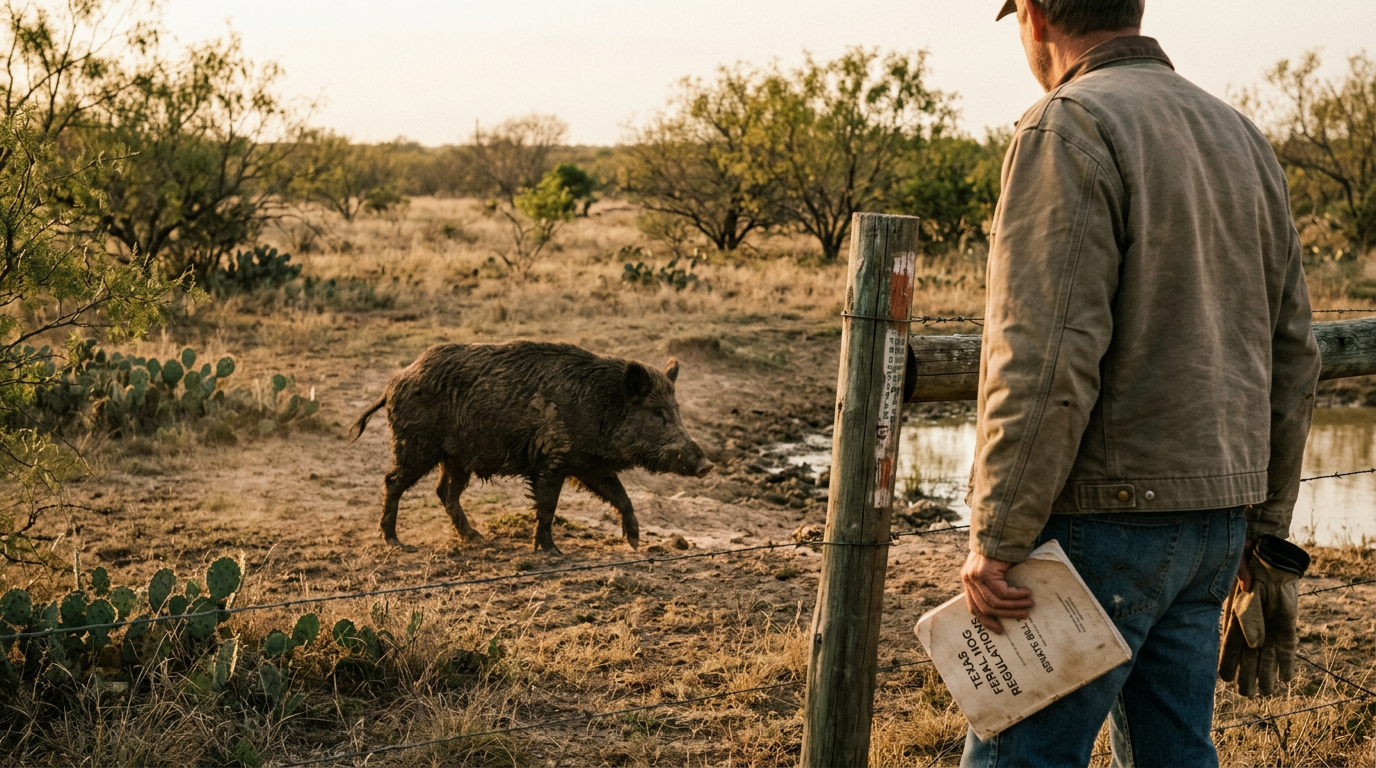
The management of feral hogs in Texas has undergone significant legislative shifts over the last decade as the state grapples with an exploding population of these invasive animals. Historically, the management of wildlife was strictly regulated by the Texas Parks and Wildlife Department (TPWD), but the sheer volume of damage caused by feral pigs led lawmakers to strip away many of the traditional barriers to population control. In 2019, the Texas Legislature passed Senate Bill 317, which fundamentally changed how residents can interact with these animals on private land. This legislation was a direct response to the estimated $118 million in annual agricultural damage caused by the roughly three million feral hogs roaming the Lone Star State. The current legal framework is designed to empower landowners to protect their property without the bureaucratic hurdles usually associated with harvesting wildlife. Feral hogs are not considered native wildlife in Texas; they are classified as an exotic, invasive species. Because they occupy a different legal category than deer or turkey, the rules governing their removal are uniquely permissive. Property owners often wonder if they are within their rights to dispatch these animals immediately upon seeing them, and the answer, according to current Texas statutes, is a resounding yes under specific conditions. As these animals continue to encroach on suburban areas and cause massive soil erosion and crop destruction, understanding the nuance of these laws becomes essential for every Texan, whether they live on a sprawling ranch or a residential lot bordering an undeveloped greenbelt.
Texas relevance
This issue is deeply rooted in the Texas economy and the preservation of the state's natural landscapes. With approximately 79 percent of the land in Texas dedicated to agriculture, the presence of feral hogs represents a direct threat to the livelihoods of thousands of Texas families. Cities across the state, from the suburbs of Houston to the Dallas-Fort Worth Metroplex, have begun reporting hog sightings in neighborhoods, leading to destroyed lawns and safety concerns for pets. Texas remains the primary battleground for this invasive species crisis in the United States, making the state's specific hunting and trapping exemptions a model for other regions facing similar ecological threats.
The Legal Status of Feral Hogs on Private Land
In the state of Texas, the legal framework regarding feral hogs is built on the premise that these animals are a destructive invasive species. Because they are not native to the North American continent, they do not enjoy the protections afforded to indigenous game animals. Under Texas law, a landowner, their family members, or their authorized agents are permitted to take feral hogs on their property without the need for a hunting license. This exemption is a critical piece of the state's strategy to reduce the population through any means necessary.
The removal of the license requirement applies specifically to private land. If an individual is hunting on public land or land where they do not have a direct relationship with the owner as an agent or family member, the standard hunting license requirements still apply. It is important to note that 'taking' the animal refers to killing it; the law remains very strict regarding the transportation and relocation of live feral hogs, which requires specific permits from the Texas Animal Health Commission due to concerns over disease transmission like swine flu and pseudorabies.
Furthermore, the law does not limit the methods used to dispatch the animals on private property. Landowners are generally allowed to use traps, firearms, and even dogs to manage the population. However, all actions must still comply with local municipal ordinances regarding the discharge of firearms. If a property is located within city limits, the state-level permission to kill hogs does not override local safety laws that prohibit shooting guns in residential areas.
Hunting Licenses and Third-Party Hunters
While the landowner is exempt from license requirements, the situation changes when third parties are involved. If a landowner invites a guest to hunt feral hogs, or if a commercial hunting guide brings clients onto the property for a fee, the participants must generally possess a valid Texas hunting license. The exemption created by Senate Bill 317 was intended to aid those suffering from property damage, not to create a license-free zone for recreational sport hunting by the general public.
For those who do not own land, a 'non-resident five-day special hunting license' or a standard resident hunting license is the baseline requirement. This ensures that the state can still track participation in the sport and fund conservation efforts through license fees, even if the target is an invasive species. Landowners should be careful to document who they have designated as their 'authorized agents' to ensure that employees or neighbors helping with hog control are legally protected while acting on the owner's behalf.
The distinction between a guest and an agent can sometimes be blurry, but the TPWD generally looks for a pre-existing relationship or a formal request for help in damage control. Those looking to avoid legal complications often ensure that all participants carry a basic license regardless, as the cost is minimal compared to the potential fines for hunter non-compliance.
Methods of Take: Firearms, Traps, and Technology
Texas is one of the most permissive states regarding the technology allowed for hog eradication. Because these animals are primarily nocturnal, the state allows the use of high-tech equipment that would be illegal for hunting native game like deer. This includes the use of thermal optics, night vision equipment, and silencers. These tools allow landowners to target entire sounders (herds) in the middle of the night when the animals are most active and susceptible to control measures.
Trapping remains one of the most effective ways to manage large numbers of hogs at once. Large corral traps with remote-controlled gates are frequently used by Texas ranchers. These systems allow the user to monitor a live video feed and drop the gate only when the entire group is inside the enclosure. This prevent 'trap shyness,' where surviving hogs learn to avoid traps after seeing their peers captured. Once captured, the hogs must be killed on-site or transported directly to a state-approved slaughter facility following specific health protocols.
Aerial control is another unique aspect of Texas law. Through the 'Hog Out' programs and private contracts, individuals can legally shoot feral hogs from helicopters. This method is highly effective in the vast grazing lands of West Texas and the brush country of South Texas, where ground-level hunting is difficult due to dense vegetation. All aerial hunting must be conducted under a permit issued by the Texas Parks and Wildlife Department to ensure safety and coordination with local law enforcement.
Agricultural and Ecological Impacts in Texas
The desperation behind Texas's lax hog laws stems from the severe ecological damage these animals cause. Feral hogs use their snouts to root through the soil in search of roots, tubers, and invertebrates. This process, known as rooting, destroys native vegetation, promotes the growth of invasive weeds, and leads to significant soil erosion. In the blackland prairies and river bottoms of Texas, this can lead to the siltation of waterways and the destruction of sensitive habitats for ground-nesting birds like the Northern Bobwhite.
Farmers in the Texas Panhandle and the Rio Grande Valley report massive losses in corn, sorghum, and peanut crops. A sounder of hogs can destroy an entire field in a single night, literalizing the phrase 'eating the profits.' Furthermore, hogs are known to be opportunistic predators; they have been documented killing newborn lambs and calves, posing a direct threat to the Texas livestock industry. The cumulative economic impact is estimated to be well over $100 million annually, a figure that is likely underreported as many smaller landowners absorb the costs without filing official claims.
From a water quality perspective, the presence of hogs in Texas watersheds is a major concern. Their waste introduces high levels of E. coli and other bacteria into creeks and streams that provide drinking water for major metropolitan areas. By providing landowners the legal green light to remove these animals without restriction, the state is attempting to protect the basic infrastructure of its natural resources regularly compromised by hog activity.
Municipal Limitations and Safety Regulations
While state law is very supportive of hog removal, there are critical limitations within municipal boundaries. Many growing Texas cities have annexed rural land, leading to situations where a person may own 20 acres that are technically within a city's limits. In these cases, city ordinances prohibiting the discharge of firearms usually take precedence over state hunting allowances. Landowners in these areas must look toward alternative methods such as archery or professional trapping services that do not involve gunfire.
Safety is a paramount concern for Texas officials. Even though a license may not be required on private land, all other hunting safety laws remain in effect. It is illegal to shoot across a public road or to discharge a firearm in a way that endangers neighboring properties. As suburban sprawl pushes further into traditionally wild areas, the conflict between hog control and public safety has intensified, leading some counties to implement specific 'safety zones' where certain types of hunting are restricted.
Landowners are encouraged to communicate with their neighbors before engaging in intensive hog control, especially when using high-powered rifles at night. The sound of gunfire, even when legal, can trigger emergency calls and unnecessary police deployments. Responsible hog management involves not only knowing the state law but also respecting the proximity of the growing Texas population.
Disease Risks and Handling Procedures
Beyond the physical damage, feral hogs carry a host of diseases that can be transmitted to humans and domestic animals. Texas health officials warn that anyone handling a carcass should use protective equipment, including gloves and eye protection. Swine brucellosis and tularemia are both present in the Texas hog population and can cause serious illness in humans who come into contact with infected blood or tissues.
The state has established strict guidelines for the processing of feral hog meat. While it is legal for a landowner to consume the meat from a hog killed on their property, they cannot sell the meat unless the animal was processed at a facility inspected by the United States Department of Agriculture (USDA) or the Texas Department of State Health Services. This ensures that the public food supply remains safe from the various pathogens found in wild swine populations.
Discarding carcasses also requires care to avoid environmental contamination. While many ranchers choose to leave carcasses for scavengers in remote areas, this can lead to water quality issues if done near wells or streams. Proper disposal, such as deep burial or transportation to a landfill, is recommended to prevent the spread of disease to other wildlife and to keep the property hygienic.
Analysis
OPINION: The Texas approach to feral hog management represents a necessary prioritization of property rights over traditional conservation bureaucracy. For too long, the requirement of a hunting license acted as a minor but persistent barrier to spontaneous control measures. By removing the license requirement for private property owners and their agents, Texas has correctly acknowledged that these animals are a nuisance and a threat rather than a resource to be preserved. However, the state must remain vigilant in ensuring that 'night hunting' and other aggressive tactics are performed safely. While the legislative changes have been beneficial, the reality is that even with unlimited hunting, the hog population continues to grow. This suggests that while individual property rights are being upheld, a more coordinated statewide eradication effort may eventually be required to supplement the efforts of individual landowners.
Source attribution
This story was reported using a public release from the Texas Wildlife Stories (Google News). Keep TX Red rewrote the coverage independently and links to the official statement for verification.
Frequently Asked Questions
- Do I need a license to hunt feral hogs on land I don't own?
- Yes. Generally, if you are not the landowner, a family member of the landowner, or a designated agent assisting with damage control, you must possess a valid Texas hunting license to take feral hogs. This is true even if the species is invasive.
- Can I shoot feral hogs at night in Texas?
- Yes, shooting feral hogs at night is legal on private property in Texas. There are no state-level restrictions on using spotlights, thermal optics, or night vision for this purpose, though you must ensure you are not violating local noise or safety ordinances.
- Is it legal to trap hogs and move them to another location?
- No, it is generally illegal to trap and release feral hogs in a new location. You can only transport live feral hogs to a state-approved holding facility or a slaughterhouse, and you must follow Texas Animal Health Commission regulations for transport.
- What should I do if feral hogs are in my suburban backyard?
- If you live within city limits, you should check local ordinances before taking any action. In most cases, you cannot fire a gun. You may need to hire a professional wildlife relocation or removal service that uses humane traps or other non-firearm methods approved by the city.
Official Sources
Take the next step
Browse the Newsroom →Read more about Keep Texas Red → Our full guide to what Keep Texas Red means and why Texans support it.
Related Articles
Get Texas updates delivered weekly.
Independent Texas reporting on politics, policy, and daily life. One email a week. Unsubscribe anytime.
Keep TX Red Newsroom
The Keep Texas Red Editorial Staff produces nonpartisan explainers, policy breakdowns, and educational resources to help Texans understand how their government works. All content is reviewed for accuracy and updated regularly.
About Keep TX Red →