Newly Declassified Pentagon Documents Place Texas at the Center of Historic Aerial Investigations
Recent federal document releases highlight Texas as a primary location for unidentified aerial phenomena throughout the twentieth century.
Editorial disclaimer: Opinions and analysis on Keep TX Red are editorial content — not statements of fact. See our editorial standards.
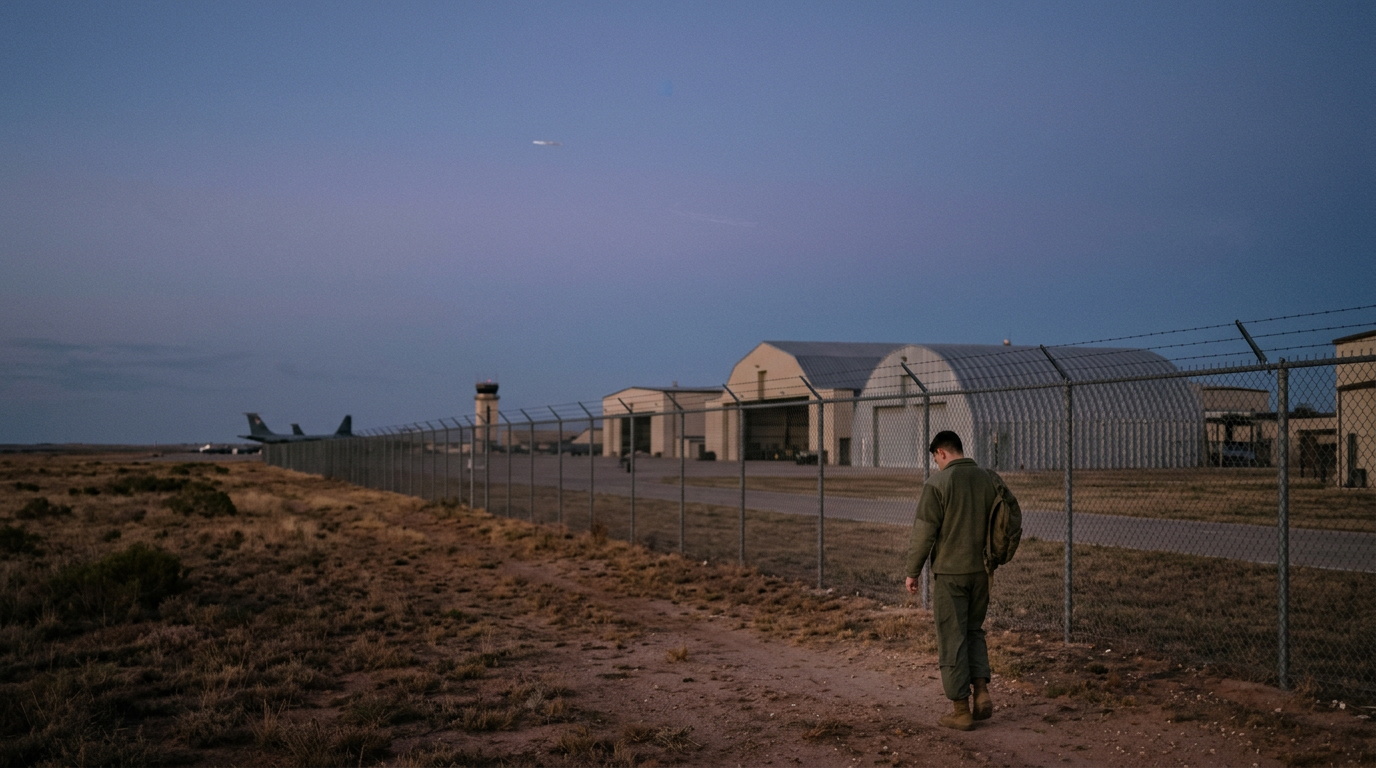
For decades, the vast expanse of the Texas sky has served as a canvas for unidentified aerial phenomena, a fact recently reinforced by the release of classified federal documents. These files, emerging from historically sensitive archives, categorize the Lone Star State as a high-volume corridor for incidents that once sparked national security debates. The documentation provides a chronological look at how military intelligence monitored sightings across specialized airspaces and residential neighborhoods alike. This transparency initiative bridges the gap between folklore and official government observation, confirming that certain objects tracked over Texas soil remained unexplained despite rigorous scrutiny by the era's top investigators. The history of these sightings is not a new development for those familiar with Texas aviation lore, but the official nature of the documents adds a layer of validation to long-standing local accounts. From the Panhandle to the Gulf Coast, the records detail specific dates where radar anomalies and visual identifications coincided. By examining these legacy files, historians can now map out how the federal government allocated resources to monitor the Texas sky during periods of geopolitical tension. The data suggests that Texas was not merely a random location for these events, but rather a consistent focal point for mysterious occurrences that baffled both civilian observers and highly trained military personnel.
Texas relevance
Texas serves as the geographical heart of this investigative saga, primarily due to its massive size and the concentration of high-profile military installations such as Fort Cavazos, Lackland Air Force Base, and Dyess Air Force Base. These newly accessible records highlight how the state's unique geography—ranging from high-altitude desert plateaus to dense coastal moisture—has long challenged aerial identification. Furthermore, the cultural impact on Texas communities is significant; towns like Stephenville and Lubbock have historical identities intertwined with these aerial mysteries, making the declassification a matter of local heritage as much as national security. The state's influence on aerospace technology also means that many of these sightings occurred near areas where cutting-edge aviation tests were conducted, complicating the search for definitive answers.
The Lubbock Lights and Early Post-War Documentation
One of the most foundational segments of the declassified files involves the events in Lubbock during the early 1950s. At the time, three professors from Texas Technological College reported seeing a series of lights flying in a 'V' formation, a story that quickly garnered international attention. These new files reveal that the military's internal investigation into the Lubbock incident was more exhaustive than public statements suggested, involving detailed analysis of atmospheric conditions and local wind speeds to determine if birds or streetlights could have caused the illusion.
The internal memos indicate a high level of frustration among researchers who could not find a conventional explanation for the speed at which the objects traveled. Because Lubbock was a hub for agricultural and academic growth at the time, the sightings caused a significant stir in the local community. The declassified records show that the Air Force maintained a presence in the area for weeks following the event, interviewing dozens of witnesses who had remained silent until official investigators arrived on the scene.
These documents underscore the transition of Texas from a purely agrarian society to a vital part of the military-industrial complex. As the Cold War intensified, the government's interest in the Lubbock lights was driven primarily by the fear of foreign surveillance or advanced adversarial technology. The records confirm that while the official report concluded 'unknown,' the private deliberations among officials showed a genuine concern for the vulnerability of the interior United States.
Tracing the Stephenville Wave through Federal Eyes
While many think of UFO history as being relegated to the mid-century, the declassified items also shed light on more recent waves, such as the activity reported in Stephenville. The files detail how radar data from nearby military towers conflicted with initial public denials of military exercise in the area. This discrepancy highlights a long-standing tension between various branches of the federal government regarding what information is shared with local law enforcement and the public.
Local residents in Erath County reported massive objects that seemed to defy the known physics of the time, moving across the horizon with near-instantaneous acceleration. The newly released files include accounts from pilots who were in the air at the time, providing a perspective that was largely omitted from the initial media coverage. The technical descriptions in these logs provide a more clinical, less sensationalized view of what was truly observed over the North Texas landscape.
By analyzing the Stephenville segment of the archives, researchers can see a clear pattern of how Texas's open airspace is utilized for both classified testing and monitoring. The interaction between civilian observers and military radar technicians remains a central theme, illustrating the difficulty of maintaining secrecy in an era where everyone carries a camera. These records serve as a bridge between the 1950s era of secrecy and the modern 21st-century demand for accountability.
Military Installations and Secret Texas Corridors
The concentration of military bases in Texas has always made it a hotspot for aerial anomalies, and the declassified files prove that these bases were often the primary reporting centers for unexplained events. In particular, the records highlight the role of Kelly Air Force Base and the intelligence gathering that occurred there. Personnel were often tasked with monitoring traffic that deviated from standard commercial or military flight paths, leading to a massive repository of 'unresolved' folders.
These secret corridors, often used for transporting sensitive materials or testing experimental drones, created a complex environment for aerial identification. The documents suggest that a significant percentage of Texas sightings could be attributed to top-secret domestic programs that were unknown even to the personnel observing them. This internal compartmentalization is a recurring theme throughout the files, showing that one hand of the government often didn't know what the other was flying over the Texas plains.
Despite the likely mundane origin of many sightings, the files reveal a category of 'high-strangeness' cases where no known terrestrial craft could account for the maneuverability described. These cases are what truly cement Texas's status as a ground zero for this research. The state’s vastness provides ample room for anomalies to occur far from the prying eyes of dense urban populations, allowing for longer observation windows and more detailed reports.
The Scientific Community’s Role in Texas Research
Texas has always been home to significant scientific and aerospace talent, and the declassified files reflect the involvement of these experts in analyzing the unknown. Documents show that consultants from various Texas universities were often brought in to provide opinions on physical evidence or photographic remains of suspected sightings. This collaboration between the federal government and Texas academia highlights the serious nature with which these investigations were conducted behind closed doors.
One particularly interesting set of documents discusses the soil and plant analysis conducted after reported 'landings' in rural parts of West Texas. While the results were often inconclusive, the fact that the government deployed specialized teams to rural Texas farms shows a level of dedication that contradicts the dismissive tone of the era's public relations campaigns. The files detail the rigorous protocols used to ensure that any potential biological or chemical contamination was contained and studied.
The role of Texas-based contractors in developing sensor technology is also mentioned in the context of identifying these objects. As the state became a leader in the tech sector, its infrastructure was used to develop more sophisticated ways of tracking what was in the sky. The declassified historical narrative shows that Texas was not just a place where things were seen, but a place where the tools to understand those things were actively being built.
Public Perception and the 'Texas Ground Zero' Narrative
The phrase 'ground zero' carries a heavy weight, and its application to Texas in these documents reflects the sheer volume of reports compared to other states. The files suggest that the Texas public was uniquely attuned to the sky, perhaps due to the state's long history with aviation and ranching. Large-scale farming and ranching operations meant that people were often outdoors at night, providing a consistent stream of witnesses across the rural landscape.
The declassified archives also contain internal assessments of public morale in Texas following major sightings. Officials were concerned that unexplained phenomena could lead to panic or a loss of faith in the military's ability to protect the borders. Consequently, some of the documents reveal the psychological operations used to calm local populations, including the planting of alternative explanations in local newspapers to steer the narrative away from high-tech mysteries.
Ultimately, the narrative established by these files is one of a state that is as much a character in the mystery as the objects themselves. Texas’s identity as a place of vast horizons and pioneering spirit fits perfectly with the search for answers in the sky. As more files are processed and released, the role of Texas as the primary theater for these atmospheric enigmas is only likely to grow in the public consciousness.
Analysis
The release of these documents appears to be part of a broader shift toward government transparency regarding phenomena that were once relegated to the fringes of science. While the records do not confirm the presence of extraterrestrial life, they do confirm that the U.S. government took Texas-based sightings seriously enough to maintain secret logs for decades. One could interpret this as a strategic move to manage public interest while acknowledging the legitimate technological hurdles in identifying every object in the sky. For Texans, these files offer a sense of vindication for rural witnesses who were often ignored or ridiculed in past generations. The intersection of Texas aviation hubris and the unknown reminds us that even with modern radar, the skies remain a frontier of discovery.
Source attribution
This story was reported using a public release from the Unusual Texas / Only In Texas (Google News). Keep TX Red rewrote the coverage independently and links to the official statement for verification.
Frequently Asked Questions
- What do the declassified files say about the cause of these sightings?
- The files generally categorize the sightings into three groups: misidentified conventional aircraft or natural phenomena, classified domestic military technology, and 'unidentified' objects that displayed flight characteristics beyond the known capabilities of the time. They do not explicitly confirm aliens, but they acknowledge that many cases remain scientifically unsolved.
- Why is Texas considered 'ground zero' for these events?
- Texas is labeled this way due to the high density of reported incidents and the strategic importance of its airspace. The state's large landmass, numerous military bases, and clear skies made it an ideal location for both historical sightings and subsequent government tracking efforts.
- Can the public access these Texas-specific files now?
- Yes, many of these documents have been moved to the National Archives or are available through the Freedom of Information Act (FOIA) portals of various agencies. Several research groups are currently cataloging the Texas-specific incidents to create a localized database for historians.
Official Sources
Take the next step
Browse the Newsroom →Read more about Keep Texas Red → Our full guide to what Keep Texas Red means and why Texans support it.
Related Articles
Get Texas updates delivered weekly.
Independent Texas reporting on politics, policy, and daily life. One email a week. Unsubscribe anytime.
Keep TX Red Newsroom
The Keep Texas Red Editorial Staff produces nonpartisan explainers, policy breakdowns, and educational resources to help Texans understand how their government works. All content is reviewed for accuracy and updated regularly.
About Keep TX Red →