Suburban Siege: The Growing Impact of Feral Hog Infestations in Texas Neighborhoods
Texas faces a massive feral hog surge as invasive sounders move from rural lands into suburban lawns, causing millions in property damage.
Editorial disclaimer: Opinions and analysis on Keep TX Red are editorial content — not statements of fact. See our editorial standards.
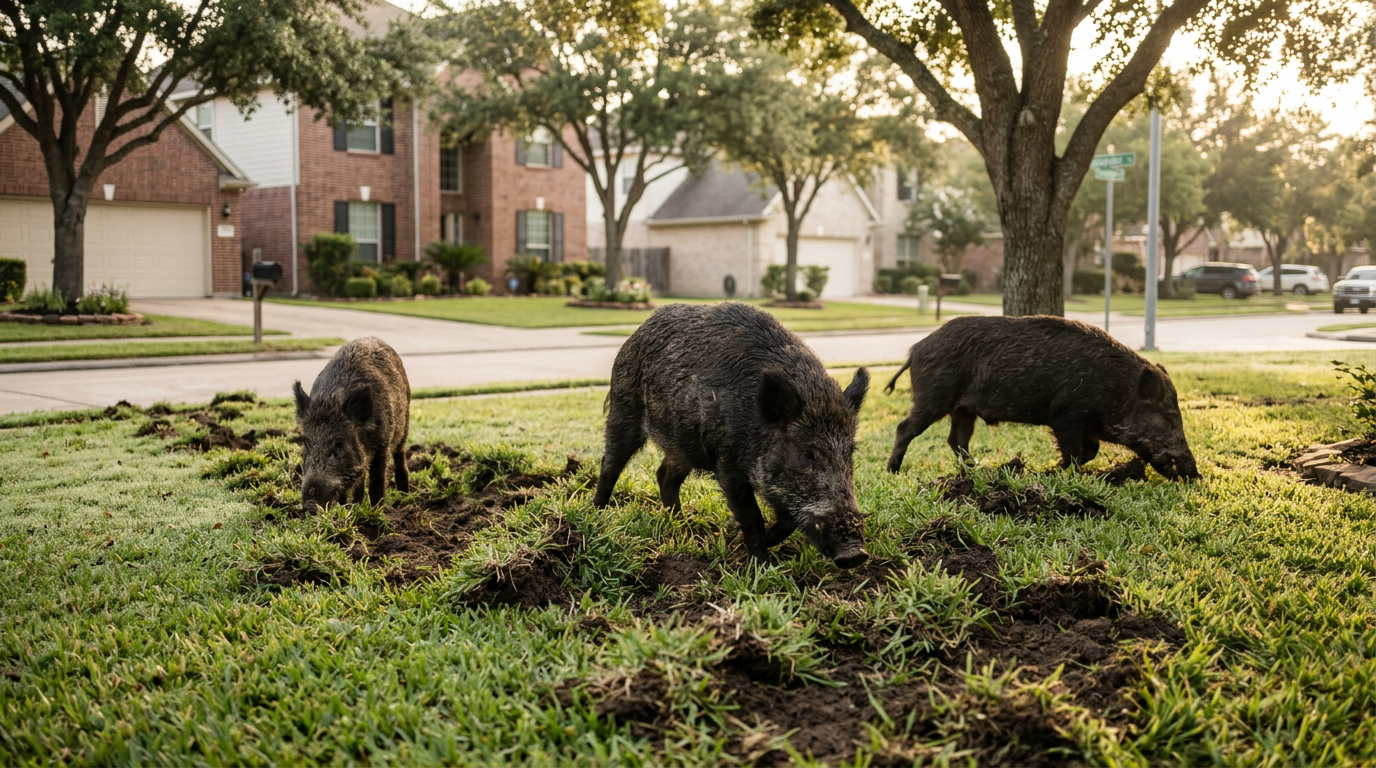
Texas is currently grappling with an unprecedented shift in the behavior and habitat of its massive feral hog population. Historically confined to rural brush country and agricultural fields, these invasive animals are increasingly infiltrating manicured suburban neighborhoods, golf courses, and public parks. This migration is driven by a combination of rapid human development and the hogs' inherent adaptability, leading to significant structural and aesthetic damage to residential properties. The animals, which can weigh several hundred pounds and travel in large family groups called sounders, have become a primary concern for local municipalities struggling to balance public safety with effective removal strategies. The history of feral hogs in Texas dates back to the 16th century when Spanish explorers first introduced domestic swine to the region. Over centuries, escaped livestock and intentional releases for hunting purposes created a hybridized population that is uniquely suited for the harsh Texas climate. Unlike native wildlife, these hogs have no natural predators in the suburban environment and possess a reproductive rate that allows a population to double in less than a year. Previous efforts by the state focused on rural eradication, but the current crisis in the suburbs represents a new frontier for wildlife officials and homeowners alike.
Texas relevance
Texas remains the epicenter of the feral hog crisis in the United States, hosting an estimated population of nearly three million animals. Cities across the state, from the Houston suburbs to the Dallas-Fort Worth Metroplex and the Austin Hill Country, are reporting a sharp rise in domestic encounters. The fiscal impact on the Texas economy is staggering, with historical estimates placing agricultural damage at over $50 million annually; however, that number is ballooning as high-value suburban landscapes and infrastructure are now being targeted. For Texas residents, this is not just an environmental issue but a direct threat to property values and public safety in areas once thought to be insulated from wild animal interference.
The Biological Advantage of Invasive Swine
Feral hogs are often described as biological machines designed for survival. Their success in the Texas suburbs is rooted in their versatile diet and incredible reproductive capacity. A single sow can have two litters per year, with each litter potentially consisting of four to twelve piglets. This means that even if a neighborhood successfully removes a large percentage of its local population, the remaining animals can replenish the sounder's numbers within a single breeding season.
Furthermore, these animals are highly intelligent and possess a keen sense of smell. They quickly learn to avoid common traps and can become nocturnal to minimize contact with humans. In suburban settings, they find easy meals in the form of grubs found under lush turfgrass, fallen fruit from ornamental trees, and even unsecured pet food or trash. This caloric abundance allows them to grow larger and healthier than their rural counterparts, making them even more difficult to manage physically.
The physical damage caused by their foraging is distinctive. Hogs use their powerful snouts to 'root' through soil, effectively acting like a plow that overturns large swaths of grass and earth. A single sounder can destroy an entire residential front lawn in just a few hours. This behavior does more than ruin aesthetics; it can damage underground sprinkler systems, compromise the integrity of fences, and create tripping hazards for children and pets.
The Suburban Migration Pattern
Infrastructure development in Texas has created a network of green corridors that hogs use to navigate between developed areas. Creeks, drainage ditches, and power line easements serve as highways for sounders to move from wooded areas into the heart of suburban communities. These routes provide both cover and easy access to water, which is essential for hogs that lack sweat glands and must cool themselves in mud or ponds.
As Texas cities expand, the perimeter of the 'Wildland-Urban Interface' grows. In regions like North Texas and the outskirts of San Antonio, many new housing developments are situated directly adjacent to land that was recently wild or agricultural. When the initial construction phase ends, the local hog populations often find the new irrigated landscapes to be more hospitable than the original dry brushland, leading to a permanent change in their territorial habits.
This shift is not temporary or seasonal. While droughts may push hogs closer to watered suburban lawns in search of moisture, many sounders are now permanent residents of the suburban fringe. They have become habituated to the sounds of traffic and leaf blowers, no longer fearing human activity as they once did. This loss of natural fear increases the likelihood of dangerous encounters on walking trails and in backyards.
Economic Costs and Property Value Concerns
While the agricultural impact of feral hogs is well-documented, the suburban economic toll is harder to quantify but no less significant. Homeowners in afflicted areas are often faced with thousands of dollars in landscape restoration costs that are rarely covered by standard homeowners' insurance policies. Repeated attacks by hogs can lead to a decrease in property appeal and potentially lower the resale value of homes in neighborhoods known for infestations.
Municipalities are also bearing the brunt of the costs. Public parks, athletic fields, and cemeteries often suffer extensive damage, requiring tax dollars for repairs and the hiring of professional animal controllers. In some Texas cities, the budget for feral hog mitigation has tripled over the last decade as local officials struggle to find permanent solutions to prevent the destruction of public assets.
The repair process itself is often a temporary fix. Laying new sod without addressing the underlying presence of the hogs simply provides a fresh food source for the sounder to return to the following night. This cycle of destruction and repair creates a financial drain on both individual families and community associations, leading to increased HOA dues and a general sense of frustration among taxpayers who feel the state should do more to intervene.
Legal and Safety Challenges for Homeowners
One of the primary obstacles to managing feral hogs in the suburbs is the conflict between state wildlife laws and local municipal ordinances. While Texas state law generally allows for the taking of feral hogs on private property without a hunting license under certain conditions, city laws often prohibit the discharge of firearms or the use of specific types of traps within city limits. This leaves homeowners with few options beyond hiring expensive professional trappers.
Safety concerns go beyond property damage. While feral hogs are not typically aggressive toward humans without provocation, a sow protecting her piglets or a cornered boar can be extremely dangerous. The risk to domestic pets is even higher; dogs that attempt to defend their territory from a hog can suffer life-threatening injuries from the hog's sharp tusks. There is also a significant concern regarding the spread of diseases.
Feral hogs are known carriers of at least 30 different diseases and nearly 40 types of parasites. These include pseudorabies, swine brucellosis, and tuberculosis. In a suburban setting, the proximity of hogs to domestic animals and human activity increases the risk of zoonotic disease transmission. Fecal contamination of local waterways and public spaces is another health concern that authorities are monitoring closely as these populations expand.
Technological Solutions and Future Outlook
As the crisis deepens, new technology is being deployed to combat suburban sounders. Smart traps that utilize cellular cameras and remote-controlled gates allow trappers to monitor a site from a smartphone and drop the gate only when the entire sounder is inside. This 'whole-sounder removal' is critical; if even one or two hogs escape, they become 'trap-shy' and significantly harder to catch in the future, passing that knowledge on to their offspring.
Research is also ongoing regarding oral contraceptives and toxic baits specifically designed for feral hogs. However, these methods face significant regulatory hurdles due to the risk of secondary poisoning to native Texas wildlife or domestic pets. Because hogs are found in so many different environments, creating a one-size-fits-all baits is scientifically challenging and socially controversial.
The future of feral hog management in Texas neighborhoods will likely require a multi-faceted approach involving public education, modified landscaping practices, and regional cooperation between neighboring cities. Residents are being encouraged to avoid over-watering their lawns and to use fencing that is reinforced at the base to deter rooting. Ultimately, the 'hog problem' is no longer just a rural grievance; it is a permanent feature of the Texas suburban landscape that requires a permanent and aggressive management strategy.
Analysis
Opinion: The invasion of Texas suburbs by feral hogs is a direct consequence of the state's explosive population growth and the resulting loss of natural buffer zones. As commercial and residential developers clear-cut land that once served as hog habitats, the animals are not retreating into deeper wilderness; instead, they are adapting to the abundant food and water sources provided by suburban irrigation systems and decorative gardens. The current patchwork of city ordinances often prevents residents from using traditional removal methods like firearms or large-scale traps, creating 'safe zones' for the hogs to flourish. Without a more aggressive, state-coordinated effort that overrides local municipal restrictions, the demographic shift of the feral hog population will likely continue until suburban infestations become as common as sightings of deer or raccoons.
Source attribution
This story was reported using a public release from the Texas Wildlife Stories (Google News). Keep TX Red rewrote the coverage independently and links to the official statement for verification.
Frequently Asked Questions
- Can I shoot a feral hog in my backyard if I live in a Texas suburb?
- While Texas state law is generally permissive regarding the hunting of feral hogs, most incorporated cities have ordinances that strictly prohibit the discharge of firearms within city limits. Additionally, many communities have rules against using bows or crossbows. You should check your specific municipal codes and HOA regulations before attempting any lethal removal. In most cases, hiring a professional licensed trapper is the recommended legal route.
- What attractants should I remove from my yard to prevent hogs?
- Hogs are primarily attracted to moisture and easy food. You should avoid over-watering your lawn, as moist soil makes it easier for hogs to root for grubs. Ensure that bird feeders do not spill excess seeds on the ground, secure all trash cans with locking lids, and never leave pet food outside overnight. If you have fruit trees, pick up fallen fruit immediately to avoid creating a natural bait station for a sounder.
- Does homeowner's insurance cover damage caused by feral hogs?
- In most cases, standard homeowners' insurance policies do not cover damage caused by birds, rodents, or insects, and this often extends to wild animals like feral hogs. Damage is typically considered a maintenance issue or an 'act of nature' that falls outside of covered perils. However, you should review your specific policy or speak with your agent to see if you have any specific riders for landscape or structural damage caused by wildlife.
Official Sources
Take the next step
Browse the Newsroom →Read more about Keep Texas Red → Our full guide to what Keep Texas Red means and why Texans support it.
Related Articles
Get Texas updates delivered weekly.
Independent Texas reporting on politics, policy, and daily life. One email a week. Unsubscribe anytime.
Keep TX Red Newsroom
The Keep Texas Red Editorial Staff produces nonpartisan explainers, policy breakdowns, and educational resources to help Texans understand how their government works. All content is reviewed for accuracy and updated regularly.
About Keep TX Red →