North Texas Farmers and Suburban Stakeholders Confront Escalating Feral Hog Population Crisis
Texas faces a massive invasive hog problem, with North Texas communities seeing significant damage to land, property, and local agricultural resources.
Editorial disclaimer: Opinions and analysis on Keep TX Red are editorial content — not statements of fact. See our editorial standards.
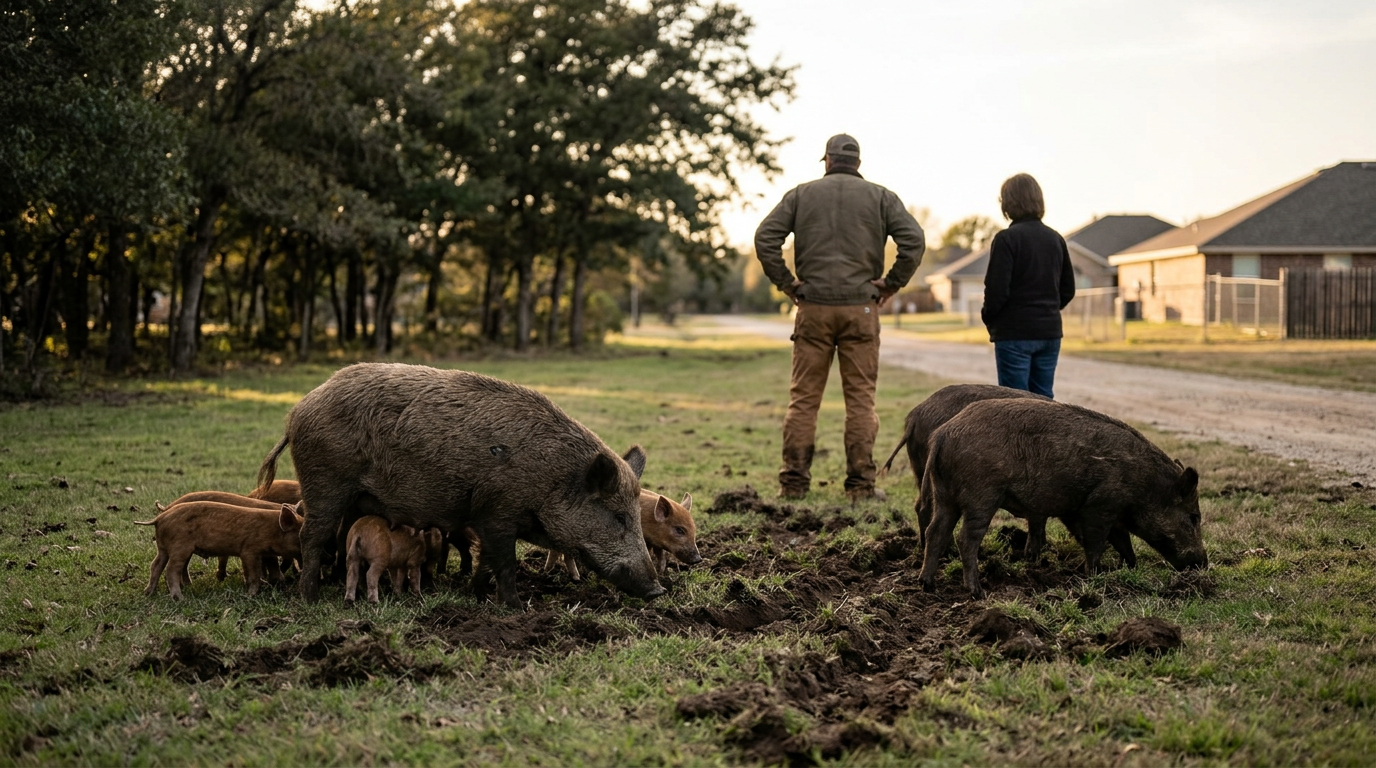
Recent environmental data and local reporting indicate that North Texas has become a primary battleground in the state's ongoing struggle against the invasive feral hog population. These animals, which were originally brought to the Americas by European explorers in the 1500s, have evolved into a resilient and highly reproductive force that threatens the ecological balance of the region. Historically, Texas has managed wild pig populations through varied hunting regulations, but the sheer volume of the current population has overwhelmed traditional methods, leading to a surge in sightings in suburban neighborhoods. In North Texas, specifically within the expanding corridors of the Dallas-Fort Worth Metroplex, the animals are no longer confined to rural brush; they are increasingly entering manicured residential lawns, golf courses, and municipal parks. This shift represents a transition from a rural agricultural annoyance to a high-cost public safety and property maintenance crisis that affects millions of residents.
Texas relevance
Texas is home to at least 2.6 million feral hogs, accounting for approximately half of the total population found in the United States. In North Texas, counties such as Tarrant, Denton, and Collin are seeing the direct impact of this invasion as urban sprawl pushes human developments closer to the natural habitats these animals have claimed. The relevance to Texans is primarily financial and safety-oriented, with the state's agricultural industry suffering an estimated $52 million in annual losses due to these pests. Beyond the farm, North Texas homeowners are frequently spending thousands of dollars to repair landscaping and fencing destroyed in a single night of 'rooting' by a sounder of hogs. Furthermore, the risk of vehicle collisions with these large animals on North Texas highways has become a pressing concern for the Texas Department of Transportation and local law enforcement agencies.
The Biological Explosion of Feral Swine
One of the primary reasons North Texas is struggling to contain the feral hog population is the biological resilience of the species. A single female hog can begin breeding as early as six months of age and is capable of producing two litters per year. With average litter sizes ranging from four to six piglets, and sometimes as many as a dozen, the population can grow by nearly 20% annually even if a significant portion of the sounder is removed via hunting.
In the lush environments found near the Trinity River and the various lakes of North Texas, these animals find an abundance of food and water. They are opportunistic omnivores, meaning they consume everything from acorns and roots to small livestock and ground-nesting birds. This lack of dietary specialization allows them to thrive in almost any environment, from the deep woods of East Texas to the suburban fringes of Plano and Frisco.
Economic Destruction and Agricultural Impact
The financial burden placed on the North Texas economy by feral hogs is multifaceted. Farmers report destroyed crops, particularly corn and grain sorghum, which are high-value exports for the regional economy. The 'rooting' behavior of the pigs, where they use their snouts to dig deep into the soil for morsels, ruins the integrity of the land, making it difficult for heavy machinery to navigate fields without breaking axles or damaging tilling equipment.
Beyond crops, the hogs are a threat to the Texas livestock industry. They compete with cattle for forage and have been known to prey on newborn calves and lambs. Additionally, they are carriers of various diseases, including pseudorabies and swine brucellosis, which pose a potential bio-security risk to commercial pork operations in the state. The cost of labor to repair damaged fences and contaminated water sources adds a significant overhead to already thin agricultural margins.
The Suburban Encroachment Problem
In recent years, the narrative of the feral hog has shifted to include urban and suburban residents of North Texas. As more housing developments appear in areas like Prosper, Celina, and McKinney, the natural corridors used by wildlife are being squeezed. Hogs are highly intelligent and have learned that suburban neighborhoods offer a ' buffet' of irrigated lawns, gardens, and pet food left outdoors.
Homeowners associations (HOAs) across the Metroplex are now forced to allocate portions of their budgets to hog mitigation. This includes installing reinforced fencing and hiring professional trappers. The presence of these animals in residential areas also poses a physical threat to residents and pets. While hogs generally avoid human contact, a protective sow or a cornered boar can be extremely aggressive, weighing up to 300 pounds and possessing sharp tusks that can cause severe injury.
Water Quality and Environmental Degradation
Feral hogs are not just a nuisance to property; they are a significant threat to the Texas water supply. Their behavior includes wallowing in riparian areas—banks of creeks, streams, and ponds—to cool their bodies, as they lack sweat glands. This activity leads to increased erosion and sedimentation, which clogs the waterways that feed into North Texas reservoirs.
Furthermore, the waste produced by these animals contributes to E. coli contamination in local watersheds. Environmental studies in North Texas have frequently linked high bacterial counts in streams to the presence of large feral hog populations upstream. This necessitates more expensive water treatment processes for municipal water districts and can lead to the closure of public swimming and fishing areas during peak summer months.
State Response and Legislative Hurdles
The Texas Department of Agriculture and the Texas Parks and Wildlife Department have collaborated on various programs to incentivize hog removal. These include grant programs for county-wide trapping efforts and the support of the 'Hog Out' County Grants program. However, many experts argue that these efforts are small 'band-aids' on a massive systemic wound. The difficulty lies in the fact that 95% of Texas land is privately owned, making a coordinated state-wide sweep nearly impossible.
Legislative efforts have focused on deregulation, such as allowing the use of silencers and night-vision equipment for hog hunting. While this allows for more effective night hunting, it has not significantly moved the needle on population numbers. There is an ongoing debate in the Texas Legislature regarding the use of toxicant-laced baits, which some argue is the only way to achieve mass reduction, while others fear the collateral damage to native wildlife such as deer and birds.
Innovative Trapping and Monitoring Technology
To combat the intelligence of the species, North Texas trappers are increasingly turning to high-tech solutions. Smart traps equipped with cellular cameras and remote-controlled gates allow trappers to monitor a sounder in real-time. Instead of catching one or two pigs, these traps enable the capture of the entire group at once, which is essential because any 'educated' survivors will learn to avoid traps in the future.
Some North Texas municipalities are also exploring the use of drones to track hog movement patterns across large, undeveloped tracts of land. By identifying where the hogs spend their daylight hours, officials can more effectively direct trapping resources to the source rather than reacting to damage after the fact. This proactive approach is becoming the gold standard for integrated pest management in urban-fringe counties.
Future Outlook for North Texas Communities
The outlook for North Texas regarding feral hogs remains challenging. Population models suggest that 66% to 70% of the current population must be removed every year just to keep the numbers stable. Currently, removal rates are estimated to be far lower than that. This means that property owners and local governments must prepare for a long-term struggle that involves constant vigilance and recurring expenses.
Moving forward, community cooperation will be vital. When one homeowner removes hogs but their neighbor does not, the problem simply shifts across the fence line. Regional coalitions of landowners, municipal leaders, and state agencies will need to create 'no-hog zones' through persistent, large-scale trapping and habitat management. For North Texans, the feral hog is no longer a distant rural curiosity but a permanent fixture of the regional landscape that requires a permanent management strategy.
Analysis
The feral hog crisis in Texas is a case study in the unintended consequences of ecological mismanagement and the limits of state-level intervention. While the Texas Legislature has eased restrictions on hunting—including the 2019 decision to allow hunting without a license on private property—these measures have largely failed to curb the population's exponential growth. It is our view that the state may need to move toward more aggressive, technology-driven eradication methods, such as large-scale trapping and the exploration of contraceptive baiting, provided these methods do not harm native species. The intersection of property rights and public nuisance law is becoming increasingly blurred as neighbors disagree on how to manage hogs that cross property lines. Without a unified, statewide strategic plan that moves beyond recreational hunting, North Texas will likely see its infrastructure and private property values continue to erode under the pressure of this invasive species.
Source attribution
This story was reported using a public release from the Texas Wildlife Stories (Google News). Keep TX Red rewrote the coverage independently and links to the official statement for verification.
Frequently Asked Questions
- Do I need a hunting license to kill feral hogs on my own land in Texas?
- No. As of 2019, Texas law allows residents and non-residents to hunt feral hogs on private property with the landowner's consent without a hunting license. This change was implemented specifically to encourage more aggressive population control.
- Why can't the state just poison the hogs to get rid of them?
- While toxicants have been explored, there are significant concerns regarding the safety of other wildlife. Specifically, there is fear that 'non-target' species like white-tailed deer or bald eagles could consume the bait or the carcasses, leading to widespread environmental damage. Research into hog-specific delivery systems is ongoing.
- Are feral hogs dangerous to humans and pets in North Texas?
- Yes, they can be. While they typically avoid humans, they are large, powerful animals that can be aggressive if they feel cornered or if a sow is protecting her piglets. They also carry numerous diseases and parasites that can be transmitted to domestic dogs and livestock.
Official Sources
Take the next step
Browse the Newsroom →Read more about Keep Texas Red → Our full guide to what Keep Texas Red means and why Texans support it.
Related Articles
Get Texas updates delivered weekly.
Independent Texas reporting on politics, policy, and daily life. One email a week. Unsubscribe anytime.
Keep TX Red Newsroom
The Keep Texas Red Editorial Staff produces nonpartisan explainers, policy breakdowns, and educational resources to help Texans understand how their government works. All content is reviewed for accuracy and updated regularly.
About Keep TX Red →