Suburban Siege: Invasive Feral Hogs Encroach on Texas Resident Communities
Texas neighborhoods face a growing crisis as invasive feral hogs move into urban areas, causing property damage and safety concerns for local residents.
Editorial disclaimer: Opinions and analysis on Keep TX Red are editorial content — not statements of fact. See our editorial standards.
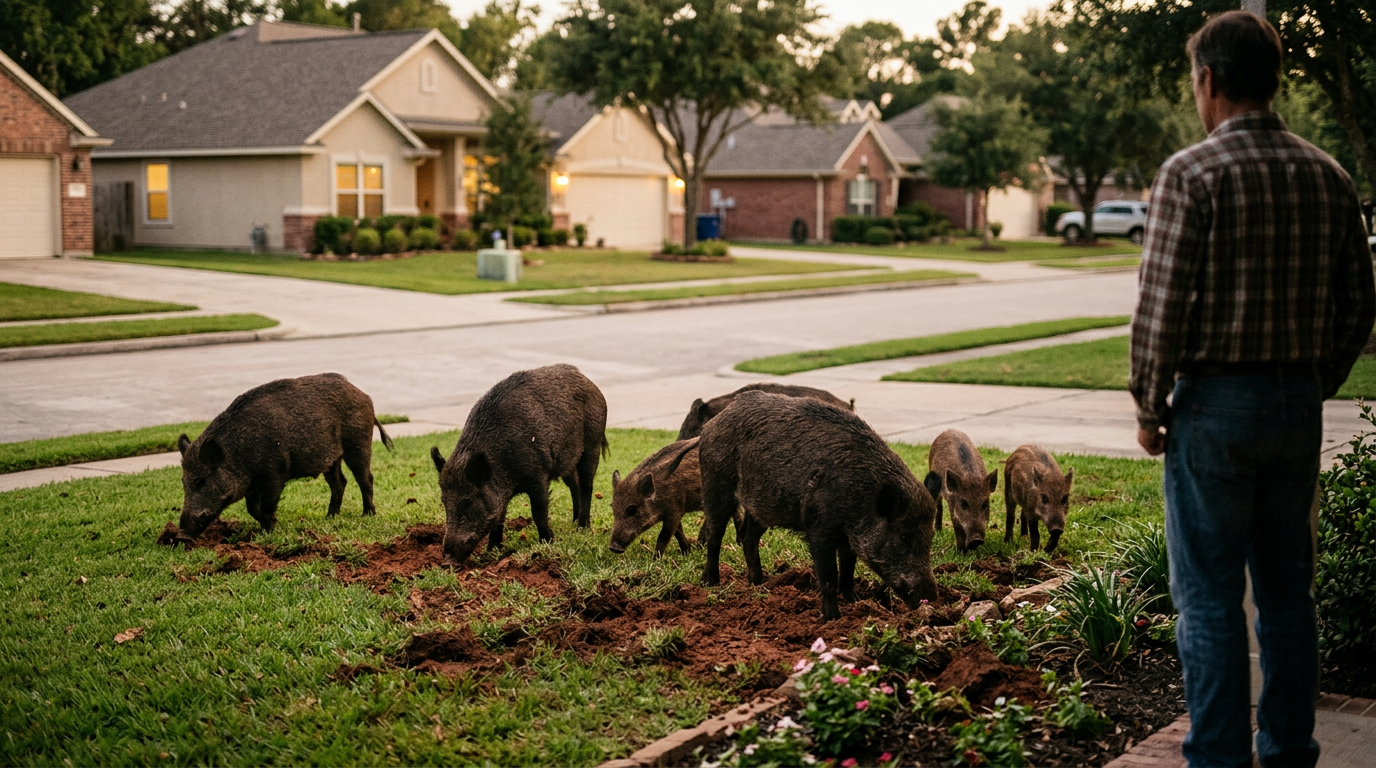
The ongoing battle between invasive wildlife and human development has reached a boiling point in the Lone Star State as feral hogs increasingly infiltrate quiet suburban neighborhoods. While these animals have long been a plague for rural farmers and ranchers, recent reports indicate a significant shift in their behavior, with sounders—groups of hogs—venturing into manicured lawns and parks. Residents across multiple Texas municipalities are now reporting destroyed landscaping, uprooted gardens, and direct encounters with these aggressive animals. This surge in urban activity marks a new chapter in a long-standing environmental crisis, forcing local leaders to reconsider how the state manages a species that seems to thrive despite aggressive hunting and trapping programs. Historical data suggests the population of these invasive swine has ballooned since their introduction centuries ago, but the modern expansion into the suburbs is driven by a combination of extreme weather conditions and the rapid expansion of human residential footprints into former timberland and scrub. The animals are attracted to the soft, irrigated soil of residential yards, which provides easy access to grubs and roots that are harder to find in the drought-stricken wild areas of the state.
Texas relevance
Texas is the undisputed epicentre of the feral hog crisis in the United States, hosting an estimated population of nearly 3 million pigs—roughly half of the entire national total. This isn't just a rural issue; it is a direct threat to the safety and property values of Texans in cities like San Antonio, Houston, and the Dallas-Fort Worth Metroplex. The economic impact in Texas alone exceeds hundreds of millions of dollars annually in agricultural damage, but the new cost is being borne by homeowners and municipal tax structures. Texas law has historically allowed for aggressive management, including the removal of hunting license requirements for hogs on private land, yet the problem continues to outpace legislative solutions. The presence of these animals in urban spaces creates a unique set of challenges because traditional control methods, like high-powered rifles, are often prohibited by city ordinances designed to keep residential areas safe. This policy conflict leaves many Texans feeling defenseless as their neighborhoods are literally torn apart overnight.
The Scale of the Urban Incursion
In recent months, the frequency of hog sightings in residential neighborhoods has skyrocketed. These are no longer isolated incidents of a lone pig wandering off a trail; homeowners are reporting large groups of thirty or more pigs moving through streets under the cover of darkness. The destruction is methodical. Because feral hogs possess a keen sense of smell, they can detect grubs and insects buried several inches beneath the surface of a lush, watered lawn. By the time the sun rises, residents often find their yards looking as if they have been tilled by heavy machinery.
The impact on property value is a growing concern for Texas homeowners' associations. Replacing several thousand square feet of sod is an expensive endeavor, especially when the predators are likely to return the following night. Furthermore, the risk of vehicle collisions has increased as sounders cross major thoroughfares and neighborhood boulevards. These animals can weigh up to 400 pounds, making a collision as dangerous as hitting a small deer or a motorcycle. City officials warn that as the hogs become more habituated to human presence, the likelihood of defensive aggression toward pets and residents increases.
Biological Advantages of the Species
To understand why Texas is struggling to contain this problem, one must look at the biological resilience of the feral hog. These animals are among the most prolific breeders in the mammal world. A single sow can have two litters a year, with each litter consisting of six to twelve piglets. Mathematically, wildlife officials estimate that Texans would need to kill roughly 70 percent of the population every year just to keep the numbers stable. At the current rate of removal, the population is actually growing, moving into any available niche—including golf courses and school playgrounds.
Beyond their reproductive capabilities, hogs are extremely intelligent. They are known to become 'trap shy,' learning to avoid cages after seeing other members of their group captured. This intelligence makes urban removal much more difficult than rural control. In a neighborhood setting, professionals must use silent traps and electronic gates, which are significantly more expensive than traditional methods. The hogs' ability to adapt to human schedules means they often feed in the middle of the night when activity is low, further obscuring the true extent of the infestation from casual observers.
Municipal Response and Regulatory Hurdles
Texas cities are currently grappling with a patchwork of ordinances that hinder effective hog control. While the Texas Parks and Wildlife Department (TPWD) manages state game laws, the discharge of firearms within city limits is strictly regulated by local codes. This means that even if a homeowner catches a hog in the act of destroying their property, they often cannot legally shoot it. The result is a reliance on commercial trappers, whose fees can quickly drain the resources of a small neighborhood or an HOA.
Some cities have begun to explore public-private partnerships to manage the pests. By hiring professional biologists and marksmen who use specialized equipment like thermal optics and suppressed rifles, cities can conduct removals safely in the dead of night. However, these programs are controversial among some activists and are often too costly for smaller municipalities to maintain year-round. This has led to a 'beggar-thy-neighbor' scenario where hogs are pushed from one town into the next because of a lack of a unified regional strategy.
Environmental and Health Concerns
The damage caused by feral hogs is not limited to aesthetic destruction of property. They pose a significant threat to local water quality. Hogs frequently wallow in creeks and drainage ditches found in suburban greenbelts. Their waste introduces E. coli and other pathogens into the water systems that flow through parks and recreation areas. For neighborhoods with shared ponds or those located near protected wetlands, the fecal contamination from a resident sounder can lead to closures and health warnings for residents.
Additionally, feral hogs are known carriers of more than 30 different diseases and nearly 40 species of parasites. This includes swine brucellosis and pseudorabies, which can be transmitted to domestic pets and livestock. As the hogs venture closer to backyards, the risk of a domestic dog or cat coming into contact with a diseased pig increases. The Texas Department of State Health Services has long advised against touching these animals without protection, but as they become neighborhood fixtures, the chance of accidental contact with children or pets becomes a legitimate public health hazard.
Long-Term Solutions for the Lone Star State
Looking forward, the solution to the urban hog crisis will likely require a multi-faceted approach involving state legislation and technological innovation. Some researchers are testing the use of contraceptive baits or species-specific toxins that would limit the hogs' ability to reproduce or kill them without harming other native wildlife. However, the regulatory approval for such methods is slow, and the effectiveness in an urban environment where other food sources are abundant remains to be seen.
Until such technological breakthroughs occur, the burden will fall on better urban planning and community cooperation. Experts suggest that residents can help by removing attractants, such as fallen fruit from trees and unsecured bird feeders. Fencing also remains a primary defense, though the cost of hog-proof fencing is significantly higher than standard wooden privacy fences. As more Texans move into suburban developments, the state must find a way to balance growth with the reality of an invasive species that is increasingly comfortable living side-by-side with humans.
Analysis
The intrusion of feral hogs into Texas neighborhoods represents a failure of current containment policies and highlights the delicate balance between rapid urban development and wildlife management. For years, the state has relied on a 'laissez-faire' approach to hog control on private land, but as these animals cross the threshold into dense residential areas, the burden is shifting from the individual to the municipality. Local city councils are now being forced to fund expensive trapping programs that were never part of their long-term budgets. There is a clear tension here: homeowners demand action, while city officials struggle to find safe, effective, and humane ways to dispatch the animals in populated corridors. Moving forward, we expect to see a push for state-level grants to help cities manage these 'urban sounders.' Without a coordinated regional effort, these highly intelligent animals will simply move from one suburban jurisdiction to another, staying one step ahead of the traps.
Source attribution
This story was reported using a public release from the Texas Wildlife Stories (Google News). Keep TX Red rewrote the coverage independently and links to the official statement for verification.
Frequently Asked Questions
- Why can't I just shoot a feral hog on my own property in a Texas city?
- While state law is very permissive regarding feral hogs on private land, most Texas municipalities have strict ordinances against the discharge of firearms or bows within city limits. Violating these local laws can lead to criminal charges, even if you are defending your property. It is best to contact a professional trapper or local animal control.
- Are feral hogs dangerous to humans and pets?
- Yes, they can be. While they usually avoid humans, feral hogs are powerful and unpredictable, especially if they feel cornered or have young piglets nearby. They have sharp tusks and can cause severe injury. Pets, particularly dogs, are at risk if they try to confront or chase a sounder.
- What should I do if I see a sounder of hogs in my neighborhood?
- Keep your distance and do not attempt to feed or move them. Report the sighting to your local animal control or HOAs. You should also ensure that food sources like pet bowls and trash cans are secured, as these attract hogs into residential yards.
Official Sources
Take the next step
Browse the Newsroom →Read more about Keep Texas Red → Our full guide to what Keep Texas Red means and why Texans support it.
Related Articles
Get Texas updates delivered weekly.
Independent Texas reporting on politics, policy, and daily life. One email a week. Unsubscribe anytime.
Keep TX Red Newsroom
The Keep Texas Red Editorial Staff produces nonpartisan explainers, policy breakdowns, and educational resources to help Texans understand how their government works. All content is reviewed for accuracy and updated regularly.
About Keep TX Red →