Wild Hog Incursion Hits Salado Creek as Porcine Population Surge Continues
Wild hog populations are expanding into Salado Creek, causing property damage and raising ecological concerns for San Antonio and Central Texas residents.
Editorial disclaimer: Opinions and analysis on Keep TX Red are editorial content — not statements of fact. See our editorial standards.
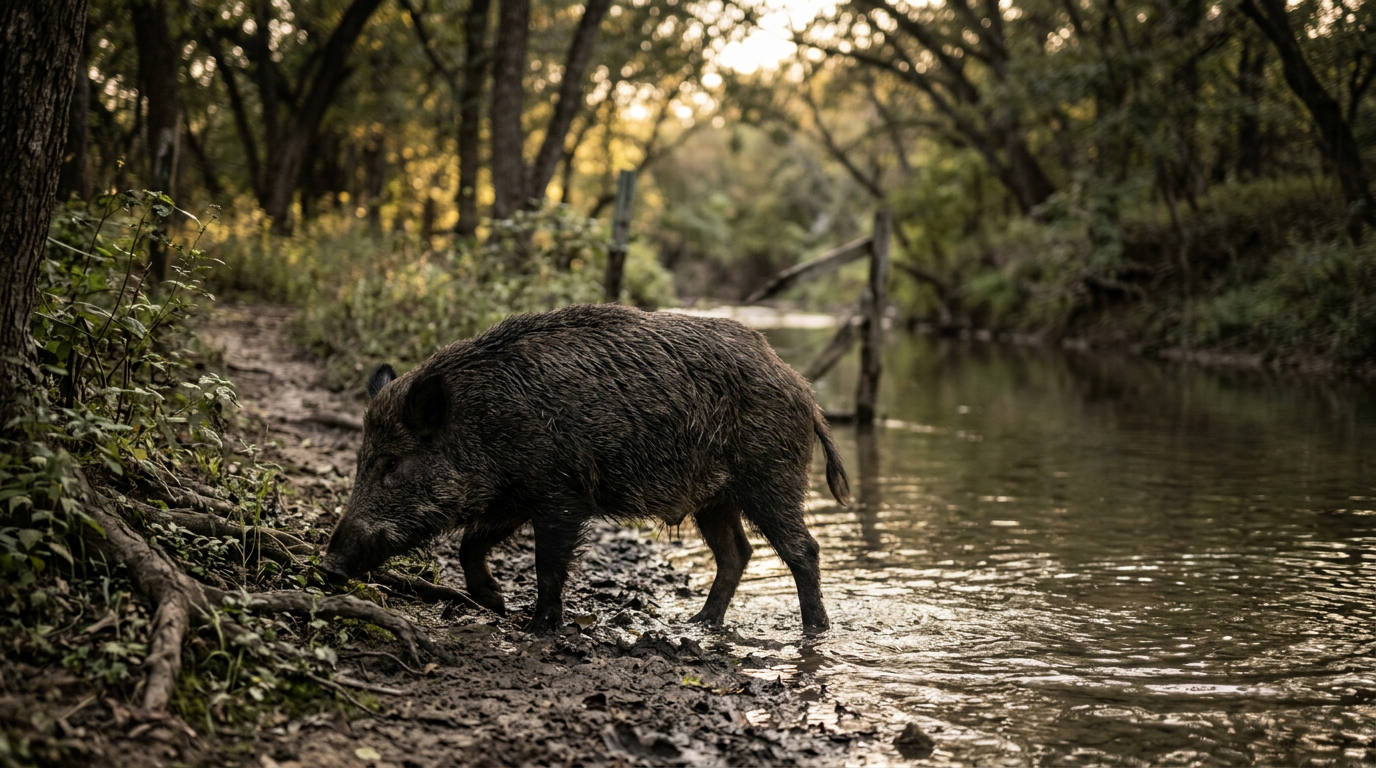
The wild hog crisis in Texas has reached a new threshold as sightings and significant property damage are now being reported along Salado Creek. Historically, these invasive animals have been a staple of rural life, but their transition into more suburban and urban-adjacent waterways signals a shift in the state's ecological battle. The prolific breeding habits of feral swine, combined with their lack of natural predators in the Lone Star State, have allowed populations to swell to an estimated nearly 3 million statewide. Recent reports from San Antonio-area residents indicate that the hogs are moving closer to neighborhoods, using creek beds as highways for transit into residential areas where food and water are plentiful. Texas has a long history of grappling with feral swine since they were first introduced by early explorers centuries ago. Over the decades, these animals have evolved into a highly resilient and intelligent threat to the local ecosystem. Previous attempts by the Texas Department of Agriculture and various wildlife agencies to curb their numbers through trapping and aerial hunting have met with limited success, as the hogs reproduce at a rate that requires a 70% annual cull just to keep the population stable. The encroachment into the Salado Creek area represents a significant expansion of their range in Bexar County, highlighting the failure of current containment strategies to keep the animals confined to rural pastures.
Texas relevance
This surge is of critical importance to Central Texas, particularly for the residents of San Antonio and those living along the Salado Creek Greenway. Feral hogs pose more than just a nuisance to homeowners; they are a direct threat to the regional water quality and the integrity of the Edwards Aquifer recharge zone. As these animals root near waterways, they disturb soil and introduce bacteria into the water supply, which can have cascading effects on municipal health standards. For the average Texan, this means increased costs for landscaping repair, potential vehicle collisions on local roads, and a higher risk of property damage that is rarely covered by standard insurance policies.
The Geographic Expansion of the Sounder
Feral hogs are known for their high mobility and adaptability, often traveling in family groups known as sounders. These groups utilize existing natural corridors like Salado Creek to safely navigate through developed areas. The creek provides dense cover, consistent water sources, and soft soil for rooting, making it an ideal staging ground for hogs to enter backyards and golf courses under the cover of night. This movement represents a tactical shift for the animals, which are increasingly comfortable living in the margins of human civilization.
Local wildlife experts note that as the urban footprint of San Antonio expands, it overlaps with the natural habitats these animals have occupied for years. However, instead of being pushed out by development, the hogs are adapting. They have discovered that suburban environments offer fewer threats and a wealth of calorie-dense resources, such as bird feeders, pet food left outdoors, and lush sod. This transition into Salado Creek is likely just the beginning of a broader trend where invasive wildlife becomes a permanent fixture of the suburban landscape.
Ecological and Infrastructure Damage
The damage caused by feral hogs is often described as 'rototilling,' where the animals use their powerful snouts to dig deep into the ground in search of tubers and grubs. In the context of Salado Creek, this activity destroys native vegetation that stabilizes the banks, leading to increased erosion and sedimentation. This can eventually alter the flow of the creek and damage the structural integrity of nearby bridges or trail systems maintained by the city. The loss of native flora also displaces indigenous species like Texas deer and ground-nesting birds.
Beyond the visual blight of torn-up landscapes, the presence of hogs brings significant biological risks. Feral swine are known carriers of numerous diseases, including swine brucellosis and pseudorabies, which can be transmitted to pets and livestock. Furthermore, their waste contributes to high levels of E. coli in public waterways. For a city like San Antonio that prides itself on its outdoor recreation and river-centric culture, the contamination of a major tributary like Salado Creek is an unacceptable public health risk.
Challenges in Urban Management
Managing wild hog populations in a rural setting involves tools like large-scale corral traps and even suppressed firearms, but these methods are difficult to implement in densely populated areas like those surrounding Salado Creek. Discharge of firearms is generally prohibited within city limits, and the presence of hikers, pets, and children makes the deployment of traditional snares or traps a liability nightmare for local authorities. This creates a 'safe zone' for the hogs where they can thrive without the pressure of hunting.
Municipalities are currently exploring more discreet methods of control, such as specialized gate traps that can be monitored remotely via cellular cameras. However, these programs are expensive and require significant manpower to manage. Without a dedicated funding stream from the state or county, many local parks departments are left to deal with the incursions on a reactive basis, essentially playing a game of 'whack-a-mole' as sounders move from one section of the creek to another.
Economic Impact on Property Owners
For residents in neighborhoods abutting the Salado Creek Greenway, a single night of hog activity can result in thousands of dollars in damages. A sounder can destroy an entire lawn, irrigation system, and expensive landscaping in just a few hours. Because these animals are considered an 'act of nature' or a wild invasive species, many homeowners find that their insurance policies do not provide coverage for the destruction. This leaves the financial burden squarely on the shoulders of the individual Texan.
In addition to direct property damage, the presence of hogs can negatively impact property values in affected areas. Prospective buyers are often wary of moving into neighborhoods where wild animals roam freely and cause visible damage to communal spaces. The economic ripple effect extends to the city as well, as more resources must be diverted from park maintenance and public works to repair the damage and implement mitigation strategies along the Greenway.
The Reproductive Cycle: A Losing Battle
The primary reason these animals are so difficult to eradicate is their sheer reproductive velocity. A female feral hog can become pregnant as early as six to eight months of age and can produce two litters a year, with each litter averaging four to six piglets. This exponential growth means that even if a local community manages to remove 50% of the hogs in Salado Creek, the population will likely return to its original size within a single year. The biological math is heavily stacked against human intervention.
To truly address the problem, experts argue that a regional approach is necessary rather than a city-by-city response. If San Antonio clears a section of the creek, more hogs will simply migrate in from neighboring Comal or Guadalupe counties. Texas has experimented with various 'hog bounties' and commercial meat processing to incentivize removal, but the volume of animals continues to outpace the demand. The Salado Creek situation is a localized symptom of a much larger, statewide epidemic.
Public Safety Risks and Human Interaction
While feral hogs are generally shy and prefer to avoid humans, they can become extremely aggressive if they feel cornered or if a sow perceives a threat to her piglets. As they move into popular recreational areas like Salado Creek, the potential for dangerous encounters with joggers, cyclists, and dog walkers increases. A full-grown hog can weigh over 200 pounds and possesses sharp tusks capable of inflicting severe injuries. This transforms a peaceful afternoon on the trail into a high-risk situation.
The risk is particularly high during the dawn and dusk hours when hogs are most active. Many residents are unaware of the proper protocol when encountering a hog—which is to maintain distance and seek higher ground or a sturdy structure. As the population grows, the city may be forced to install warning signage or temporarily close sections of the trail system to prevent attacks, further limiting the public's access to our natural spaces.
Analysis
The appearance of feral hogs in Salado Creek is a reminder that the invasive species problem is no longer just a 'farmer's issue.' It is an urban infrastructure and public safety concern. The state's current reliance on haphazard trapping and recreational hunting is clearly insufficient to manage a population of this scale. Moving forward, Texas lawmakers may need to consider more aggressive state-funded mitigation programs or legal changes that allow for more streamlined removal processes in suburban zones. The sheer numbers suggest that without a coordinated, large-scale intervention, the hogs will continue to treat Texas suburbs like an open buffet, leaving taxpayers to foot the bill for the environmental and structural cleanup.
Source attribution
This story was reported using a public release from the Texas Wildlife Stories (Google News). Keep TX Red rewrote the coverage independently and links to the official statement for verification.
Frequently Asked Questions
- What should I do if I see a wild hog on the Salado Creek trail?
- Maintain a safe distance and do not approach the animal, especially if it is with young offspring. Ensure your pets are on a leash. Slowly back away and report the sighting to the San Antonio Animal Care Services or the local parks department so they can track movements.
- Why can't we just hunt the hogs in suburban areas?
- Discharging firearms within city limits is illegal and poses a major safety risk to residents. Additionally, hunting can scatter the hogs, making them harder to trap collectively, which is generally considered a more effective population control method.
- Does homeowner's insurance cover hog damage?
- Typically, no. Most standard insurance policies classify damage from domestic animals or pests as maintenance issues, and wild animal damage is often excluded. It is important to check your specific policy, but most Texans pay for repairs out of pocket.
Official Sources
Take the next step
Browse the Newsroom →Read more about Keep Texas Red → Our full guide to what Keep Texas Red means and why Texans support it.
Related Articles
Get Texas updates delivered weekly.
Independent Texas reporting on politics, policy, and daily life. One email a week. Unsubscribe anytime.
Keep TX Red Newsroom
The Keep Texas Red Editorial Staff produces nonpartisan explainers, policy breakdowns, and educational resources to help Texans understand how their government works. All content is reviewed for accuracy and updated regularly.
About Keep TX Red →