Unveiling the Legacy: New Austin Documentary Explores the Hidden History of Jewish Women in the Lone Star State
A new documentary highlights the massive impact Jewish women had on Texas culture, politics, and infrastructure over the last two centuries.
Editorial disclaimer: Opinions and analysis on Keep TX Red are editorial content — not statements of fact. See our editorial standards.
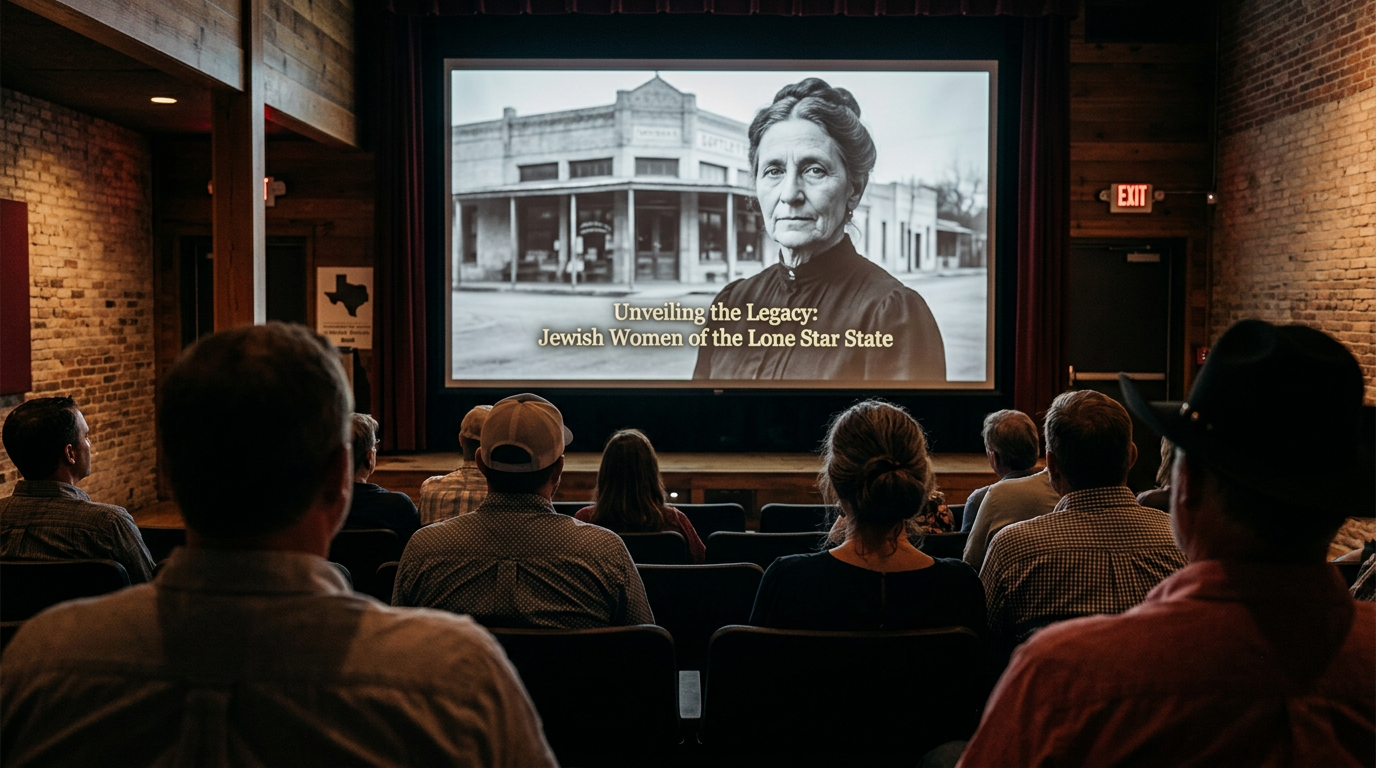
A groundbreaking new documentary has recently premiered, focusing on the often-overlooked contributions of Jewish women to the development of Texas. Historically, the narrative of the Texas frontier has been dominated by cowboys and oilmen, but this film shifts the lens toward the cultural and civic leadership provided by Jewish women from the mid-19th century to the modern era. These figures were instrumental in establishing the state's earliest social safety nets, including hospitals, libraries, and charitable organizations that laid the groundwork for Texas's current infrastructure. The film utilizes a combination of archival footage, private family letters, and interviews with descendants to weave a complex tapestry of assimilation and preservation. It explores how these women maintained their cultural identity while fully embracing the unique spirit of Texas. This production adds to a growing body of work aimed at diversifying the historical record of the state, ensuring that the foundational work of minority communities is recognized as integral to the Texas story rather than peripheral to it. By highlighting specific family lineages and their migration patterns from Europe to the Texas coast and rural interiors, the documentary provides a geographical map of influence that spans from Galveston to the Permian Basin.
Texas relevance
Texas has home to a Jewish population since its days as a Republic, with the historical port of Galveston serving as a primary entry point for many families. This documentary specifically highlights locations like Austin, Dallas, and El Paso, where Jewish women founded many of the first cultural institutions that still exist today. For Texans, this film serves as a vital reminder of the pluralistic roots of the state's rugged independence. The heritage discussed in the film is not just an ethnic history but a core component of the broader Texas identity, influencing everything from the state's retail giant, Neiman Marcus, to its legal and legislative milestones. Understanding this history helps modern residents appreciate the collaborative effort required to build the state's most resilient communities.
The Galveston Movement and Early Arrivals
The documentary begins by tracing the influx of Jewish immigrants through the Port of Galveston, often referred to as the 'Ellis Island of the South.' While many histories focus on the men who found work in the shipping and cotton industries, the film emphasizes the women who established the domestic and communal stability necessary for these families to thrive in a harsh, unfamiliar climate. These women were responsible for the creation of the first Hebrew Benevolent Societies, which provided aid not just to Jewish newcomers but to any Texan in need during times of yellow fever outbreaks and natural disasters.
The narrative details the transition from the coastal regions to the interior of Texas, where families set up general stores that became the hearts of small rural towns. In these settings, Jewish women often served as the cultural emissaries, introducing European literature, music, and social customs to the Texas frontier. Their ability to adapt their traditions to the local environment—such as keeping kosher while using local ingredients—represents the early stages of a unique Texas-Jewish hybrid culture that still persists in many family traditions across the state today.
Civic Leadership and the Birth of Social Services
As the state modernized, the film illustrates how Jewish women moved from domestic leadership into the public square. In major hubs like Dallas and Houston, they were the driving forces behind the establishment of many non-sectarian hospitals and orphanages. The documentary points out that these institutions were often open to all Texans regardless of race or religion, demonstrating a forward-thinking approach to civic duty that predated many government-led social programs. Their work in the late 19th and early 20th centuries established a model for private-public partnerships that remains a hallmark of Texas governance.
One of the film's most compelling segments focuses on the 'Council of Jewish Women' and their activism in the realm of public health and education. These groups lobbied the Texas Legislature for improved sanitation in schools and better working conditions in factories. By leveraging their social standing and organizational skills, these women became some of the most effective, albeit unofficial, lobbyists in Austin. They were instrumental in the movement for women's suffrage in Texas, recognizing that legal standing was the only way to safeguard the social reforms they had worked so hard to implement.
Retail Empires and Economic Stability
Beyond social work, the documentary highlights the economic impact Jewish women had through the development of iconic Texas retail brands. While names like Neiman and Marcus are household words, the film goes behind the scenes to show the influence of women in the curation of style and the management of high-stakes business operations. These women helped transform Texas from a rugged agricultural landscape into a center for fashion and commerce, attracting international attention to cities like Dallas. Their business acumen provided the economic engine that funded much of the philanthropy described earlier in the film.
This economic success was not limited to the big cities. The film profiles several 'merchant princesses' in smaller towns who managed family businesses while their husbands traveled as peddlers or worked in other industries. These women were the accountants, the inventory managers, and the public faces of their businesses. Their presence in the local Chamber of Commerce and other business guilds helped integrate the Jewish community into the fabric of the Texas middle class, fostering an environment of religious tolerance through shared economic interests.
Preserving the Narrative for Future Generations
The climax of the documentary addresses the challenge of modern preservation and the fear that these stories might be lost as older generations pass away. The filmmakers interview current Texas leaders who trace their lineage back to these pioneering women, emphasizing that the legacy of service is a multi-generational commitment. The film acts as a call to action for local historical societies to digitize records and save the personal correspondences that provide the most authentic look into the daily lives of these historical figures.
The production also features a segment on the Texas Jewish Historical Society, showcasing the work currently being done to mark historical sites related to Jewish female pioneers. From small synagogues in the Hill Country to grand homes in the historic districts of Houston, these physical landmarks serve as the remaining tangible links to the past. The documentary argues that without a concerted effort to document these histories, a vital part of the Texas identity will remain incomplete, leaving a gap in the understanding of how the 'modern' Texas was actually constructed.
Educational Impact and the Future of Texas History
The film is expected to be integrated into various educational curricula across the state, providing social studies teachers with a new resource to discuss diversity and communal development. The documentary’s creators express hope that by showing the specific challenges and triumphs of Jewish women, students will gain a deeper appreciation for the complexity of Texas's social evolution. It moves the conversation beyond the simplified 'Alamo and Oil' tropes and introduces a nuanced perspective on religious minority experiences in the South.
Finally, the documentary looks toward the future, asking how the current generation of Jewish women in Texas is continuing the work started by their ancestors. From modern tech entrepreneurs in Austin to political leaders in the State Capitol, the film concludes that the influence of this community is not just a relic of the past but a living, breathing force. The documentary serves as a bridge between the 19th-century pioneers and the 21st-century leaders, proving that the roots of Texas heritage are deeper and more diverse than many residents realize.
Analysis
The release of this film marks a significant shift in how Texas history is being curated for the 21st century. By focusing on the intersection of faith and gender in a region traditionally viewed through a hyper-masculine lens, the creators are reclaiming a forgotten segment of the state's soul. It is particularly noteworthy that these women often acted as the primary bridge-builders between their small communities and the broader Texas public, utilizing social clubs and philanthropic endeavors to gain a foothold in leadership at a time when they were legally barred from many professional avenues. This documentary isn't just a niche cultural piece; it is a study of how soft power and community organization can steer the direction of an entire state's development for generations.
Source attribution
This story was reported using a public release from the Texas History Stories (Google News). Keep TX Red rewrote the coverage independently and links to the official statement for verification.
Frequently Asked Questions
- Where can I watch this documentary about Jewish women in Texas?
- The film is currently circulating through various Texas film festivals and is expected to have screenings at major cultural institutions in Austin, Dallas, and Houston. Some segments may be made available through PBS-affiliated stations in Texas.
- Which Texas cities are specifically featured in the film?
- The documentary traces history across the state, with significant focus on Galveston as the entry point, followed by Austin, Dallas, El Paso, and several smaller rural communities where Jewish families established essential businesses.
- Was the Jewish community a large part of early Texas history?
- Yes, while numerically small, the community had a disproportionately large impact on the state's early civic and economic life. Texas had a Jewish population as early as the Texas Revolution, and many prominent families have been in the state for over 150 years.
Official Sources
Take the next step
Browse the Newsroom →Read more about Keep Texas Red → Our full guide to what Keep Texas Red means and why Texans support it.
Related Articles


Get Texas updates delivered weekly.
Independent Texas reporting on politics, policy, and daily life. One email a week. Unsubscribe anytime.
Keep TX Red Newsroom
The Keep Texas Red Editorial Staff produces nonpartisan explainers, policy breakdowns, and educational resources to help Texans understand how their government works. All content is reviewed for accuracy and updated regularly.
About Keep TX Red →