Texas Emergency Alert Test Scheduled for Mobile Devices Statewide Today
The Texas Division of Emergency Management is conducting a live test of the wireless emergency alert system to ensure statewide readiness.
Editorial disclaimer: Opinions and analysis on Keep TX Red are editorial content — not statements of fact. See our editorial standards.
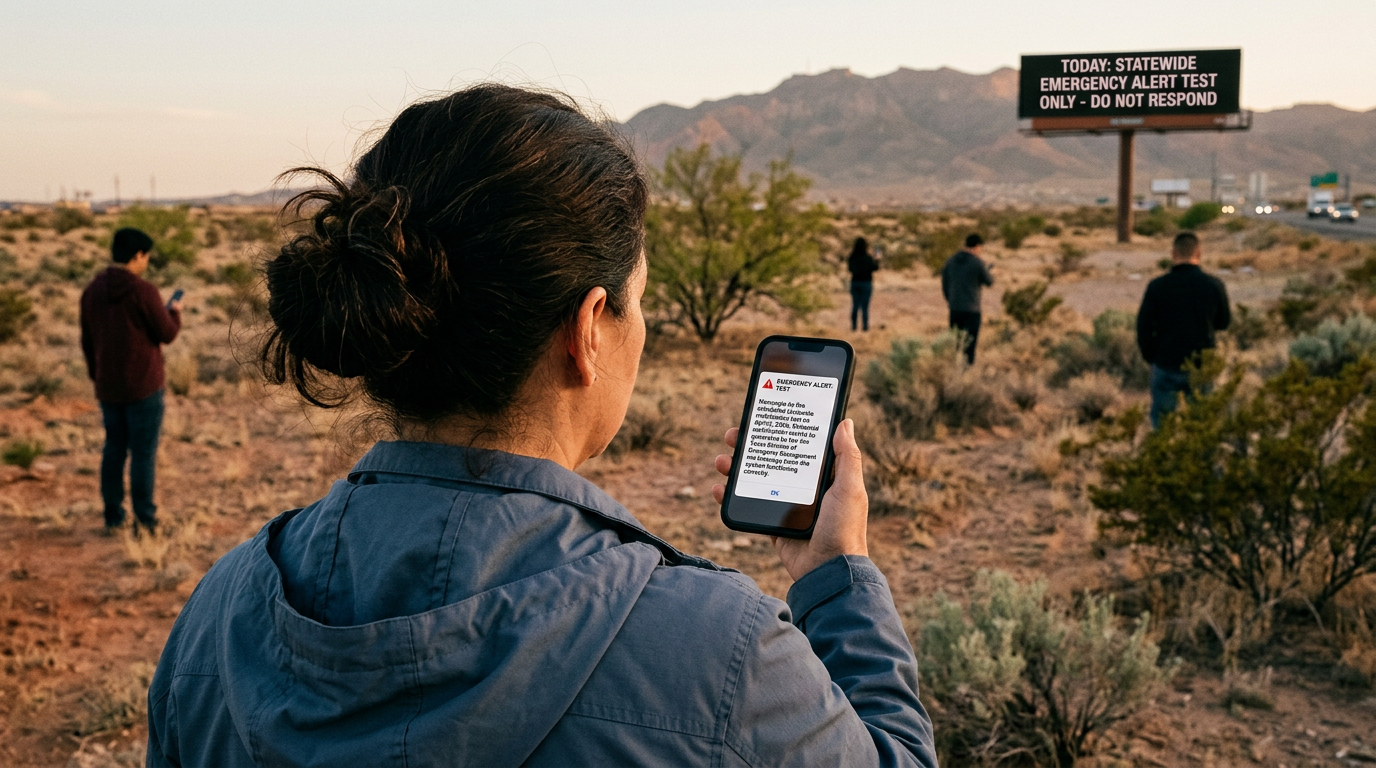
On April 2, 2026, residents throughout the State of Texas will receive a coordinated emergency notification on their mobile devices as part of a statewide system check. The Texas Division of Emergency Management (TDEM) is spearheading this effort to verify the functional capabilities of the Wireless Emergency Alerts (WEA) infrastructure. This scheduled broadcast is a routine but essential component of state safety protocols, designed to ensure that the communication pathway between government agencies and the public remains robust during actual crises. Throughout the day, cellular users can expect a distinctive tone and vibration accompanied by a text-based message identifying the transmission as a test. This specific event follows a long history of emergency communication evolution in Texas, where geography and weather patterns necessitate a high degree of technological readiness. Historically, these systems were primarily broadcast through television and radio, known as the Emergency Broadcast System. However, as mobile technology became the primary source of information for the majority of the population, the emphasis shifted toward cellular integration. Texas has previously utilized these pathways for localized warnings concerning flash floods, tornadoes, and missing person reports, making these test windows vital for technical calibration across different service providers and hardware types.
Texas relevance
As the second-largest state by population and landmass, Texas faces a unique set of logistical challenges when it comes to mass communication. From the coastal regions prone to hurricanes to the central plains of Tornado Alley, the ability for the Texas Division of Emergency Management to reach millions of citizens simultaneously is a matter of public safety. This test ensures that every cellular tower from El Paso to Beaumont is correctly relaying the emergency signals required to save lives during real-world threats. For Texans, these alerts are the first line of defense against rapidly changing environmental hazards and public safety emergencies.
The Technology Behind Wireless Emergency Alerts
The Wireless Emergency Alerts system operates differently than standard text messages. While a typical SMS relies on a point-to-point delivery method that can be delayed by network congestion, the WEA system uses a broadcast-like technology. This allows authorities to send a message to every compatible device within a specific geographic area simultaneously without being affected by heavy traffic on cellular networks.
To facilitate this, the Texas Division of Emergency Management coordinates with wireless carriers. When an alert is triggered, it is sent to the cellular towers in the targeted region. Those towers then broadcast the signal to every mobile device currently within their range. This ensures that even visitors traveling through Texas will receive pertinent safety information specific to their immediate physical location.
The system is designed to bypass 'Do Not Disturb' settings and other silencers in many instances, although users have some control over certain categories of alerts in their device settings. However, designated 'Presidential' or high-level national and state alerts are typically mandatory. Today’s test serves to confirm that these priority overrides are functioning as intended across the diverse array of mobile operating systems used by the public.
Why Statewide Testing Is Necessary
Regular testing is common practice for emergency systems to identify 'dead zones' or technical glitches before a real disaster strikes. In a state as vast as Texas, software updates from phone manufacturers or hardware upgrades at cell sites can occasionally create unforeseen compatibility issues. By conducting a live statewide test, TDEM can collect data on where the system performed well and where improvements might be needed in the infrastructure.
These tests also serve as a public educational tool. For many newer residents who have recently moved to Texas, the specific sound and look of a state emergency alert may be unfamiliar. Experiencing the alert in a controlled, non-emergency environment helps taxpayers recognize the signal, reducing panic and ensuring they know to pay attention when a legitimate warning is issued in the future.
Furthermore, the coordination required between state agencies and federal partners like FEMA and the FCC is extensive. A successful test confirms that the digital handshake between these various levels of government is seamless. This inter-agency cooperation is the backbone of the Integrated Public Alert and Warning System, which Texas utilizes to protect its communities 24 hours a day.
What Residents Should Expect on Their Devices
When the alert is triggered today, mobile phones will emit a loud, piercing tone that is distinct from standard ringtones or notification sounds. This sound is accompanied by a unique vibration pattern designed to grab the user's attention, even if the device is in a pocket or bag. On the screen, a text window will appear with a heading such as 'State Test' or 'Emergency Alert' to clearly identify the nature of the message.
The text of the message will explicitly state that the broadcast is only a test and that no action is required from the public. It is important for residents to simply acknowledge the message and continue with their daily activities. There is no need to call 911 or local police departments to report the alert, as doing so could overwhelm emergency phone lines that must remain open for actual 911 calls.
In some cases, individuals with multiple devices, such as personal and work phones, may receive the alert at slightly different times depending on their service provider. Additionally, tablets with cellular connectivity and some smartwatches may also display the notification. This multi-device reach is a primary goal of the Texas emergency notification strategy.
Managing Public Response and Expectations
The Texas Division of Emergency Management often announces these tests in advance to minimize public alarm. In recent years, unexpected alerts have occasionally caused momentary confusion, leading to high volumes of social media inquiries. By providing clear notice, the state ensures that the public remains informed and calm while the technical evaluation takes place.
It is also a time for families and businesses to review their own internal emergency plans. The arrival of the test message serves as a reminder to check battery backups for medical devices, review evacuation routes, and ensure that emergency kits are updated. In a state where weather can turn severe in a matter of minutes, the alert system is only one part of a comprehensive personal safety strategy.
For those who do not receive the alert today despite being in a covered area, it may be an indication that their device settings need adjustment or that their service provider has a local connectivity issue. Residents who experience such failures are encouraged to check their wireless settings or contact their carrier to ensure they are set up to receive future warnings.
Historical Context of Alerts in Texas
Texas has been a leader in the development of specialized alert systems, such as the Amber Alert for missing children and the Silver Alert for missing seniors. The infrastructure used for today’s test is the same framework that supports these critical community programs. The success of these programs relies heavily on the reliability of the cellular delivery system being tested today.
Prior to the digital age, Texas relied on mechanical sirens and loud-speaker systems in many municipalities. While many cities still maintain these sirens for local threats like tornadoes, the cellular alert has become the most effective way to reach the modern, mobile workforce. Today's test represents the latest iteration of a commitment to public safety that dates back decades.
As technology continues to advance, the state is looking toward 'Next Generation' emergency communications, which may include richer media like photos or maps embedded within the alerts. Testing the current text-based system provides the baseline data necessary to eventually transition to these more advanced communication methods.
Next Steps for the Division of Emergency Management
Following the conclusion of today's test, the Texas Division of Emergency Management will conduct a comprehensive review of the event. They will work with telecommunications partners to verify geographic accuracy—ensuring, for example, that an alert meant for the Panhandle didn't accidentally fire in the Rio Grande Valley.
Any technical anomalies discovered during the test will be addressed in future system updates. This continuous loop of testing, feedback, and improvement is what keeps the Texas emergency infrastructure among the most reliable in the nation. The state remains committed to leveraging every available tool to protect the lives and property of its citizens through clear and timely communication.
Source attribution
This story was reported using a public release from the Texas Emergency Video (Google News). Keep TX Red rewrote the coverage independently and links to the official statement for verification.
Frequently Asked Questions
- Why did my phone make a loud noise even though it was on silent?
- Emergency alerts managed by state and federal authorities are designed to bypass standard silent or 'Do Not Disturb' modes to ensure they are noticed during life-threatening situations. The tone and vibration are specifically calibrated to be distinct from regular notifications.
- Do I need to sign up to receive these alerts in Texas?
- No, you do not need to register. The Wireless Emergency Alerts system is built into the cellular infrastructure and automatically sends messages to all compatible phones within range of a Texas cell tower during the broadcast.
- Is there any cost associated with receiving these messages?
- No, alerts sent through the official emergency system are free to the public. They do not count against your text messaging limits or data plans provided by your cellular carrier.
- What should I do if my phone did not receive the test alert today?
- If your device did not receive the notification, ensure that your phone's software is up to date and check your 'Emergency Alerts' settings in the notifications menu. If the settings are correct, you may want to contact your cellular provider to ensure your device is properly provisioned for public safety broadcasts.
Official Sources
Take the next step
Browse the Newsroom →Read more about Keep Texas Red → Our full guide to what Keep Texas Red means and why Texans support it.
Related Articles



Get Texas updates delivered weekly.
Independent Texas reporting on politics, policy, and daily life. One email a week. Unsubscribe anytime.
Keep TX Red Newsroom
The Keep Texas Red Editorial Staff produces nonpartisan explainers, policy breakdowns, and educational resources to help Texans understand how their government works. All content is reviewed for accuracy and updated regularly.
About Keep TX Red →