Feral Hog Eradication Strategies: Georgia Adopts Drone Technology to Combat Invasive Populations
Georgia implements new laws allowing drones and relaxed licensing for hog hunting, offering a potential blueprint for Texas invasive species management.
Editorial disclaimer: Opinions and analysis on Keep TX Red are editorial content — not statements of fact. See our editorial standards.
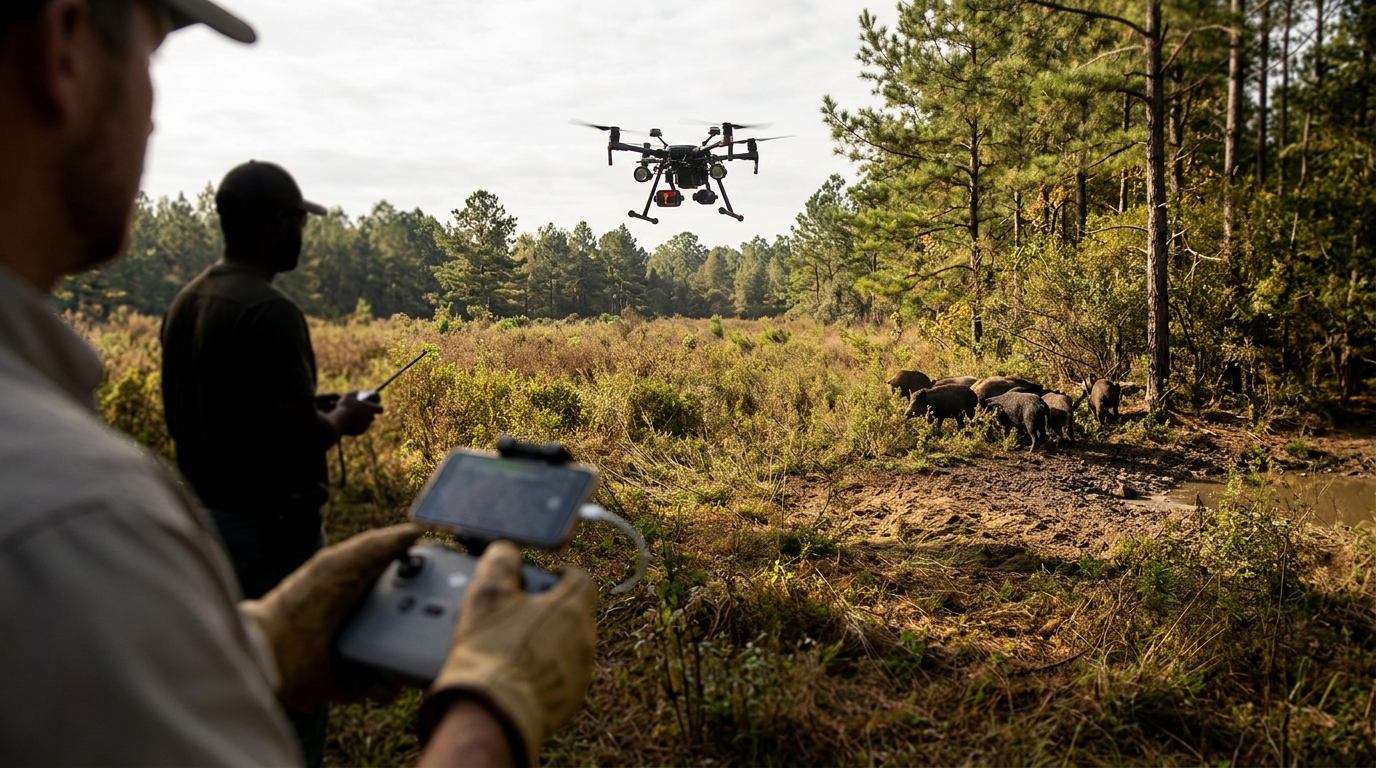
The state of Georgia has officially authorized the use of unmanned aerial vehicles, commonly known as drones, to aid in the location and removal of feral hogs. This legislative shift arrives alongside a significant relaxation of hunting license requirements for residents and non-residents specifically targeting these invasive swine. Historically, both Texas and Georgia have struggled with the explosive growth of feral hog populations, which cause billions of dollars in property damage and threaten native ecosystems. Previously, most states heavily restricted drone use in hunting to maintain the principles of fair chase, but the ecological emergency posed by wild pigs has prompted officials to prioritize eradication over traditional sporting ethics. By allowing thermal-capable drones to scout for sounders, Georgia aims to provide farmers and professional trappers with a technological advantage that was previously reserved for government agencies or high-level commercial operations.
Texas relevance
Texas serves as the primary battleground for feral hog control in the United States, hosting an estimated population of nearly 3 million pigs. The policy shift in Georgia serves as a critical case study for the Texas Legislature and the Texas Parks and Wildlife Department. Texas already allows for aerial gunning from helicopters and hunting with suppressed firearms, but the integration of consumer drones into private eradication efforts remains a topic of active debate among Lone Star State property owners. Because feral hogs cause an estimated $52 million in annual agricultural damage in Texas alone, the success or failure of Georgia's drone legalization will likely dictate future regulatory changes in Austin to help protect Texas ranchers and their land.
Technological Advancements in Feral Hog Tracking
The primary hurdle in controlling feral hog populations is their nocturnal nature and their ability to retreat into dense brush where human observers cannot easily follow. Georgia's new regulations specifically target this advantage by allowing thermal imaging sensors mounted on drones to identify heat signatures from above the canopy. This allows for the real-time tracking of large sounders, which can then be steered toward traps or intercepted by ground-based teams.
In the past, scouting required hours of labor-intensive work, including the placement of stationary trail cameras and physical tracking on foot. These methods often alerted the hogs to human presence, causing them to relocate. Drones operate at an altitude that minimizes noise disturbance, providing a more stealthy approach to monitoring population movements across large swaths of agricultural and forest land.
The integration of GPS data from these drones also allows land managers to create heat maps of where hogs are most active. This data-driven approach ensures that resources are not wasted on areas where pig activity is minimal. By optimizing the deployment of traps and hunters, the state hopes to achieve a population reduction rate that finally outpaces the species' rapid reproductive cycle.
Relaxing Licensing Barriers for Landowners
Beyond the technological shift, Georgia is removing administrative barriers that previously discouraged occasional hunters from participating in eradication efforts. By relaxing the license requirements, the state is essentially acknowledging that the feral hog is an invasive pest rather than a managed wildlife resource. This shift is expected to attract more out-of-state hunters and local enthusiasts who were previously deterred by the cost and paperwork of traditional hunting permits.
This regulatory relief also extends to landowners who may have previously feared legal repercussions for using non-traditional methods to protect their crops. With the new rules, the focus is squarely on the outcome—the removal of the animal—rather than the process. This mirrors some of the 'night-hunting' permissions already seen in various parts of the South, where the goal is maximum efficiency.
The change in licensing also addresses the logistical reality that feral hogs do not respect state lines. By making it easier for hunters to cross borders and engage in pig removal, Georgia is fostering a more mobile and responsive force of volunteer eradicators. This serves as a model for regional cooperation among southern states facing a shared biological threat.
The Economic Impact of Invasive Swine
The financial toll of feral hogs is staggering, with nationwide estimates reaching into the billions when considering both direct agricultural losses and environmental restoration. In Georgia, as in Texas, pigs destroy row crops, ruin pasture land, and contaminate water sources with pathogens. They are also known to prey on native species, including ground-nesting birds and the young of various livestock.
By legalizing drones, the state is attempting to save farmers millions in potential losses. A single sounder can destroy an entire field of corn or peanuts in a matter of nights. The cost of a drone is often a fraction of the profit lost to a single season of hog damage, making the investment in technology a sound business decision for modern agricultural operations.
Public infrastructure also benefits from these measures. Feral hogs are notorious for causing structural damage to levees, dams, and roadways through their constant rooting behaviors. Reducing the population density near critical infrastructure helps lower the long-term maintenance costs for taxpayers and local municipalities.
Environmental Consequences of Unchecked Growth
Environmentalists have long warned that feral hogs are one of the most destructive invasive species in North America. Their rooting behaviors disturb the soil, leading to increased erosion and the spread of invasive plant species. Furthermore, their competition for food resources often pushes out native wildlife such as white-tailed deer and wild turkeys.
By utilizing drones for more targeted eradication, Georgia officials believe they can better protect sensitive habitats. Traditional hunting can sometimes be scattershot, but drone-assisted removal allows for the total elimination of entire sounders. This 'whole-sounder removal' strategy is widely considered the only effective way to prevent the remaining population from quickly rebounding.
Protecting water quality is another major environmental goal. Feral hogs often congregate near streams and wetlands, where their waste introduces E. coli and other bacteria into the watershed. Effective population control through high-tech means is a direct investment in the health of the state's rivers and coastal ecosystems.
Challenges and Regulatory Oversight
While the legalization of drones marks a major win for land managers, it does come with new responsibilities and oversight requirements. Authorities must ensure that the use of drones for hog control does not interfere with privacy rights or disturb other protected wildlife species. There are also concerns regarding the safe operation of UAVs in areas where manned aircraft may be conducting crop-dusting or other low-altitude operations.
Training and certification for drone operators will likely become a point of emphasis as these programs expand. Ensuring that operators understand both the tech and the legal boundaries of their activity is crucial for the long-term viability of the policy. Georgia's wildlife department will likely establish specific guidelines to prevent the technology from being abused during the hunting of traditional game animals.
Public perception also plays a role. While most agricultural stakeholders support the move, some hunting purists argue that the use of drones moves too far away from the 'fair chase' ethos. However, regulators argue that the severity of the hog crisis necessitates a departure from traditional norms in favor of modern, high-intensity solutions.
Looking Toward a Regional Solution
The feral hog problem is not unique to Georgia, and the success of their drone program could lead to a 'technology arms race' against invasive species across the southeastern United States. If Georgia sees a measurable dip in hog-related insurance claims and agricultural losses, other states like Alabama, Mississippi, and Texas are expected to follow suit with similar legislation.
Regional data sharing could also become a reality. If multiple states authorize drone scouting, they could collaborate on tracking the migration patterns of hogs across state boundaries. This would allow for a multi-state 'cordon' approach to eradication, slowly pushing the invasive populations back and protecting border-region farms.
Ultimately, the goal is to make these tools so accessible that the feral hog population is no longer a self-sustaining threat. By combining legislative freedom with private sector innovation, Georgia is taking a bold step toward reclaiming the landscape from an invasive predator that has dominated the region for decades.
Analysis
OPINION: The move to legalize drones for hog control reflects a necessary transition from 'hunting' to 'pest control.' For too long, regulatory frameworks have treated feral hogs as game animals rather than biological pollutants. Georgia's decision to strip away the red tape and allow technology to meet the scale of the crisis is a pragmatic conservative victory for property rights. Texas should closely monitor these results; if drone scouting significantly increases the 'yield' of sounder trapping and night shooting, the Texas Parks and Wildlife Department would be wise to adopt similar measures. Protecting the agricultural backbone of Texas requires moving faster than the rate at which these invasive species reproduce, and drones provide the eye-in-the-sky required to hit those benchmarks.
Source attribution
This story was reported using a public release from the Texas Wildlife Stories (Google News). Keep TX Red rewrote the coverage independently and links to the official statement for verification.
Frequently Asked Questions
- Why were drones previously banned for hunting?
- Drones were largely banned under 'fair chase' laws, which are designed to ensure that hunters do not have an unfair technological advantage over game animals. However, because feral hogs are considered an invasive pest rather than a game animal, Georgia and other states are exempting hog control from these traditional sporting rules.
- Does this law apply to other animals like deer or turkey?
- No. The new regulations in Georgia specifically target feral hogs. Using drones to track or hunt traditional game animals like deer, turkey, or bears remains illegal and is subject to strict enforcement and penalties to protect the integrity of the harvest.
- Will Texas adopt similar drone laws for hog control?
- While Texas already has some of the most permissive hog control laws in the nation—including harvest from helicopters and hot air balloons—the specific use of drones by private citizens is still regulated. The success of Georgia's initiative could provide the evidence needed for the Texas Legislature to expand drone permissions during future sessions.
Official Sources
Take the next step
Browse the Newsroom →Read more about Keep Texas Red → Our full guide to what Keep Texas Red means and why Texans support it.
Related Articles
Get Texas updates delivered weekly.
Independent Texas reporting on politics, policy, and daily life. One email a week. Unsubscribe anytime.
Keep TX Red Newsroom
The Keep Texas Red Editorial Staff produces nonpartisan explainers, policy breakdowns, and educational resources to help Texans understand how their government works. All content is reviewed for accuracy and updated regularly.
About Keep TX Red →