New Texas A&M AgriLife Feral Hog Mitigation Strategy Released for Federal Lands
Texas A&M AgriLife Extension Service unveils a comprehensive tactical guide to combat invasive feral hog populations within the National Park system.
Editorial disclaimer: Opinions and analysis on Keep TX Red are editorial content — not statements of fact. See our editorial standards.
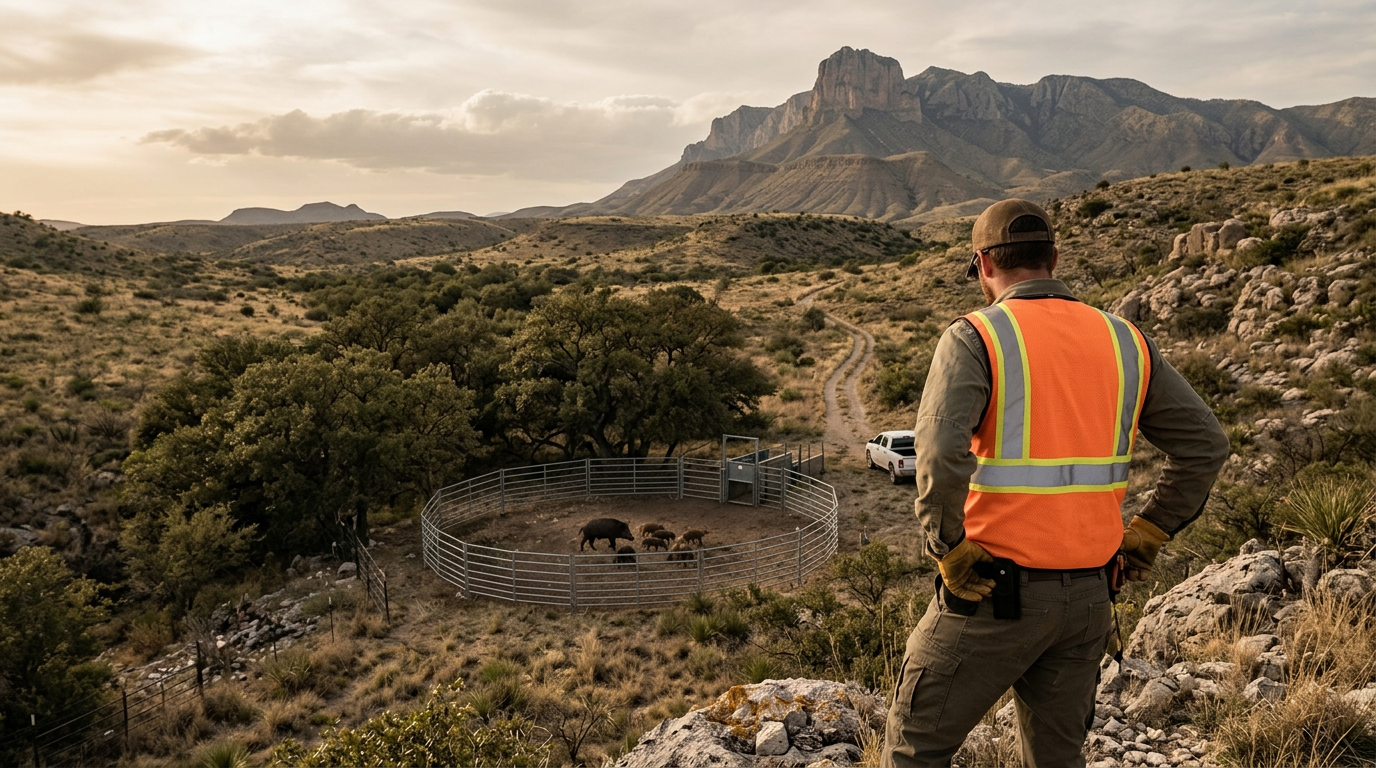
The Texas A&M AgriLife Extension Service has finalized a sophisticated operational guide aimed at controlling the invasive feral hog populations currently plaguing the U.S. National Park system. This initiative represents a milestone in the intersection of academic research and federal land management, providing a framework for ecological restoration. Historically, the presence of Sus scrofa in the United States dates back to early explorers, but the modern population explosion has reached a crisis point, particularly across the southern sunbelt where Texas serves as a primary battleground for containment. This new guide prioritizes data-driven methods for tracking and eliminating sounders that threaten the biodiversity of federal protected areas. The development of this resource follows years of field research and pilot programs conducted by Texas-based experts who have studied the specific behaviors and reproductive cycles of these highly intelligent mammals. By focusing on the National Park Service's unique regulatory environment, the guide offers solutions that balance aggressive population reduction with the need to protect native flora and sensitive archaeological sites. Control measures outlined in the document have been vetted for efficiency, acknowledging that traditional hunting often fails to achieve the high levels of removal required to suppress population regrowth. This strategic shift emphasizes a 'whole-sounder' approach, which seeks to mitigate the dispersal effects caused by sporadic or uncoordinated control efforts on federal lands.
Texas relevance
Texas is the epicenter of the feral hog crisis in the United States, hosting an estimated population of over 3 million animals, which accounts for nearly half of the entire national total. The relevance of this Texas A&M AgriLife guide to the state cannot be overstated, as Texas is home to several major National Park Service units including Big Bend, Guadalupe Mountains, and the Big Thicket National Preserve. These federal lands often act as reservoirs for feral hog populations, allowing them to repopulate neighboring private ranches and state-managed lands once local control efforts have been completed. By providing the federal government with a Texas-born strategy, the state aims to better synchronize management efforts across boundary lines that ignore ecological realities. In addition to the ecological threat, Texas agriculture suffers losses exceeding $52 million annually due to feral hog destruction. Since these animals frequent water sources and riparian corridors common in Texas parks, their presence degrades water quality for downstream Texas communities. The implementation of this guide helps protect the Texas economy by ensuring that the federal tracts within the state are no longer safe havens for invasive species. Furthermore, it leverages the specialized knowledge of the Texas A&M system—a world leader in wildlife management—to influence national policy and preserve the specific biodiversity of the Lone Star State's various ecoregions.
The Evolution of the Feral Hog Crisis
Feral hogs were first introduced to the American landscape as early as the 1500s by Spanish explorers, originally intended as a mobile food source. Over centuries, domestic escapees interbred with European wild boars, resulting in the resilient, prolific hybrid seen today. Their biological success is driven by their status as opportunistic omnivores and their high reproductive rate, where a single sow can produce two litters per year. This biological profile has allowed them to colonize almost every county in Texas, eventually spilling over into federal territories that were once considered pristine.
The expansion of these populations into National Parks has significantly complicated management efforts. Unlike private lands where owners have wide latitude for animal control, federal lands are subject to stringent environmental assessments and public safety regulations. The Texas A&M AgriLife guide addresses these constraints directly, providing park rangers and federal biologists with a roadmap to navigate legal hurdles while still employing effective mechanical and technological tools to reduce hog densities.
Ecological Impact on National Protected Areas
The damage caused by feral hogs in National Parks is multifaceted, ranging from soil erosion to the predation of endangered species. Their rooting behavior disturbs the soil to depths of 10 inches or more, destroying native root systems and facilitating the spread of invasive plant species. In the context of the South Texas brush country or the East Texas piney woods, this means that sensitive orchids and rare grasses are often obliterated before they can go to seed, permanently altering the local ecosystem's succession.
Beyond vegetation, feral hogs are known to prey upon the eggs and young of ground-nesting birds and sea turtles, the latter being a major concern for federal coastal preserves. Their presence near water sources also leads to significant fecal contamination and pathogen introduction, which can be devastating for native aquatic life and other mammals. The AgriLife guide provides specific metrics for parks to assess this damage, allowing for a prioritized response based on the sensitivity of the habitat being destroyed.
Tactical Methodologies and the Whole-Sounder Support
The core philosophy of the newly released guide is the concept of 'whole-sounder removal.' This technique involves the capture or elimination of an entire social group of hogs at once. Traditional methods, such as shooting individuals on sight, often cause the remaining members of the sounder to scatter and become 'trap-shy.' This makes future control efforts significantly more difficult and expensive. By utilizing large-scale corral traps with remote triggering technology, managers can monitor a site until the entire group is inside before closing the gate.
The guide also explores the use of aerial gunning and professional thermal stalking in areas where terrain allows. These methods are particularly effective in the expansive, open landscapes found in West Texas parks. By integrating these various tools into a cohesive management plan, the guide ensures that federal agencies are not just 'tinkering at the edges' of the problem but are making measurable progress in reducing the total biomass of invasive swine in their jurisdictions.
Technological Innovations in Monitoring
One of the standout features of the Texas A&M AgriLife plan is its reliance on modern monitoring technology. This includes the use of cellular-enabled trail cameras that provide real-time data on hog movements and population counts. Such data allows park staff to allocate resources more efficiently, focusing their time on areas where hogs are most active rather than patrolling vast areas blindly. The guide provides technical specifications for these systems, ensuring that parks can implement standardized monitoring protocols.
Moreover, the use of Geographic Information Systems (GIS) mapping is emphasized to identify high-traffic corridors and nesting sites. By layering topographic data with sighting reports, park managers can predict movement patterns based on seasonal changes and food availability. This predictive modeling is a critical component of the long-term success of the program, as it allows for the interception of hogs moving between federal and private lands.
Collaborative Management Across Boundaries
Feral hogs do not respect property lines, a fact that has long frustrated Texas landowners whose properties border National Parks. When a park manages its population but the surrounding private land does not, or vice versa, the hogs simply move back and forth to avoid pressure. The new guide encourages National Park superintendents to engage in cross-boundary collaborations with state agencies like the Texas Parks and Wildlife Department and local soil and water conservation districts.
This cooperative approach is designed to create 'buffer zones' around parks where coordinated trapping and removal occur simultaneously. This creates a vacuum effect that can significantly lower the overall population in a specific region. By fostering these relationships, the AgriLife guide helps integrate federal lands into the larger state-level strategy for hog management, creating a more formidable defense against the ongoing invasion.
Economic and Operational Considerations
Implementing large-scale hog control is an expensive endeavor, requiring significant investment in equipment, manpower, and technology. The AgriLife guide provides a cost-benefit analysis for various control methods, helping park administrators justify the expense to federal budget committees. By demonstrating the long-term savings in infrastructure repair and habitat restoration, the guide makes a compelling financial case for aggressive early intervention rather than perpetual low-level management.
Operational safety is also a major focus, particularly given that National Parks are public spaces. The guide outlines best practices for conducting removal operations in a way that minimizes impact on park visitors and ensures the safety of staff. This includes the timing of operations and the use of silenced equipment when appropriate. By professionalizing the removal process, the guide aims to maintain public support for these necessary but often controversial wildlife management actions.
Analysis
The release of this guide marks a strategic shift from reactive management to proactive eradication. While local Texas farmers have long been on the front lines, the involvement of federal agencies in a coordinated manner—facilitated by Texas academic leadership—suggests a more unified front in a war that has been largely losing ground. The emphasis on 'whole-sounder' removal in the guide is particularly noteworthy; it shifts the paradigm from recreational hunting to professionalized management. This is a critical distinction because recreational pressure often educates hogs, making them more nocturnal and difficult to trap, whereas the AgriLife approach focuses on surgical precision and total removal to prevent the remaining animals from learning and adapting to human presence.
Source attribution
This story was reported using a public release from the Texas Wildlife Stories (Google News). Keep TX Red rewrote the coverage independently and links to the official statement for verification.
Frequently Asked Questions
- Why is Texas A&M AgriLife the organization leading this national effort?
- Texas A&M AgriLife is recognized as a global leader in agricultural and wildlife research. Given that Texas faces the most significant feral hog challenge in the nation, the university's extension service has decades of experience and data that are unmatched by other institutions, making them the natural choice to consult for federal land management.
- Are these hogs a threat to people visiting National Parks?
- While feral hogs generally avoid human contact, they can be aggressive if cornered or if a sow is protecting her young. The greater threat to the public is the transmission of diseases and the degradation of the environment, including the contamination of water sources with E. coli and other pathogens.
- Does this guide recommend using poison or contraceptives?
- The guide primarily focuses on mechanical and physical removal methods such as trapping and shooting. While certain toxicants have been researched in Texas, their use on federal lands remains highly regulated and controversial due to risks to non-target species. Contraceptives are currently considered inefficient for large-scale wild population control.
Official Sources
Take the next step
Browse the Newsroom →Read more about Keep Texas Red → Our full guide to what Keep Texas Red means and why Texans support it.
Related Articles


Get Texas updates delivered weekly.
Independent Texas reporting on politics, policy, and daily life. One email a week. Unsubscribe anytime.
Keep TX Red Newsroom
The Keep Texas Red Editorial Staff produces nonpartisan explainers, policy breakdowns, and educational resources to help Texans understand how their government works. All content is reviewed for accuracy and updated regularly.
About Keep TX Red →