A Guide to Exclusive Texas Experiences and Lone Star State Culture
Discover the unique cultural landmarks and recreational activities that define the Texas experience for residents and visitors alike.
Editorial disclaimer: Opinions and analysis on Keep TX Red are editorial content — not statements of fact. See our editorial standards.
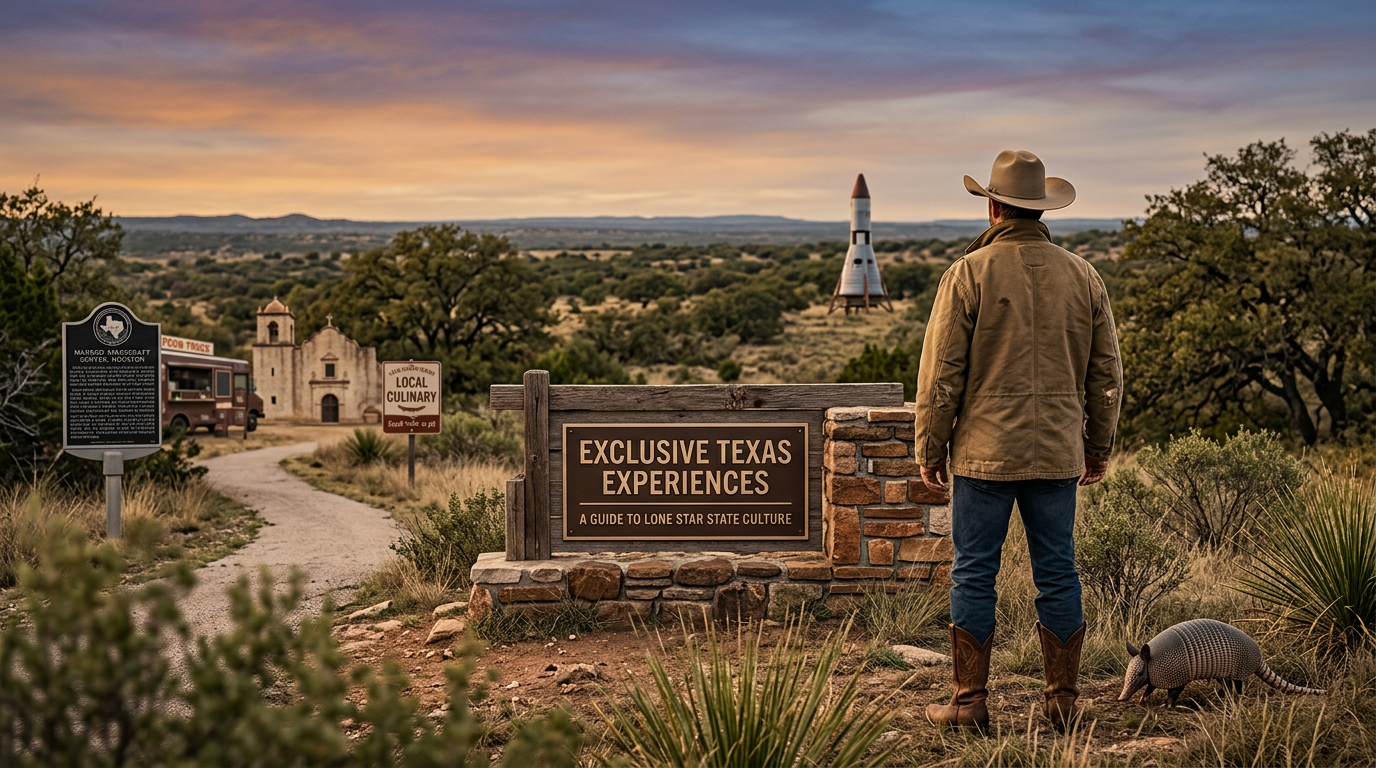
Texas occupies a singular position in the American landscape, offering a range of activities and geographical wonders that are mathematically and culturally impossible to replicate in other states. Since the days of the Republic, the state has cultivated a distinct identity rooted in its immense scale, spanning two time zones and multiple climate regions. This geographic diversity provides the foundation for experiences ranging from deep-space exploration history to specialized culinary traditions that have evolved over centuries of migration and settlement. The Lone Star State serves not just as a destination, but as a sovereign sub-culture where tradition and innovation intersect in the wild landscapes of the West and the high-tech corridors of the major metroplexes. Historically, Texas has leveraged its independence and massive land area to create infrastructure and attractions that command global attention. From the establishment of the Manned Spacecraft Center in Houston during the Cold War to the preservation of Spanish colonial missions in San Antonio, the state maintains a physical connection to both the stars and the dusty trails of its ancestors. The current era of Texas tourism focuses on this duality, highlighting how one can witness a rocket launch on the coast and attend a professional rodeo in a climate-controlled stadium in the same weekend. These activities serve as the backbone of the state's multi-billion dollar travel industry, attracting millions who seek a scale of adventure that only 268,597 square miles can provide.
Texas relevance
As a Texas-focused publication, understanding the unique selling points of our state is vital for both economic awareness and cultural preservation. These exclusive experiences drive significant tax revenue into the Texas General Revenue Fund through the hotel occupancy tax and local sales taxes. Furthermore, the geographical vastness of Texas means that even lifelong residents often have not explored the full breadth of these exclusive opportunities, making this information a roadmap for internal exploration of the Lone Star State.
Aerospace Legacy and the Gateway to Mars
Houston has long been synonymous with the pinnacle of human achievement in space exploration. The Johnson Space Center is not simply a museum; it is the active nerve center for American spaceflight operations. Visitors to this facility can stand within the historic Mission Control room that coordinated the Apollo moon landings, a location that exists nowhere else on the planet. This site offers a tangible connection to the Cold War era and the technological breakthroughs that defined the 20th century.
Moving into the modern era, the South Texas coastline near Brownsville has become the new frontier for private space exploration. The emergence of 'Starbase' represents a shift in how Texas contributes to the aerospace industry. The ability to witness the development of the world's largest rockets in a public setting, against the backdrop of the Gulf of Mexico, provides a futuristic experience that reinforces the state's status as a leader in global technology and exploration.
The Culinary Science of Texas Barbecue
While many regions in the United States claim a barbecue tradition, the Texas method is distinguished by its focus on beef and the specific use of post oak, mesquite, or hickory wood. The 'Texas Holy Trinity'—brisket, ribs, and sausage—represents a culinary discipline that requires 12 to 16 hours of precise temperature management. This is not merely cooking; it is a cultural ritual that draws people to rural outposts like Lockhart, Taylor, and Luling, which serve as the spiritual capitals of the craft.
The exclusivity of this experience lies in the geography and the smoke. The Central Texas style, in particular, avoids heavy sauces in favor of dry rubs, allowing the quality of the cattle and the smoke profile to dictate the flavor. This dedication to craft has birthed a massive industry of 'barbecue tourism,' where enthusiasts wait for hours in lines to sample meats treated with a reverence usually reserved for fine wine or high-end cuisine.
Geological Wonders of the Chihuahuan Desert
Big Bend National Park offers a landscape that feels entirely disconnected from the rest of the continent. The park protects the largest tract of the Chihuahuan Desert in the United States, featuring the massive limestone walls of Santa Elena Canyon and the isolated Chisos Mountains. This is one of the few places where a visitor can experience total silence and some of the darkest night skies in the lower 48 states, thanks to its extreme distance from urban centers.
The park's unique biodiversity includes species found nowhere else, adapted to the harsh and variable climate of the Big Bend. The presence of the Rio Grande as a natural and political border adds a layer of complexity to the experience, where one can look across a narrow river into a different nation. The sheer scale and ruggedness of this terrain define the 'Wild West' archetype that continues to draw global interest to the region.
The San Antonio River Walk and Colonial History
The San Antonio River Walk, or Paseo del Río, is a feat of urban planning and flood control that transformed a potential hazard into the most visited tourist attraction in the state. Located one level below the busy streets of downtown San Antonio, this network of walkways creates a sanctuary of cypress trees, stone bridges, and local commerce. It serves as a connector between the modern city and the historic sites that shaped the Republic of Texas.
A short walk from the river leads to the Alamo, the site of the pivotal 1836 battle that became the symbol of Texan resistance. The proximity of these colonial-era missions—now a UNESCO World Heritage site—to a vibrant, modern city center creates a historical continuum. Nowhere else can you find a fusion of Spanish colonial architecture and modern American hospitality integrated so seamlessly into the natural hydrology of the area.
The German Roots of the Texas Hill Country
The Texas Hill Country offers a cultural blend found nowhere else: the fusion of German heritage with Western ranching traditions. Towns like Fredericksburg and New Braunfels maintain a unique identity that dates back to the mid-19th century when German immigrants settled the rugged terrain. This influence is visible in the architecture, the local dialects sometimes referred to as 'Texas German,' and the proliferation of beer gardens and bakeries.
The region is also home to the Enchanted Rock State Natural Area, a massive pink granite pluton that has been a focal point for indigenous people and settlers for millennia. Climbing this dome provides a panoramic view of the rolling hills and peach orchards that define the area. The combination of European cultural roots and the distinct geology of the Edwards Plateau makes the Hill Country a quintessential Texas experience that cannot be duplicated.
The Legacy of the Stockyards and Cowboy Culture
In Fort Worth, the 'City of Cowboys and Culture,' the daily cattle drive in the Stockyards National Historic District serves as a living tribute to the state’s agricultural roots. Unlike staged performances elsewhere, these drives feature authentic Texas Longhorns and are conducted by professional drovers. It is a reminder of the era when Fort Worth was the final civilized stop on the Chisholm Trail, providing a gateway to the northern markets.
This culture extends into the massive dance halls, such as Billy Bob’s Texas, which holds the title of the world’s largest honky-tonk. These venues are more than just bars; they are community hubs where the 'two-step' and country music are preserved as high art forms. The commitment to maintaining the lifestyle of the American cowboy in a modern urban environment is a feat unique to North Texas.
The Coastal Resilience of the Gulf Shore
The Texas Gulf Coast, particularly Padre Island National Seashore, protects the longest stretch of undeveloped barrier island in the world. This 70-mile expanse of coastline provides a sanctuary for the endangered Kemp’s ridley sea turtle and serves as a vital migratory path for hundreds of bird species. The ability to drive for miles on an open beach, disconnected from the commercialized boardwalks common in other coastal states, offers a sense of frontier isolation.
The coastal region also supports a massive recreational fishing industry that centers on the unique hypersaline lagoons of the Laguna Madre. These waters are one of only six such ecosystems in the world, providing a specific habitat for redfish and spotted seatrout. The intersection of delicate ecology and industrial power, with massive shipping ports nearby, creates a dynamic environment that is uniquely Texan.
Sports Culture and the 'Friday Night Lights' Phenomenon
While football is popular nationwide, the intensity of high school football in Texas is an exclusive cultural phenomenon. In small towns and major cities alike, multi-million dollar stadiums fill to capacity on Friday nights, serving as the social apex of the week. This 'Friday Night Lights' culture is a deeply rooted tradition that reflects the state's emphasis on community identity and competitive excellence.
This passion carries over into the professional sphere, with facilities like AT&T Stadium in Arlington pushing the boundaries of sports architecture. These venues are designed to be monuments to the game, featuring some of the largest video screens and retractable roofs in existence. The scale of investment and the level of public engagement in sports here demonstrate a cultural priority that treats the gridiron with a level of seriousness rarely seen outside the Lone Star State.
Analysis
Opinion: While many states attempt to market themselves as 'unique,' Texas is one of the few that can back up the claim with legislative and historical evidence. The state's ability to maintain its own power grid, its history as an independent nation, and its specific cultural export of 'Texas-style' everything creates a brand that is arguably stronger than the federal brand. For those residing here, these exclusive activities are not just tourist traps; they are expressions of a specific brand of Americanism that emphasizes independence, scale, and a refusal to be categorized by outside observers.
Source attribution
This story was reported using a public release from the Unusual Texas / Only In Texas (Google News). Keep TX Red rewrote the coverage independently and links to the official statement for verification.
Frequently Asked Questions
- What is the best time of year to visit the Texas Hill Country?
- The best time is typically in the spring (late March to early May) when the bluebonnets and other wildflowers are in bloom, or in the fall (October to November) when temperatures are milder and the humidity is lower.
- Are the NASA facilities in Houston open to the general public?
- Yes, Space Center Houston serves as the official visitor center for NASA Johnson Space Center. It offers tours of the facility, including the historic Mission Control and the Saturn V rocket park, though some areas require advance booking.
- Why is Texas barbecue different from other styles like Memphis or Kansas City?
- Texas barbecue focuses primarily on beef (brisket) and uses dry rubs rather than heavy, sweet sauces. The flavor is derived from the long, slow smoking process over local hardwoods like post oak.
- Can you really drive on the beaches in Texas?
- Yes, unlike many other coastal states, many Texas beaches, including parts of Padre Island and the Bolivar Peninsula, allow vehicles on the sand. However, specific permits and adherence to local traffic laws are required.
Official Sources
Take the next step
Browse the Newsroom →Read more about Keep Texas Red → Our full guide to what Keep Texas Red means and why Texans support it.
Related Articles
Get Texas updates delivered weekly.
Independent Texas reporting on politics, policy, and daily life. One email a week. Unsubscribe anytime.
Keep TX Red Newsroom
The Keep Texas Red Editorial Staff produces nonpartisan explainers, policy breakdowns, and educational resources to help Texans understand how their government works. All content is reviewed for accuracy and updated regularly.
About Keep TX Red →