Federal Protection Status Proposed for Rare Wildflower Endemic to Texas Soil
The U.S. Fish and Wildlife Service seeks endangered status and habitat protections for the bracted twistflower found only in Central Texas.
Editorial disclaimer: Opinions and analysis on Keep TX Red are editorial content — not statements of fact. See our editorial standards.
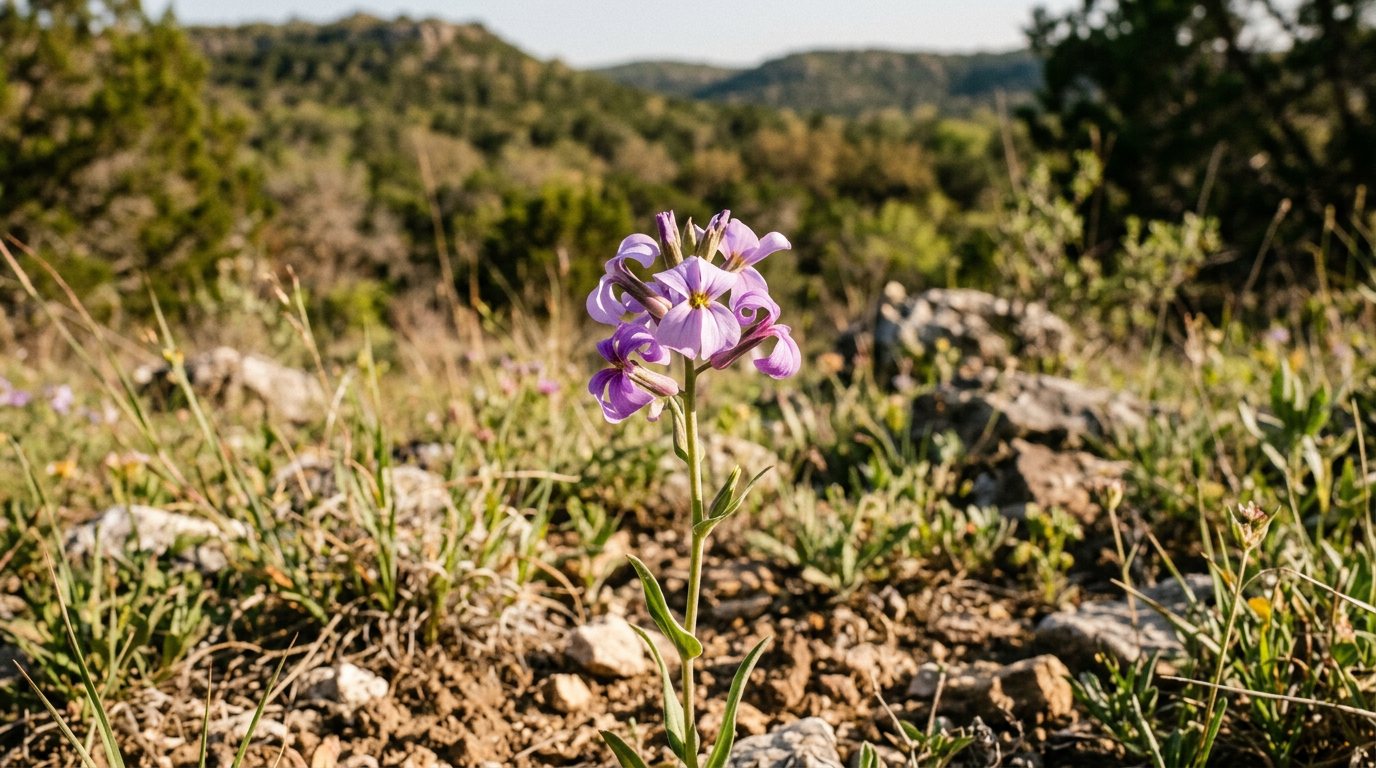
The U.S. Fish and Wildlife Service has formally initiated a process to designate the bracted twistflower, a rare annual wildflower found exclusively in Central Texas, as an endangered species. Historically, Texas has seen several plant species receive similar protections under the Endangered Species Act (ESA) to mitigate the impacts of rapid urbanization and habitat fragmentation. This specific flower, known for its distinct lavender petals and unique curling structure, currently faces significant threats from land development, heavy deer browsing, and the encroachment of invasive plant species. State and federal biologists have monitored the dwindling populations for years, leading to the current push for federal oversight to ensure its survival in the wild. The proposal includes not only the designation of the species as endangered but also the formal identification of critical habitat areas necessary for its recovery.
Texas relevance
This regulatory action directly impacts land use and conservation strategies within the Edwards Plateau region of Texas, specifically affecting counties such as Bexar, Travis, Uvalde, and Medina. For Texans, the protection of the bracted twistflower represents a intersection of private property rights and environmental stewardship. Because the flower is endemic—meaning it grows naturally nowhere else on Earth—the responsibility for its preservation falls entirely on Texas soil and the local management of its landscape. The outcome of this federal proposal will influence how urban expansion projects in the San Antonio and Austin corridors are reviewed, as developers must account for the presence of protected flora and fauna during the planning phases of construction.
Biological Profile of the Bracted Twistflower
The bracted twistflower, scientifically known as Streptanthus bracteatus, is a member of the mustard family. It is a winter annual, meaning it germinates in the cooler months and blooms in the spring, typically between April and June. The plant is easily identified by its hairless, blue-green foliage and its striking four-petaled flowers that range in color from pale lavender to deep purple. One of its most interesting biological traits is its reliance on specific pollinators and soil conditions found only in the rocky outcrops and slopes of the Edwards Plateau.
The flower’s lifecycle is highly sensitive to annual rainfall patterns. In years with significant drought, the seeds may remain dormant in the soil for long periods, waiting for the right conditions to emerge. This boom-and-bust cycle makes it difficult for researchers to get a consistent count of the population size from year to year. Despite this resilience, the long-term trend has shown a steady decline in the number of viable colonies, prompting the current federal investigation into its status.
The Geographic Range and Habitat Concerns
Currently, the known populations of the bracted twistflower are restricted to a handful of sites in the southeastern portion of the Edwards Plateau. This area, which encompasses parts of San Antonio and the surrounding Hill Country, is one of the fastest-growing regions in the United States. The primary threat cited by the U.S. Fish and Wildlife Service is the loss of habitat due to the conversion of natural landscapes into residential subdivisions, commercial properties, and transportation networks.
In addition to physical habitat loss, the flower is also suffering from the lack of natural fire regimes. Historically, periodic wildfires would clear out dense woody vegetation, allowing sunlight to reach the forest floor where the twistflower thrives. Without these fires, or human-led brush management, the plant is often shaded out by larger shrubs and trees. Furthermore, the high density of white-tailed deer in Central Texas has led to overgrazing, where the young plants are consumed before they can produce seeds for the next generation.
Critical Habitat Designation Explained
A key component of the federal proposal is the designation of critical habitat. This does not mean the land becomes a government sanctuary; rather, it identifies specific geographic areas that contain the physical and biological features essential to the species' conservation. For the bracted twistflower, this includes areas with specific limestone soils and open canopy structures. Most of the proposed critical habitat is located on land already managed for conservation, such as state parks or municipal preserves, but some private tracts may be included.
When an area is designated as critical habitat, federal agencies must consult with the Fish and Wildlife Service before authorizing, funding, or carrying out actions that might destroy or adversely modify that habitat. This is particularly relevant for projects that involve federal permits, such as the construction of highways or utility lines. For private landowners, the designation generally only has an impact if their activities require a federal permit or use federal funding, though it often serves as a guide for best management practices.
The Evolution of Local Conservation Efforts
Before this federal move, several local Texas organizations and local governments had already taken steps to protect the species. In San Antonio, for instance, there have been collaborative efforts between the Parks and Recreation Department and local botanical experts to monitor twistflower populations within the city’s natural areas. These local initiatives have included installing cages around plants to protect them from deer and conducting controlled burns to simulate natural environmental processes.
Despite these commendable local efforts, federal authorities believe that a unified, national-level protection status is required to coordinate recovery across county lines. The transition from local management to federal oversight often brings more resources for research and restoration. It also provides a more standardized framework for mitigation, ensuring that if a population is lost in one area due to development, a corresponding population is protected or restored elsewhere to maintain the overall species stability.
Implementation Timeline and Public Input
The process of listing a species under the Endangered Species Act involves a period of public comment and scientific review. The U.S. Fish and Wildlife Service typically allows a 60-day window for the public, including residents of Central Texas, scientists, and industry representatives, to provide feedback on the proposal. This stage is crucial for ensuring that the final decision is based on the best available biological data and accounts for the economic impacts on the Texas communities involved.
Once the comment period closes, the agency will review the testimonies and data before making a final determination. If the bracted twistflower is officially listed, a formal recovery plan will be developed. This plan will outline the specific actions needed to increase the population to a level where federal protection is no longer necessary. The ultimate goal of the ESA is not just to protect the species indefinitely, but to recover it to the point where it can be removed from the list entirely.
Economic and Operational Implications for Texas
The listing of any species in the thriving Texas economy raises questions about the cost of compliance. For the construction and energy sectors, an endangered listing may necessitate more rigorous environmental assessments during the site-selection process. This can lead to increased costs and longer timelines for project approvals. However, some economic studies suggest that early intervention via the ESA can prevent even more costly and restrictive measures later on if the species' situation becomes more desperate.
For the agricultural sector, the impact is expected to be minimal, as most ranching activities do not conflict with the flower's preferred rocky slopes. In fact, many conservation-minded ranchers in the Hill Country view themselves as the primary defenders of Texas’s natural biodiversity. By maintaining large, undeveloped tracts of land, these landowners provide the very sanctuary that rare species like the bracted twistflower need to survive away from the urban sprawl of Austin and San Antonio.
Analysis
Opinion: The move to list the bracted twistflower reflects a recurring tension between the explosive growth of the Texas Hill Country and the preservation of its ecological heritage. While conservationists view the ESA listing as a necessary 'safety net' to prevent extinction, some local stakeholders expressed concern that federal intervention could complicate infrastructure projects and private land development. However, the proposal also highlights a unique aspect of Texas pride: the state’s commitment to its native landscapes. By identifying critical habitats, the federal government is effectively signaling that the aesthetic and biological value of the Hill Country’s unique flora is a priority that transcends immediate commercial interests. The challenge moving forward will be finding a balance that allows for sustainable growth without erasing the very natural beauty that makes Central Texas a desirable place to live.
Source attribution
This story was reported using a public release from the Unusual Texas / Only In Texas (Google News). Keep TX Red rewrote the coverage independently and links to the official statement for verification.
Frequently Asked Questions
- Why is the bracted twistflower only found in Texas?
- The bracted twistflower is uniquely adapted to the specific geological and climatic conditions of the Edwards Plateau. It requires certain limestone soil types and a specific balance of shade and sunlight that is characteristic of the Central Texas Hill Country canyons and slopes.
- Will this listing prevent me from building on my property?
- Generally, the Endangered Species Act primarily restricts activities that involve federal funding or federal permits. However, if an endangered species is known to be on your land, it is advisable to consult with the Fish and Wildlife Service to ensure your activities do not 'take' (harm or kill) the species, which is prohibited under the law.
- What exactly are the threats to this flower?
- The primary threats include the expansion of cities like Austin and San Antonio into his habitat, an overpopulation of white-tailed deer that eat the plants, and a lack of natural fires which allows thick brush to shade out the flowers.
Official Sources
Take the next step
Browse the Newsroom →Read more about Keep Texas Red → Our full guide to what Keep Texas Red means and why Texans support it.
Related Articles

Get Texas updates delivered weekly.
Independent Texas reporting on politics, policy, and daily life. One email a week. Unsubscribe anytime.
Keep TX Red Newsroom
The Keep Texas Red Editorial Staff produces nonpartisan explainers, policy breakdowns, and educational resources to help Texans understand how their government works. All content is reviewed for accuracy and updated regularly.
About Keep TX Red →