Saving the Attwater’s Prairie Chicken: The High Stakes of Protecting a Lone Star Original
Texas conservationists work to save the Attwater’s prairie chicken, a bird found nowhere else on Earth, through breeding and habitat restoration.
Editorial disclaimer: Opinions and analysis on Keep TX Red are editorial content — not statements of fact. See our editorial standards.
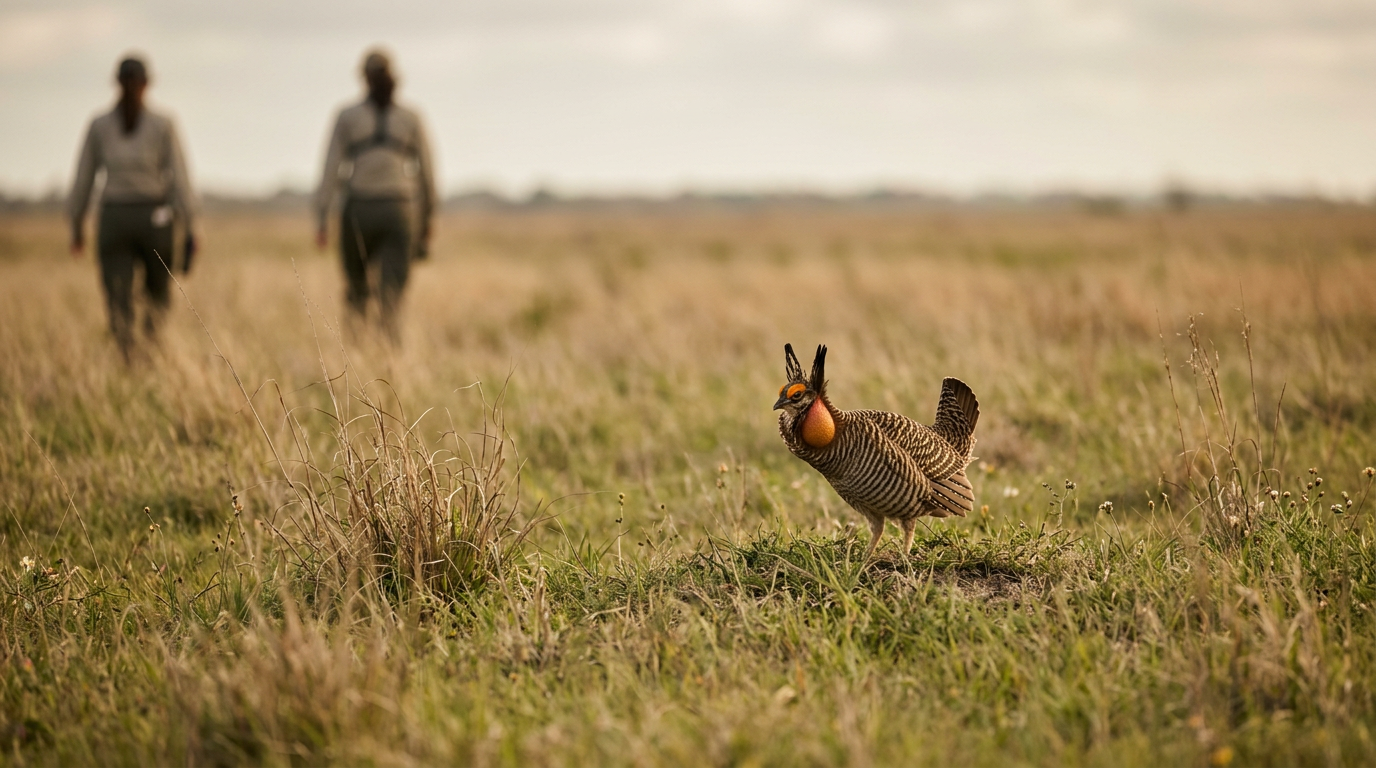
The Attwater’s prairie chicken stands as one of the most critically endangered birds in North America, with its entire global population residing exclusively within a few specific patches of the Texas coastal prairie. Historically, these birds were once so abundant that they were a staple of the regional ecosystem, numbering in the millions across the vast grasslands that stretched from the Texas coast into Louisiana. However, agricultural expansion, urban development, and the loss of native grasses have pushed this unique subspecies to the absolute brink of extinction. Today, the survival of the species depends on a complex network of captive breeding programs and localized habitat management efforts. The birds serve as a biological indicator for the health of the tallgrass prairie, a landscape that has largely vanished from the Texas map over the last century. Efforts to preserve the species have become a race against time and nature. The birds face constant threats from extreme weather events, such as hurricanes and flooding, which can devastate an entire year’s worth of wild nesting in a single afternoon. Additionally, invasive species like red imported fire ants have fundamentally altered the food chain, preying on newly hatched chicks and reducing the availability of the insects that the birds rely on for protein. Conservationists emphasize that allowing the Attwater’s prairie chicken to disappear would not just be the loss of a single bird, but the final collapse of a specific natural heritage that is deeply rooted in Texas history. Prior recovery actions have focused on the Attwater Prairie Chicken National Wildlife Refuge, but recent years have seen a massive push to expand public-private partnerships to ensure the species has room to roam.
Texas relevance
This issue is central to Texas because the Attwater’s prairie chicken is a native resident of the Texas Gulf Coast and is found in no other state or country in the world. Its survival is directly tied to the management of Texas lands, particularly the coastal prairies near cities like Houston and Victoria. The recovery plan involves significant collaboration between Texas livestock producers, private landowners, the Texas Parks and Wildlife Department, and non-profit organizations like the Houston Zoo. Because over 95% of Texas land is privately owned, the success of this conservation effort serves as a primary case study for how the state can balance economic interests, such as cattle grazing, with the preservation of biological diversity.
The Rise and Fall of a Coastal Icon
At the turn of the 20th century, the Attwater’s prairie chicken was a ubiquitous sight across the coastal plains of Texas. Naturalists from that era recorded massive populations that would congregate for their famous 'booming' displays, a complex mating ritual where males inflate orange neck sacs and produce a low-frequency sound that can be heard for miles. This ritual is a hallmark of the Texas spring, though few inhabitants of the state today have ever had the privilege of witnessing it in the wild.
The decline of the species was swift and largely attributed to the rapid conversion of native grasslands into rice fields and cattle pastures. As the tallgrass was tilled under or overgrazed, the birds lost the specific cover they needed to hide from predators and the diverse insect population required to sustain their young. By the time the bird was listed under the Endangered Species Act in 1967, its numbers had already plummeted to a fraction of its historical peak, hovering in the low thousands.
Captive Breeding and its Challenges
A cornerstone of the modern recovery effort is the captive breeding program, which operates across several facilities, including the Houston Zoo and Fossil Rim Wildlife Center. These facilities work to maximize genetic diversity while producing enough healthy birds to supplement the wild population annually. The process is delicate, as the birds are hyper-sensitive to their environment and requires specialized diets and stress-free enclosures to ensure successful laying and hatching of eggs.
Once the chicks reach a certain age, they are relocated to release sites like the Attwater Prairie Chicken National Wildlife Refuge in Colorado County. This 're-wilding' process is often difficult; the birds must quickly learn to avoid hawks, coyotes, and snakes while finding food in an environment they were not raised in. Despite these hurdles, captive-bred birds are the primary reason the species has not yet been declared extinct in the wild.
The Fire Ant Factor
Invasive species represent one of the greatest modern hurdles to the bird's recovery in Texas. The red imported fire ant, which arrived in the United States decades ago, has a particularly devastating impact on coastal bird populations. Fire ants swarming a nest can kill a chick before it even manages to fully break out of its shell. Furthermore, fire ants compete for the same beetles and grasshoppers that prairie chicken chicks need to survive their first few critical weeks of life.
To combat this, wildlife managers utilize targeted treatments to reduce ant populations in nesting areas. This chemical intervention must be carefully balanced to ensure it does not harm other native insects that are beneficial to the prairie. The struggle against fire ants highlights how globalized trade and invasive biology create hidden costs for Texas conservation efforts.
Private Landowners as Key Partners
Because the majority of the bird's historical range is now in private hands, the federal and state governments have had to rethink their approach to conservation. Instead of just purchasing land, programs now focus on 'Safe Harbor' agreements and incentive-based management. These programs allow Texas ranchers to continue using their land for agriculture while receiving technical assistance to manage their pastures in a way that benefits the prairie chicken, such as using prescribed burns to clear out woody brush.
Prescribed burning is a traditional tool that mimics the natural wildfires that once kept the Texas coastal prairie healthy. By removing invasive brush and trees, these fires allow native grasses to return, providing the open spaces the birds need for their mating displays. This collaborative approach recognizes that the heritage of the Texas rancher and the heritage of the Texas prairie chicken are inextricably linked.
Weathering the Storms
The Texas Gulf Coast is prone to severe weather, and for a species with such a small population, a single storm can be cataclysmic. In 2017, Hurricane Harvey dumped historic amounts of rain on the region, flooding the primary refuge and causing a significant setback in the bird's population numbers. When a species is restricted to such a small geographic area, it lacks the 'biological hedge' of having populations elsewhere that might be unaffected by a local disaster.
Recovery teams are currently looking into diversifying the locations where birds are released to prevent a single weather event from wiping out the entire wild population. This involves identifying secondary sites along the Texas coast that meet the strict habitat requirements of the bird. The goal is to build a resilient, multi-nodal population that can survive the unpredictable nature of Texas weather cycles.
The Booming Sound of Future Hope
Despite the long odds, experts remain optimistic about the future of the Attwater’s prairie chicken. Technological advancements in tracking and genetic monitoring are providing new insights into the birds' behavior and health. Researchers are now able to track released birds with minute detail, learning exactly how they utilize the landscape and where they are most vulnerable. This data-driven approach allows for more efficient use of conservation funding and resources.
Saving the bird is not just about the bird; it is about saving the prairie itself. The tallgrass prairie is one of the most endangered ecosystems in the world, and by fighting for the Attwater’s prairie chicken, Texas is effectively protecting a landscape that provides carbon sequestration, groundwater recharge, and a buffer against coastal storms. The 'booming' of the prairie chicken is the heartbeat of the Texas coast, and experts are determined to ensure it never goes silent.
Analysis
Opinion: Beyond the biological necessity of saving an endangered species, the fight for the Attwater’s prairie chicken represents a broader commitment to the preservation of the Texas identity. For decades, the Texas coastal prairie was the heart of the state's ranching and agricultural boom, but that progress came at a cost to the region's original inhabitants. If Texas can successfully restore this population, it proves that the state can maintain a thriving economy without permanently sacrificing its unique natural legacy. Critics often point to the high cost of such programs, but the long-term value of a stable, healthy ecosystem—which buffers against erosion and supports other pollinator species—far outweighs the temporary expense of breeding programs.
Source attribution
This story was reported using a public release from the Unusual Texas / Only In Texas (Google News). Keep TX Red rewrote the coverage independently and links to the official statement for verification.
Frequently Asked Questions
- Why is the Attwater’s prairie chicken only found in Texas?
- The bird is a specific subspecies evolved to live in the tallgrass coastal prairies of the Gulf Coast. While it once ranged into Louisiana, habitat fragmentation and land use changes have restricted the remaining viable habitat solely to specific areas within the state of Texas.
- What is 'booming' in regard to these birds?
- Booming refers to the unique mating call and display performed by male prairie chickens. They gather in flat areas called 'leks' to dance and inflate orange air sacs on their necks, creating a resonance that sounds like a low, hollow boom.
- How can private citizens help save the prairie chicken?
- Citizens can support conservation through organizations like the Houston Zoo or Texas Parks and Wildlife. For those living in the Gulf Coast region, participating in native grass restoration and supporting responsible land management practices are the most effective ways to help.
Official Sources
Take the next step
Browse the Newsroom →Read more about Keep Texas Red → Our full guide to what Keep Texas Red means and why Texans support it.
Related Articles

Get Texas updates delivered weekly.
Independent Texas reporting on politics, policy, and daily life. One email a week. Unsubscribe anytime.
Keep TX Red Newsroom
The Keep Texas Red Editorial Staff produces nonpartisan explainers, policy breakdowns, and educational resources to help Texans understand how their government works. All content is reviewed for accuracy and updated regularly.
About Keep TX Red →