Uncovering the Backwards History of Reklaw: An East Texas Gem
Discover the unique story of Reklaw, Texas, a town named through a creative reversal that defines its identity in the heart of East Texas.
Editorial disclaimer: Opinions and analysis on Keep TX Red are editorial content — not statements of fact. See our editorial standards.
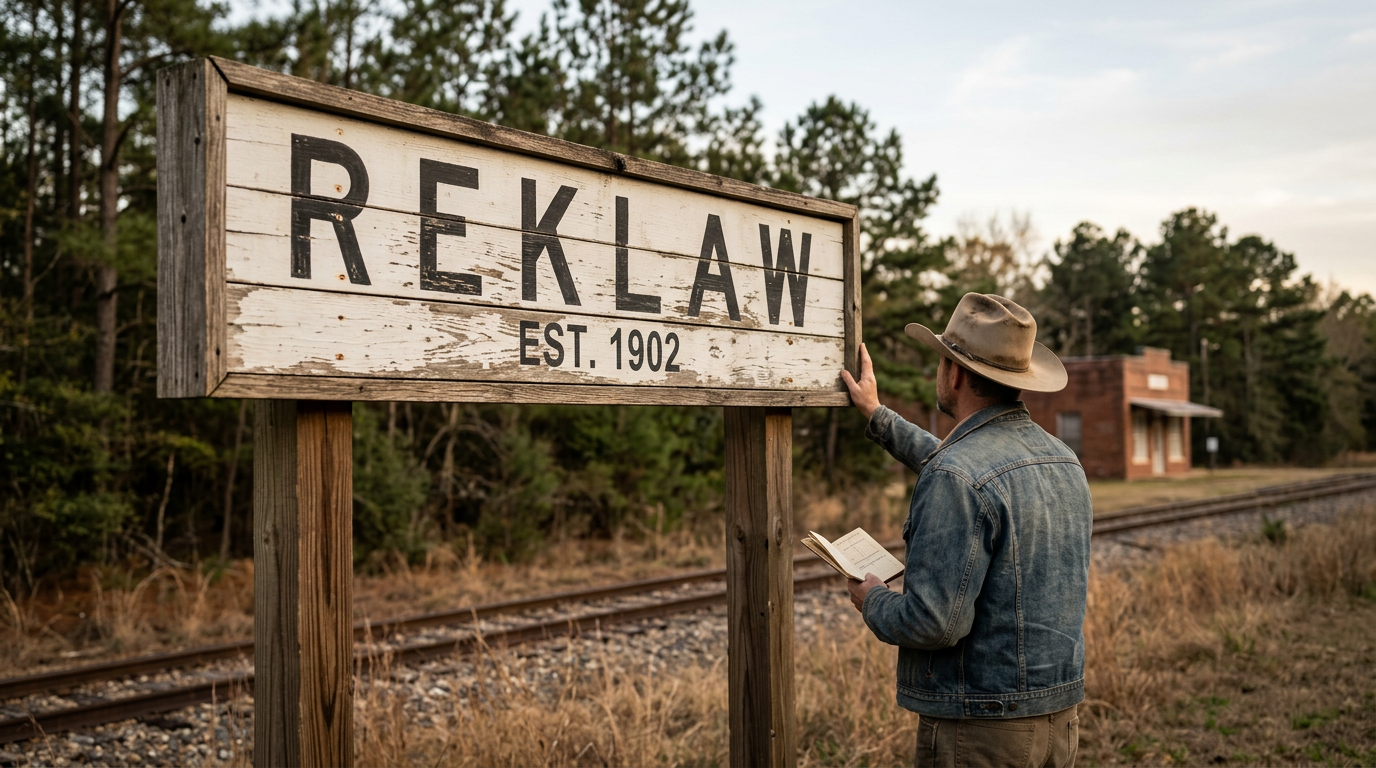
In the sprawling landscape of East Texas, the small community of Reklaw stands as a testament to the quirky and resourceful spirit of early settlers. Established along the border of Cherokee and Rusk Counties, this town gained its formal identity in 1902 when the Texas and New Orleans Railroad expanded through the region. The necessity of a post office forced residents to choose a name that was distinct and not already in use across the Lone Star State. This led to a creative solution involving Margaret Walker, a local landowner whose contribution to the town's founding is literally mirrored in its title. Historically, the establishment of postal routes and rail lines required strict adherence to naming conventions to prevent logistical chaos. In an era where communication was tethered to physical mail, two towns having the same name in a state as massive as Texas was an impossibility. Reklaw’s birth was not just a naming exercise; it was a strategic move to ensure the community could participate in the burgeoning global economy of the early 20th century. By backward-spelling a prominent local name, the residents bypassed bureaucratic red tape while simultaneously honoring their heritage in a way that remains a conversation piece over a century later.
Texas relevance
Reklaw is a quintessentially Texas story, straddling the line between Cherokee and Rusk Counties in the heart of the Piney Woods. For Texans, the town represents a broader history of rural development tied to the expansion of rail lines and the practicalities of the U.S. postal system at the turn of the 20th century. Its proximity to other unique locations, such as the town of Sacul—which shares a similar reverse-naming origin—highlights a specific linguistic trend found in East Texas history. This area remains a critical part of the state's timber and agricultural legacy, providing a direct link to the industrial transformation of the Texas frontier.
The Origin of the Name Reklaw
The story of Reklaw begins with the local Walker family, specifically Margaret Walker. In 1902, as the railroad infrastructure began to connect more isolated parts of East Texas, the need for a designated post office became a priority for the emerging settlement. However, the name 'Walker' was already claimed by another community within the state's postal registry, creating a bureaucratic obstacle for the residents. This was a common problem during the Texas population boom, where common surnames often led to naming conflicts.
In a display of local ingenuity, the community decided to simply reverse the letters of the family name. By spelling 'Walker' backward, they created 'Reklaw.' This simple yet effective transformation allowed the town to honor its founding influence while satisfying the need for a completely unique identifier within the Texas geography. This methodology provides a fascinating window into how early Texans navigated the constraints of growing infrastructure without losing their local identity. It speaks to a pragmatic 'can-do' attitude that defines the region.
The Railroad Expansion Era
The development of Reklaw was inextricably linked to the arrival of the Texas and New Orleans Railroad. During the early 1900s, the railroad was the lifeblood of rural Texas, dictating where towns would flourish and where commerce would concentrate. The tracks provided a vital link for local agricultural products and timber, which were the primary exports of the region. Without the iron horse, many of these small East Texas outposts would have remained isolated farming pockets.
As the steam engines rolled through Cherokee County, they brought with them a wave of new settlers and economic opportunities. The establishment of a post office in Reklaw was more than just a convenience; it was a formal recognition of the town's permanence. This period of expansion defined the layout and the social fabric of the community, anchoring it to the industrial progress of the era and ensuring that the town was more than just a dot on the map, but a functional hub for the surrounding countryside.
A Tale of Two Backwards Towns
Reklaw is not alone in its backwards naming convention. Just a few miles away lies the community of Sacul. In a strikingly similar fashion, Sacul was named by reversing the surname of the Lucas family. These two towns, Reklaw and Sacul, form a rare pair of linguistic mirrors that have become a point of pride and curiosity for residents of East Texas. It is rare to find such a specific naming trend repeated in such close geographic proximity, suggesting a shared creative spark among the neighbors.
This shared naming strategy suggests a common cultural approach among the settlers of the Cherokee and Rusk County lines. Facing the same postal naming restrictions, these communities leaned into a pattern that was both practical and memorable. Today, the connection between Reklaw and Sacul remains a staple of East Texas lore, drawing the interest of historians and travelers who enjoy the eccentricities of Texas nomenclature. It serves as a reminder that history is often made by the simple decisions of ordinary people.
Geography and Community Identity
Situated amidst the thick pine forests characteristic of the region, Reklaw has managed to maintain its quiet, rural character over the decades. The town’s location on the county line has often meant that its identity is split between the administrative boundaries of Cherokee and Rusk. Despite this, the community remains tight-knit, bound by the shared history of its unique origin. Residents often identify more with the 'Reklaw' name and its story than with the specific county designations.
The geography of Reklaw played a significant role in its early success as a depot for the timber industry. The abundance of natural resources provided the initial economic spark that necessitated the railroad’s presence. While the scale of industry has changed, the landscape remains a defining feature of the town, ensuring that the 'Reklaw' name remains synonymous with the rugged beauty of the East Texas wilderness and the enduring legacy of the Piney Woods.
Preserving the East Texas Legacy
For modern-day Texans, Reklaw serves as a reminder of a time when the state was a frontier of expanding rails and new beginnings. Preservation of these unique town names is vital for maintaining the cultural heritage of the Lone Star State. The narrative of Margaret Walker and the reverse-spelling of her name is passed down through generations, keeping the memory of the founding pioneers alive. It is a piece of oral and written history that anchors the residents to their ancestors' land.
As many small towns face the pressures of urbanization or decline, Reklaw remains a fixed point on the map that celebrates its heritage. The town's presence on modern highways continues to spark the curiosity of drivers who see the sign and wonder about its meaning. By investigating the history of Reklaw, one uncovers a larger story about Texas resilience and the simple, effective ways our ancestors made their mark on the land, ensuring their names—even when backwards—would never be forgotten.
Economic Foundations and the Lumber Legacy
While the name of the town captures the imagination, the actual survival of Reklaw was built on the back of the lumber industry. In the early 20th century, the Piney Woods were the site of an unprecedented timber boom. The virgin forests provided high-quality yellow pine that was used to build homes across the expanding United States. Reklaw served as a critical loading point where raw logs were transformed into valuable freight, sustaining the local economy for many years.
This industrial history created a community of laborers and entrepreneurs who were deeply connected to the land. The sawmills that once hummed in the vicinity of Reklaw provided the steady employment needed to keep the town viable long after the novelty of its name had worn off. Today, while the massive mills are largely a thing of the past, the descendants of those workers still call Reklaw home, maintaining the generational ties that prevent the town from disappearing into history.
Modern Impacts and Travel Appeal
In the digital age, Reklaw has found a new kind of relevance as a destination for 'off-the-beaten-path' travelers and historical hobbyists. Its quirky name makes it a frequent feature in travel blogs and regional news segments focusing on 'Strange Texas.' This micro-tourism provides a small but significant boost to the local area, as visitors stop to take photos with town markers or visit local businesses. It highlights the value of unique branding, even if that branding was born out of 1902 postal necessity.
Furthermore, the story of Reklaw encourages a deeper appreciation for the 'small' stories of Texas. Not every town is home to a world-altering battle or a massive metropolitan skyline, but towns like Reklaw provide the texture and character that make Texas unique. For the local residents, the name is not strange; it is home. It represents a history of overcoming small obstacles through cleverness, a trait that continues to define the spirit of East Texans today.
Source attribution
This story was reported using a public release from the Unusual Texas / Only In Texas (Google News). Keep TX Red rewrote the coverage independently and links to the official statement for verification.
Frequently Asked Questions
- Why couldn't the town just be named Walker?
- When the community applied for a post office in 1902, there was already a town or post office in Texas registered with the name 'Walker.' To avoid confusion in mail delivery, the residents had to select a unique name that was not currently in use within the state.
- Where exactly is Reklaw located?
- Reklaw is situated in East Texas, straddling the county line between Cherokee and Rusk Counties. It is located within the Piney Woods region, known for its dense forests and rich timber history.
- Who was Margaret Walker?
- Margaret Walker was a local landowner in the area during the turn of the 20th century. Because of her and her family's significance to the settlement and the land provided for the town's development, the community chose to honor her name, eventually resulting in the reverse-spelled 'Reklaw.'
Official Sources
Take the next step
Browse the Newsroom →Read more about Keep Texas Red → Our full guide to what Keep Texas Red means and why Texans support it.
Related Articles
Get Texas updates delivered weekly.
Independent Texas reporting on politics, policy, and daily life. One email a week. Unsubscribe anytime.
Keep TX Red Newsroom
The Keep Texas Red Editorial Staff produces nonpartisan explainers, policy breakdowns, and educational resources to help Texans understand how their government works. All content is reviewed for accuracy and updated regularly.
About Keep TX Red →