Texas Property Tax Laws Explained: What Homeowners Need to Know
How Texas property tax law actually works in 2026 — appraisals, exemptions, rate-setting, ARB protests, truth-in-taxation notices, and the constitutional amendments that raised the homestead exemption to $140,000.
Reporting is based on the sources and public records cited or linked in this article. Opinion and analysis are labeled and follow our editorial standards.
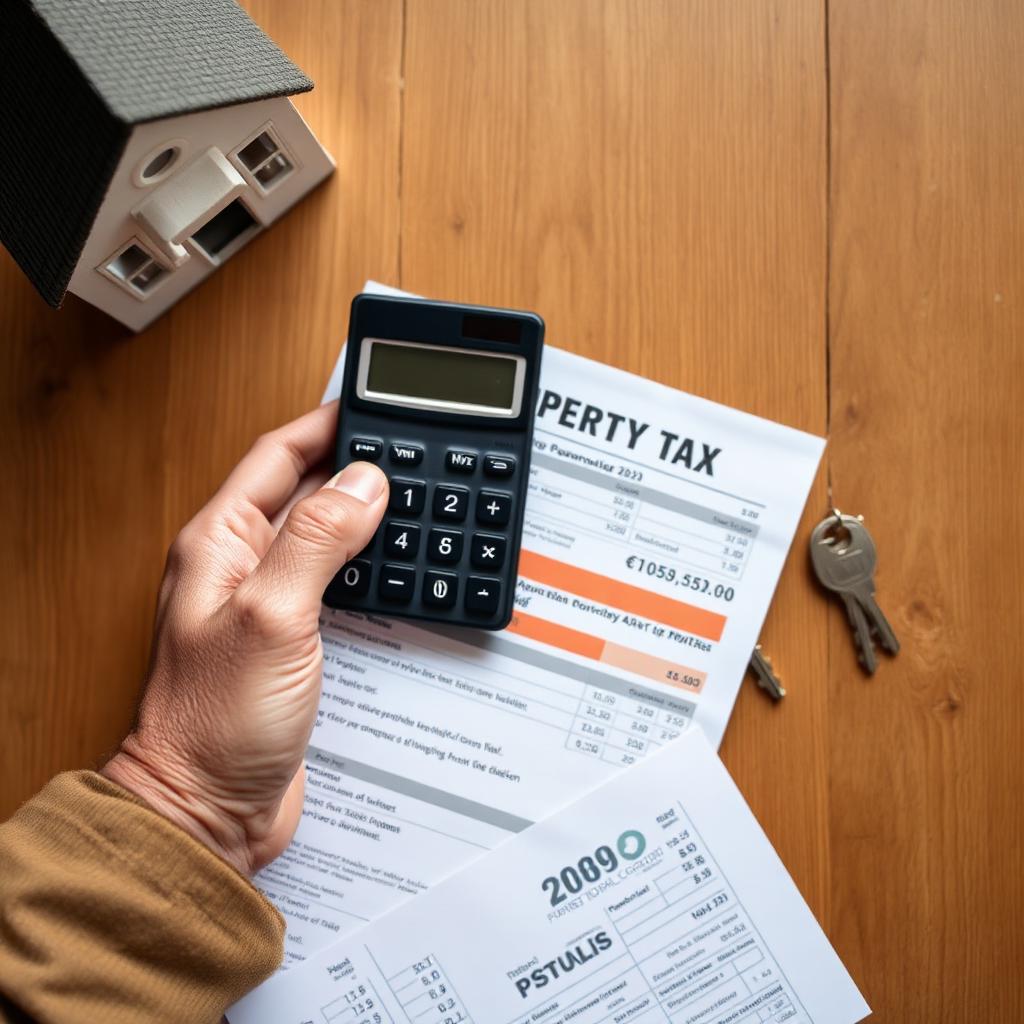
Property tax is the single most consequential tax a Texas homeowner pays, and it operates under a body of law most residents never encounter until the appraisal notice arrives in April. This guide explains the statutory framework that governs how your home is valued, how your rate is set, how your bill is calculated, and what legal tools you have to challenge every one of those steps.
Texas property tax law is a mix of the Property Tax Code (Title 1), the Tax Code (Chapter 26), constitutional caps (Article VIII), and voter-approved amendments — including the 2025 measure that raised the residence homestead exemption to $140,000. If you're new to the state and want the whole system in plain English, start with The Texas Property Tax Guide, and use our Property Tax Calculator to run your actual numbers.
Why Texas Relies on Property Tax So Heavily
Texas has no personal income tax, and voters made that permanent with a 2019 constitutional amendment. That leaves property tax as the primary funding mechanism for local government — school districts, counties, cities, community colleges, hospital districts, MUDs, and emergency-service districts all draw from it. The state itself does not levy property tax; the whole system is local, which is why identical homes in adjacent ZIP codes can carry very different bills.
For a full explanation of the trade-off, see Why Texas Has No State Income Tax. The upside is choice: Texans decide the size of local government by voting on bonds and by voting for the elected officials who set rates.
How Your Property Gets Valued: County Appraisal Districts
Every Texas county has a Central Appraisal District (CAD) governed by a board and led by a chief appraiser. The CAD is legally independent of every taxing entity — the county doesn't set your value, the school district doesn't set your value, only the CAD does. Values are certified in July and used by every entity that draws from your property.
By statute, the CAD must appraise at market value as of January 1 each year using mass appraisal techniques. Residential appraisers analyze comparable sales, adjust for differences, and generate a value for every parcel. The methodology is public. The result is the 'appraised value' that appears on your April notice.
For homestead properties, the Texas Constitution caps the growth of the taxable value at 10% per year regardless of how much the market value rose. That 'assessed value' is what your rate is applied to, not the raw market number. For non-homestead residential properties valued at $5 million or less, a temporary 20% growth cap runs through the 2026 tax year.
For a deeper dive into how the CAD operates and your statutory rights during the process, see How County Appraisal Districts Work.
The Homestead Exemption and Other Statutory Reductions
The residence homestead exemption is the single largest property-tax reduction many Texans will qualify for. Following the November 2025 constitutional amendments, the school-district homestead exemption is $140,000. Homeowners age 65 or older or with a qualifying disability receive an additional $60,000 school-district exemption plus a school-tax ceiling for qualifying homeowners.
Optional local homestead exemptions of up to 20% of appraised value may be adopted by counties, cities, and other taxing units. Many major counties have adopted them. Disabled veterans qualify for exemptions ranging from $5,000 to a full exemption depending on VA disability rating; 100% disabled veterans and their surviving spouses pay no property tax on their homestead.
The exemption is not automatic. It must be applied for at your county appraisal district using Form 50-114, ordinarily by April 30 of the tax year, though late filings back two years are commonly accepted. See The Texas Homestead Exemption Explained for the filing walkthrough.
How Rates Are Set: Truth-in-Taxation and the Voter-Approval Rate
Each taxing entity — school district, county, city, hospital district, and so on — must adopt a tax rate every year. That rate is expressed in dollars per $100 of assessed valuation. Rates are the second half of the bill; the first half is your assessed value.
The 'no-new-revenue rate' is the rate that would generate the same total revenue as last year on the same properties. The 'voter-approval rate' is generally the no-new-revenue rate plus 3.5% for most cities and counties and 2.5% for school districts. If a taxing unit adopts a rate above the voter-approval rate, voters automatically get a rollback election in November — a reform put in place by Senate Bill 2 in 2019 to force elected officials to defend increases at the ballot box.
Truth-in-taxation notices must be published, posted online, and mailed to homeowners in advance of the rate-adoption hearing. The Texas Comptroller maintains a truth-in-taxation lookup site where any resident can see every entity's proposed rate side by side.
How the Bill Is Actually Calculated
The formula is straightforward: assessed value minus exemptions, times the sum of all applicable tax rates, divided by 100. If your home is assessed at $400,000, your homestead exemption is $140,000 for school purposes, and your school district rate is $1.05 per $100, your school-district portion is (($400,000 − $140,000) × 1.05) / 100 = $2,730. Add the county, city, MUD, and hospital-district portions, each calculated on their own exempted taxable value and their own rate, and you have the total bill.
Bills are mailed in October and are legally due by January 31 without penalty. Payment options include installment plans for homeowners 65 and older and for qualifying disabled Texans, plus escrowed payment through the mortgage servicer for most buyers.
Your Right to Protest — And Why You Should
Every property owner has a statutory right to protest the appraised value each year. The typical protest deadline is May 15 or 30 days after the notice was mailed, whichever is later. Two grounds carry the most weight: (1) the market value is too high compared to actual sales of comparable properties, and (2) the appraisal is unequal — comparable properties in the neighborhood are appraised for less on a per-square-foot basis.
The process starts with an informal meeting at the CAD, where a substantial percentage of protests are resolved. If not, the case moves to the Appraisal Review Board (ARB) — a panel of citizen volunteers who hear evidence from both sides. ARB hearings are not adversarial in the courtroom sense; they are structured, brief, and evidence-driven. From an ARB order, the property owner may appeal to district court, to binding arbitration, or to SOAH (the State Office of Administrative Hearings) depending on the property type.
Practical advice: file the protest online the day the notice arrives, request the CAD's evidence packet (they are required to provide it), and build a five-page comparable-sales packet from MLS data, closing statements, or a fee appraisal. See How to Protest Your Property Appraisal — and Actually Win for the full playbook.
What the 2023 and 2025 Reform Packages Actually Changed
The 2023 reform package (SB 2, the constitutional Proposition 4) delivered the largest one-time property tax reduction in Texas history: $18 billion. It compressed school district M&O rates by roughly 10.7 cents, raised the school-district homestead exemption from $40,000 to $100,000, and introduced the temporary 20% cap on non-homestead residential properties valued at $5 million or under.
The 2025 constitutional amendment approved by voters raised the homestead exemption further to $140,000 and expanded the additional over-65/disabled exemption. School district rate compression continued in the 2025 budget. Both packages left the underlying formula intact — Texas still funds schools through property tax with state supplementation — but shifted a meaningful share of the burden off the residential homeowner.
For related coverage, see New Property Tax Relief Package and our Texas Property Tax Relief Calculator.
Special Situations: Ag-Use, Wildlife, Timber, and Open Space
Texas allows productivity-based appraisal for land in agricultural, wildlife, or timber use — often shorthanded as 'ag exemption,' though it is technically a special use valuation. The valuation is based on the land's productive value, not market value, resulting in dramatically lower tax bills on qualifying tracts. Rules and minimum acreage vary by county.
Rollback taxes apply when land drops out of qualifying use — typically five years of the difference between what was paid and what would have been paid at market value, with interest. Anyone buying land with an existing ag valuation should confirm the current productivity status and understand what an intended change of use would trigger.
MUDs, PIDs, and the Other Line Items That Surprise Newcomers
A Municipal Utility District (MUD) is a special-purpose local government created to finance water, sewer, and drainage infrastructure in a developing subdivision. MUDs levy their own property tax, sometimes at rates of $0.50-$1.00 per $100, which sits on top of the county, city, and school portions of your bill.
Public Improvement Districts (PIDs) and Emergency Services Districts (ESDs) function similarly. Buyers of new construction in Texas's expanding suburbs should ask specifically about every overlapping district before closing — the true tax rate is the sum of every entity your property falls inside, and it can meaningfully change what a $400,000 house actually costs to hold.
For a broader look at these overlapping entities, see What Local Governments Actually Control in Texas.
Enforcement, Delinquency, and the Statute of Limitations
Unpaid property taxes accrue penalty and interest starting February 1. After delinquency, the taxing unit can sue for a personal judgment, place a lien on the property, and ultimately foreclose. Tax lien foreclosures happen at monthly courthouse-step auctions in every Texas county.
Texas has a strong statutory framework for tax deferrals for homeowners 65 and over and for surviving spouses — the tax accrues but cannot be collected during the deferral period, protecting seniors on fixed incomes from being taxed out of long-held homes. Interest continues to accumulate; the deferral is not forgiveness.
What Every Homeowner Should Do Every Year
Three steps, every year, without exception: (1) verify your homestead exemption is on file with your CAD, (2) protest the appraised value when it arrives in April, and (3) show up or vote absentee in the November constitutional-amendment and rollback elections. These are the only levers a homeowner controls, and each one measurably affects the annual bill.
For a full first-year checklist for new arrivals, our Moving to Texas Guide walks through the entire property tax cycle in the context of everything else a new resident has to file.
Frequently Asked Questions
- How much is the Texas homestead exemption in 2026?
- The residence homestead exemption for school district purposes is $140,000 as of the November 2025 constitutional amendment. Homeowners 65 or older or with a qualifying disability receive an additional exemption plus a school-tax freeze.
- When is the deadline to protest my property appraisal?
- The standard deadline is May 15 or 30 days after the appraisal notice was mailed, whichever is later. File online with your county appraisal district as soon as the notice arrives.
- Who actually sets my property tax rate?
- Each taxing entity — school district, county, city, hospital district, MUD — sets its own rate every year. If the total exceeds the voter-approval rate, a rollback election is automatic in November.
- What is the appraisal cap and how does it work?
- The Texas Constitution caps growth of the taxable value on a homestead at 10% per year regardless of market value. A temporary 20% cap applies to non-homestead residential properties valued under $5 million through the 2026 tax year.
- Can I stop paying property tax when I turn 65?
- No, but you may qualify for a school-tax freeze, an additional exemption, and a full deferral of collection during your lifetime (interest continues to accrue). File with your CAD when you qualify.
- What happens if I do not pay my property tax bill?
- Delinquency triggers penalty and interest starting February 1, followed by potential lawsuit, lien, and eventually tax-lien foreclosure at courthouse auction.
Sources
Take the next step
Estimate Your Bill With Our Calculator →Related Articles
The Texas Property Tax Guide: Appraisals, Caps, and Calculating Your Bill

The Texas Homestead Exemption Explained: What Every Homeowner Should Claim

How to Protest Your Property Appraisal — and Actually Win
How County Appraisal Districts Work — and Your Rights as a Taxpayer

Texas New Laws 2026: Major Legislative Changes Explained
Get Texas updates delivered weekly.
Independent Texas reporting on politics, policy, and daily life. One email a week. Unsubscribe anytime.