Houston Housing Affordability Hiked by Parking Minimum Mandates, New Report Finds
A new push to eliminate government-mandated parking quotas gains steam at Houston City Hall to lower housing costs.
Editorial disclaimer: Opinions and analysis on Keep TX Red are editorial content — not statements of fact. See our editorial standards.
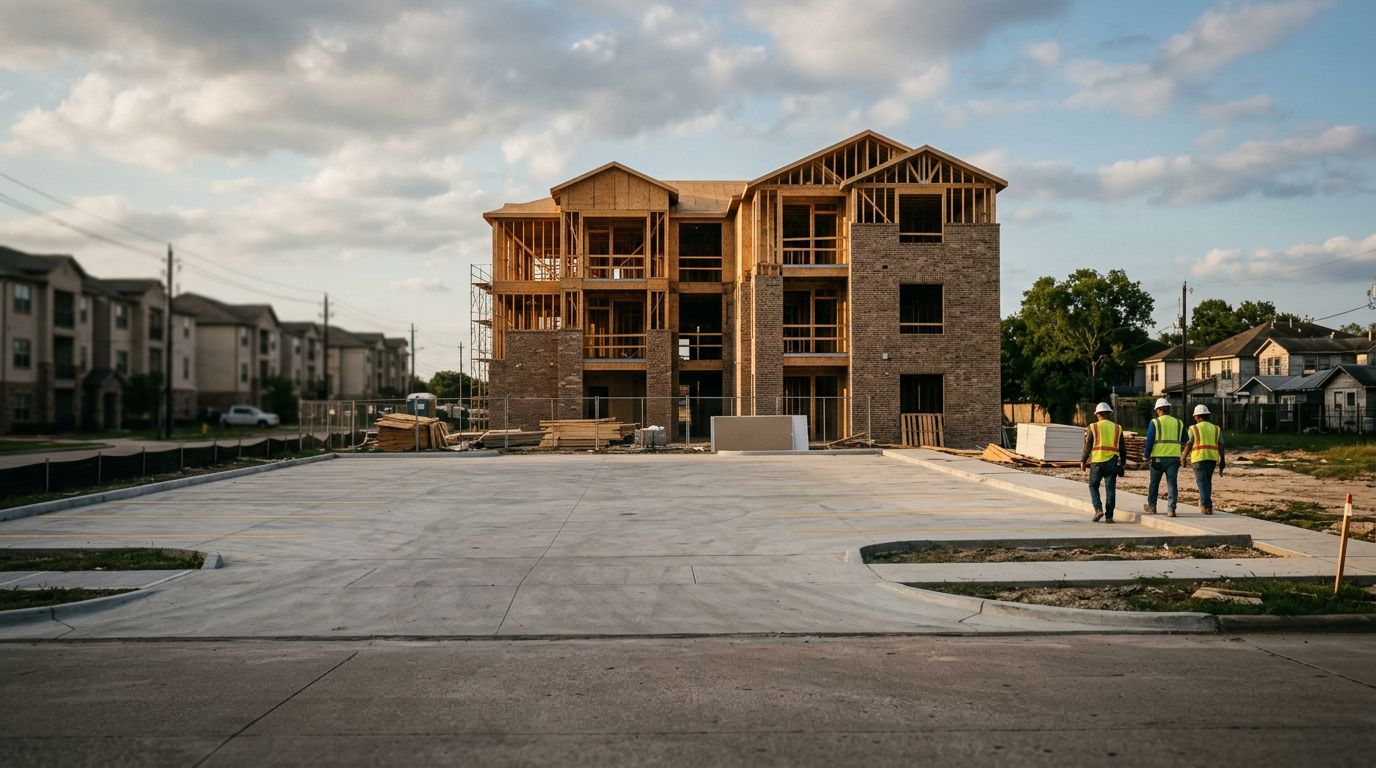
On July 22, 2026, the Houston Chronicle editorial board issued a public challenge to city leaders, advocating for the total removal of mandatory parking minimums to spur economic growth and housing availability. This proposal targets the municipal codes that currently dictate exactly how many parking spaces a private business or residential developer must provide on their own property. Historically, Houston has been known for its lack of traditional zoning, yet these specific parking ordinances act as a de facto regulatory hurdle that many argue limits the city's natural expansion. By calling for the city to start cutting this red tape, the editorial board is pushing for a shift toward a market-driven approach for urban development.
Texas relevance
As the largest city in Texas and a primary engine for the state's economy, Houston’s land-use decisions have massive implications for the Texas triangle. The city has long served as a model for how a less-regulated real estate market can provide more affordable housing than coastal counterparts like Los Angeles or New York. However, as the local population continues to swell, the cost of land has risen significantly. This specific debate over parking reflects a broader Texas-wide conversation about 'Texas-sized' urban sprawl versus the need for more efficient, high-density development that preserves the state's reputation for affordability and property rights.
The High Cost of Concrete and Land
One of the primary arguments for eliminating parking quotas centers on the sheer cost of land acquisition. In major Texas hubs like Houston, the price of a single acre has climbed to the point where requiring deep-set parking lots significantly reduces the amount of space available for actual housing units or storefronts. When a developer is forced by municipal code to prioritize cars over people, the financial burden is passed directly to the consumer.
Constructing parking garages or vast paved lots is not a free endeavor for the private sector. These costs are embedded in the final price of every retail item and the monthly rent of every apartment. By removing the mandate, reformers believe that the market will find a more natural balance, allowing for smaller, more affordable 'infill' projects that were previously blocked by the financial impossibility of meeting rigid parking quotas.
Micromanagement vs. Market Flexibility
Current Houston regulations involve a detailed system of micromanagement where City Hall bureaucrats determine the needs of individual businesses. Different types of shops or residential dwellings often face different tiers of requirements, creating a byzantine system that requires lawyers and consultants just to navigate. This complexity acts as a tax on small business owners who may not have the resources to challenge or meet these specific demands.
Moving toward a more flexible system would allow for the type of mixed-use projects that are becoming popular in major Texas metros. These developments often combine living, working, and shopping in a single footprint. When the government dictates parking counts, these creative and efficient uses of Texas land are often stifled or made prohibitively expensive by the need to build massive, underutilized parking structures.
Environmental Impact and Flood Prevention
In a city like Houston, where drainage and permeable surfaces are critical for flood management, every square foot of concrete matters. Current parking minimums essentially mandate the pouring of more concrete, even if a business owner believes they do not need that much parking. This contributes to the 'heat island' effect and increases runoff during the heavy rain events common to the Gulf Coast.
By allowing developers to reduce their paved footprint, the city could see a natural increase in green space or more innovative water detention methods on private property. This shift would represent a move away from 'one-size-fits-all' mandates that do not account for the specific geographic and environmental needs of different neighborhoods across the city's vast territory.
Expanding Living and Working Spaces
The ultimate goal of this regulatory rollback is to increase the supply of available places to live and work. As Houston's population grows, the demand for quality housing remains high. The editorial board suggests that current parking rules are a major factor in the struggle many residents face when trying to find affordable housing. When parking takes priority, housing supply is artificially constrained.
By freeing up space that was previously reserved for empty parking spots, developers can build more units on the same parcel of land. In the long run, increasing the supply of housing is the most effective way to stabilize prices in the Texas market. This approach emphasizes that the secondary effects of government regulation often manifest as rising costs for the very citizens the government claims to serve.
Economic Development and Tax Revenue
Beyond individual affordability, this policy change is framed as a win for the city's broader economic health. More densely developed lots typically generate higher property tax revenue for the city than sprawling parking lots. This allows the municipal government to fund essential services without necessarily raising the tax rate on existing homeowners.
Attracting new businesses to the urban core also becomes easier when those businesses aren't burdened by archaic land-use rules. As Texas continues to compete for corporate relocations and talent, maintaining an agile and business-friendly regulatory environment in its major cities is essential for sustaining the 'Texas Miracle' of economic growth.
Analysis
This push represents a classic tension between legacy urban planning and modern market-based solutions. From a conservative policy perspective, removing parking minimums aligns with the goal of reducing government interference in private enterprise. Forcing a developer to build a specific number of non-revenue-generating concrete slabs is a clear example of regulatory overreach that drives up the price for the end-user—the Texas homebuyer or renter. By allowing the property owner to decide their own parking needs based on actual customer or resident demand, the city could effectively lower the cost-barrier for new construction. Furthermore, reducing the amount of mandatory paved surfaces is a rare point of intersection between free-market advocates and those concerned about Houston's unique drainage and flood management challenges.
Source attribution
This story was reported using a public release from the r/houston. Keep TX Red rewrote the coverage independently and links to the official statement for verification.
Frequently Asked Questions
- What exactly are parking minimums?
- Parking minimums are local laws that require developers and business owners to provide a specific number of off-street parking spaces. The number is usually based on the square footage of a building or the number of residential units. In Houston, these are seen by some as an unnecessary layer of red tape that ignores actual market demand.
- How would removing these mandates lower the cost of housing?
- Building parking is expensive. Whether it is a surface lot or a multi-story garage, the cost of land and construction is high. When the government requires more parking than is actually needed, the cost of that unused space is added to the rent or purchase price of the housing units, making them more expensive for residents.
- Will there be enough parking if the mandates are removed?
- Supporters of the change argue that developers will still build as much parking as their customers or tenants demand. Businesses have a financial incentive to make sure their customers can reach them. The difference is that the 'market' will decide the amount of parking based on need, rather than a fixed number dictated by the city government.
Official Sources
Take the next step
Browse the Newsroom →Read more about Keep Texas Red → Our full guide to what Keep Texas Red means and why Texans support it.
Get Texas updates delivered weekly.
Independent Texas reporting on politics, policy, and daily life. One email a week. Unsubscribe anytime.
Keep TX Red Newsroom
The Keep Texas Red Editorial Staff produces nonpartisan explainers, policy breakdowns, and educational resources to help Texans understand how their government works. All content is reviewed for accuracy and updated regularly.
About Keep TX Red →