Texas SNAP Deadline Extended: Governor Abbott Announces Relief for Flood-Impacted Counties
New extension allows residents in nine Texas counties to apply for food replacement benefits through August 2026 following catastrophic flooding.
Editorial disclaimer: Opinions and analysis on Keep TX Red are editorial content — not statements of fact. See our editorial standards.
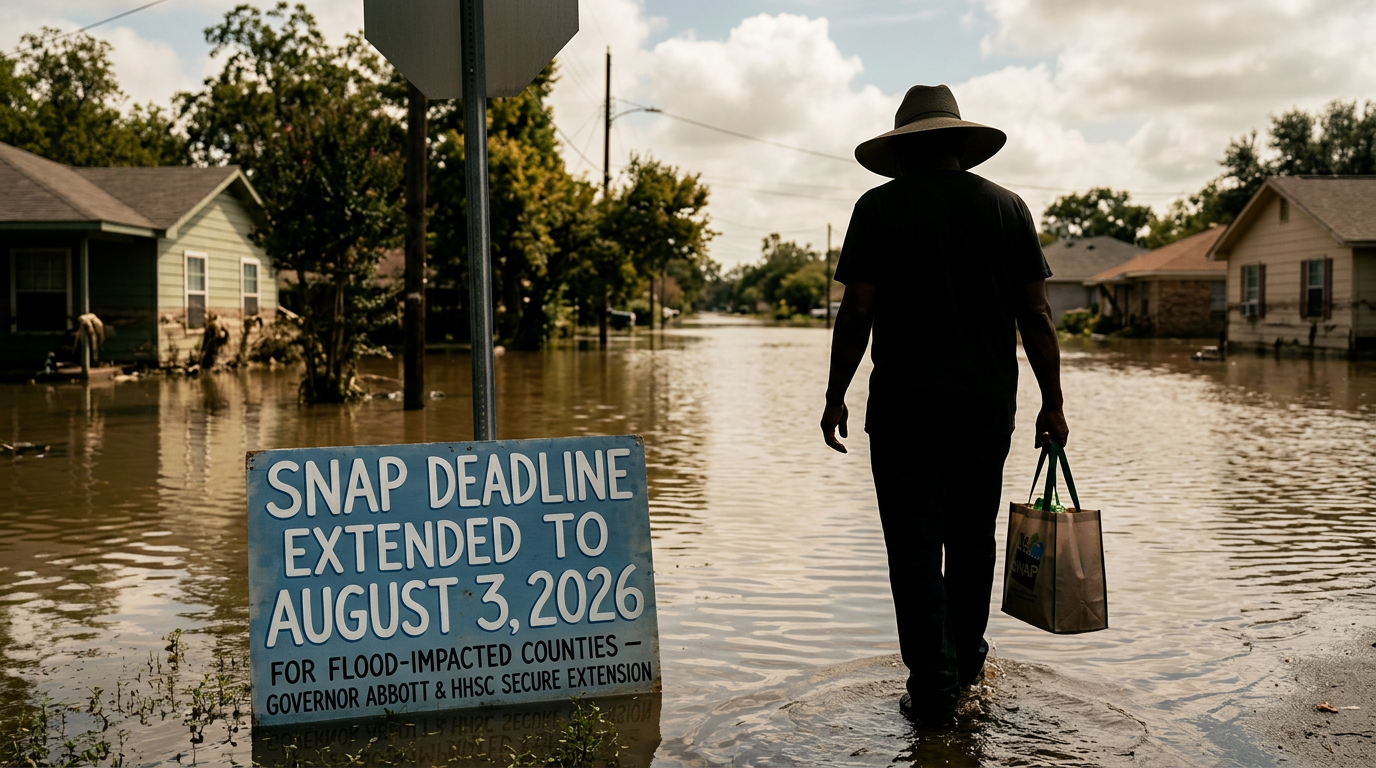
Governor Greg Abbott and the Texas Health and Human Services Commission (HHSC) have secured a reporting extension for residents in nine Texas counties seeking to replace food lost during recent flooding. Following a request from the state, the U.S. Department of Agriculture Food and Nutrition Administration granted approval to move the application deadline to August 3, 2026. This administrative change specifically targets registered Supplemental Nutrition Assistance Program (SNAP) recipients who suffered losses due to the severe weather events that recently swept through Central and Southwest Texas. Historically, Texas governors have utilized emergency powers and federal partnerships to fast-track aid after flash flooding, which is a frequent threat in the Balcones Escarpment and Hill Country regions. By extending the window for reporting losses, the state aims to ensure that eligible families do not lose their nutritional support due to paperwork delays or the physical displacement caused by rising waters. The extension applies to a cluster of counties that recently experienced heavy rainfall and subsequent infrastructure damage.
Texas relevance
This update directly impacts residents in Bandera, Blanco, Frio, Gillespie, Kendall, Kerr, Medina, Uvalde, and Val Verde counties. These regions, many of which are known for rugged terrain and rapid river rises like the Guadalupe and Frio rivers, are particularly susceptible to flash floods. The state’s intervention provides a critical safety net for rural Texans whose primary concern during recovery is maintaining consistent food access. The use of the Lone Star Card system as the delivery vehicle ensures that benefits reach the local economies of these specific Texas communities quickly.
Targeted Relief for Nine Texas Counties
The extension is not a statewide mandate but rather a targeted response for specific jurisdictions identified in the disaster recovery zone. Residents in Bandera, Blanco, and Frio counties are among those eligible to file for these replacement funds. The geography of these areas often presents challenges for mail and telecommunications during floods, making the extended timeframe essential for reaching all affected households.
Further west and north, Gillespie, Kendall, and Kerr counties are also included in the directive. These areas frequently deal with bridge washouts and road closures that can isolate residents for days. By pushing the deadline to 2026, the Governor’s office and the HHSC are acknowledging that the recovery of personal property and the assessment of household losses can take significantly longer than the standard reporting windows usually allow.
The final group of counties listed includes Medina, Uvalde, and Val Verde. These South Texas and border-region areas have faced significant weather-related stress in recent months. The inclusion of Uvalde and Val Verde ensures that families in the most downstream or western-affected corridors have equitable access to the federal food assistance funds originally allocated to them before the disaster occurred.
How the Replacement Process Operates
Replacement benefits are specifically designed to restore food items that were destroyed by power outages or water damage during the flood events. Under normal circumstances, SNAP recipients have a very limited window to report such losses. The new extension removes that immediate pressure, allowing families to focus on home repairs and safety before navigating the bureaucracy of the HHSC.
Once a request is filed and approved, the state has committed to a rapid turnaround for fund distribution. Benefits are scheduled to be added to existing Lone Star Cards within two business days of the request being processed. This speed is intended to prevent nutritional gaps for low-income residents who may have lost their entire refrigerated or frozen food supply during the storm's peak.
Collaboration Between State and Federal Agencies
The delivery of this aid requires a multi-tiered governmental approach. While the Texas Health and Human Services Commission manages the local distribution and intake of applications, the ultimate authority for SNAP funding lies with the U.S. Department of Agriculture (USDA) Food and Nutrition Administration. The state of Texas acts as the advocate for its citizens, petitioning the federal government for waivers and extensions when local conditions warrant them.
This specific extension was the result of a formal request by the HHSC to the USDA. This collaborative effort ensures that the state can bypass standard federal limitations that might otherwise prevent families from receiving help. By securing this federal approval, Governor Abbott’s administration ensures that the financial burden of the replacement benefits is supported by federal allocations, preserving state resources for other emergency management needs.
Focus on Hill Country and Southwest Texas Recovery
The region covered by this announcement is largely characterized by its tourism and agricultural industries, both of which are highly sensitive to weather disruptions. In counties like Gillespie and Kendall, flooding can disrupt both residential stability and the local workforce. Ensuring that families remain food-secure is a primary step in maintaining the regional economy's resilience during the cleanup phase.
In Uvalde and Val Verde, the impact of flooding can be exacerbated by the distance between population centers. The HHSC's role in these areas is crucial, as they must often coordinate with local community leaders to ensure the message regarding the August 3 deadline reaches those in unincorporated areas. The extension serves as a recognition of these unique logistical hurdles present in the Lone Star State’s vast geography.
Maintaining Nutritional Stability
Nutritional stability is a cornerstone of the state's disaster response strategy. According to the Governor’s office, the goal of extending the deadline is to ensure that 'meals remain on the table' for those who have suffered from the unpredictability of Texas weather. The prompt restoration of these benefits helps stabilize household budgets that are already stressed by the costs of cleaning up after a flood.
The SNAP replacement program is a vital component of the broader Texas disaster recovery framework. By focusing on food security, the state prevents further health and social complications following a natural disaster. This proactive approach by the Abbott administration and the HHSC reflects a standardized protocol for addressing the frequent rainfall-related emergencies that occur in these specific river-basin counties.
Source attribution
This story was reported using a public release from the Office of the Governor. Keep TX Red rewrote the coverage independently and links to the official statement for verification.
Frequently Asked Questions
- Which Texas counties are eligible for the SNAP benefit extension?
- Residents in Bandera, Blanco, Frio, Gillespie, Kendall, Kerr, Medina, Uvalde, and Val Verde counties are eligible for the extended application deadline.
- What is the new deadline to apply for replacement benefits?
- The deadline has been moved to August 3, 2026, giving families significantly more time to report food losses resulting from the floods.
- How long does it take to receive the replacement funds?
- Once the application has been received and processed by the Texas Health and Human Services Commission, the replacement benefits are typically loaded onto the recipient's Lone Star Card within two business days.
- Why was this extension necessary?
- Standard SNAP rules require food losses to be reported very quickly. Because of the severity of the recent flooding, the state of Texas requested more time from the federal government to ensure every affected family had a chance to apply.
Official Sources
Take the next step
Browse the Newsroom →Read more about Keep Texas Red → Our full guide to what Keep Texas Red means and why Texans support it.
Get Texas updates delivered weekly.
Independent Texas reporting on politics, policy, and daily life. One email a week. Unsubscribe anytime.
Keep TX Red Newsroom
The Keep Texas Red Editorial Staff produces nonpartisan explainers, policy breakdowns, and educational resources to help Texans understand how their government works. All content is reviewed for accuracy and updated regularly.
About Keep TX Red →