University of Houston Evaluates Scaling Back Core Curriculum to Align with Texas GOP Mandates
UH considers a significant 40% reduction in required core courses following recent legislative changes in Austin.
Editorial disclaimer: Opinions and analysis on Keep TX Red are editorial content — not statements of fact. See our editorial standards.
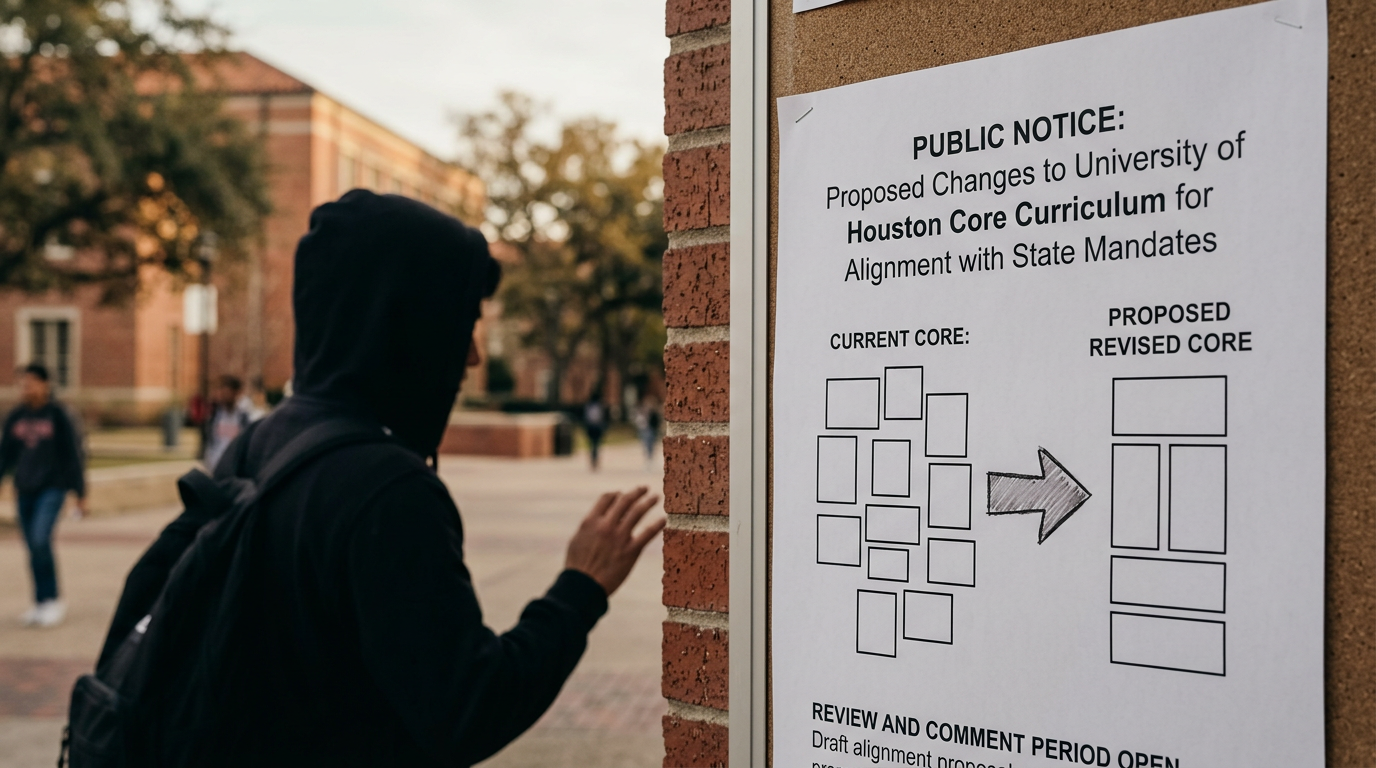
The University of Houston is currently evaluating a major structural shift in its undergraduate academic requirements, potentially slashing the number of core curriculum classes by 40 percent. This motion comes as a direct response to a legislative framework established by Texas Republican lawmakers intended to streamline higher education and focus on specific statewide standards. Historically, Texas universities have maintained a wide array of core options to provide a liberal arts foundation, but recent legislative sessions in Austin have signaled a move toward more standardized and efficient degree paths. The proposed changes at UH represent one of the most significant institutional responses to these state-level mandates in recent years.
Texas relevance
This development is a critical issue for the Houston metro area and the broader Texas higher education landscape. As one of the state's leading public research institutions, the University of Houston serves thousands of Texas residents who rely on the university for competitive and affordable degree programs. The shift in curriculum not only affects current and future Cougars but also sets a precedent for other public universities across Texas, from UT Austin to Texas A&M. Changes to the core curriculum directly impact the cost of tuition, the length of time it takes for a Texan to enter the workforce, and the specific skill sets that local graduates bring to the Texas economy.
The Scale of the Proposed Reductions
The University of Houston's potential move to cut 40 percent of its core requirements is not a minor adjustment but a fundamental overhaul of the student experience. Under current standards, students must choose from a wide variety of subjects to satisfy state and institutional core requirements. These classes often span the arts, humanities, social sciences, and natural sciences, designed to provide a well-rounded perspective.
The new proposal seeks to condense this list significantly. By removing nearly half of the available options, the university would guide students into a more concentrated set of courses. This consolidation is meant to simplify the registration process and ensure that the remaining courses are those most directly supported by state education policies.
Alignment with State Legislative Goals
Texas Republican lawmakers have spent several sessions focusing on the value proposition of public higher education. Through Various legislative actions, the GOP has sought to ensure that public universities remain focused on curriculum that prepares students for traditional civic participation and professional success. This move by UH is seen as a proactive measure to stay in compliance with the fiscal and academic expectations set in Austin.
The legislative intent behind these changes often center on the idea of 'core essentials.' Rather than allowing for a broad range of specialized topics to fulfill requirements, the preference is shifting toward a standardized set of classes that every student in the system receives. This reduces the variance in education between different public institutions across the state.
Impact on Degree Completion and Costs
One of the primary arguments in favor of slimming down the core curriculum is the potential for faster degree completion. Many students in Texas find themselves taking 'excess hours' that do not always transfer easily or contribute directly to their major. By narrowing the core, UH could potentially help students stay on a more direct path to their degree.
Reducing the number of core sections could also lead to more efficient use of university resources. With fewer types of core classes to staff, the university may be able to direct more funding and faculty attention toward high-demand majors and specialized research. This operational efficiency is a key component of the current legislative push in the Texas capital.
Faculty and Departmental Implications
A 40 percent cut to core requirements inevitably affects the faculty and the departments that currently provide those classes. Many professors at the University of Houston specialize in the specific elective courses that fill the current core curriculum. If these courses are removed from the required list, enrollment in those departments could drop, leading to internal shifts in staffing and department budgets.
University leadership will have to navigate the balance between complying with state-level mandates and maintaining the academic diversity of the institution. While the goal is to streamline, the institution must also ensure that it does not lose its competitive edge as a top-tier research university that attracts talent from around the world.
Public and Student Reaction
Student response to the news has been mixed, reflecting a divide between those who prefer more educational choices and those who want a shorter path to the workforce. For many, the ability to explore different subjects through core classes is a hallmark of the college experience. Others see the current system as unnecessarily complex and expensive, welcoming a more streamlined approach.
The discussion surrounding these cuts is expected to continue through the upcoming academic cycles. As the list of specifically targeted classes becomes clearer, stakeholders across the Houston area will likely weigh in on how these changes will affect the quality and reputation of a University of Houston degree in the long term.
Long-Term Policy Shift in Texas
This curriculum review at UH is a signal of the changing relationship between the state government and its public universities. After decades of relative autonomy, institutions are facing increased scrutiny regarding their spending and their classroom content. The Texas Legislature's focus on higher education reform shows no sign of slowing down, with more mandates likely on the horizon.
As other systems like UT and Texas A&M monitor the situation at the University of Houston, the state may be looking at a new standard for core education. If successful and well-received by lawmakers, the UH model of a 'lean' core could become the blueprint for all public universities in the state, fundamentally changing the Texas undergraduate experience.
Analysis
The proposed 40% reduction in core offerings reflects a broader push by the Texas GOP to reshape public education by prioritizing efficiency and ideological consistency. By narrowing the scope of required courses, lawmakers and university administrators may be aiming to reduce the total credit hours required for a degree, which could theoretically lower student debt and accelerate graduation. However, this move also serves as a check on university autonomy, as the state takes a more active hand in deciding what constitutes a fundamental education for a Texas citizen. From a conservative perspective, this is a victory for accountability, ensuring that taxpayer-funded institutions focus on essential academic skills rather than a sprawling list of niche electives.
Source attribution
This story was reported using a public release from the r/TexasPolitics. Keep TX Red rewrote the coverage independently and links to the official statement for verification.
Frequently Asked Questions
- Why is the University of Houston cutting these classes?
- The university is responding to legislative mandates from the Texas GOP aimed at standardizing and streamlining the core curriculum across public universities to improve efficiency and focus on essential coursework.
- Will this affect my ability to graduate on time?
- Ideally, these changes are designed to help students graduate faster by reducing the complexity of core requirements and minimizing unnecessary credit hours that do not count toward a degree.
- Does this only apply to the University of Houston?
- While the current proposal is specific to UH, it is part of a broader legislative movement in Texas that could eventually impact all public universities in the state.
- Which classes are being removed?
- A specific list is being reviewed by university administration, but the goal is to reduce the total number of elective-style courses that currently satisfy core requirements by about 40 percent.
Official Sources
Take the next step
Browse the Newsroom →Read more about Keep Texas Red → Our full guide to what Keep Texas Red means and why Texans support it.
Get Texas updates delivered weekly.
Independent Texas reporting on politics, policy, and daily life. One email a week. Unsubscribe anytime.
Keep TX Red Newsroom
The Keep Texas Red Editorial Staff produces nonpartisan explainers, policy breakdowns, and educational resources to help Texans understand how their government works. All content is reviewed for accuracy and updated regularly.
About Keep TX Red →