Texas Democrats Request State Investigation into Ken Paxton Over Voter Residency Concerns
A new complaint asks the Texas Secretary of State to investigate if Attorney General Ken Paxton violated election law by voting under a former address.
Editorial disclaimer: Opinions and analysis on Keep TX Red are editorial content — not statements of fact. See our editorial standards.
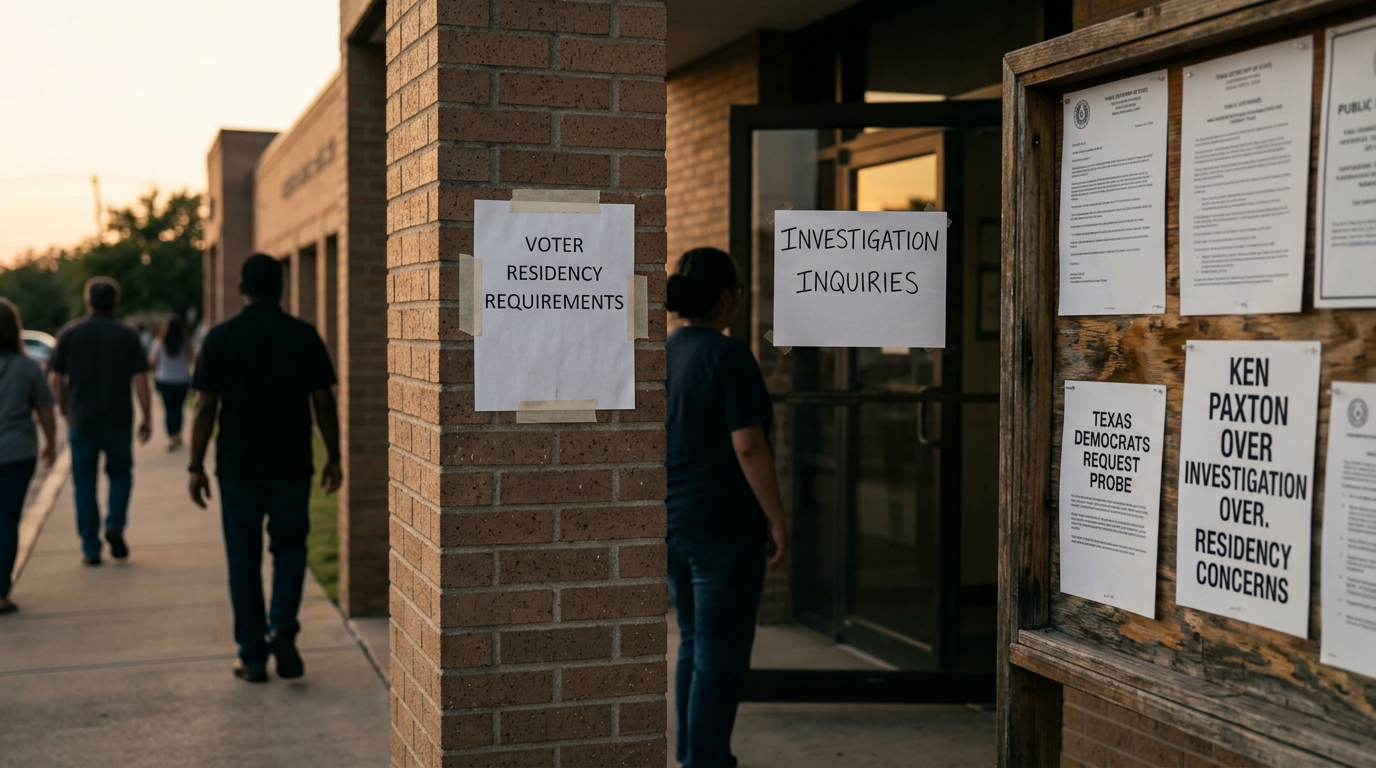
The Texas Democratic Party has formally requested that the Texas Secretary of State launch an investigation into Attorney General Ken Paxton regarding his recent participation in the May primary runoff election. The request centers on allegations that Paxton may have violated state election laws by casting a ballot using a residential address where he no longer resides. Historically, Texas voter registration laws require individuals to register at their primary residence, and using an outdated or incorrect address can lead to allegations of election fraud or illegal voting. This move marks the latest chapter in the ongoing legal and political friction between the state's Democratic leadership and the Republican Attorney General. Texas has a long history of strictly enforcing residency requirements for voters, often spearheaded by the Attorney General's own office in other cases.
Texas relevance
This matter is highly relevant to Texas as it involves the chief law enforcement officer of the state and the integrity of the voting process in a significant statewide primary. The Attorney General’s office is responsible for investigating and prosecuting election crimes within Texas, making any allegation directed at the head of that agency a matter of significant public interest. For residents across North and Central Texas, where Paxton maintains professional and personal ties, the outcome of such an investigation could impact public trust in the state's electoral oversight. The Texas Secretary of State, who oversees elections, must now determine if the evidence presented warrants a formal probe into the residency status of one of the state's highest-ranking executive officials.
Allegations of Residency Discrepancies
The core of the complaint rests on claims that Ken Paxton cast a ballot in the May primary runoff using an address that he had reportedly vacated. Under the Texas Election Code, a voter must be a resident of the territory covered by the election and must register at their true home address. When a voter moves, they are generally required to update their registration to match their new domicile to ensure they are participating in the correct local and regional contests.
The Democrats' filing indicates that reporting suggests the Attorney General was no longer living at the location listed on his official voter registration file at the time he voted. In Texas, residency is defined as the place where a person lives and to which they intend to return after any temporary absence. If a voter intentionally provides false information or fails to update their address while voting in a district where they do not live, it can be flagged as a violation of state statutes.
The Role of the Secretary of State
The complaint was directed to the Texas Secretary of State, the office tasked with maintaining the state's voter rolls and advising local election officials. While the Secretary of State does not always possess independent prosecutorial power, they are the primary authority for reviewing irregularities in the voting process. They can refer findings to other law enforcement entities if they determine that a criminal violation may have occurred.
Typically, the Secretary of State's office handles thousands of registration updates and inquiries annually. However, a request to investigate the Attorney General is a rare occurrence that places the office in a highly visible position. The office will likely review the registration history and the specific ballots cast during the May runoff to see if any technical or intentional errors were made during the check-in process at the polls.
Historical Context of Election Enforcement
Texas has been at the forefront of the national debate over election integrity, with state leaders frequently advocating for tighter controls on voter registration and identification. The Attorney General’s office has historically prioritized the prosecution of illegal voting, often citing cases where individuals used incorrect addresses or voted in districts where they were not eligible. This context makes the complaint against the sitting Attorney General particularly significant to political observers.
In previous years, Senate Bill 1 and other legislative efforts have increased the penalties for various election-related offenses in Texas. These laws were designed to ensure that the voter rolls are accurate and that participants are truly residents of the communities where they are casting votes. The current complaint seeks to apply these same standards of residency and registration accuracy to the official who oversees their broader enforcement.
Impact on Primary Runoff Results
The May primary runoff included several high-stakes races for both local and state-level positions. While a single vote rarely changes the outcome of a large-scale election, the legal implications of a high-profile official potentially voting in the wrong precinct carry weight beyond the mathematical tally. Each precinct has specific candidates for local offices, such as precinct chairs or judicial seats, that are determined by the residency of the voter.
If it is found that a voter participated in a runoff outside of their legal residence, those specific down-ballot contests can be called into question. Texas law emphasizes that voters must participate in the specific elections for which they are eligible based on their home. The Democratic Party's request highlights the necessity of ensuring that all participants, regardless of their station in government, adhere to the geographic boundaries established by state law.
Legal Procedures for Voting Complaints
When a formal complaint is filed regarding a voter's eligibility or residency, the process involves a review of governmental records, including property tax filings, utility bills, and driver’s license registration. These documents are often used as evidence to establish a person’s legal domicile. The Secretary of State’s office must weigh these records against the information provided on the voter registration card and the poll book from the day of the election.
Should the investigation find discrepancies, the potential outcomes range from administrative corrections to formal legal referrals. Texas law provides a framework for challenging a voter's residency, usually initiated by a concerned citizen or an opposing political organization. In this case, the state’s primary opposition party is utilizing these standard administrative channels to bring attention to what they characterize as a significant oversight by the Attorney General.
Future Implications for Texas Election Law
This request for an investigation could set a precedent for how residency disputes involving public officials are handled in the future. As Texas continues to grow and its officials move between various properties in the state capital and their home districts, the clarity of residency laws becomes increasingly vital. Clearer definitions or more frequent updates to the voter rolls may be suggested as a result of such high-profile disputes.
Furthermore, the public nature of this complaint ensures that voter registration accuracy will remain a key topic during the upcoming general election cycle. If the state moves forward with a probe, it will likely involve a detailed analysis of the Attorney General’s living arrangements and his intent to maintain a specific residence. This scrutiny underscores the ongoing emphasis on election security that has defined Texas politics over the last decade.
Source attribution
This story was reported using a public release from the r/texas. Keep TX Red rewrote the coverage independently and links to the official statement for verification.
Frequently Asked Questions
- What exactly are Texas Democrats alleging in their complaint?
- They are alleging that Attorney General Ken Paxton may have committed election fraud by casting a ballot in the May primary runoff using a former residential address where he no longer lives, which would violate Texas residency requirements for voters.
- Who has the authority to investigate this complaint?
- The complaint was submitted to the Texas Secretary of State. This office manages election records and can review whether a voter’s registration information matches their legal residency during an election.
- What is the legal definition of 'residency' for voting in Texas?
- In Texas, residency is defined as a person's home and the place where they intend to return after an absence. To vote in a specific district or precinct, a person must be a legal resident of that area and must update their registration when they move permanently.
Official Sources
Take the next step
Browse the Newsroom →Read more about Keep Texas Red → Our full guide to what Keep Texas Red means and why Texans support it.
Get Texas updates delivered weekly.
Independent Texas reporting on politics, policy, and daily life. One email a week. Unsubscribe anytime.
Keep TX Red Newsroom
The Keep Texas Red Editorial Staff produces nonpartisan explainers, policy breakdowns, and educational resources to help Texans understand how their government works. All content is reviewed for accuracy and updated regularly.
About Keep TX Red →