Sid Miller Joins Lubbock Residents Protesting Proposed Data Center Expansion
Texas Ag Commissioner Sid Miller traveled to Lubbock to support locals fighting a new data center, citing concerns over resources and land use.
Editorial disclaimer: Opinions and analysis on Keep TX Red are editorial content — not statements of fact. See our editorial standards.
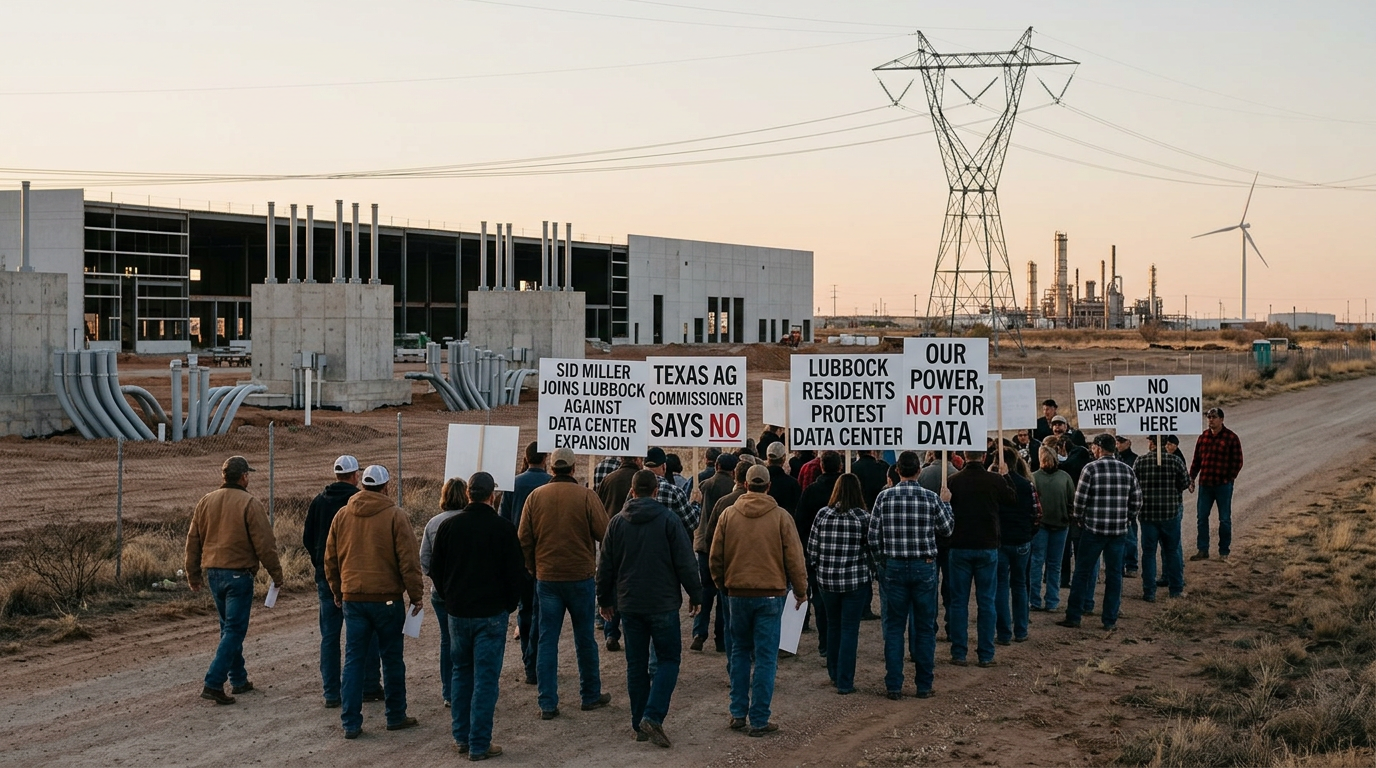
Texas Agriculture Commissioner Sid Miller appeared in Lubbock on July 21, 2026, to publicly side with local residents protesting the development of a new data center. The Commissioner, known for his vocal stance on protecting rural interests, joined a crowd of concerned citizens who argue that the massive infrastructure project threatens their quality of life. During the event, Miller emphasized the importance of local control and the potential strain such facilities place on the state’s electrical and water resources. The protest marks a significant moment in the ongoing tension between Texas’s rapid technological growth and the preservation of its traditional agricultural and residential landscapes. Historically, Texas has been a magnet for data centers due to its independent power grid and business-friendly environment, but this event signals a potential shift in how state leaders view the trade-offs of such developments.
Texas relevance
This situation is deeply relevant to Lubbock and the broader West Texas region, where the balance between land use for industry and agriculture is a constant point of contention. As high-tech firms increasingly eye rural Texas for expansion, the state’s Agriculture Commissioner stepping directly into a local zoning and development dispute sets a precedent for how the Texas Department of Agriculture may handle future industrial projects. For Texans, this highlights a growing debate over how the state can support economic diversification without compromising the rights and resources of long-standing farming communities. The Lubbock incident serves as a case study for other Texas municipalities currently facing similar proposals from large technology corporations.
The Rise of Data Center Developments in West Texas
Over the last decade, Texas has emerged as a global hub for data centers and cryptocurrency mining operations. These facilities require vast amounts of land and, perhaps more significantly, a consistent and massive supply of electricity and water for cooling. Companies are often drawn to the Lubbock area because of available space and historical proximity to energy production zones.
However, the rapid influx of these facilities has begun to cause friction with local residents. In Lubbock, the pushback has intensified as proposed sites have moved closer to residential neighborhoods and established agricultural land. Residents argue that the noise pollution and resource demands of these centers do not align with the character of their communities, leading to the organized protest witnessed this week.
Commissioner Miller’s Stance on Resource Allocation
Commissioner Miller has frequently expressed concern over how non-agricultural industries utilize Texas’s limited natural resources. During his address in Lubbock, he pointed out that while economic growth is a priority for the state, it should not come at the expense of the people who have lived and worked the land for generations. His presence lent a powerful state-level voice to a move that was previously handled primarily by local city councils.
Miller’s involvement suggests that the Texas Department of Agriculture may look for new ways to influence zoning or state-level permits for high-consumption industrial sites. He framed the issue not just as a local zoning dispute, but as a broader question of how Texas will manage its future. By focusing on the 'common sense' needs of the community, Miller has shifted the conversation toward the long-term sustainability of Texas’s rural infrastructure.
Lubbock Residents Cite Noise and Utility Concerns
The residents of Lubbock who organized the protest have highlighted several specific grievances. Primary among these is the constant humming noise generated by the large-scale cooling fans required to keep data servers from overheating. For neighborhoods that were once quiet and semi-rural, this shift represents a dramatic change in living conditions that many find unacceptable.
Beyond the noise, there are significant questions regarding the impact on the local power grid. With the Electric Reliability Council of Texas (ERCOT) frequently issuing conservation appeals, many Lubbock citizens are skeptical about the wisdom of adding another high-consumption user to the local circuit. The protesters gathered in Lubbock believe that the city should prioritize residential stability over corporate expansion when those two interests collide.
The Role of the Texas Department of Agriculture
While data centers are not traditionally within the direct regulatory scope of the Agriculture Commissioner, Miller has argued that anything impacting land use and water availability is an 'ag issue.' Under his leadership, the department has become more interactive with local development disputes, especially when they involve the conversion of farm property into industrial zones.
This event suggests that Miller is willing to use his platform to pressure local officials and state legislators to adopt stricter guidelines. By appearing in person, he has forced a dialogue about whether the current 'business at any cost' approach to tech development is sustainable. For the Department of Agriculture, protecting the stakeholders of West Texas is portrayed as protecting the backbone of the state's economy.
Local Government and Developmental Conflict
Lubbock’s local government faces the difficult task of balancing the promise of a larger tax base against the passionate opposition of their constituents. Data centers often offer significant tax revenue but relatively few long-term jobs compared to their physical footprint. This dynamic has made them a target for residents who feel the benefits do not outweigh the costs to their daily lives.
The protest attended by Miller has increased the pressure on city leaders to reconsider the approval processes for these projects. With a high-ranking state official now publicly backing the opposition, the political calculation for the Lubbock City Council has become considerably more complex. The outcome of this specific data center proposal could set a new standard for how other cities in the Texas Panhandle and South Plains respond to tech industry proposals.
Broader Implications for the Texas Energy Grid
The debate in Lubbock is a microcosm of a larger statewide discussion regarding the ERCOT grid. As Texas continues to grow, the demand for power is reaching record levels, often driven by industrial users who operate 24/7. The critics in Lubbock, supported by Miller, are asking at what point the state must say 'no' to keep the lights on for residential consumers.
If more state officials join Miller in his skepticism of unrestricted data center growth, we could see a legislative shift in Austin. This might include new fees for high-density users or more stringent requirements for facilities to provide their own backup power. The Lubbock protest is a clear indicator that the political climate regarding tech infrastructure in Texas is evolving rapidly.
Future Outlook for Land Rights in Rural Texas
As this story develops, all eyes will be on how the developers of the Lubbock data center respond to the high-profile opposition. If the project proceeds without modification, it could fuel further resentment and more aggressive state-level intervention. Conversely, if the project is moved or scaled back, it will represent a major victory for local organizers and Sid Miller’s advocacy.
For now, the message from the Lubbock protest is clear: rural and semi-rural Texans are no longer willing to quietly accept industrial encroachment. With the Agriculture Commissioner providing a megaphone for these concerns, the intersection of technology and Texas land rights will remain a central theme in state politics for the foreseeable future.
Analysis
Opinion: Sid Miller’s decision to personally attend a local protest in Lubbock reflects his broader political strategy of positioning himself as the primary defender of 'Texas values' and rural autonomy. By aligning with local homeowners against corporate interests, Miller is signaling that the Texas Department of Agriculture intends to have a seat at the table when it comes to infrastructure policy. This could be interpreted as a move to bolster his support among the rural base who feel that the state's urban-centric tech boom is beginning to encroach on their way of life. Furthermore, his focus on resource consumption—specifically water and power—taps into widespread anxiety following recent grid instability and drought conditions across the Lone Star State.
Source attribution
This story was reported using a public release from the r/TexasPolitics. Keep TX Red rewrote the coverage independently and links to the official statement for verification.
Frequently Asked Questions
- Why is the Texas Agriculture Commissioner involved in a data center dispute?
- Sid Miller views the expansion of massive data centers as a direct threat to rural land and natural resources like water, which are essential for the Texas agricultural industry. He has taken the position that protecting these resources falls under his mandate to represent the interests of rural Texans.
- What are the main complaints from Lubbock residents regarding the data center?
- Residents are primarily concerned with the continuous noise produced by cooling systems, the massive amount of electricity the facilities draw from an already stressed grid, and the proximity of industrial buildings to residential neighborhoods and family farms.
- What could be the long-term impact of this protest?
- This protest, backed by a state official, could lead to more restrictive zoning laws at the local level or new state-level regulations focused on how much water and power industrial facilities are allowed to consume during times of scarcity.
Official Sources
Take the next step
Browse the Newsroom →Read more about Keep Texas Red → Our full guide to what Keep Texas Red means and why Texans support it.
Get Texas updates delivered weekly.
Independent Texas reporting on politics, policy, and daily life. One email a week. Unsubscribe anytime.
Keep TX Red Newsroom
The Keep Texas Red Editorial Staff produces nonpartisan explainers, policy breakdowns, and educational resources to help Texans understand how their government works. All content is reviewed for accuracy and updated regularly.
About Keep TX Red →