The Shifting Landscape of Minority Voting Blocs and Party Loyalty in Texas Politics
Texas Democrats face scrutiny over their relationship with Black voters as political alignments shift and expectations of automatic loyalty are challenged.
Editorial disclaimer: Opinions and analysis on Keep TX Red are editorial content — not statements of fact. See our editorial standards.
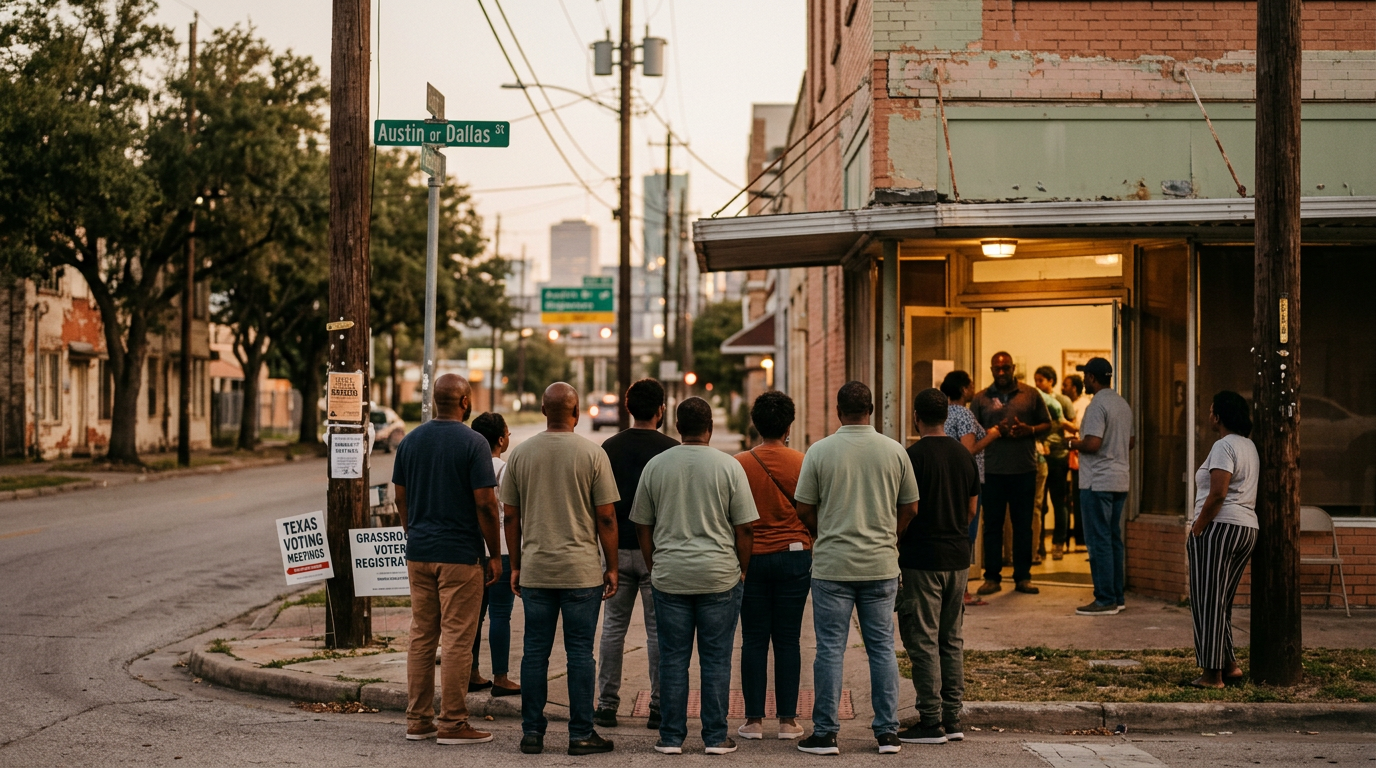
The historical expectation that specific demographic groups will consistently vote for a single political party is undergoing intense scrutiny across the Lone Star State. While Black voters have long served as a foundational pillar for the Texas Democratic Party, recent shifts in political discourse suggest a growing tension between traditional party allegiances and the evolving priorities of individual voters. For decades, the narrative in Austin and across major metro areas like Houston and Dallas has assumed a near-monolithic voting block, but the modern era of Texas politics is beginning to challenge these long-held assumptions as voters demand more tangible results for their support. Historically, Texas has seen similar shifts within the Latino community, particularly in the Rio Grande Valley, where Republicans have made significant inroads by focusing on traditional values and economic stability. This shift in the Latino vote has set a precedent that some analysts believe could eventually extend to other demographic groups. Contemporary discussions among political activists now highlight a perceived double standard in how the left responds to political diversity within minority communities, often questioning why some groups are criticized for diversifying their vote while others are not.
Texas relevance
These developments are critically important for the future of Texas as the state continues to be a battleground for demographic-based political strategies. In cities such as Dallas, Houston, and San Antonio, the way political parties engage with Black and minority communities will determine the outcome of statewide races for decades to come. Texas represents a unique micro-ecosystem where the 'Old South' politics of the eastern part of the state meet the 'New West' dynamics of the growing tech corridors, making it a primary laboratory for testing whether traditional party loyalty can be maintained or if a new era of competitive multi-ethnic outreach is required to win.
The Evolution of Demographic Expectations
In the mid-20th century, the transition of many minority groups from the party of Lincoln to the New Deal coalition created a roadmap for Democratic dominance in urban centers. In Texas, this meant that the urban cores of Harris and Dallas counties became reliable strongholds. However, as the political landscape becomes more fractured by cultural issues and economic volatility, the assumption that these voters will always support the same candidate is being tested by a younger, more independent generation.
Political observers note that when Latino or Asian voters in Texas trend toward the Republican Party, the reaction is often described as a 'strategic realignment' or a 'messaging failure.' In contrast, when discussions arise regarding Black voters potentially shifting their support, the rhetoric from the progressive wing of the state's politics becomes significantly more defensive. This underscores a deep-seated reliance on this specific demographic to offset losses in rural, white-majority counties across the state.
Competition for the Soul of the Texas Voter
The emergence of figures like James Talarico and other progressive leaders in the Texas Legislature has highlighted the gap between the 'online left' and the grounded reality of various minority communities. While the progressive wing often focuses on systemic reform and social justice through a specific lens, many minority voters in Texas prioritize kitchen-table issues such as school choice, the rising cost of living in booming cities, and public safety. These priorities do not always align perfectly with the national Democratic platform.
As Texas Republicans increasingly market themselves as the party of entrepreneurship and traditional family structures, they are finding listeners in communities once thought to be unreachable. The perceived 'entitlement' reported by certain political commentators serves as a barrier to authentic engagement. If a party assumes it owns a vote by default, it often stops listening to the unique concerns that vary from the neighborhoods of South Dallas to the suburbs of Fort Worth.
The Impact of School Choice and Economic Freedom
One of the most significant policy areas driving a wedge between traditional partisan lines in Texas is the debate over education. School choice has become an increasingly popular concept among Black and Latino families who feel underserved by large, bureaucratic urban school districts. When Democratic leaders in Austin oppose these measures, they find themselves at odds with a significant portion of their own base that views educational freedom as a civil rights issue for the modern era.
Similarly, the Texas economic miracle has brought prosperity to the state, but it has also brought challenges like gentrification and property tax hikes. Voters in minority communities are looking for leaders who can mitigate these pressures while sustaining growth. When the political left focuses on ideological purity rather than these practical economic realities, it creates an opening for conservative candidates to present themselves as a viable alternative for voters who are tired of being taken for granted.
Historical Precedents and Shifting Alliances
Texas history is full of examples where political alliances shifted based on regional and economic needs. Before the 1960s, the Democratic Party was the only game in town, encompassing a wide range of ideological bents. The current shift toward a more conservative-leaning Latino electorate in South Texas is a modern parallel to how demographic groups can and will change their voting patterns when they feel their values are no longer represented by the status quo.
If the Democratic Party continues to treat its most loyal supporters as a monolithic block that cannot be questioned, it may inadvertently accelerate the very exit it fears. The rise of social media has allowed for a more decentralized political conversation, where dissenting voices within minority communities can find like-minded individuals and realize they are not alone in their skepticism of established party narratives. This democratization of information is a direct threat to the entitlement-style politics of the past.
Future Strategies for the Lone Star State
Looking toward future election cycles, the strategy for both parties must evolve. For the GOP, the challenge is to move beyond mere outreach and toward genuine inclusion within the party structure. Showing up in communities only weeks before an election is no longer sufficient; a year-round presence is required to build the trust necessary to flip long-held seats. This includes supporting minority candidates who can speak directly to their communities about how conservative principles lead to better local outcomes.
Conversely, Texas Democrats must confront the internal biases that lead to the 'entitlement' mentality. Respecting the agency of Black voters means accepting that they are not a monolith and that their support must be earned through policy results, not just historical legacy. As the state grows and becomes more diverse, the parties that thrive will be those that treat every voter as a persuadable individual rather than a statistic in a demographic spreadsheet.
Analysis
The internal friction within the Democratic ranks regarding minority outreach is symptomatic of a larger identity crisis. By viewing specific communities as 'entitled' voters rather than constituents that must be earned every cycle, the party risks alienation. Conversely, the Texas GOP has a historic opportunity to broaden its base if it can successfully pivot from rhetoric to policy that addresses the specific concerns of urban minority voters. The criticism often leveled at Black voters who explore conservative options suggests a fear within the Democratic establishment that their most reliable floor is beginning to crack, and without that floor, the path to statewide victory in Texas becomes virtually impossible.
Source attribution
This story was reported using a public release from the r/TexasPolitics. Keep TX Red rewrote the coverage independently and links to the official statement for verification.
Frequently Asked Questions
- Why is the Black vote so critical for Texas Democrats?
- Because Republicans maintain a strong hold on rural and suburban white voters, Democrats rely on a high-turnout, high-percentage support from Black voters in major cities to remain competitive in statewide races. Even a minor shift in this demographic toward the GOP could permanently bar Democrats from winning the state.
- Is there evidence that minority groups in Texas are moving to the right?
- Yes, particularly in the 2020 and 2022 election cycles, where South Texas and the Rio Grande Valley saw historic swings toward Republican candidates among Latino voters. Political analysts are now watching for similar, albeit slower, trends in urban Black communities.
- What is 'political entitlement' in this context?
- Political entitlement refers to the assumption by a party or candidate that a certain group of people owes them their vote based on identity or historical affiliation, rather than the party continuing to earn that vote through current policy and respectful engagement.
Official Sources
Take the next step
Browse the Newsroom →Read more about Keep Texas Red → Our full guide to what Keep Texas Red means and why Texans support it.
Get Texas updates delivered weekly.
Independent Texas reporting on politics, policy, and daily life. One email a week. Unsubscribe anytime.
Keep TX Red Newsroom
The Keep Texas Red Editorial Staff produces nonpartisan explainers, policy breakdowns, and educational resources to help Texans understand how their government works. All content is reviewed for accuracy and updated regularly.
About Keep TX Red →