Texas Roadhouse Breaks Tradition to Launch New Food Delivery Pilot Program
The Louisville-based chain is testing delivery services in select markets, marking a major shift in its long-standing business model.
Editorial disclaimer: Opinions and analysis on Keep TX Red are editorial content — not statements of fact. See our editorial standards.
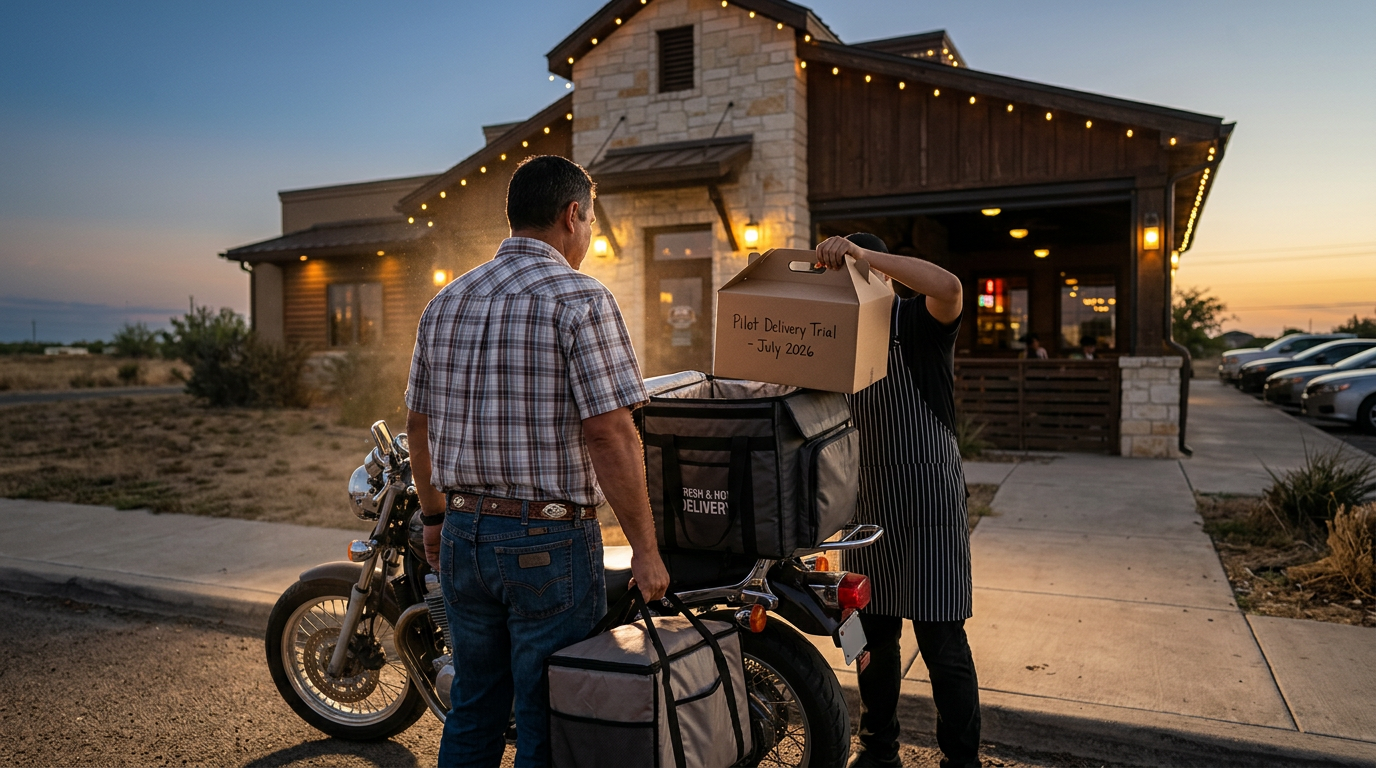
Texas Roadhouse, the steakhouse chain synonymous with rolls and hand-cut steaks, is officially launching a pilot program to test third-party delivery services in July 2026. This decision marks a significant departure from the company’s traditional stance, which previously prioritized the in-restaurant experience and limited off-premise options to customer pickups. CEO Jerry Morgan and the executive team are initiating this trial to determine if the brand can maintain its signature food quality while meeting the modern consumer's demand for home delivery. Historically, the brand resisted these platforms due to concerns regarding delivery fees and the potential for a diminished guest experience outside the steakhouse walls. The new initiative follows successful growth in to-go sales that emerged during the early 2020s, signaling that the infrastructure for high-volume off-premise dining is already partially in place. Contextually, Texas Roadhouse has spent decades building a cult-like following based on an atmosphere of loud country music, line dancing, and immediate table service. In an industry where competitors like Chili’s and Outback Steakhouse embraced DoorDash and UberEats years ago, Roadhouse remained a notable holdout. The company previously argued that their specific product, particularly high-quality steaks, did not travel well enough to justify the commission rates charged by delivery aggregators. However, the shift in market dynamics has reached a point where the company believes it must at least explore the potential for incremental revenue through digital ordering platforms. This testing phase will monitor how delivery impacts kitchen operations and whether the brand's margins can withstand the costs associated with third-party logistics.
Texas relevance
As a brand that carries the state's name and has a massive footprint across every major Texas metropolitan area, this change directly impacts thousands of Texas employees and millions of local diners. Texas Roadhouse operates hundreds of locations within the Lone Star State, serving as a staple for family dining and employment in cities from Amarillo to Brownsville. Any shift in how the company manages its kitchen workflow or customer interactions will be felt acutely in Texas communities, where the restaurant often serves as a primary social hub. The success or failure of this pilot will determine if Texas residents can soon order their favorite rolls and butter through an app without leaving their homes.
The Evolution of Off-Premise Strategy
For years, Texas Roadhouse focused almost entirely on the four walls of its restaurants. The leadership team believed that the value of the brand was tied to the physical environment—the peanut shells on the floor, the interaction with servers, and the freshness of food delivered straight from the kitchen. This focus led to industry-leading traffic numbers, but also meant they were missing out on the growing segment of consumers who prefer to dine at home.
The shift toward delivery began in earnest when the company realized that to-go orders had settled at a permanently higher level than pre-pandemic years. By building dedicated to-go areas in newer restaurant designs, the company laid the physical groundwork for external delivery drivers. Now, the pilot program will test whether the existing staff can handle the additional load of delivery drivers alongside traditional walk-in customers and mobile pickup orders.
Maintaining Quality Controlled Steaks
One of the primary hurdles for the steakhouse chain has been the physics of the food itself. A steak cooked to a specific temperature continues to cook in a cardboard box, and fries or rolls can lose their appeal if they sit in a delivery vehicle for twenty minutes. This pilot program is specifically focused on packaging technology and delivery radius limits to ensure that the food arriving at a customer's door is as close to the restaurant experience as possible.
Management is expected to work closely with third-party partners to establish strict guidelines. These guidelines likely include limits on how many orders a driver can carry at once and how long a bag can sit before being picked up. By controlling these variables, Texas Roadhouse hopes to avoid the common complaints associated with delivery, such as cold food or incorrect orders, which can lead to negative reviews despite the restaurant's best efforts.
Impact on Restaurant Operations and Staff
The introduction of delivery brings a new set of challenges for the 'Roadies,' the nickname for the company's frontline employees. Adding a new channel for orders requires changes to the kitchen display systems and the coordination between the front-of-house and back-of-house teams. The pilot will evaluate whether current staffing levels are sufficient to manage the influx of digital orders without slowing down the service for patrons sitting at the tables.
There is also the question of tips and compensation. While traditional servers rely on tips from seated guests, the to-go and delivery workflow often distributes labor differently. Texas Roadhouse has historically been known for high employee retention, and ensuring that this new business model doesn't overwhelm the kitchen staff or decrease the earning potential of servers will be a critical part of the evaluation process.
The Competitive Landscape in Texas
In the competitive Texas casual dining market, brands like LongHorn Steakhouse and Saltgrass Steak House have already integrated various levels of delivery and curbside service. Texas Roadhouse is entering a crowded digital field where brand loyalty is often tested by the ease of a mobile app. By finally entering the delivery space, the chain is positioning itself to compete more directly for 'couch-based' consumer spending that was previously going to fast-casual or pizza chains.
Market analysts note that Texas Roadhouse has one of the highest volumes of sales per square foot in the industry. Adding delivery is a way to increase that volume even further without physically expanding the footprint of existing buildings. If the pilot succeeds, it could set a new standard for how high-volume steakhouses manage the balance between a rowdy, high-energy dining room and a streamlined digital storefront.
Financial Implications and Growth Goals
From a financial perspective, the move into delivery is a play for incremental sales. The company has already seen stock performance benefits from its consistent growth, and delivery offers a new lever to pull for revenue generation. However, the margins on third-party delivery are notoriously thin due to the commissions charged by the platforms, which can range from 15% to 30% per order.
Jerry Morgan has indicated that the company will be careful not to sacrifice profitability for the sake of top-line growth. The test phase will provide the data necessary to see if customers are willing to pay a premium for delivery or if the company needs to adjust its menu pricing for off-premise orders to maintain its margins. This data-driven approach is characteristic of the chain's conservative but steady expansion philosophy.
Technological Upgrades and Integration
Supporting a delivery rollout requires more than just a contract with a delivery app; it requires a robust digital infrastructure. Texas Roadhouse has been upgrading its proprietary technology to better handle online ordering and waitlist management. The integration of third-party delivery services will require these systems to talk to each other in real-time to prevent the kitchen from becoming overwhelmed during rush periods.
The company is also likely exploring loyalty program integrations. By capturing data from delivery customers, Texas Roadhouse can better understand consumer behavior and customize marketing efforts. In an era where data is as valuable as the food itself, the pilot program serves as a laboratory for learning how to better engage with the modern diner across multiple touchpoints.
Analysis
This move represents a pragmatic pivot by Jerry Morgan and the leadership team to capture a segment of the market that values convenience over the traditional 'dinner and a show' experience found in their dining rooms. By waiting longer than their peers, Texas Roadhouse has had the advantage of watching other chains struggle with delivery logistics, allowing them to enter the space with a more refined strategy. The core challenge will be maintaining the 'Texas-sized' value proposition. If delivery fees and service charges drive the price of a meal up by thirty percent, the brand risks alienating its cost-conscious base. Furthermore, the operational strain on the kitchen during peak Texas weekend rushes could be a double-edged sword; while sales might increase, the quality of service for seated guests must be protected to avoid damaging the primary brand identity.
Source attribution
This story was reported using a public release from the Texas Food Stories (Google News). Keep TX Red rewrote the coverage independently and links to the official statement for verification.
Frequently Asked Questions
- Will every Texas Roadhouse location offer delivery immediately?
- No, the program is currently in a pilot or testing phase. Only specific locations selected for the trial will offer delivery initially as the company evaluates the operational impact.
- Which delivery services is Texas Roadhouse partnering with?
- The company is testing services with major third-party delivery aggregators, though specific exclusive partnerships have not been finalized for all regions during this testing period.
- Will the full menu be available for delivery?
- The pilot will determine which items travel best. While the goal is to offer a comprehensive menu, certain items that are highly sensitive to temperature and time may be restricted to ensure customer satisfaction.
- How will delivery affect the price of the food?
- Typically, third-party delivery involves additional service fees and delivery charges. Texas Roadhouse is using the pilot to determine how these costs affect customer demand and restaurant profitability.
Official Sources
Take the next step
Browse the Newsroom →Read more about Keep Texas Red → Our full guide to what Keep Texas Red means and why Texans support it.
Get Texas updates delivered weekly.
Independent Texas reporting on politics, policy, and daily life. One email a week. Unsubscribe anytime.
Keep TX Red Newsroom
The Keep Texas Red Editorial Staff produces nonpartisan explainers, policy breakdowns, and educational resources to help Texans understand how their government works. All content is reviewed for accuracy and updated regularly.
About Keep TX Red →