Texas Grid Prepared for Historic Demand Surge with Record Excess Capacity
Texas energy forecasts predict record-breaking demand this week, but high excess capacity signals a stabilized and robust state power grid.
Editorial disclaimer: Opinions and analysis on Keep TX Red are editorial content — not statements of fact. See our editorial standards.
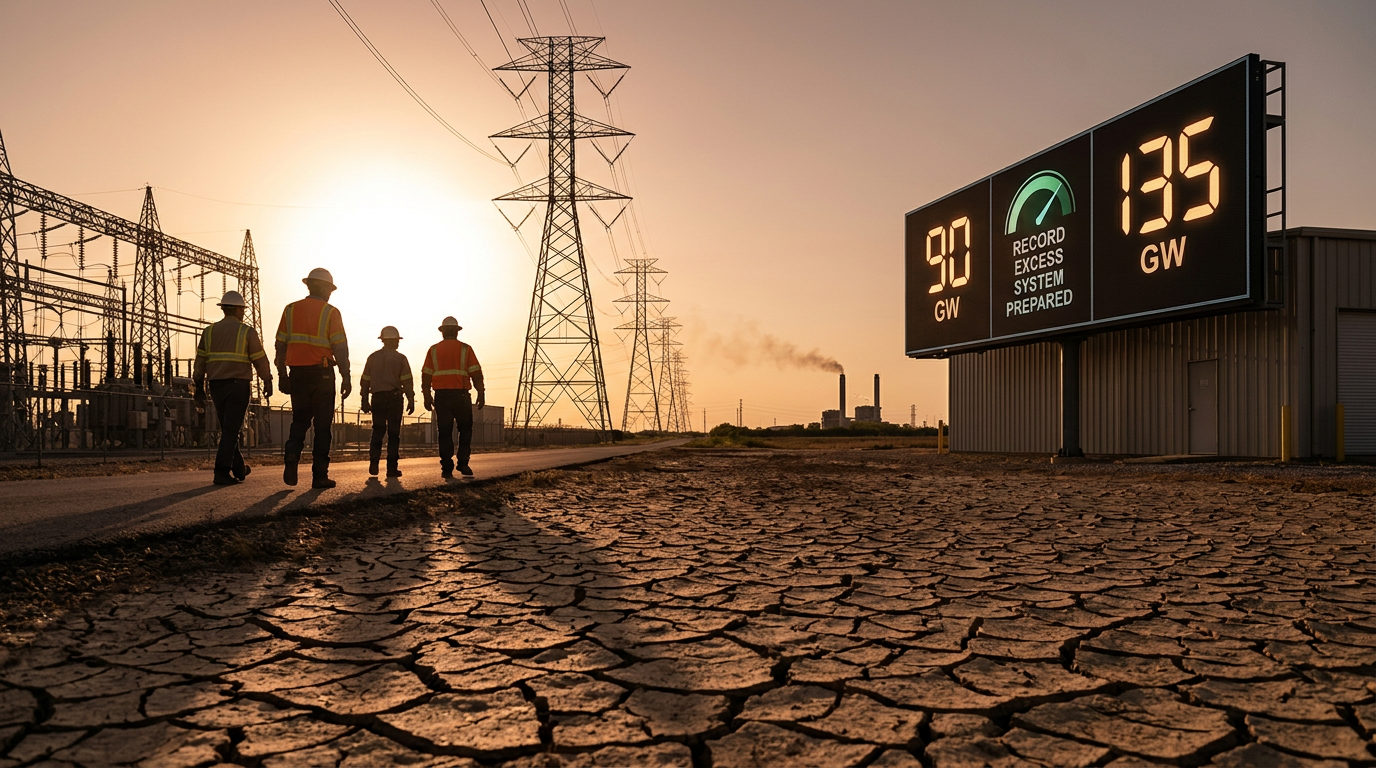
Recent data reveals that the Texas electrical grid is approaching an unprecedented milestone in energy consumption. Projections for the upcoming week indicate that the state is likely to surpass its previous record for one-day electricity usage, which currently stands at 85.5 gigawatts. Forecasts suggest a daily draw reaching approximately 90 gigawatts, driven by intense summer temperatures and a rapidly expanding population. This surge in demand highlights the evolving pressures on the Electric Reliability Council of Texas (ERCOT) to manage the needs of millions of homes and businesses during peak periods. Historically, Texas has faced scrutiny regarding the reliability of its independent grid, particularly following severe weather events that strained supply. However, the current outlook offers a different narrative than previous years of scarcity. Despite the historic demand levels predicted, the system is expected to maintain an extraordinary buffer of roughly 30 gigawatts in excess capacity. This surplus represents a significant shift in the state's energy landscape, suggesting that recent investments in diverse energy sources—including natural gas, wind, and solar—are providing a level of resilience that was previously absent during periods of extreme heat.
Texas relevance
This energy forecast is of paramount importance to every resident and business owner in Texas, as it directly impacts grid reliability and potential utility costs. The ability of the ERCOT system to handle 90 gigawatts of demand without triggering conservation appeals or rotating outages is a critical test of the state's infrastructure. In a state where extreme heat is a recurring reality, the stability of the grid is not just a point of policy, but a matter of public safety and economic continuity for all 254 counties.
Understanding the 90-Gigawatt Milestone
Reaching a 90-gigawatt daily demand is a milestone that few regional grids in the world have ever contemplated. To put this in perspective, one gigawatt is roughly enough to power 200,000 Texas homes during a peak summer afternoon. By scaling to 90 gigawatts, the state is effectively powering 18 million homes simultaneously, alongside the massive industrial corridor of the Gulf Coast and the tech hubs of Austin and Dallas.
The shift from the old record of 85.5 gigawatts to a consistent 90-gigawatt draw represents more than just a hot week. it reflects the compounding growth of the Texas economy. As more manufacturing facilities relocate to the state and the population continues to swell, the baseline for 'normal' electricity usage has moved upward. This week serves as a real-time stress test for the new baseline of the Texas energy ecosystem.
The Significance of Excess Capacity
Perhaps more shocking than the demand itself is the 30 gigawatts of excess capacity available within the system. This buffer is larger than the total capacity of many other state-level grids across the United States. Having such a wide margin of safety allows ERCOT to manage unexpected plant outages or drops in intermittent generation without resorting to emergency measures. It provides a cushion that protects the consumer from the volatility that defined previous summers.
This surplus is the result of a diverse 'all-of-the-above' energy strategy. While Texas continues to lead the nation in wind and solar installation, it has also maintained a strong commitment to thermal generation, such as natural gas and coal. The combination of these resources ensures that when the sun goes down or the wind dies, there are still enough dispatchable megawatts online to meet the needs of a growing state.
Technological Integration and Grid Monitoring
The use of advanced data platforms like GridStatus.io has revolutionized how the public interacts with the state's energy information. No longer is grid health a mystery hidden behind closed doors; real-time forecasting allows transparency into how supply and demand are balanced by the minute. This transparency holds grid operators accountable and allows industrial users to adjust their consumption patterns based on real-time price signals.
Technological upgrades at the substation and transmission levels have also played a role in facilitating this record-breaking load. High-voltage transmission lines, particularly those connecting west Texas wind farms and south Texas solar arrays to the population centers of the 'Texas Triangle,' have been reinforced to handle increased flow. Without these logistical improvements, a 90-gigawatt draw would be impossible regardless of how much power was being generated.
Economic Implications of Energy Surplus
A stable grid with high excess capacity is a massive economic recruitment tool for the state. Large-scale data centers, semiconductor fabrication plants, and heavy manufacturers all require a guarantee of reliable, relatively affordable power. When Texas shows that it can handle record demand with room to spare, it signals to global investors that the state is open for business and capable of supporting complex industrial operations.
Furthermore, the excess capacity helps to mitigate extreme price spikes in the wholesale market. While prices naturally rise when demand is high, the presence of surplus power prevents the 'scarcity pricing' that occurs when reserves drop to dangerous levels. This stability trickles down to residential consumers who benefit from a more predictable market environment, even during the harshest months of the year.
Comparative Strength Against Other Markets
The sheer scale of the Texas surplus—30 gigawatts—is frequently compared to the total requirements of California’s grid. This comparison highlights a significant divergence in energy policy. While some states have struggled with supply shortages and have had to ask citizens to curb usage frequently, Texas has focused on expanding its generation footprint to meet and exceed its own record-breaking growth.
The Texas model relies on market signals rather than heavy-handed government mandates to bring new generation online. The current forecasts suggest that the market is responding effectively to the needs of the state. By prioritizing a mix of traditional and renewable sources, Texas is creating a blueprint for how a large, independent grid can navigate the energy transition without sacrificing reliability or economic expansion.
Future Outlook and Infrastructure Planning
As Texas looks toward 2030, the demand for electricity is only expected to climb. Planners are already looking at scenarios where 100 gigawatts becomes the new standard for summer peaks. To prepare for this future, the state is encouraging the development of more 'firm' power sources, ensuring that the excess capacity seen this week remains a permanent feature of the Texas grid rather than a temporary anomaly.
Investments in battery storage are also beginning to play a more prominent role in the ERCOT market. These batteries can discharge quickly to fill gaps in supply, providing another layer of security. When combined with the massive surplus of traditional generation, these new technologies ensure that Texas remains the energy capital of the world, capable of powering its own future regardless of how high the temperature—or the demand—climbs.
Analysis
OPINION: The projected surplus of 30 gigawatts is a powerful rebuttal to critics who claimed the Texas deregulated market could not provide sufficient reliability. For years, opponents of the Texas model argued that the lack of a capacity market would lead to perpetual shortages. These new forecasts demonstrate that the 'energy-only' market, supplemented by recent legislative reforms focused on dispatchable generation and grid hardening, is successfully incentivizing production. The fact that Texas can generate enough surplus to power a medium-sized country while hitting record demand is a testament to the state's pro-growth energy strategy.
Source attribution
This story was reported using a public release from the r/texas. Keep TX Red rewrote the coverage independently and links to the official statement for verification.
Frequently Asked Questions
- What is the previous record for electricity usage in Texas?
- The previous record for the Texas grid (ERCOT) was 85.5 gigawatts. The current forecast predicts the state will exceed this by hitting approximately 90 gigawatts daily throughout the current week.
- Is there a risk of blackouts during this record demand?
- Current forecasts indicate a very low risk of blackouts because the state has approximately 30 gigawatts of excess capacity. This surplus is more than enough to cover the increased demand and account for any potential equipment failures at power plants.
- Why is Texas energy demand growing so quickly?
- The growth is driven by three main factors: extreme summer temperatures, a significant increase in the residential population moving to the state, and a massive expansion of industrial and tech-related businesses that require high amounts of power.
Official Sources
Take the next step
Browse the Newsroom →Read more about Keep Texas Red → Our full guide to what Keep Texas Red means and why Texans support it.
Get Texas updates delivered weekly.
Independent Texas reporting on politics, policy, and daily life. One email a week. Unsubscribe anytime.
Keep TX Red Newsroom
The Keep Texas Red Editorial Staff produces nonpartisan explainers, policy breakdowns, and educational resources to help Texans understand how their government works. All content is reviewed for accuracy and updated regularly.
About Keep TX Red →