Texas GOP Convention: Ethics Disclosures Show Campaign Funds Used for Animal Exhibit
Governor Greg Abbott's campaign finance reports detail a $25,000 expenditure for an elephant appearance at the state party convention in Houston.
Editorial disclaimer: Opinions and analysis on Keep TX Red are editorial content — not statements of fact. See our editorial standards.
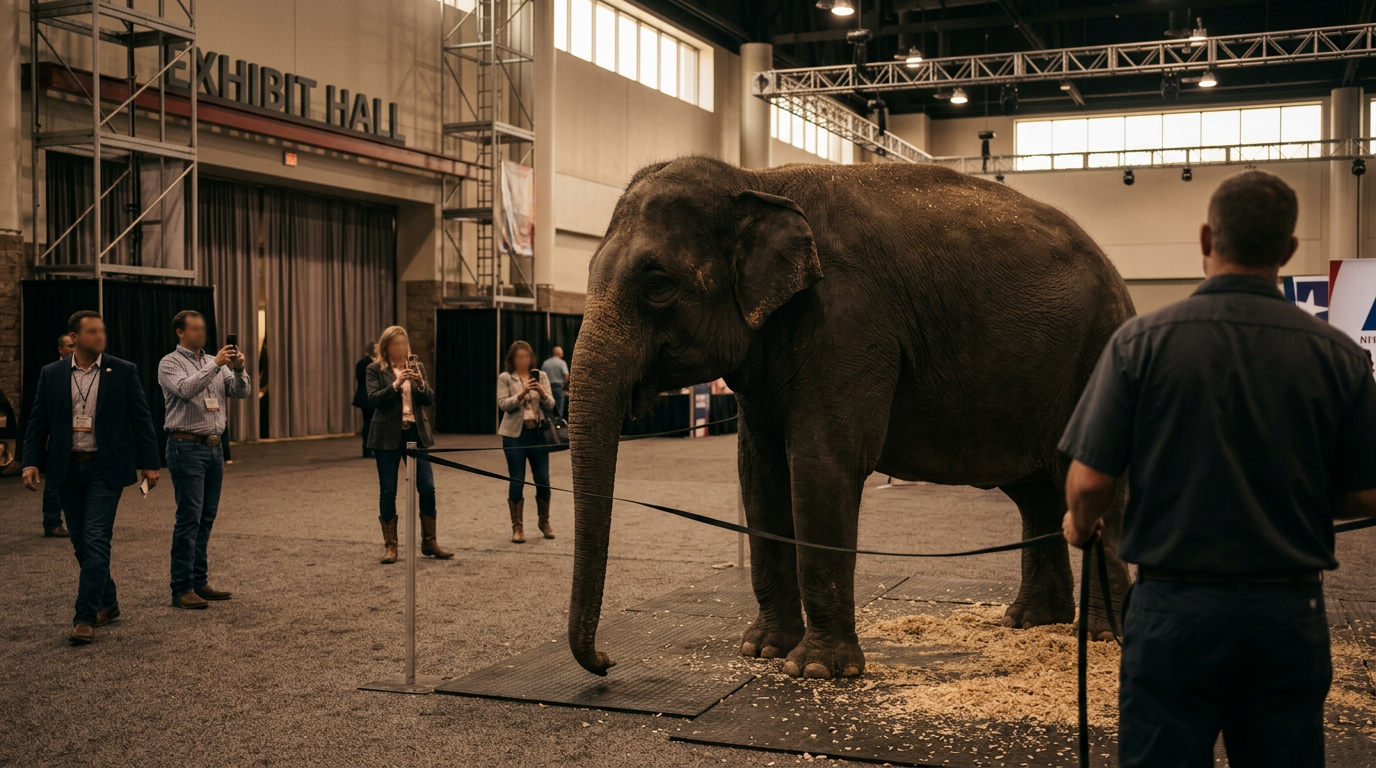
Recent campaign finance disclosures from the Governor Greg Abbott political committee have provided a detailed look at the costs associated with the most recent Texas GOP Convention. Among the expenditures was a $25,000 payment to an East Texas-based animal exhibitor for the appearance of an elephant named Paige at the George R. Brown Convention Center in Houston. This specific cost was part of a larger push by the state party to incorporate traditional GOP symbols into the branding of the June event. In Texas, the use of large exotic animals for political rallies has a long history, dating back to the mid-20th century when such spectacles were common at both state fairs and partisan gatherings. However, the logistical and regulatory hurdles surrounding these appearances have increased significantly over the last decade as municipal codes in major Texas hubs like Houston and Austin have tightened. This latest disclosure has sparked a conversation regarding the intersection of political optics, municipal registration requirements, and the oversight of licensed animal exhibitors operating within the state.
Texas relevance
The incident is highly relevant to Texas residents as it involves the chief executive of the state and the primary political organization in Texas. Furthermore, the conflict involves specific municipal ordinances in Houston, the state's most populous city, regarding the exhibition of exotic animals. Texas cities have increasingly moved toward more stringent local control over public safety relative to large animal displays, creating a tension between state-level political events and local regulatory authority. The situation also highlights how campaign funds, primarily raised from Texas donors, are allocated for large-scale event production and symbolic displays.
The Financial Breakdown of the Exhibit
The newly released finance report from the Abbott campaign provides transparency into the high costs of maintaining a consistent brand image at major political summits. The $25,000 fee was paid specifically to Trunks and Humps, an entity also known as East Texas Elephant Experience. This group is one of the few remaining exhibitors in the state that provides large mammals for public events and film productions.
In the context of a statewide campaign that raises millions of dollars annually, a $25,000 expenditure is a relatively minor line item. However, when viewed through the lens of public perception, it represents a significant investment in a single afternoon of visual engagement. The payment covered the transport, handling, and appearance fees for the animal during the festivities at the Houston-based convention center.
Houston Municipal Code and Registration Issues
While the payment itself was legal and disclosed according to state ethics rules, the logistics of the appearance ran into friction with Houston’s local regulations. The City of Houston requires any licensed exhibitor to register with the city's regulatory division at least 20 days before a planned event. This window is designed to allow local officials to review safety protocols and ensure that the presence of a large animal does not pose a threat to the public in a densely populated urban environment.
Reports indicate that the regulatory division in Houston found no record of the required filing for this specific appearance. This lack of paperwork has raised questions about whether the burden of compliance falls on the exhibitor or the entity hosting the event. In most cases, the vendor is responsible for these filings, but the controversy has inevitably landed on the doorstep of the campaign that financed the presence of the animal.
Historical Context of Animal Exhibitors in Texas
Texas has a deep-seated culture of utilizing livestock and exotic animals in public celebrations, ranging from the Houston Livestock Show and Rodeo to small-town parades. For generations, these animals have been seen as symbols of the state's rugged identity and agricultural foundations. The use of elephants by the GOP and donkeys by the Democrats is a traditional practice that stretches back decades in American political life.
However, as urban centers like Dallas, San Antonio, and Houston have grown, the space and tolerance for these displays have shifted. Modern Texas politics is increasingly caught between these traditional modes of entertainment and a newer, more cautious regulatory environment. The scrutiny surrounding the East Texas Elephant Experience is a byproduct of this shifting landscape, where animal welfare standards and municipal safety codes are prioritized over traditional pagentry.
Stakeholder Perspectives on the Convention Display
Supporters of the move argue that the elephant provided a unique and memorable experience for convention-goers, helping to build morale and create a festive atmosphere that is essential for party unity. They view the administrative hurdles as minor bureaucratic hurdles that do not detract from the successful execution of a major political gathering that drew thousands of Texans to Houston.
On the other hand, critics have pointed to the exhibitor’s history with federal welfare regulations as a reason for concern. These critics argue that and the state’s highest offices should vet vendors more thoroughly to ensure they align with public expectations of animal care. The divide reflects a broader debate in the state regarding the ethics of using exotic animals for entertainment purposes in the 21st century.
Implications for Future Political Events
The disclosure of this expense may change how campaigns approach event planning in the future. As news of the $25,000 cost and the registration failure circulates, other political committees may decide that the PR risk and the logistical headache are not worth the symbolic value. This could lead to a shift toward digital displays or more conventional props that do not require specialized municipal permits or animal handling expertise.
Furthermore, this incident may prompt the Texas Legislature or local city councils to clarify the responsibilities of event organizers versus vendors. If city ordinances continue to be overlooked by high-profile visitors, there could be a push for stricter enforcement or higher fines to ensure that public safety protocols are followed by everyone, regardless of their political affiliation or social status.
Public Safety and Crowd Management
The George R. Brown Convention Center is one of the busiest venues in Texas, often hosting multiple events simultaneously. Introducing a six-ton mammal into such an environment requires precise coordination between handlers, venue security, and local law enforcement. When registration deadlines are missed, the opportunity for that coordination is diminished, which is the primary concern cited by Houston officials.
No incidents of injury or property damage were reported during the June 12 appearance, but the 'what if' factor remains at the heart of the regulatory debate. Ensuring that handlers are qualified and that the animal's temperament is suitable for a crowded convention floor is a high-stakes responsibility that requires more than just a financial transaction to manage effectively.
Analysis
From a political strategy perspective, the use of the elephant—the mascot of the Republican Party—is a literalist approach to branding intended to energize the base and provide recognizable imagery for social media and news broadcasts. However, the $25,000 price tag and the subsequent regulatory oversight issues by the City of Houston demonstrate the risks of such high-profile stunts. While the campaign likely viewed the expense as a standard production cost for a major convention, the administrative oversight regarding the 20-day registration window could lead to increased scrutiny for future events. This situation underscores the administrative complexity that state departments and political campaigns face when operating in Texas's diverse municipal jurisdictions, where city ordinances often necessitate more lead time than state-level planners may anticipate.
Source attribution
This story was reported using a public release from the r/TexasPolitics. Keep TX Red rewrote the coverage independently and links to the official statement for verification.
Frequently Asked Questions
- Why was the $25,000 payment only revealed now?
- Texas law requires political campaigns to file periodic finance reports. This specific payment occurred in June, which meant it was included in the most recent filing cycle released this week. These reports provide a public record of how campaigns spend their donated funds.
- Does a $25,000 fee for an elephant reflect the market rate?
- Yes, renting large exotic animals for events is an expensive endeavor in Texas. The costs include specialized climate-controlled transportation, liability insurance, professional handlers, and the care of the animal. Similar exhibits for media productions or corporate events often command similar or higher prices.
- What happens if a vendor fails to register with the city of Houston?
- Failure to register as an exhibitor can result in fines and the potential for the exhibitor to be barred from future events within the city limits. The city's regulatory division monitors these situations to ensure compliance with public safety codes, though enforcement actions are often handled post-event if the violation is administrative in nature.
Official Sources
Take the next step
Browse the Newsroom →Read more about Keep Texas Red → Our full guide to what Keep Texas Red means and why Texans support it.
Get Texas updates delivered weekly.
Independent Texas reporting on politics, policy, and daily life. One email a week. Unsubscribe anytime.
Keep TX Red Newsroom
The Keep Texas Red Editorial Staff produces nonpartisan explainers, policy breakdowns, and educational resources to help Texans understand how their government works. All content is reviewed for accuracy and updated regularly.
About Keep TX Red →