Houston In-Custody Death: Lorenzo Salgado Case Sparks New Community Debate
A recent death in federal custody sparks a statewide conversation regarding immigration enforcement protocols and Houston's specific cultural identity.
Editorial disclaimer: Opinions and analysis on Keep TX Red are editorial content — not statements of fact. See our editorial standards.
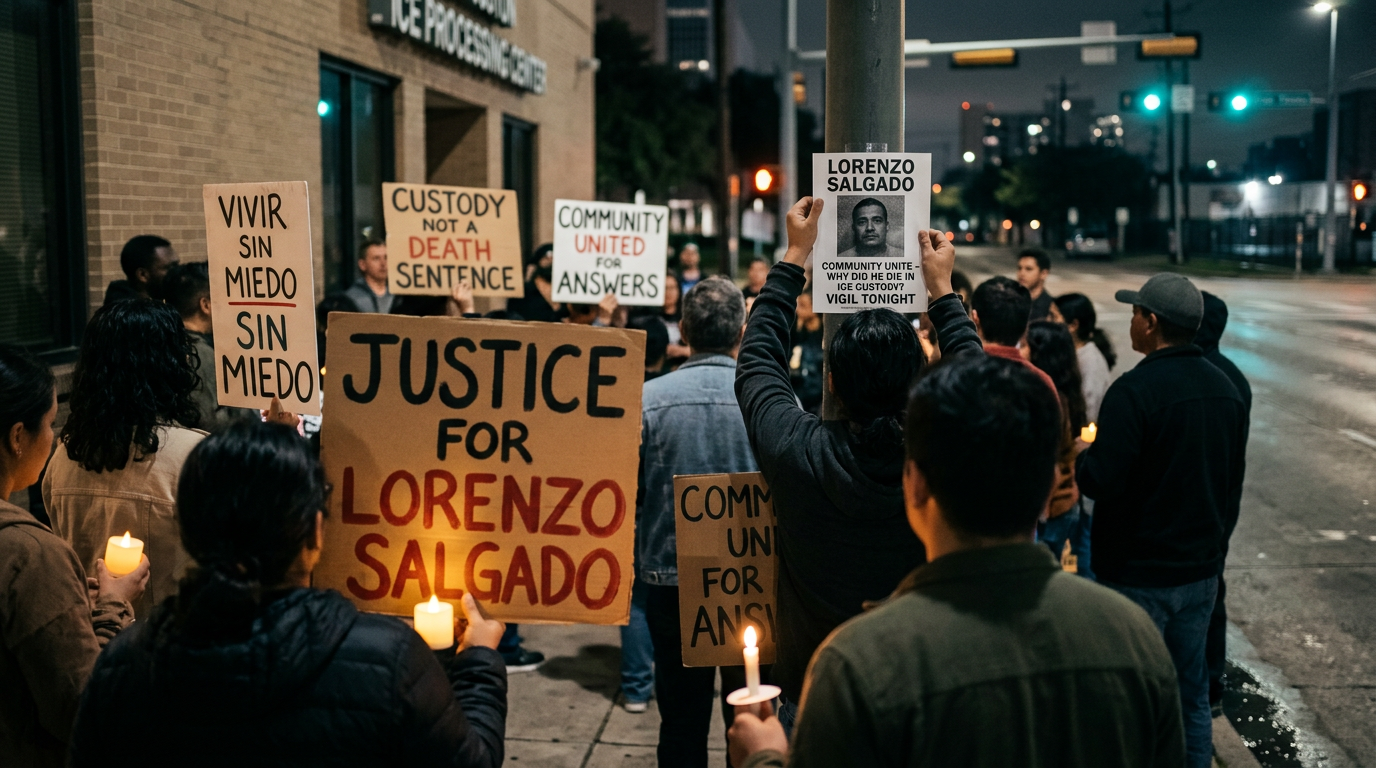
Recent reports regarding the death of Lorenzo Salgado, a long-term resident of Houston who was in the custody of U.S. Immigration and Customs Enforcement (ICE), have reignited a passionate discussion about the intersection of public safety and civil liberties. Salgado was known in his local community as a dedicated father who emphasized educational achievement for his children to ensure they had opportunities he did not. His passing has transitioned into a symbol for those questioning the efficacy and morality of current federal detention practices versus the practical needs of maintaining an orderly society. This incident follows a pattern of heightened scrutiny on federal agencies operating within major Texas metropolitan hubs, where local culture often clashes with national enforcement directives. The narrative surrounding Salgado emphasizes his role as a provider, creating a juxtaposition between the individual human story and the systemic procedures of federal agencies. Historically, Texas has seen similar flashpoints when long-term residents with established family roots are detained, leading to significant legal and social discourse regarding the threshold of force and control permitted by government entities.
Texas relevance
As the largest city in Texas and a primary economic engine for the state, Houston serves as the epicenter for this development. The impact of federal immigration policy is felt more acutely in Harris County than in many other parts of the country due to its diverse population and shared history with international migration. Texas lawmakers and local officials often find themselves at odds regarding how much cooperation should exist between local police departments and federal agents. For Texans, the case of Lorenzo Salgado represents more than just a single legal file; it touches on the foundational state values of family autonomy, hard work, and the right to due process within the borders of the Lone Star State.
The Profile of an Abandoned Narrative
Lorenzo Salgado resided in Houston for many years, building a life centered around manual labor and family advancement. His story is typical of many who move to Texas seeking economic stability: he worked long hours under the intense Texas sun to provide for his three sons. His children recall him as a man who viewed his own physical struggles as a stepping stone for their intellectual and professional success.
By focusing on his role as a father, community advocates are attempting to shift the focus from his legal status to his contribution to the local social fabric. The narrative suggests that Salgado’s story is a quintessential Houstonian experience, representing the grit and determination often celebrated in Texas culture. This framing complicates the federal government's position, as it forces a public weighing of a person's individual character against their legal standings.
Federal Oversight and Accountability Mechanisms
When an individual dies in ICE custody, it triggers a multi-layered investigation involving the Department of Homeland Security’s Office of Inspector General. However, these investigations often take months or years to reach a public conclusion. In Texas, where federal agencies have a massive footprint, there is a growing demand for more immediate transparency to maintain public trust in law enforcement institutions.
Critics argue that the current protocols for medical care and safety within detention facilities are insufficient for the population density they maintain. Proponents of current methods argue that the agencies are doing the best they can with limited resources and a high volume of cases. Regardless of the side, the Salgado case stands as a primary exhibit in the ongoing debate over whether federal detention centers in the Southern District of Texas are meeting basic safety standards.
The Evolution of Houston’s Cultural Identity
Houston has long prided itself on being a 'melting pot' where economic opportunity is the primary driver of social integration. Events like the Salgado incident challenge this identity by highlighting the underlying tensions of federal intervention. As the city continues to grow, its internal policies regarding how it interacts with federal immigration authorities remain a point of significant internal friction.
The reaction from the Houston community often reflects a unique brand of Texas independence. Local leaders frequently emphasize that while they respect federal law, they are primarily responsible for the safety and well-being of their specific constituents. This creates a complex regulatory environment where federal agents must navigate a local population that is increasingly skeptical of heavy-handed enforcement tactics that disrupt local families.
Political Responses and Legislative Implications
In the Texas Legislature, discussions regarding 'sanctuary' policies and law enforcement cooperation are perennial topics. The death of Salgado gives ammunition to those seeking to limit the state's role in federal immigration enforcement, while also prompting supporters of strict enforcement to call for better-funded, more secure facilities to prevent such tragedies.
Legislators in Austin are faced with the challenge of balancing these competing interests. There is a push for new standards of reporting whenever a Texas resident is detained by federal authorities, seeking to ensure that the state is kept informed of the status and health of its residents. The outcome of the Salgado investigation could influence future bills aimed at reforming how local jails and federal holding units interface.
Historical Context of Force and Liberty
The philosophical underpinnings of this debate reach back to the Founding Fathers, specifically John Adams’ thoughts on the necessity of studying 'politics and war' to secure a future of 'mathematics and philosophy.' In a modern Texas context, this translates to the idea that law enforcement is a necessary tool, but one that must be wielded carefully to avoid destroying the liberty it seeks to preserve.
Over the last several decades, Texas has been the site of numerous landmark cases involving the rights of non-citizens. Each case, including Salgado’s, adds a layer to the legal precedent regarding the 'duty of care' the government owes to those it deprives of liberty. As the state moves further into the 21st century, these questions of how to manage a large, diverse population under the rule of law remain as relevant as ever.
Family Advocacy and Future Legal Steps
The Salgado family, led by his eldest son Ronaldo, has become vocal in seeking answers. Their quest is not just for an explanation of his causes of death, but for a recognition of his humanity. By speaking to national and local media outlets, the family is ensuring that the case does not disappear into the bureaucracy of federal paperwork.
Legal experts suggest that a civil rights lawsuit may be the next step for the family. Such litigation in Texas often serves as a catalyst for policy changes, as discovery processes can reveal systemic failures within government agencies. The family’s resilience in the face of this loss has garnered support from various civic groups in the Houston area, further fueling the call for a comprehensive review of ICE’s operational procedures.
Analysis
OPINION: While the preservation of law and order is a cornerstone of Texas governance, the death of a resident while in government custody inevitably necessitates a transparent review. For conservatives and liberals alike, the power of the state to exert fatal force or allow conditions leading to death must be strictly checked. If the government is to maintain the 'politics and war' necessary to secure a free society, it must ensure that those entrusted with that power do not become a threat to the very liberty they aim to protect. The tragedy highlights a need for reform that prioritizes administrative efficiency and human safety without compromising the sovereign right of a nation to enforce its borders.
Source attribution
This story was reported using a public release from the r/houston. Keep TX Red rewrote the coverage independently and links to the official statement for verification.
Frequently Asked Questions
- Who was Lorenzo Salgado?
- Lorenzo Salgado was a longtime resident of Houston, Texas, and a father of three. He was known for his work in manual labor and his strong advocacy for his children's education before being detained by federal authorities.
- What caused the death of Lorenzo Salgado?
- The specific medical cause of death is typically subject to an autopsy and an official report by the federal agency. The primary controversy stems from the fact that the death occurred while he was under the supervision and care of ICE.
- How does Houston's local government typically handle ICE matters?
- Houston has a complex relationship with ICE, often balancing the requirements of state laws like SB4, which mandates cooperation, with a local desire to maintain trust within its diverse immigrant communities.
Official Sources
Take the next step
Browse the Newsroom →Read more about Keep Texas Red → Our full guide to what Keep Texas Red means and why Texans support it.
Get Texas updates delivered weekly.
Independent Texas reporting on politics, policy, and daily life. One email a week. Unsubscribe anytime.
Keep TX Red Newsroom
The Keep Texas Red Editorial Staff produces nonpartisan explainers, policy breakdowns, and educational resources to help Texans understand how their government works. All content is reviewed for accuracy and updated regularly.
About Keep TX Red →