Texas Election 2026: Rio Grande Valley Rallies Highlight Competing Visions for State Governance
Attorney General Ken Paxton and Representative James Talarico recently visited the border regions to define the future of Texas political identity.
Editorial disclaimer: Opinions and analysis on Keep TX Red are editorial content — not statements of fact. See our editorial standards.
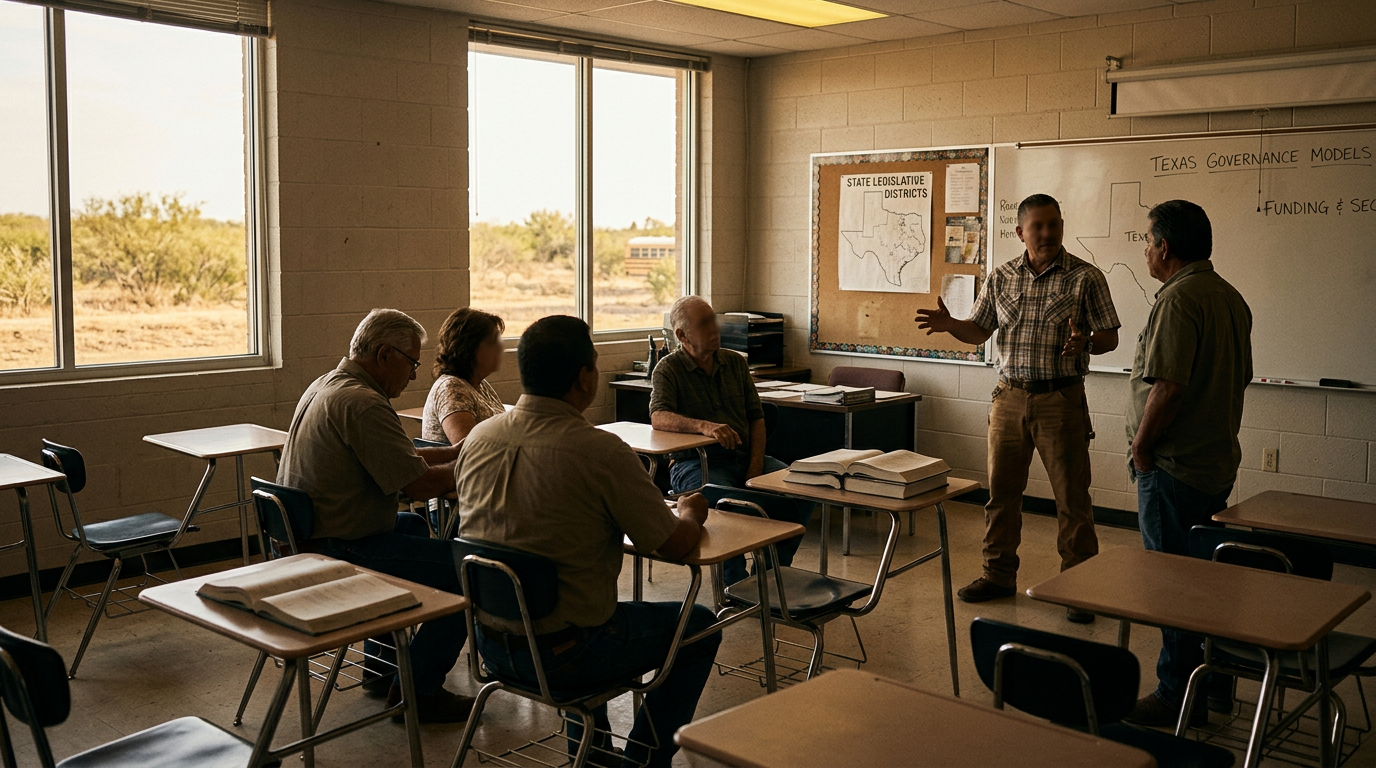
The Rio Grande Valley recently served as the backdrop for two drastically different political demonstrations, as high-profile Texas figures Ken Paxton and James Talarico campaigned across the region. As the state moves toward a pivotal 2026 election cycle, the question of what constitutes authentic Texas values has taken center stage. The Attorney General, representing the staunch conservative wing of the Republican party, met with local law enforcement and grassroots supporters to emphasize security, sovereignty, and traditional constitutional interpretations. Simultaneously, Representative Talarico, often viewed as a rising star in the Democratic party, engaged with communities to promote a platform centered on social investment and public resource equity. This duality reflects a longstanding tension in Texas politics where the 'heart' of the state is claimed by both traditionalists and reformers. Since the late 19th century, the South Texas region has evolved from a rural agricultural bastion into a critical demographic and political battlefield. Historically, the Rio Grande Valley was a Democratic stronghold, but recent election cycles have shown a significant shift toward Republican candidates, particularly among Hispanic voters concerned with economic opportunity and national security. This shift has forced leaders from both parties to visit the region more frequently, not merely as a photo opportunity, but as a genuine attempt to secure the votes necessary for statewide victory. The recent visits by Paxton and Talarico are emblematic of this strategic pivot, signaling that the Path to the Governor’s Mansion or the U.S. Senate increasingly runs through the southern border counties.
Texas relevance
These campaign maneuvers in the Rio Grande Valley are critical for all Texas residents because they represent the shifting tectonic plates of the state's electorate. As the fastest-growing state in the nation, Texas is currently grappling with how to integrate its frontier heritage with its modern, urbanized reality. For residents in the Valley specifically, these stops determine which policy priorities—such as border wall funding versus public school teacher pay raises—will receive legislative attention in the next session of the Texas Legislature in Austin. The ideological divide between Paxton and Talarico offers a preview of the messaging that will dominate airwaves from El Paso to Beaumont over the next two years.
Security and Sovereignty: The Paxton Perspective
Attorney General Ken Paxton’s visit to the Rio Grande Valley focused heavily on the mechanics of state power and the protection of the border. During his meetings with local officials, Paxton emphasized the state's role in filling the vacuum he claims has been left by federal inaction. His message to the voters in the region was one of resilience and defense, arguing that Texas cannot thrive unless its borders are secure and its laws are strictly enforced. This approach resonates with a significant portion of the South Texas population that deals directly with the logistical and safety challenges of living near the international boundary.
Beyond border security, Paxton used his platform to highlight his ongoing legal battles with the federal government. For those who subscribe to his vision of Texas, his litigation serves as a necessary shield against federal overreach. By framing himself as a defender of the Texas way of life, he positions his brand of politics as the only one capable of preserving the state's unique economic and social standing. His presence in the Valley was a calculated effort to remind voters that the Republican party intends to maintain its influence through aggressive legal and administrative action.
The Rise of Progressive Populism: Talarico’s Vision
In stark contrast, James Talarico’s time in the Valley was spent discussing the internal infrastructure of the community, specifically schools and healthcare. Talarico, a former educator, has built his political identity on the idea that the true values of Texas are found in how the state treats its most vulnerable citizens. He argued that the current leadership has neglected the human element of the state in favor of ideological grandstanding. His events were characterized by a call for increased funding for public institutions and a move toward a more inclusive definition of what it means to be a modern Texan.
Talarico’s rhetoric often bridges the gap between traditional social justice and contemporary progressive policy. By visiting the Rio Grande Valley, he sought to prove that his message of economic fairness and educational opportunity is not just for the suburbs of Austin or Dallas, but is equally applicable to the borderlands. He explicitly challenged the notion that the Republican shift in the region is permanent, suggesting instead that voters are looking for a party that prioritizes their daily material needs over political theater. This sets the stage for a high-stakes competition for the hearts and minds of South Texas residents.
Strategic Importance of the Rio Grande Valley
The Rio Grande Valley is no longer a localized interest; it is the center of the Texas political universe. For decades, the region was often ignored by high-level statewide campaigns, viewed as a reliable but low-turnout Democratic region. That changed in 2020 and 2022 when Republican margins improved dramatically in counties like Zapata, Starr, and Hidalgo. This shift has put both parties on notice. Republicans see a historic opportunity to create a multi-ethnic coalition of conservative voters, while Democrats see a desperate need to defend their traditional territory or risk losing the state for another generation.
The candidates' strategies reflect this urgency. Paxton is leaning into the cultural and security concerns of a region that is often on the front lines of national debates. Talarico is betting that the economic realities of the Valley—where poverty rates remain higher than the state average—will eventually pull voters back toward the Democratic party if the message is framed correctly. This creates a fascinating dynamic where both sides are essentially campaigning on the same turf but addressing two entirely different sets of anxieties. The outcome of this tug-of-war will likely dictate the winners of the 2026 midterm elections.
Competing Definitions of ‘Texas Values’
At the core of these visits is a fundamental disagreement over what 'Texas values' actually mean. For the conservative wing represented by Paxton, these values are synonymous with rugged individualism, limited taxation, and a strong, uncompromising defense of the state's borders. This view sees Texas as an exceptional enclave that must be protected from outside influences that might dilute its traditional culture. To this group, being 'Texas enough' means standing firm against any change that threatens the established order that has seen the state lead the nation in business growth for years.
Conversely, Talarico and his supporters argue that Texas values are rooted in community, neighbors helping neighbors, and public investment in the future. They frame the state’s history not as a finished product to be defended, but as an ongoing project of expansion and improvement. From their perspective, the most 'Texan' thing a leader can do is invest in the next generation through robust public schools and accessible healthcare. This philosophical divide is why the campaign stops in the Valley were so pointed; each man was essentially offering a different roadmap for the state's identity in the 21st century.
The Impact of Demographic Shifts
The political maneuvering in South Texas is also a response to the massive demographic shifts occurring throughout the state. As the Hispanic population continues to grow and move into new economic classes, their political preferences are becoming more diverse. No longer can any party assume that a voter’s ethnicity dictates their ballot. This fluidity has made the Rio Grande Valley a laboratory for new political messaging. Both Paxton and Talarico are trying to figure out which issues will move the needle for a voting bloc that is increasingly younger and more aspirational.
This demographic reality means that 'standard' campaign tactics often fall flat in the Valley. Voters here are looking for tangible results and a sense that they are not being used as props for a national audience. Whether it is Paxton’s focus on the rule of law or Talarico’s focus on social services, the candidate who wins will be the one who can convince these voters that their specific local needs are being prioritized at the state capitol. The recent flurry of activity in the region suggests that neither party is willing to concede an inch of ground.
Future Implications for the 2026 Senate Race
Looking ahead to the 2026 election cycle, the groundwork being laid today in the Rio Grande Valley will be the foundation for the entire state’s political narrative. If Paxton and his allies can maintain or grow their support in the region, the Republican path to victory remains solid. However, if Talarico and the Democrats can successfully pivot the conversation back to education and healthcare and revitalize their base in South Texas, the statewide map begins to look much more competitive. These early visits are the opening salvos in a long and likely expensive battle.
The broader implication is that Texas is no longer a 'red state' or a 'blue state' in the traditional sense; it is a high-competition state where every region must be actively contested. The activity in the Valley proves that both parties recognize the stakes. As the 2026 primary and general elections approach, Texans should expect to see more of these dueling visions as candidates attempt to define themselves as the true representatives of the Lone Star State.
Analysis
The contrast between Ken Paxton and James Talarico serves as a microcosm for the broader national political realignment occurring within the Lone Star State. Paxton’s strategy remains rooted in the 'law and order' and 'state sovereignty' pillars that have secured Republican dominance for three decades. By focusing on the Rio Grande Valley, he is attempting to solidify the GOP's gains among conservative Hispanic voters who align with his views on border security. On the other hand, Talarico is attempting to redefine the Democratic brand in Texas, moving away from purely national talking points and toward a more localized, faith-informed progressive populism. This competition over 'who is more Texan' is not just a stylistic choice; it is a battle for the soul of a state that is rapidly diversifying yet remains fiercely independent in its political culture.
Source attribution
This story was reported using a public release from the Texas Monthly. Keep TX Red rewrote the coverage independently and links to the official statement for verification.
Frequently Asked Questions
- Why is the Rio Grande Valley so important in Texas politics?
- Historically a Democratic stronghold, the Rio Grande Valley has seen a significant shift toward the Republican party in recent years. Because of its large population and strategic location on the border, both parties now view the region as essential for winning statewide elections.
- What are the primary differences between Paxton and Talarico's platforms?
- Ken Paxton focuses on legal challenges to federal authority, border enforcement, and conservative social values. James Talarico focuses on investing in public infrastructure, specifically through increasing teacher pay and expanding healthcare access.
- How does demographic change impact these campaign visits?
- The Hispanic population in Texas is growing and becoming more ideologically diverse. This means candidates can no longer rely on old voting patterns and must actively campaign in the Valley to address specific economic and security concerns of a changing electorate.
Official Sources
Take the next step
Browse the Newsroom →Read more about Keep Texas Red → Our full guide to what Keep Texas Red means and why Texans support it.
Get Texas updates delivered weekly.
Independent Texas reporting on politics, policy, and daily life. One email a week. Unsubscribe anytime.
Keep TX Red Newsroom
The Keep Texas Red Editorial Staff produces nonpartisan explainers, policy breakdowns, and educational resources to help Texans understand how their government works. All content is reviewed for accuracy and updated regularly.
About Keep TX Red →