Representative Gonzalez Files Legislation to Safeguard Public Access at Boca Chica Beach
New federal bill seeks to ensure South Texas residents maintain access to historic coastal areas amid expanding aerospace operations.
Editorial disclaimer: Opinions and analysis on Keep TX Red are editorial content — not statements of fact. See our editorial standards.
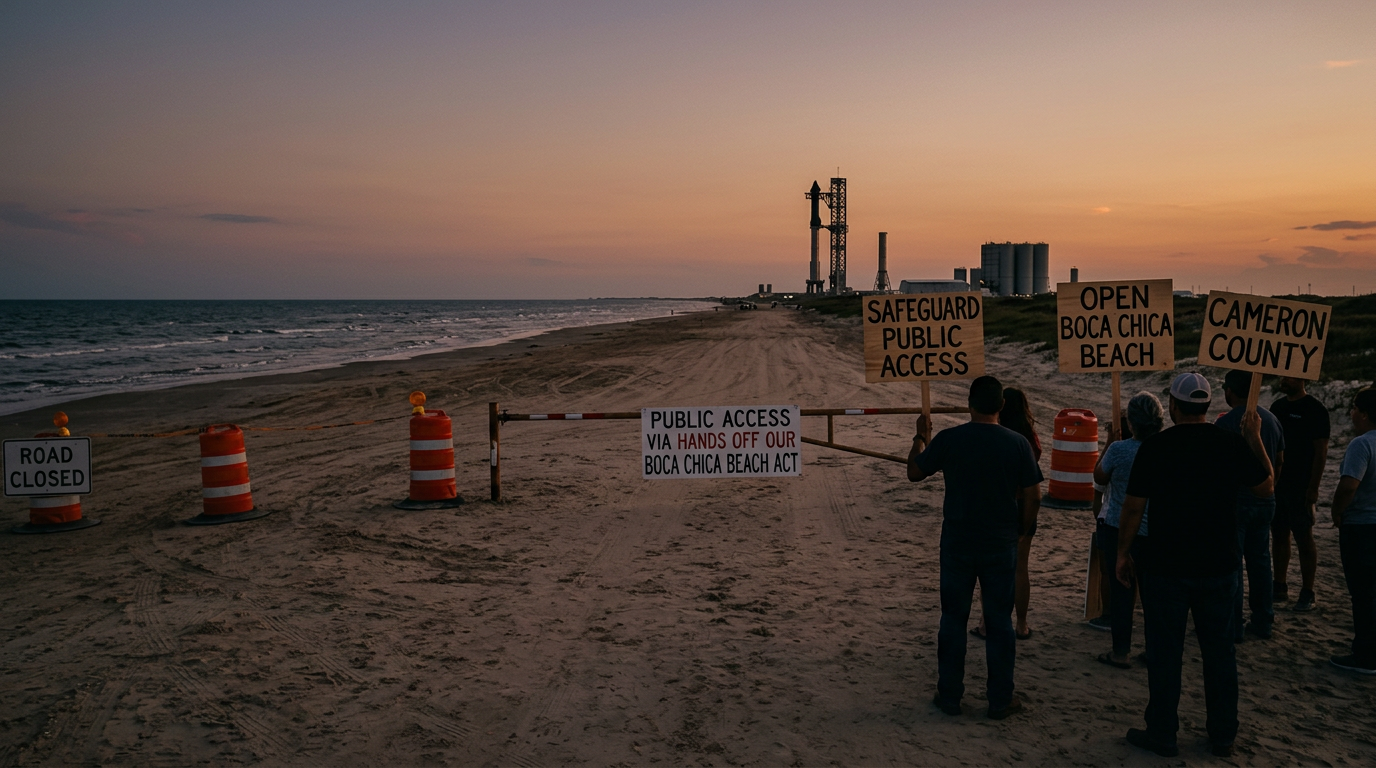
On July 20, 2026, U.S. Congressman Vicente Gonzalez, who represents the 34th District of Texas, introduced the Hands Off Our Boca Chica Beach Act. This legislative move aims to codify protections for public access to the shoreline in Cameron County, an area that has become a central hub for the aerospace industry. The introduction of this bill follows a period of localized tension regarding the frequency of closures at the beach and the primary access road leading to it. By filing this act, Gonzalez is seeking a federal solution to ensure that the natural resources and recreational areas of South Texas remain available to the community without excessive interruption.
Texas relevance
This legislation directly affects Cameron County and the broader Rio Grande Valley region of Texas. Boca Chica Beach is one of the few remaining undeveloped stretches of coastline in the state, serving as a vital recreational spot for Brownsville residents and visitors alike. As Texas continues to attract major aerospace investments, the balance between economic development and the preservation of Texas’s Open Beaches Act principles has become a state-wide talking point. The bill highlights the specific struggle in South Texas to maintain traditional land use rights while supporting the state’s role as a leader in space exploration.
Historical Context of Texas Shoreline Access
Texas has a long-standing tradition of maintaining open access to its coastline, a concept formally recognized in state law through the Texas Open Beaches Act of 1959. This landmark legislation established that the public has the free and unrestricted right to ingress and egress to and from the state-owned beaches bordering the Gulf of Mexico. For decades, these laws have protected the ability of Texans to utilize the sand and surf without the interference of private landowners or gated developments.
Boca Chica Beach, located at the southernmost tip of Texas, has historically been a remote and quiet destination used for fishing, camping, and family gatherings. However, the geographic isolation that made it attractive for recreational use eventually made it a prime location for the growing space industry. As facilities expanded, the frequency of road closures on State Highway 4—the only road leading to the beach—increased, leading to the current legislative friction.
The Mechanics of the Proposed Legislation
The Hands Off Our Boca Chica Beach Act specifically targets the frequency and duration of closures that have characterized the region over the last several years. By seeking federal intervention, Congressman Gonzalez is looking to provide a clearer framework for when and how the beach can be cordoned off for safety or experimental purposes. The bill aims to establish a more rigorous notification system and limits that prevent public access from being secondary to industrial needs.
This federal approach is necessary because the area involves a complex overlap of jurisdictions, including state highway management, federal wildlife refuge land, and private industrial sites. By formalizing public access rights at the congressional level, the bill seeks to provide the local community with legal leverage to ensure their coastal heritage is not eroded by the rapid pace of technological development.
Impact on the South Texas Community
For the residents of Brownsville and surrounding Cameron County, Boca Chica Beach is more than just a plot of land; it is a cultural and recreational staple. The beach serves as a low-cost getaway for families in a region that faces unique economic challenges. When access is restricted, it disrupts local tourism and traditional activities that have spanned generations. Gonzalez’s bill is presented as a defense of these community values.
Local advocates have frequently expressed concern that the normalization of frequent closures sets a dangerous precedent for other public lands in Texas. They argue that if a major industry can successfully limit access to a public beach in South Texas, other regions could face similar restrictions in the name of economic growth. The legislative push by the 34th District representative serves to validate these local concerns on the national stage.
Balancing Industry and Public Interest
The aerospace sector has undeniably transformed the economy of the Rio Grande Valley, bringing high-tech jobs and global attention to a previously overlooked corner of the state. Most local leaders, including Gonzalez, have expressed support for the industry’s presence. However, the 'Hands Off' act highlights the growing pains associated with such rapid industrialization. It suggests that the benefits of the space race must not come at the total expense of local taxpayers.
Supporters of the legislation argue that industry and public access are not mutually exclusive. They contend that with better planning and more transparent communication, the aerospace sector can fulfill its mission without making the beach inaccessible for long stretches of time. The bill encourages a symbiotic relationship where the industry respects the surrounding community’s right to its natural resources.
Legislative Path Forward
Following its introduction, the bill will move to the relevant House committees for review. This process will likely involve testimony from local environmental groups, residents, and representatives from the aerospace industry. The debate will center on how to define 'reasonable access' in an era where safety concerns during testing and launches are paramount. Gonzalez will need to build a coalition to move the bill through a divided Congress.
If passed, the Hands Off Our Boca Chica Beach Act could serve as a template for other states dealing with similar industrial expansion in public areas. As more private entities look to utilize wide-open spaces for technological advancement, the tension between remote public land use and corporate utility will only increase. This Texas-led initiative puts the Lone Star State at the forefront of the coastal rights debate.
Analysis
The introduction of the Hands Off Our Boca Chica Beach Act reflects a significant political pivot in the management of Texas coastal lands. While the aerospace industry has brought thousands of jobs and millions in investment to the Brownsville area, the logistical requirements of launch schedules often conflict with the public's right to access state waters. Representative Gonzalez is attempting to navigate a middle ground that acknowledges the importance of the industry while asserting that public infrastructure should not be indefinitely restricted. The success of this bill could set a national precedent for how federal lawmakers handle the intersection of private tech expansion and public utility in rural coastal corridors.
Source attribution
This story was reported using a public release from the Texas Congressional Delegation (Google News). Keep TX Red rewrote the coverage independently and links to the official statement for verification.
Frequently Asked Questions
- What is the Hands Off Our Boca Chica Beach Act?
- It is a bill introduced by Congressman Vicente Gonzalez designed to protect the public's right to access Boca Chica Beach in South Texas. The legislation aims to limit the frequency and duration of closures that have occurred due to nearby space industry activities.
- Why is this bill being introduced now?
- The bill was filed in July 2026 following increased public frustration regarding closures of State Highway 4 and the beach area. As aerospace operations have ramped up, the community has seen a decrease in the availability of this public recreational space.
- How does this affect the space industry in Texas?
- While the bill does not aim to remove the aerospace industry, it seeks to place federal safeguards on public land access. This would require industry leaders and local authorities to coordinate more effectively to ensure that industrial operations do not permanently or excessively hinder the public's use of the shoreline.
Official Sources
Take the next step
Browse the Newsroom →Read more about Keep Texas Red → Our full guide to what Keep Texas Red means and why Texans support it.
Get Texas updates delivered weekly.
Independent Texas reporting on politics, policy, and daily life. One email a week. Unsubscribe anytime.
Keep TX Red Newsroom
The Keep Texas Red Editorial Staff produces nonpartisan explainers, policy breakdowns, and educational resources to help Texans understand how their government works. All content is reviewed for accuracy and updated regularly.
About Keep TX Red →