Northeast Texas Positions for Growth with Inaugural Texarkana Lithium Symposium
Texarkana hosts its first lithium symposium to discuss mining potential in the Smackover Formation and the future of Texas energy storage manufacturing.
Editorial disclaimer: Opinions and analysis on Keep TX Red are editorial content — not statements of fact. See our editorial standards.
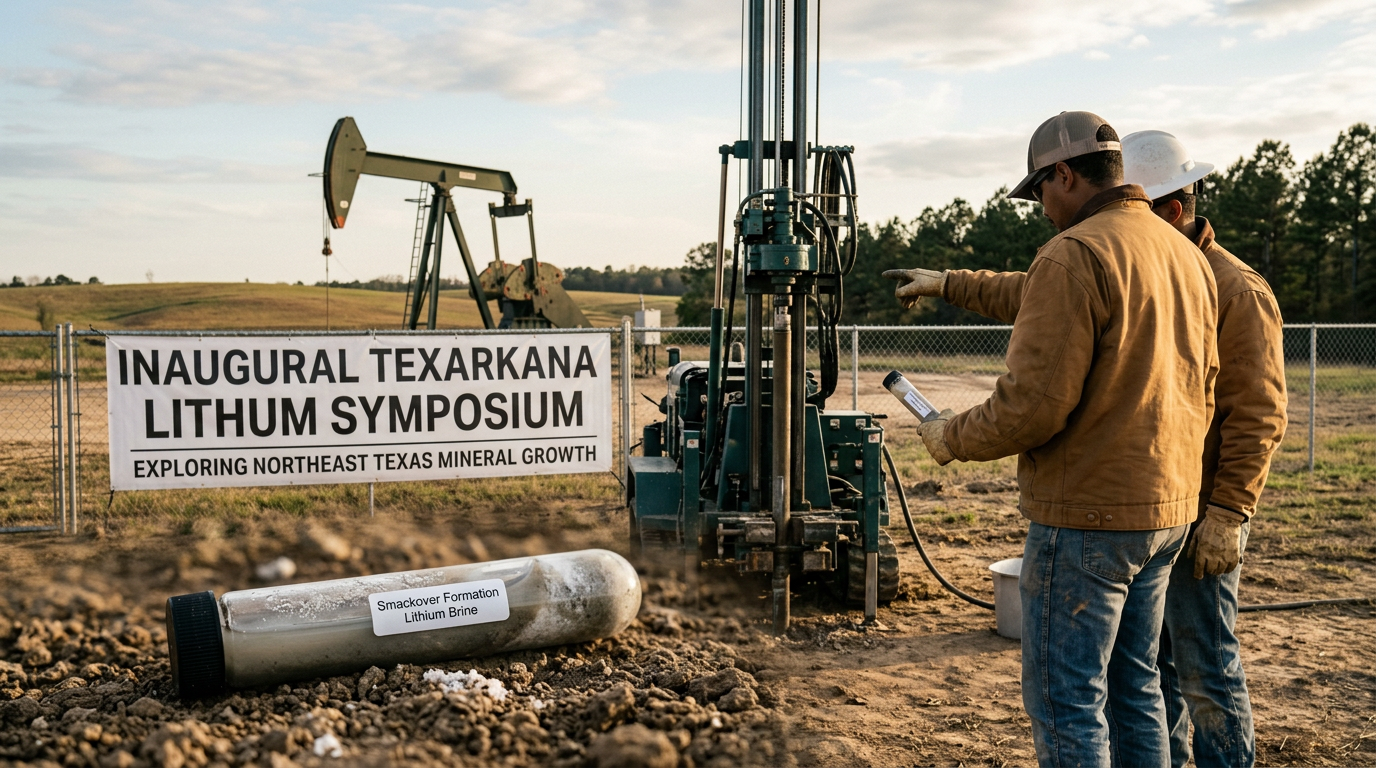
The Texarkana region marked a significant shift in its industrial trajectory by hosting its first dedicated lithium symposium as of mid-2026. This gathering of local leaders, industry experts, and economic development officials focused on the vast mineral potential buried beneath the Texas-Arkansas border, specifically targeting the brine deposits that have remained largely untapped for their mineral value until now. The primary goal of the summit was to establish a formal framework for how the region can capitalize on the explosive global demand for lithium, which serves as the fundamental building block for the modern battery market. By bringing together diverse stakeholders, the event aimed to address the complex logistical, environmental, and financial requirements necessary to transform Northeast Texas into a premier hub for domestic mineral production. Historically, Texas has relied on its massive oil and gas reserves to anchor its status as an energy powerhouse. However, as the global economy shifts toward electrification and advanced storage solutions, the state is increasingly looking toward diversified mineral assets. This symposium follows years of preliminary geological surveying that suggested the Smackover Formation could be more lucrative than previously thought. By facilitating a transparent dialogue between the public sector and private industry, organizers hope to bypass many of the common pitfalls that delay large-scale industrial projects. The event serves as a call to action for local policymakers to prepare for an era where 'liquid gold' increasingly refers to the mineral-rich brines found miles below the piney woods.
Texas relevance
Northeast Texas, specifically the area around Texarkana, sits atop portions of the Smackover Formation, a geological feature known to contain lithium-rich brine. As Texas continues to lead the nation in energy production, the ability to extract and process lithium locally would decrease reliance on foreign imports and solidify the state's role in the new energy economy. For residents of Texarkana and surrounding Bowie County, this represents a potential influx of high-paying industrial jobs and a significant expansion of the local tax base. Prior to this movement, the region was most famous for its timber and military logistical support through the Red River Army Depot; now, the focus shifts to subterranean resources that could power the next century of Texas innovation.
The Strategic Importance of the Smackover Formation
The Smackover Formation is a vast underground limestone stretch that reaches from the Texas Gulf Coast through the Arklatex region and into the deep south. This geological relic from the Jurassic period was once considered primarily for its significant oil and gas yields and sulfur content. However, modern chemical analysis and advancements in brine filtration have revealed that the ancient saltwater trapped within the formation contains some of the highest lithium concentrations in the continental United States. This has turned the Texarkana region into a focal point for international companies looking to secure a domestic supply of 'white gold' without the geopolitical risks associated with overseas mining.
Unlike the environmental impact associated with traditional hard-rock mining found in Australia or South America, lithium extraction in Northeast Texas would likely involve a closed-loop brine system. In this model, brine is pumped to the surface from deep wells, the lithium is extracted using selective membranes or ion-exchange resins, and the depleted water is then reinjected into the same reservoir. This process is frequently cited as being more efficient and having a significantly smaller surface footprint than traditional evaporation ponds or open-pit mines. The symposium provided a critical platform for experts to explain these technical nuances to the local community, ensuring that the technology is understood as a high-tech refinement process rather than a destructive mining operation.
Economic Implications for Texarkana and Bowie County
For decades, the economy of Northeast Texas has been anchored by manufacturing, timber, and the Red River Army Depot. While these sectors remain robust, the introduction of a lithium extraction and processing industry could provide a vital diversification of the regional economy, protecting it from fluctuations in single-industry markets. Symposium participants discussed how the development of these natural resources could lead to the construction of multi-million dollar processing facilities, which would require a specialized workforce ranging from chemical engineers and geologists to heavy equipment operators and logistics managers.
Local officials emphasize that the benefit extends far beyond the mining sites and extraction wells themselves. A localized, reliable supply of lithium could act as a magnet for secondary manufacturers, such as battery assembly plants, electric vehicle component factories, or cathode production facilities. This 'cluster' effect is a primary target for the Texas economic development strategy, which seeks to integrate the entire supply chain—from the ground to the finished product—within state lines. For the city of Texarkana, this could mean an increased tax base capable of funding significant improvements to local schools, parks, and public safety infrastructure.
Infrastructure Requirements and Regulatory Clarity
A major theme of the discussion in Texarkana involved the physical infrastructure required to support a burgeoning mining industry. Lithium extraction and the subsequent refinement into battery-grade carbonate or hydroxide require significant water management systems and a reliable, high-capacity power grid. Attendees at the symposium evaluated the current state of local roads, rail lines, and utilities to identify where upgrades might be necessary. Given that Texarkana is a major logistics hub with access to multiple interstate highways and rail connections, the foundations are already in place, but industrial scaling will require localized improvements to handle increased heavy-duty traffic.
Regulatory clarity remains a top priority for developers and landowners alike. Because the lithium is found in brine water, there are ongoing legal discussions regarding mineral rights—specifically whether these minerals belong to the surface owner, the water rights owner, or the traditional oil and gas mineral rights holder. This is a uniquely Texas legal challenge that requires legislative or judicial clarification. The symposium allowed for an initial dialogue on how the state can streamline its permitting processes to ensure that projects move forward safely and efficiently while protecting the fundamental property rights of local Texas landowners.
Environmental Stewardship and Landowner Relations
Any discussion of large-scale mineral extraction must address the impact on the local environment and the heritage of East Texas ranching and timber lands. The Texarkana symposium included dedicated sessions on water usage and the long-term sustainability of the Smackover aquifer. Proponents of the project argue that modern direct lithium extraction (DLE) technologies are significantly cleaner and consume less water than the massive evaporation ponds used in the 'Lithium Triangle' of South America. However, transparent communication with the public is essential for securing the trust of the local community.
Local leaders expressed a firm desire to ensure that the growth is managed responsibly. This involves proactive planning for the housing, healthcare, and public services that will be needed if the industry brings a surge of new residents and contractors to the area. By addressing these concerns years before the first commercial-scale plant is operational, the Texarkana region hopes to avoid the 'boom and bust' cycles that have historically characterized energy-heavy regions like the Permian Basin. The focus remains on building a sustainable, long-term industry that respects the natural landscape of Northeast Texas.
Texas in the Global Lithium Supply Chain
On a broader stage, the activity in Texarkana is a small but vital part of a national push to secure critical mineral supply chains. Currently, the vast majority of the world's lithium is processed in China, which creates a strategic vulnerability for U.S. automotive and defense manufacturers. By developing the resources in the Smackover Formation, Northeast Texas could play a pivotal role in national security and domestic economic independence. This symposium represents the local stakeholders' willingness to participate in a project of national importance.
Texas is already home to significant investments in the electric vehicle sector, most notably the Tesla Gigafactory in Austin and various battery research centers in the Dallas-Fort Worth area. Connecting the raw material extraction at the Texas-Arkansas border to the high-tech manufacturing corridors of the state's major metros creates a powerful, full-circle economic ecosystem. The Texarkana symposium served as the official starting gun for a race to prove that East Texas is ready to compete on a global stage, turning deep-earth brine into the engine of the 21st-century economy.
Analysis
The move toward lithium extraction represents a strategic pivot for the Texas energy market, shifting from combustible fuels to the raw materials required for the energy transition. By hosting a localized symposium, Texarkana is effectively branding itself as the 'Lithium Capital of Texas' before other regions can claim the title. This proactive stance is likely intended to front-load regulatory discussions, ensuring that once the technology for Direct Lithium Extraction (DLE) reaches full commercial maturity, the local infrastructure in Northeast Texas is ready to support it. Investors are watching closely to see if the Texas Legislature provides further tax incentives for these specific types of mining operations, which would likely accelerate the timeline for groundbreaking.
Source attribution
This story was reported using a public release from the Texas Tribune. Keep TX Red rewrote the coverage independently and links to the official statement for verification.
Frequently Asked Questions
- Why is Texarkana a good location for lithium mining?
- The region sits directly on the Smackover Formation, a geological layer containing lithium-rich brine. Texarkana also offers a unique logistical advantage due to its existing rail and highway infrastructure, which connects Northeast Texas to major manufacturing hubs in Austin and Dallas.
- What is the primary method for extracting lithium in this region?
- The focus in Texas is on Direct Lithium Extraction (DLE). This process involves pumping mineral-rich water from deep underground, using specialized technology to filter out the lithium, and سپس reinjecting the leftover brine back into its original underground location to minimize environmental impact.
- How will this affect the local Texas economy?
- The development of a lithium industry could create hundreds of high-wage jobs for engineers, technicians, and manual laborers. It also increases the local tax base for Bowie County and positions the region as a critical supplier for the multi-billion dollar electric vehicle and energy storage markets.
Official Sources
Take the next step
Browse the Newsroom →Read more about Keep Texas Red → Our full guide to what Keep Texas Red means and why Texans support it.
Get Texas updates delivered weekly.
Independent Texas reporting on politics, policy, and daily life. One email a week. Unsubscribe anytime.
Keep TX Red Newsroom
The Keep Texas Red Editorial Staff produces nonpartisan explainers, policy breakdowns, and educational resources to help Texans understand how their government works. All content is reviewed for accuracy and updated regularly.
About Keep TX Red →