Dallas Corporate Migration: Why North Texas Assets are Shifting to Growing Suburbs
Dallas faces a demographic and economic crossroads as professional teams and major corporations migrate toward suburbs like Frisco and Arlington.
Editorial disclaimer: Opinions and analysis on Keep TX Red are editorial content — not statements of fact. See our editorial standards.
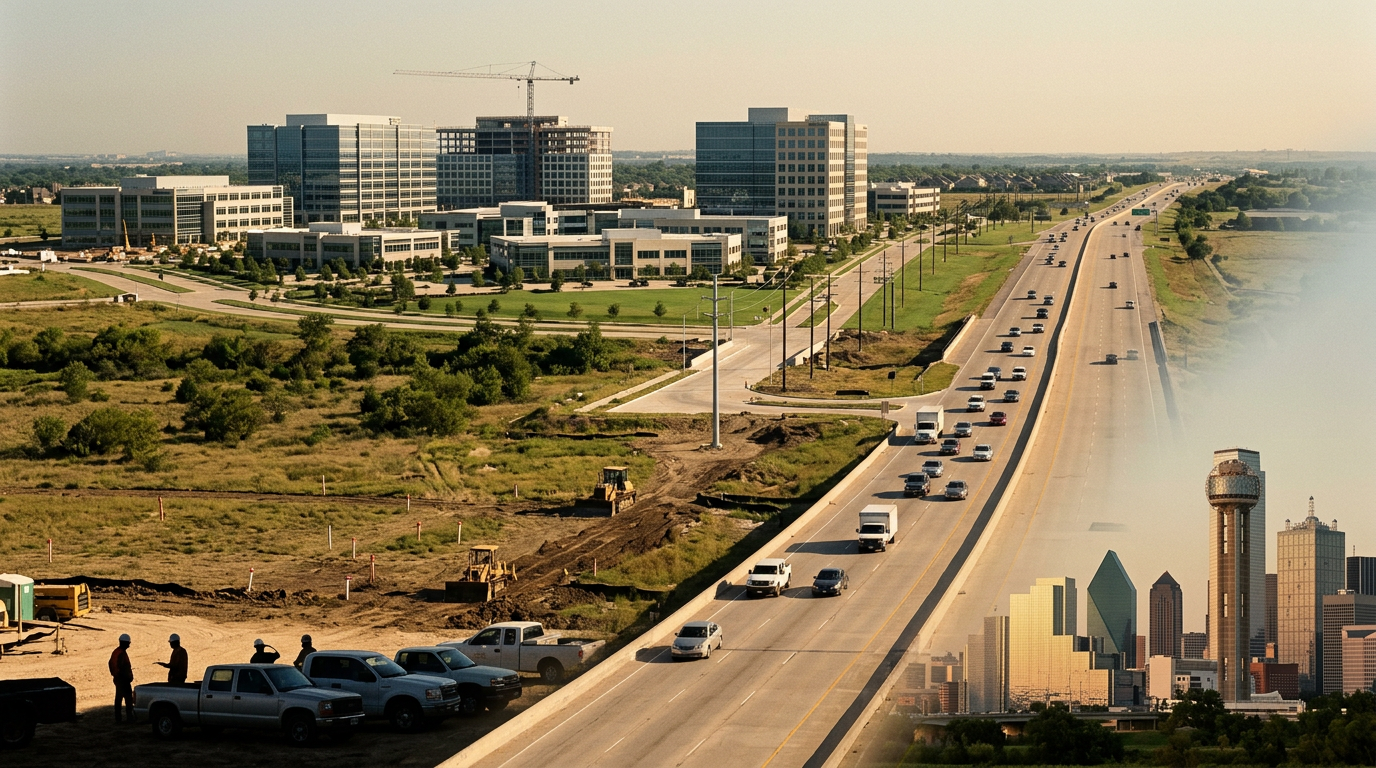
For decades, the city of Dallas served as the undisputed sun in the planetary system of North Texas, driving the regional economy and serving as the cultural heart of the South. However, recent data and high-profile departures indicate a fundamental shift in the DFW metroplex’s center of gravity. As the surrounding suburbs mature into self-sustaining job centers with lower taxes and newer infrastructure, the legacy hub of Dallas is struggling to retain its most valuable residents and taxpayers. This trend captures a broader national movement where 'satellite' cities are becoming the primary destination for corporate headquarters and professional sports venues. Contextually, this is not a sudden collapse but the culmination of several decades of suburban investment. Since the 1970s, the DFW region has expanded outward, but the current decade marks the first time that the 'core' city is seeing a net drain of physical institutions rather than just residents. In the past, the suburbs were bedrooms for Dallas workers; today, they are the workplaces themselves, leaving the City of Dallas to contend with aging infrastructure and a shrinking share of the regional tax base.
Texas relevance
This transition is critical for all Texans because the DFW metroplex is the engine of the state's GDP. When the central city of such a massive region begins to lose its competitive edge, it affects state-wide tax revenues, transportation planning via TxDOT, and the overall perception of Texas as a business-friendly environment. Specifically for North Texas residents, this migration dictates where toll roads are built, where school funding increases, and where property values are likely to rise or stabilize over the next twenty years.
The Exodus of Professional Sports
One of the clearest signals of the shifting tide is the relocation of iconic sports franchises and the construction of new entertainment districts outside city limits. The Dallas Cowboys have long resided in Arlington, but their recent investment in 'The Star' in Frisco further cemented that suburb as a sports mecca. Now, ongoing discussions regarding the future of the Dallas Mavericks and Dallas Stars suggest that remaining in the downtown American Airlines Center is no longer a guaranteed certainty.
Suburbs offer something the city of Dallas currently lacks: massive tracts of undeveloped land that allow for 'live-work-play' ecosystems. These developments integrated with stadiums provide year-round revenue streams that standalone urban arenas struggle to match. As these teams look for modernization, the financial incentives and land availability in the northern suburbs often outweigh the prestige of a Dallas zip code.
Corporate Flight and the 'Trophy' Office Market
Major corporations are increasingly looking toward the Platinum Corridor and Legacy West as the new standard for corporate headquarters. Factors driving this include proximity to the executive workforce and the ability to build custom, campus-style facilities that are difficult to fit into the dense Dallas grid. While Dallas still maintains a strong financial district, the growth rate of new office leases in the suburbs is outpacing the downtown core.
The migration is often led by the perceived quality of life for employees. Companies are following the talent, and in North Texas, the middle-to-upper management demographic has increasingly settled in Collin and Denton counties. When a CEO decides to move a headquarters to Plano or Frisco, they are often shortening their own commute and that of their most essential staff, creating a feedback loop that benefits the suburbs.
Infrastructure and Public Safety Challenges
Residents and businesses alike have cited public safety and street maintenance as primary reasons for looking outside Dallas city limits. The Dallas Police Department has faced perennial staffing shortages, leading to increased response times in both residential and commercial zones. In contrast, newer suburbs often boast lower crime rates and modern infrastructure that requires less immediate maintenance, providing a sense of stability for investors.
Furthermore, the complexity of the Dallas permitting process has become a common grievance among developers. While suburban municipalities are often hungry for growth and offer streamlined approval processes, Dallas has struggled with a backlog of building permits that has delayed multi-million dollar projects. This friction makes the suburbs not just a cheaper alternative, but a faster one.
The Demographic Shift: Who is Leaving?
Data indicates that the people leaving Dallas are often high-earning families looking for top-tier public schools. Texas school districts are a major driver of real estate value, and the perception of Dallas ISD compared to districts like Prosper, Frisco, or Southlake remains a significant hurdle for the city’s retention efforts. As these families move, they take their disposable income and property tax contributions with them.
This leaves the city of Dallas with a widening gap between high-end luxury dwellers and those in underserved neighborhoods, with the traditional middle class hollowing out. The result is a polarized economy that makes it difficult for the city to fund broad infrastructure improvements without placing a heavy burden on a shrinking percentage of the population.
Suburban Autonomy and Identity
The suburbs of North Texas are no longer mere appendages of Dallas. Places like Arlington and Frisco have developed their own independent brands and cultural magnets, ranging from world-class museums to professional-grade athletic facilities. This autonomy means that people living in these areas rarely feel the need to travel into the 'Big D' for entertainment or employment.
This shift forces a reevaluation of what it means to be a 'regional hub.' If Dallas is no longer the primary provider of work or play for the majority of the metroplex, its role may shift toward a specialized destination for finance and high-density tourism, rather than the all-encompassing center it was in the 20th century.
Future Outlook for the Urban Core
To combat this trend, Dallas city leadership is looking toward revitalizing the southern sector and reinvesting in parks like Klyde Warren. However, the competition is fierce. The northern suburbs have more capital and fewer legacy problems to fix, allowing them to iterate and grow at a much faster pace. The next decade will determine if Dallas can successfully reinvent itself or if it will become a secondary component of its own metro area.
Strategic investments in technology hubs and green spaces are current priorities, but the overarching challenge remains the cost of doing business. Unless the city can find a way to compete with the tax incentives and ease of development found in the suburbs, the 'bleeding' of assets is likely to continue as North Texas pushes further north and west.
Analysis
The 'urban sprawl' of Texas has reached a tipping point where the 'sprawl' is now more efficient than the 'center.' While Dallas leaders have focused on high-density residential developments in the urban core, the market seems to be signaling a preference for the master-planned flexibility of the northern suburbs. Historically, Dallas relied on its status as the only game in town for major entertainment and high-end office space. By failing to address rising crime concerns and bureaucratic hurdles for developers, the city has inadvertently handed a massive competitive advantage to neighboring municipalities like Frisco and Plano.
Source attribution
This story was reported using a public release from the r/dallas. Keep TX Red rewrote the coverage independently and links to the official statement for verification.
Frequently Asked Questions
- Why is Frisco growing so much faster than Dallas?
- Frisco benefits from significant availability of undeveloped land, a highly-rated school district, and a proactive city government that fast-tracks large-scale developments like the PGA headquarters and Universal Kids Resort. This creates a synergy that attracts both residents and major employers.
- Are sports teams actually leaving Dallas?
- While the Mavericks and Stars currently play in Dallas, the trend shows teams seeking 'stadium districts' where they control the surrounding retail and residential assets. The Cowboys (Arlington/Frisco) and Rangers (Arlington) have already set the precedent for moving operations to the suburbs.
- Is Dallas's population really shrinking?
- While the overall metroplex is growing, the city of Dallas has seen periods of 'bleeding' residents to the suburbs, particularly among the middle class and families, while the surrounding counties are seeing record-breaking growth rates.
Official Sources
Take the next step
Browse the Newsroom →Read more about Keep Texas Red → Our full guide to what Keep Texas Red means and why Texans support it.
Get Texas updates delivered weekly.
Independent Texas reporting on politics, policy, and daily life. One email a week. Unsubscribe anytime.
Keep TX Red Newsroom
The Keep Texas Red Editorial Staff produces nonpartisan explainers, policy breakdowns, and educational resources to help Texans understand how their government works. All content is reviewed for accuracy and updated regularly.
About Keep TX Red →