Texas Alcoholic Beverage Commission: Abbott reappoints key agency leaders
Governor Greg Abbott reappoints Hasan Mack and Debbie Marino to the TABC, ensuring continuity through 2031 for the state's liquor regulator.
Editorial disclaimer: Opinions and analysis on Keep TX Red are editorial content — not statements of fact. See our editorial standards.
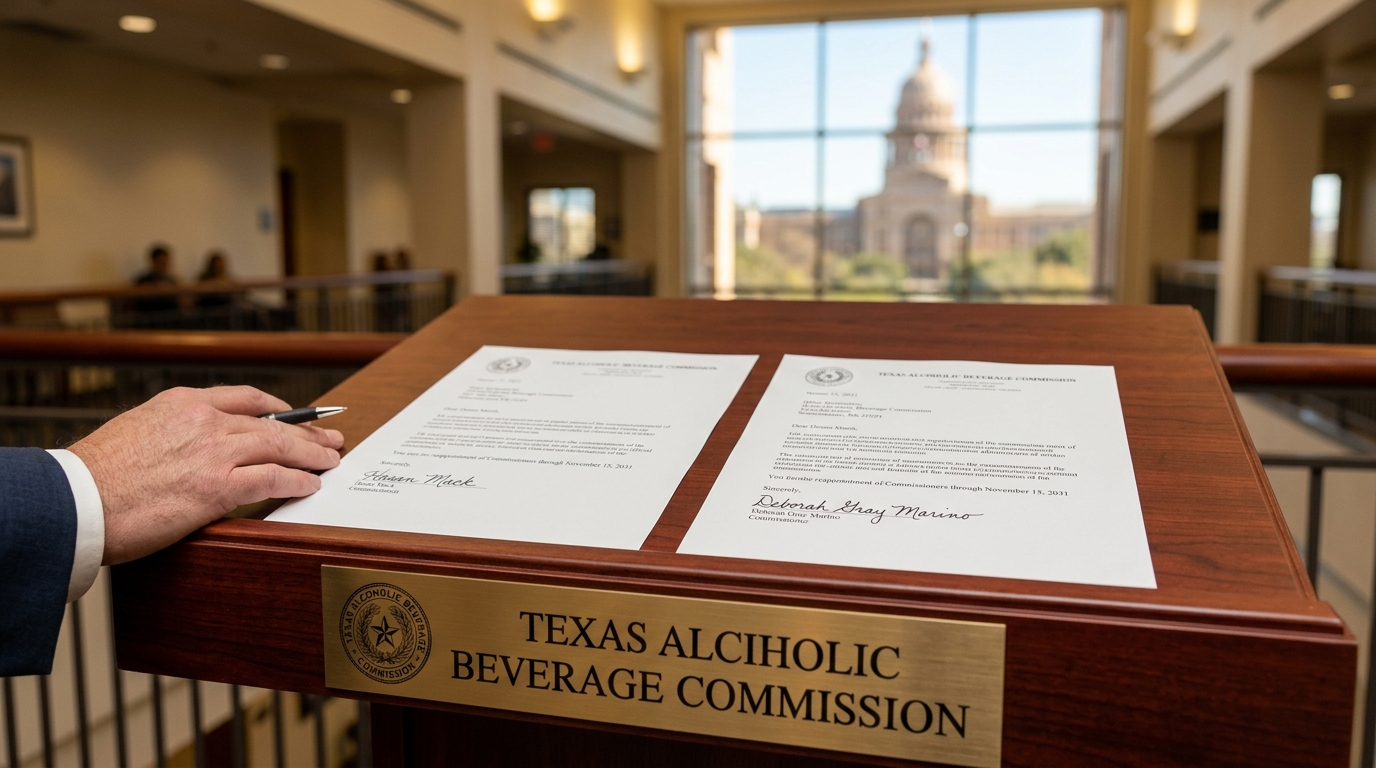
Governor Greg Abbott has officially announced the reappointment of Hasan Mack and Deborah 'Debbie' Gray Marino to the Texas Alcoholic Beverage Commission (TABC). These appointments extend their service for another full term, with their roles now set to continue through November 15, 2031. Historically, the TABC has played a central role in the state's economic landscape, managing the intricate balance between public safety and the robust growth of the alcoholic beverage industry. This move by the Governor signals a desire for stability and continuity within one of the state's most powerful regulatory bodies, which oversees everything from local craft breweries to massive distribution networks. By maintaining experienced leadership at the helm, the administration aims to ensure that the regulatory environment remains consistent for both business owners and Texas consumers.
Texas relevance
As a major economic driver for the Lone Star State, the alcoholic beverage industry impacts every corner of Texas from Austin's local distilleries to Houston's shipping hubs and the hospitality sectors in DFW and San Antonio. The TABC is the sole agency responsible for the inspection and supervision of every phase of this industry. Decisions made by these commissioners directly influence how businesses operate, how taxes are collected, and how public safety laws are enforced in Texas neighborhoods. This leadership continuity ensures that the complex legal framework governing alcohol in Texas—rules that have long evolved from post-Prohibition era statutes—is managed by individuals with a deep understanding of the unique Texas market and its diverse logistical challenges.
The Strategic Role of Hasan Mack
Hasan Mack, an Austin-based attorney, serves as a cornerstone of the commission’s fiscal and legal oversight. Currently working with McCall, Parkhurst & Horton L.L.P., Mack specializes as bond, disclosure, and underwriter’s counsel. His daily professional life involves navigating the complexities of federal and state securities laws, a skillset that translates directly to the TABC’s mission of ensuring legal compliance across the state's manufacturing and distribution sectors.
Beyond his legal practice, Mack has a distinguished history of public service in Texas. Having previously served on the Texas Bond Review Board, he possesses a granular understanding of how state agencies interact with financial markets. His involvement with the State Bar of Texas and the National Association of Bond Lawyers further underscores his commitment to legal excellence, while his leadership roles in the Texas Lyceum and the Austin Area Urban League demonstrate a deep-seated connection to the Texas community and its future leaders.
His reappointment ensures that the TABC retains a commissioner who can effectively translate complex financial regulations into actionable state policy. In an era where the TABC is managing increased scrutiny over its fiscal operations and revenue collection, Mack’s background in municipal security transactions provides a level of technical expertise that is vital for the agency's long-term transparency and efficiency.
Debbie Marino’s Impact on Policy and Relations
Deborah 'Debbie' Gray Marino brings a different but equally vital perspective to the commission. Based in San Antonio, she serves as the Senior Vice President of Corporate Relations for SWBC, a massive financial services firm. Her professional focus on corporate strategy and community relationships is a major asset for the TABC as it works to balance the needs of large corporate entities with the safety concerns of local Texas municipalities.
Marino is well-known in the San Antonio area for her extensive philanthropic and civic work. She has served as a board member for the United Way of San Antonio and Bexar County, the Alamo Bowl, and the San Antonio Chamber of Commerce. This local engagement ensures the TABC remains grounded in the realities of how hospitality and tourism—key drivers of the Texas economy—interact with state-level alcohol mandates and licensing requirements.
Her past service on the Texas Department of Information Resources further highlights her capability in managing large-scale state infrastructure and technology initiatives. As the TABC continues its multi-year effort to streamline its permitting process through advanced digital platforms, Marino’s experience with state technology resources will be instrumental in making sure these systems are user-friendly for businesses while maintaining high levels of security and accountability.
The TABC: A Powerhouse of State Regulation
The Texas Alcoholic Beverage Commission is not merely a licensing body; it is a comprehensive regulatory agency with a broad mandate. It oversees the manufacturing, distribution, and sale of all alcoholic beverages within the state. This includes everything from the smallest microbrewery in the Hill Country to the largest national distributors operating out of North Texas. The agency's reach extends to every bar, restaurant, liquor store, and grocery store that holds a license.
The commission is responsible for ensuring that the 'three-tier system' of alcohol distribution remains intact. This system, established after the repeal of Prohibition, is designed to prevent monopolies and ensure a fair marketplace by separating manufacturers, wholesalers, and retailers. The commissioners, including Mack and Marino, are the final arbiters of policy that maintains this delicate economic structure, which prevents any single entity from controlling the entire supply chain from production to the consumer's glass.
Furthermore, the TABC has a significant law enforcement arm. The agency's agents are tasked with investigating violations of the Alcoholic Beverage Code, including sales to minors, over-service to intoxicated persons, and organized crime. By appointing steady and experienced leaders, Governor Abbott ensures that the agency’s law enforcement goals remain aligned with the state’s broader public safety objectives, focusing on high-risk locations and protecting the general public.
Long-Term Stability through 2031
The decision to reappoint Mack and Marino for terms lasting until 2031 highlights a long-term vision for the agency. Liquor laws in Texas are notoriously complex and are often a subject of intense lobbying and legislative debate during biennial sessions in Austin. Having commissioners who have already navigated several legislative cycles allows the TABC to maintain a consistent voice when advising lawmakers on potential changes to the state code.
Stability at the top of the commission also provides a sense of certainty for the private sector. Business owners are more likely to invest in the Texas market when they know the regulatory landscape is led by individuals who understand the precedents and the underlying logic of current rules. Rapid turnover in such positions can lead to inconsistent enforcement or sudden shifts in interpretation of the law, both of which can be detrimental to the state's business climate.
As Texas continues to grow at a record pace, the demand for TABC services—from new permit applications to venue inspections—will only increase. The 2031 sunset of these terms means that Mack and Marino will lead the agency through a period of significant demographic and economic shifts, ensuring that the regulation of alcohol keeps pace with the modernization of the state without sacrificing the core values of safety and fair competition.
Economic Implications for the Hospitality Sector
The hospitality industry in Texas is one of the largest employers in the state, and the TABC is its primary regulator. When the commission operates efficiently, it facilitates the opening of new venues and the expansion of existing ones, which in turn creates jobs and generates local sales tax revenue. The expertise that Mack and Marino bring to the table is essential for ensuring that the agency’s bureaucratic processes do not become a bottleneck for economic growth.
In recent years, the TABC has worked to simplify the licensing process, reducing the number of different permit types and making it easier for businesses to comply with the law. This modernization effort requires leaders who are not afraid of technological change and who understand the operational burdens placed on small business owners. The reappointments suggest that the current trajectory of these improvements will continue, much to the benefit of the thousands of small businesses that make up the backbone of the Texas hospitality world.
Moreover, the TABC’s role in tax collection cannot be understated. The agency ensures that the correct taxes are paid on every gallon of alcohol sold in the state, contributing billions of dollars to the Texas general fund. Mack’s financial background is particularly relevant here, as he understands the nuances of state revenue and the importance of professional auditing and fiscal responsibility in a major state department.
The Intersection of Law and Public Safety
While much of the TABC's work is administrative, its impact on public health and safety is profound. The commission sets the standards for server training programs, which are designed to prevent the dangerous over-consumption of alcohol. By ensuring that these programs are effective and widely adopted, the TABC plays a key role in reducing drunk driving and other alcohol-related incidents across Texas highways and streets.
The commission also collaborates with local law enforcement agencies to combat human trafficking and other illegal activities that sometimes occur in and around licensed premises. The leadership provided by the commissioners ensures that the TABC remains a proactive partner in these efforts, using its unique regulatory authority to revoke the licenses of establishments that harbor criminal activity. This dual focus on business facilitation and rigorous enforcement is exactly what Mack and Marino have championed during their previous terms.
As the commissioners move into their new terms, they will face new challenges, including the rise of third-party delivery services and changing consumer habits regarding home consumption. Their ability to adapt the agency's enforcement strategies to these new realities will be a test of their leadership. However, their extensive backgrounds suggest they are well-prepared to lead the TABC through these evolving societal and legal landscapes, keeping Texas safe while the industry thrives.
Analysis
These reappointments reflect a broader trend in the Abbott administration to prioritize professional expertise in finance and public relations within executive boards. Hasan Mack brings a strong background in public finance, which is essential for an agency that handles significant tax revenue and large-scale state bonding issues. Meanwhile, Debbie Marino's extensive experience in corporate relations and community engagement provides a bridge between regulatory strictness and the commercial realities of the private sector. By reappointing these specific individuals, the Governor is likely looking to avoid the friction that can occur with brand-new appointees, choosing instead to rely on a proven track record as the TABC continues to modernize its digital licensing systems and enforcement protocols.
Source attribution
This story was reported using a public release from the Office of the Governor. Keep TX Red rewrote the coverage independently and links to the official statement for verification.
Frequently Asked Questions
- What exactly does the Texas Alcoholic Beverage Commission do?
- The TABC is the state agency responsible for regulating all aspects of the alcoholic beverage industry in Texas. This includes issuing permits and licenses, inspecting businesses to ensure they follow state laws, collecting excise taxes, and enforcing the Texas Alcoholic Beverage Code. They oversee everything from the production process at a distillery to the final sale at a restaurant or grocery store.
- How long are the terms for TABC commissioners?
- Commissioners are typically appointed to six-year staggered terms. In this case, Governor Abbott has reappointed Mack and Marino for terms that will conclude in late 2031, providing them with a significant period to implement long-term policy goals and oversee the agency's modernization efforts.
- Who is Hasan Mack?
- Hasan Mack is an Austin-based attorney at McCall, Parkhurst & Horton L.L.P. He has extensive experience as a bond counsel for state agencies and higher education institutions. He has a history of public service in Texas, including roles on the Texas Bond Review Board and within the Texas Lyceum, making him a seasoned expert in state law and finance.
- Who is Debbie Marino?
- Debbie Marino is the Senior Vice President of Corporate Relations for SWBC in San Antonio. She is a veteran of the Texas regulatory and civic scene, having previously served on the Texas Department of Information Resources and numerous non-profit boards. Her expertise lies in corporate strategy, community engagement, and regional economic development.
- Why is leadership continuity important for the TABC?
- The TABC manages a highly complex legal and economic environment. Having experienced commissioners like Mack and Marino ensures that the agency maintains a consistent approach to regulation. This consistency is vital for the thousands of Texas businesses that rely on predictable rules to operate, and it ensures that ongoing projects, like digital licensing upgrades, continue without interruption.
Official Sources
Take the next step
Browse the Newsroom →Read more about Keep Texas Red → Our full guide to what Keep Texas Red means and why Texans support it.
Get Texas updates delivered weekly.
Independent Texas reporting on politics, policy, and daily life. One email a week. Unsubscribe anytime.
Keep TX Red Newsroom
The Keep Texas Red Editorial Staff produces nonpartisan explainers, policy breakdowns, and educational resources to help Texans understand how their government works. All content is reviewed for accuracy and updated regularly.
About Keep TX Red →