Texas Politics and Social Media: How Digital Discourse Is Shaping the Lone Star State
A look at the rise of digital forums in Texas politics as moderators handle the surge of public debate and grassroots opinion sharing across the state.
Editorial disclaimer: Opinions and analysis on Keep TX Red are editorial content — not statements of fact. See our editorial standards.
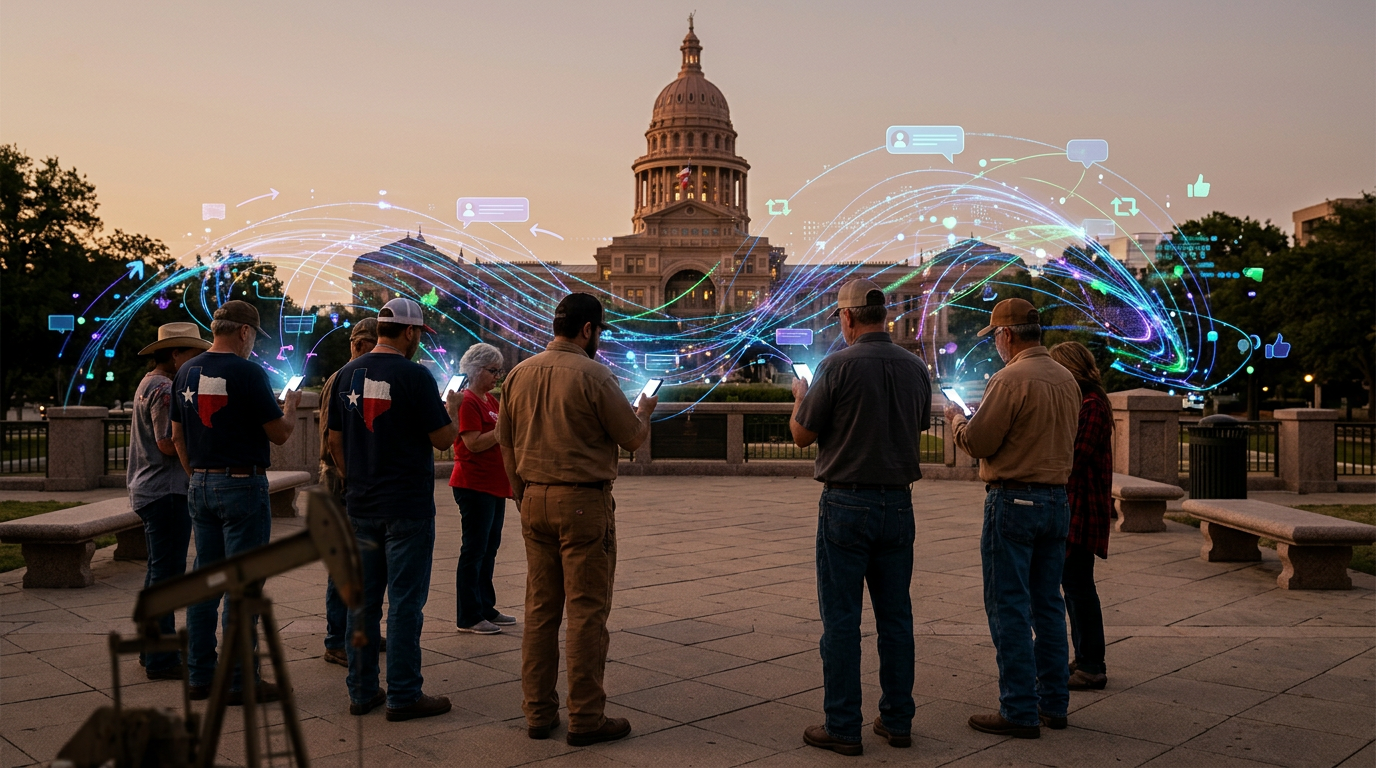
The landscape of Texas political discourse is increasingly migrating from the physical steps of the State Capitol in Austin to the virtual arenas of social media platforms and digital forums. This shift has necessitated the creation of specific digital gathering places where constituents can exchange ideas, share controversial stances, and gauge the public temperature on legislative priorities. Historically, Texas has been a battleground for free speech issues, from landmark cases regarding protest rights to contemporary legislative debates over how tech platforms moderate content. These digital 'megathreads' act as a modern barometer for the state's diverse ideological spectrum, providing a centralized location for unfiltered feedback on everything from domestic border policy to local school board decisions. Unlike traditional polling, these interactive digital hubs offer a real-time, high-velocity stream of consciousness from residents across the 254 counties of Texas. As the state grows in both population and technological influence, the management of these spaces has become a complex task for organizers and moderators who must balance open expression with the maintenance of civil standards. This trend reflects a broader cultural change in the Lone Star State, where the speed of information delivery often dictates the pace of political mobilization and the formation of public opinion among younger demographics and tech-savvy activists.
Texas relevance
Texas is currently at the center of national debates regarding digital speech and platform accountability, most notably through legislative efforts like House Bill 20. This context makes any structured forum for Texas-centered political debate a significant data point for understanding how the state's residents interact with their government. From the tech hubs of Austin and Dallas to the rural stretches of West Texas, the ability to congregate and debate online represents a constitutional exercise translated for the 21st century. The health of these digital town squares directly impacts how local issues—such as the Texas Power Grid, property tax reform, and water rights—are perceived and advocated for by the general public.
The Evolution of Information Exchange in Texas
In the early days of Texas history, political exchange happened primarily through local newspapers and physical gatherings at county courthouses. Voters would travel from surrounding farmsteads to hear stump speeches and participate in lively debates that shaped the future of the Republic and later the State. This tradition of vocal, often rowdy participation in the political process is a hallmark of the Texas identity, where civic engagement is viewed as both a right and a competitive sport.
As the state transitioned into a technological powerhouse, the methods of these exchanges evolved but the spirit remained largely unchanged. Today, a resident in El Paso can debate a policy proposal with someone in Beaumont in a matter of seconds. This collapse of geographic barriers has led to a more unified state consciousness on certain issues, but it has also magnified the friction between the state's rapidly growing urban centers and its vast rural regions which have traditionally held different political priorities.
The shift toward digital-first discourse also changes how political figures in Texas interact with their base. No longer reliant solely on press releases or televised town halls, representatives often monitor these online threads to determine which issues are gaining traction. This has created a feedback loop where the 'hot take' of today can become the legislative session's primary focus tomorrow, illustrating the transformative power of internet-based grassroots organizing.
Moderation Challenges in High-Stakes Environments
Maintaining order in a forum dedicated to Texas politics is an increasingly specialized craft. Because the state’s political landscape is so polarized on issues like energy and border security, these spaces can quickly devolve into unproductive conflict without strict guidelines. Moderators are tasked with upholding community standards—often centered on preventing harassment or misinformation—while avoiding the appearance of partisan bias that could alienate a segment of the user base.
The rules governing these interactions often reflect broader societal tensions regarding where the line between protected speech and disruptive behavior should be drawn. In Texas, where the cultural value for individual liberty is high, any perceived overreach in moderation is often met with accusations of censorship. This creates a delicate balancing act for those managing these platforms, as they must ensure a variety of viewpoints are heard without allowing the environment to become toxic to the average participant.
Furthermore, the rise of automated moderation tools and the influence of massive user growth have necessitated more structured 'megathreads' to contain specific types of speech. By siloing high-friction opinions into specific areas, platforms can maintain a general sense of community in other sections while providing a free-fire zone for more intense political combat. This strategy is becoming the standard for state-level forums where the volume of discussion exceeds the capacity for individual thread management.
The Infrastructure of Online Advocacy
Digital forums have become the primary infrastructure for modern advocacy groups in Texas. Whether it is mobilizing voters for a primary election or organizing a protest at the state house, these threads provide a logistical backbone for political action. The ability to quickly share links, donate to causes, and draft petitions within the same ecosystem where debate occurs has streamlined the pathway from opinion to action.
This integration of discussion and activism is particularly potent in Texas due to the state’s unique biennial legislative cycle. When the Texas Legislature is in session, the velocity of online discourse increases exponentially as citizens track bills in real-time. Digital gathering places allow for the rapid dissemination of bill numbers, committee hearing times, and call-to-action alerts that can influence the outcome of a vote in Austin within hours.
Despite the benefits, this infrastructure also poses risks related to the echo-chamber effect. Users often gravitate toward threads that reinforce their existing worldviews, which can lead to a distorted perception of a policy’s popularity. For the Texas political ecosystem to remain healthy, these digital squares must continue to host a wide array of competing ideas rather than becoming gated communities for specific ideological factions.
Impact of Demographics on Digital Debate
Texas is currently experiencing a demographic shift that is reflected in the tone and content of its online political forums. As younger, more diverse populations move into the Texas Triangle—the region between DFW, Houston, and San Antonio—the topics of conversation are shifting toward urban infrastructure, housing affordability, and social justice. These 'new' Texas issues often clash with traditional debates over oil and gas regulation and fiscal conservatism.
This demographic transition is highly visible in online threads where multi-generational Texans and newcomers exchange perspectives. These interactions can be a source of significant friction, but they also offer a glimpse into the future of the state's political alignment. The digital town square acts as a laboratory where new political identities are forged, and where the next generation of Texas leaders often gets their first taste of public scrutiny.
The accessibility of these platforms also means that marginalized voices, which may have historically been excluded from traditional political circles in Texas, now have a direct line to the public forum. This democratization of speech has complicated the traditional power structures within the state, as small but highly vocal online blocks can now exert pressure on established political organizations and media outlets.
Future Trends in Lone Star State Online Discourse
Looking forward, the way Texans engage in political debate will likely become even more localized and niche. We are seeing a move away from massive, catch-all platforms toward smaller, community-focused digital spaces that cater to specific cities or legislative districts. This hyper-localism allows for more targeted discussion on issues like municipal zoning or local school bonds, which often have a more direct impact on a resident's daily life than state-level policy.
Artificial intelligence and enhanced data analytics will also play a role in how these spaces are managed and interpreted. Political campaigns in Texas are already using AI to scrape forums for sentiment analysis, allowing them to tailor their messaging to the specific grievances and hopes expressed in online threads. This makes the digital town square not just a place for citizens to talk, but a valuable asset for those seeking to gain or maintain power in the state government.
Ultimately, the sustainability of these forums depends on the participation of the citizenry. As long as Texans feel that their voices matter and that their online contributions can influence the direction of their state, the digital megathread will remain a vital component of the Texas political landscape. The challenge for the future will be ensuring that these spaces remain transparent, accessible, and grounded in the factual reality of life in the Lone Star State.
Analysis
OPINION: The emergence of curated political debate spaces suggests a growing fatigue with the fragmented and often hostile nature of general social media interactions. By creating designated zones for 'hot takes' and aggressive debate, administrators are attempting to insulate broader community discussions from becoming perpetually overwhelmed by partisan friction. For Texas, a state with a fiercely independent political identity, these forums serve as a pressure valve. However, they also highlight a growing divide: as digital spaces become more regulated or segmented, the 'true' voice of the average Texan may become harder to distinguish from organized digital campaigns or bot-driven narratives. The challenge involves keeping these squares open enough to be useful but controlled enough to remain coherent.
Source attribution
This story was reported using a public release from the r/texas. Keep TX Red rewrote the coverage independently and links to the official statement for verification.
Frequently Asked Questions
- What is the primary purpose of a political megathread in a Texas context?
- The primary purpose is to centralize political debate and controversial opinions into a single, moderated space. This prevents the broader community forum from being dominated by partisan conflict while still allowing residents to voice their views on state-level issues.
- How does online discourse in Texas affect actual lawmaking in Austin?
- While online threads aren't law, they function as a real-time sentiment analysis tool for legislators and advocacy groups. Trends identified in these forums often inform the priorities of grassroots organizations and can lead to rapid mobilization for or against specific bills during the legislative session.
- Why are strict moderation rules necessary for these types of threads?
- Strict rules are intended to prevent harassment and ensure that the discussion remains productive. In a high-stakes political environment like Texas, without such rules, forums can become hijacked by bots or aggressive individuals, making it impossible for average citizens to engage in meaningful dialogue.
Official Sources
Take the next step
Browse the Newsroom →Read more about Keep Texas Red → Our full guide to what Keep Texas Red means and why Texans support it.
Get Texas updates delivered weekly.
Independent Texas reporting on politics, policy, and daily life. One email a week. Unsubscribe anytime.
Keep TX Red Newsroom
The Keep Texas Red Editorial Staff produces nonpartisan explainers, policy breakdowns, and educational resources to help Texans understand how their government works. All content is reviewed for accuracy and updated regularly.
About Keep TX Red →