Texas 2026 Midterm Elections: Crucial Voter Registration Deadlines and Dates
Stay ahead of the deadlines for the 2026 Texas midterm elections. Learn about registration dates, early voting, and how to participate in the democratic pr
Editorial disclaimer: Opinions and analysis on Keep TX Red are editorial content — not statements of fact. See our editorial standards.
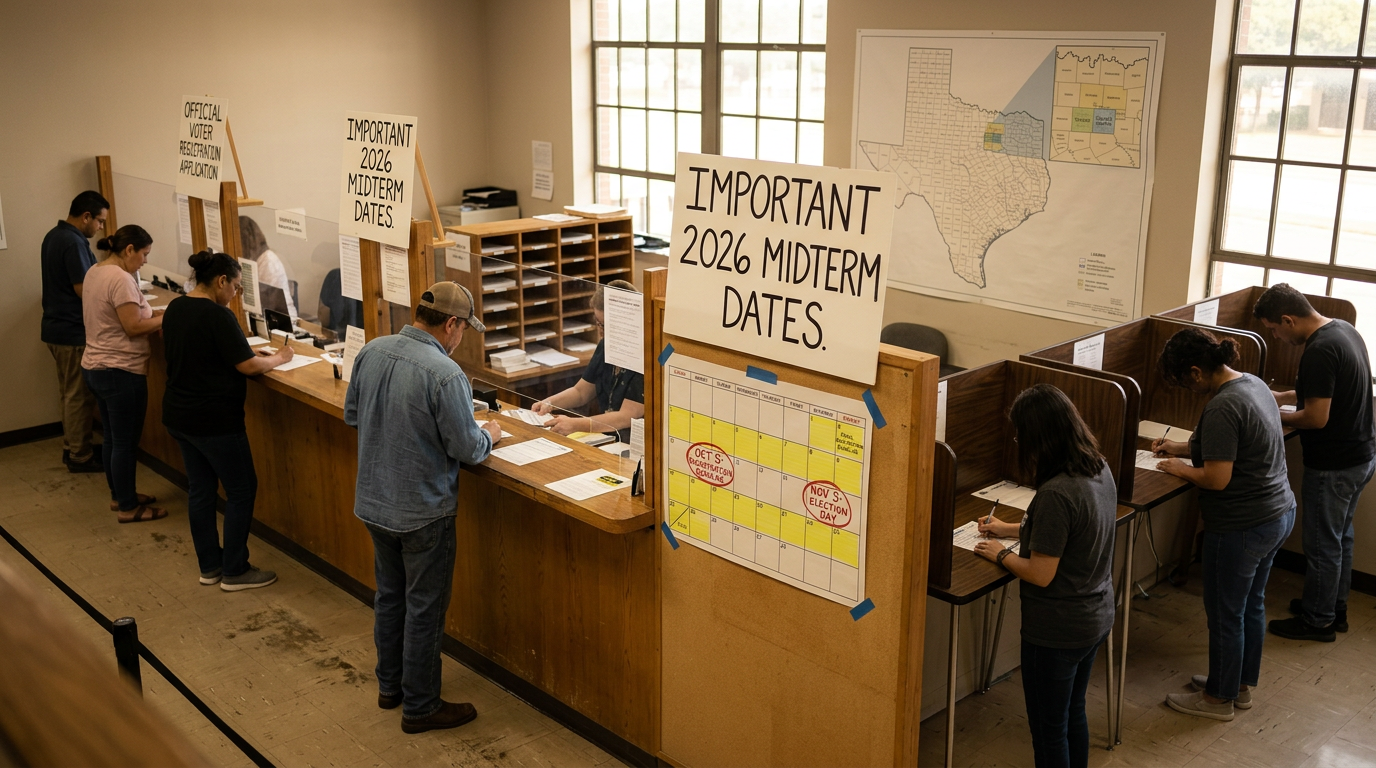
As the heat of the Texas summer continues, the focus for many across the Lone Star State is shifting toward the upcoming 2026 midterm elections. Historically, Texas has navigated significant shifts in voter participation, often influenced by high-stakes gubernatorial races and legislative sessions that tackle cornerstone issues like border security and tax reform. This year is no different, as local election officials in North Texas begin the arduous task of prepping the electorate for a critical November cycle. Historically, Texas voter turnout in midterms lags behind presidential years, yet these cycles determine the makeup of the state house and key judicial seats that impact the daily lives of millions of Texans. The process for participation remains rigorous, requiring advance planning and a clear understanding of the state’s regulatory framework for ballot access.
Texas relevance
The focus on Dallas and Tarrant Counties highlights the importance of the North Texas region in determining the state's political trajectory. As the state's population continues to boom, the Dallas-Fort Worth metroplex has become the central battleground for competing ideological visions of Texas's future. Local decisions made at the precinct level in these counties often ripple through the state legislature, influencing everything from property tax relief to the funding of the Texas Department of Public Safety. For residents of North Texas, the administrative deadlines set by the Secretary of State are the first hurdle in ensuring that the region's specific needs and conservative values are represented in Austin.
The Critical October Deadline for Texas Voters
The fundamental pillar of participating in the 2026 election is meeting the registration deadline, which falls on October 5. In Texas, unlike states that allow same-day registration, the law requires that applications be postmarked or delivered at least 30 days before the election. This window is designed to protect the integrity of the voter rolls, allowing election administrators in Dallas and Tarrant Counties to scrub inactive or ineligible entries before the first ballots are cast.
For new residents who have moved to Texas during the recent migration wave, this deadline is particularly vital. Failing to update a registration after moving between counties can result in being forced to vote on a limited ballot or being turned away from the polls. Local GOP organizers often emphasize that early registration is the best defense against disenfranchisement caused by last-minute bureaucratic hurdles.
Understanding the Logistics of Early Voting
Early voting in Texas is scheduled to begin on October 19 and will conclude on October 30. This two-week window provides the primary opportunity for most Texans to cast their ballots without the congestion often found at polling stations on Election Day. State law has increasingly standardized these hours to ensure that working families have access to the polls during weekends and late-evening shifts, particularly in high-density areas.
The strategic importance of the early voting period cannot be overstated. Roughly 70% of the total vote in recent Texas cycles has been recorded before Election Day. By utilizing this window, voters can ensure that their voice is heard even if personal emergencies or long lines arise on November 3. For the 2026 cycle, election officials are bracing for high volumes in North Texas, where school board and municipal issues are expected to drive turnout alongside state-level contests.
Mail-in Ballot Regulations and Security
The deadline to apply for a ballot by mail is October 23, 2026. However, Texas maintains some of the strictest requirements in the nation for who qualifies for this service. Generally, the state limits mail-in voting to those who are 65 or older, disabled, confined in jail but otherwise eligible, or away from their home county during the entire voting period. This policy is a cornerstone of the state's commitment to election security, ensuring that the vast majority of votes are cast under the supervision of trained poll watchers.
Applicants must ensure that their ID numbers—either a Texas Driver’s License or the last four digits of their Social Security number—match the data on their original registration records. Recent legislative updates have clarified these requirements to prevent the rejection of legitimate ballots while maintaining a firm stance against potential fraud. Voters intending to use this method are encouraged to submit their applications as early as possible to avoid postal delays.
The Role of Dallas and Tarrant County Elections Departments
The Dallas County and Tarrant County Elections Departments serve as the front lines of the democratic process in the DFW metroplex. These offices are responsible for securing thousands of voting machines, training hundreds of poll workers, and managing the intake of registration forms. Given the size of these counties, their efficiency and adherence to state law are under constant scrutiny from both state officials and local activists.
In 2026, these departments will face the challenge of managing growth in suburban areas that were previously deep-red but are seeing shifting demographics. The accuracy of the voter rolls in these counties is paramount. Texans are encouraged to use the 'My Voter Portal' on the Secretary of State’s website to verify their status ahead of the October 5 cutoff, ensuring that any administrative errors can be corrected before it is too late.
Election Day 2026: The Final Push
November 3, 2026, marks the final day for the midterm cycle. On this day, polls must remain open from 7:00 AM to 7:00 PM. While early voting is the preferred method for many, Election Day remains a symbolic and logistical climax for the campaign season. It is the day when the last-minute 'get out the vote' efforts peak, and candidates make their final appeals to the electorate.
Voters are reminded that as long as they are in line by 7:00 PM, they are legally entitled to cast their ballot. This day will determine the future of the Texas executive branch, the composition of the state legislature, and several key congressional seats. The results will set the tone for the 88th Legislative Session and define Texas's stance on national issues for the following two years.
Identifying Valid Forms of Identification
Texas law requires voters to present one of seven acceptable forms of photo identification at the polls. This includes a Texas driver’s license, a Texas election identification certificate, a Texas personal identification card, a Texas handgun license, a U.S. military identification card with a photo, a U.S. citizenship certificate with a photo, or a U.S. passport. This 'voter ID' requirement is a central component of Texas's election integrity framework.
If a voter cannot reasonably obtain one of these forms of identification, they may fill out a Reasonable Impediment Declaration and provide a supporting document, such as a utility bill or bank statement. However, the state strongly encourages the use of primary photo IDs to streamline the check-in process and ensure the highest level of security at the ballot box.
Analysis
The upcoming 2026 cycle is more than just a standard midterm; it is a referendum on the direction of the state's governance following years of unprecedented growth and external pressures. While some groups push for expanded mail-in options, the state's focus remains on secure, in-person voting as the gold standard for election integrity. The early registration deadline of October 5 serves as a procedural firewall, ensuring that county clerks have sufficient time to verify rolls and prevent the administrative chaos seen in other states with late-stage or same-day registration. For the 'Keep TX Red' movement, these deadlines are the call to action to ensure the silent majority is not out-organized by rapid mobilization efforts in urban centers.
Source attribution
This story was reported using a public release from the r/dallas. Keep TX Red rewrote the coverage independently and links to the official statement for verification.
Frequently Asked Questions
- Can I register to vote online in Texas?
- No, Texas does not offer full online voter registration. Residents can fill out an application online, but it must be printed, signed, and mailed to the county voter registrar. This ensures a physical signature is on file for verification purposes.
- What happens if I miss the October 5 deadline?
- If you are not registered by October 5, you will be ineligible to vote in the November 3, 2026, election. Texas law is strict regarding this 30-day window to allow for proper roll maintenance.
- Do I need a specific ID to vote?
- Yes, you must present one of seven approved forms of photo ID. If you do not have one, you may be eligible to use a Reasonable Impediment Declaration with a supporting document like a birth certificate or utility bill.
Official Sources
Take the next step
Browse the Newsroom →Read more about Keep Texas Red → Our full guide to what Keep Texas Red means and why Texans support it.
Related Articles


Get Texas updates delivered weekly.
Independent Texas reporting on politics, policy, and daily life. One email a week. Unsubscribe anytime.
Keep TX Red Newsroom
The Keep Texas Red Editorial Staff produces nonpartisan explainers, policy breakdowns, and educational resources to help Texans understand how their government works. All content is reviewed for accuracy and updated regularly.
About Keep TX Red →