Texas Marijuana Laws: Travelers Face Harsh Penalties in Rural Counties
Traveling with marijuana remains a high-risk gamble in Texas, where rural counties strictly enforce possession laws despite legalization in neighboring are
Editorial disclaimer: Opinions and analysis on Keep TX Red are editorial content — not statements of fact. See our editorial standards.
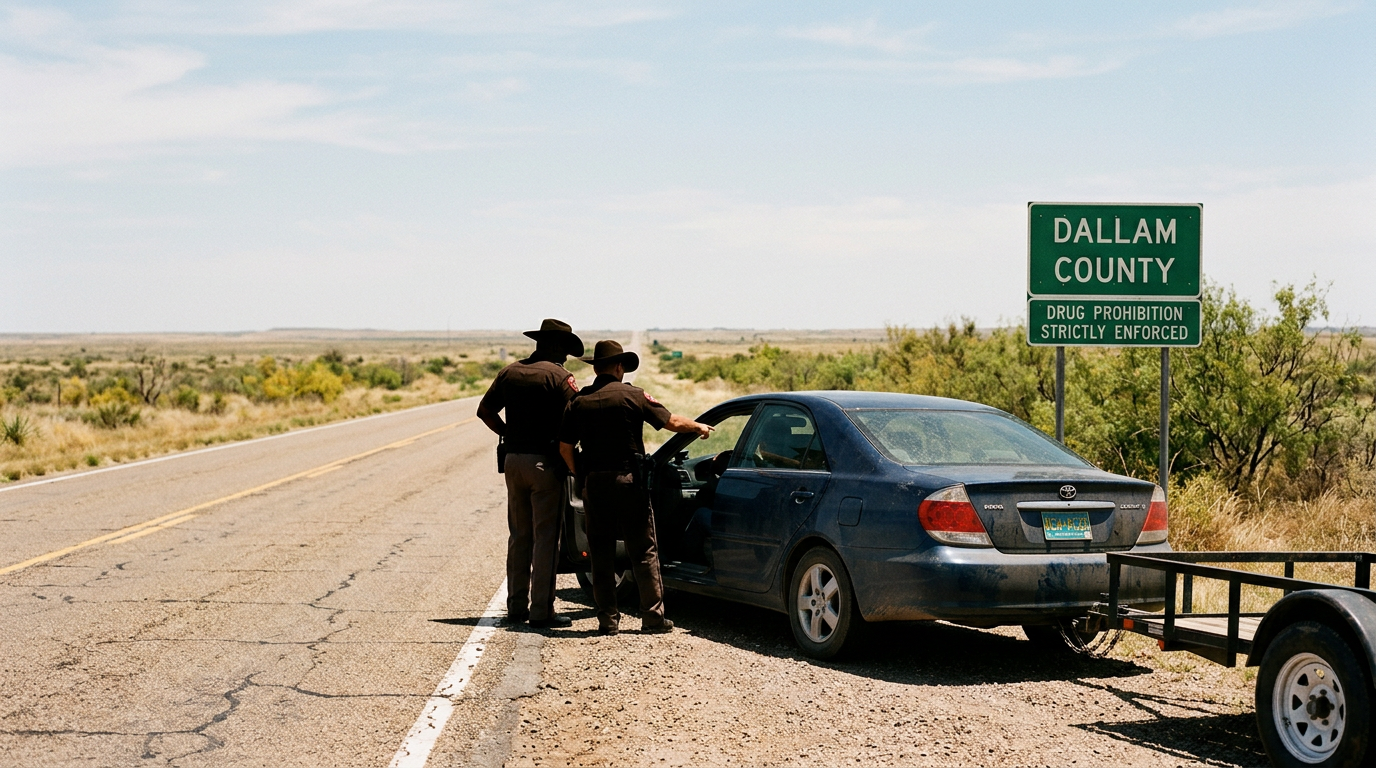
Recent accounts from small-town business owners and concerned residents highlight a recurring crisis for tourists entering the Lone Star State: the uncompromising enforcement of marijuana prohibition. Despite a rapidly shifting legal landscape in neighboring states like New Mexico and Oklahoma, Texas remains a jurisdiction where possessing even small amounts of cannabis can lead to immediate arrest, vehicle impoundment, and significant financial ruin. This trend is particularly visible in rural corridors where local law enforcement prioritizes drug interdiction as a matter of public policy. Observers note that many travelers mistakenly assume a level of leniency that simply does not exist once they cross the state line into a non-legal state. Historically, Texas has maintained some of the most stringent cannabis regulations in the country. Even as the federal government and adjacent states have moved toward decriminalization or full legalization, the Texas Legislature has consistently resisted efforts to follow suit for recreational use. This legal disconnect has created what some locals call a 'legal trap' for the uninformed. The consequence of this mismatch is a predictable surge in arrests during peak tourism seasons, such as summer and spring break, when travelers are most likely to be moving between states. For those caught in the middle, the experience often serves as a brutal introduction to the Texas justice system, which prioritizes the letter of the law over regional cultural shifts.
Texas relevance
Texas occupies a unique and often precarious geographical position. It shares thousands of miles of borders with states that have moved toward full legalization or robust medicinal programs. In regions like the Panhandle, West Texas, and the Red River valley in North Texas, travelers often cross into the state without realizing they have entered a jurisdiction where their out-of-state legal purchases are classified as criminal contraband. The local stake is high; for instance, along I-40 or I-10, small rural counties find their judicial systems stretched thin by non-resident offenders. When travelers are stranded after an arrest, the local economy and social services are often the ones left to manage the fallout, providing food or emergency labor opportunities to individuals who have lost everything to a single traffic stop.
The Stark Reality of the State Line
The primary issue facing travelers today is the extreme legal contrast between Texas and its various neighbors. New Mexico, for example, legalized recreational marijuana years ago, leading to a flourishing retail industry located just miles from the Texas border. Many travelers purchase products there legally and then continue their journey east, unaware that the moment they cross the invisible line into a Texas county like Oldham or Hudspeth, they are committing a state-level crime.
Oklahoma also maintains a very robust medical marijuana program, further complicating the legal reality for those traveling along I-35. While an individual may hold a valid medical card in their home state, Texas does not recognize out-of-state permits or prescriptions. To a Texas State Trooper, there is no difference between a medically prescribed product from another state and a black-market substance. The lack of reciprocity means that what was legal one mile ago becomes a jail-bookable offense the next.
The Devastating Financial Impact of Seizure
An arrest for marijuana possession in a rural Texas county involves far more than a simple fine or a 'slap on the wrist.' In many of these jurisdictions, law enforcement officers will routinely impound the vehicle if the driver is taken into custody and there is no sober passenger to take control of the car. This effectively leaves travelers stranded in remote areas with no means of transportation and limited access to public lodging or services.
The financial burden of these stops escalates with incredible speed. Beyond the immediate cost of bail, which can be thousands of dollars, defendants face daily impound fees that can exceed hundreds of dollars. When you factor in court costs and the mandatory necessity of hiring a local defense attorney to navigate the county's specific legal nuances, a single weekend trip can easily turn into a multi-thousand-dollar legal saga. For many families, this results in a permanent criminal record and the loss of their primary vehicle.
Rural Communties as a Safety Net
Small-town business owners, particularly those operating cafes, gas stations, and motels in popular tourist corridors, often find themselves on the front lines of this legal friction. When travelers are released from a county jail without funds, phone access, or a vehicle, they frequently turn to local businesses for help. This places a significant and unplanned burden on small communities that are already managing limited resources and infrastructure.
Local business owners report a recurring sight: individuals seeking temporary day labor just to afford enough gasoline to eventually leave the state or to pay for a bus ticket home. These businesses often step in to provide meals or a place to wait, essentially acting as an unofficial social safety net for people caught in the state’s drug interdiction dragnet. This human side of the enforcement debate highlights the ripple effects that strict policing has on the social fabric of rural Texas towns that rely on tourism for survival.
Law Enforcement Tactics and Interdiction
In many Texas counties, drug interdiction is explicitly stated as a top priority for the Sheriff’s Office and the Texas Department of Public Safety (DPS). Highways are heavily patrolled by units specifically trained to look for signs of travelers who might be carrying controlled substances. This includes looking for out-of-state plates, signs of nervousness, or other indicators that might justify a K-9 sniff or a vehicle search. What might start as a routine traffic stop for a minor speeding violation or a broken taillight can quickly escalate into a full search of the vehicle.
Proponents of these strict measures argue that they are essential for preventing larger-scale drug trafficking and maintaining a high standard of public safety throughout the state. They maintain that the law is clear and that it is the responsibility of the traveler to know the rules of the state they are entering. However, for the average traveler, the reality is that the risk of detection is extremely high, and the willingness of rural prosecutors to reduce or drop charges remains exceptionally low compared to the state's larger cities.
The Legislative Future of Cannabis in Texas
The Texas Legislature has seen a steady stream of bills aimed at decriminalizing small amounts of marijuana or expanding the state's very limited Compassionate Use Program. While the Texas House has occasionally passed bills to reduce possession penalties to a Class C misdemeanor, these efforts have historically stalled in the Texas Senate. Leadership in the state government has remained firm on maintaining the current prohibition, seeing it as a vital part of the state's 'law and order' identity.
Governor Greg Abbott has signaled a slight openness to reducing jail time for minor possession, yet the state remains far from a consensus on any form of legalization. This means the current 'trap' for interstate travelers is likely to persist for years. Until there is a unified federal policy or a radical shift in the political makeup of the state leadership in Austin, the advice from Texas locals remains the same: do not bring it across the line. The cultural shift seen in the rest of the country has not yet changed the enforcement reality on Texas highways.
Navigating the Legal Landscape as a Visitor
For those planning to visit or drive through Texas, it is crucial to understand that the state's laws apply to everyone within its borders, regardless of where they are from or what their home state allows. Being a first-time offender does not guarantee leniency in many rural counties. Prosecutors often use these cases to send a clear message to other travelers, and the legal process can take months or even years to resolve, requiring multiple return trips to the state for court appearances.
Ultimately, the best way to avoid being stranded in a rural Texas town with no money and an impounded car is to simply follow the local laws. Disposing of any cannabis products before crossing the state border is the only certain way to ensure a trip to the Lone Star State doesn't end in a jail cell. As many former residents and regular visitors have learned, the temporary convenience of carrying a product is never worth the life-altering consequences of a Texas drug arrest.
Analysis
While major metropolitan hubs like Austin, Dallas, or Harris County have implemented 'cite and release' programs or officially de-prioritized small-scale possession, the 'Real Texas'—the vast rural stretches governed by traditional sheriffs—operates under a completely different set of rules. This creates a dangerous inconsistency for anyone traveling across the state. For the Texas taxpayer, these arrests represent a significant expenditure of law enforcement resources for a substance that is increasingly normalized elsewhere. However, for the Texas legal system, these laws remain a cornerstone of state sovereignty and public policy intended to deter drug trafficking. The recurring narrative of tourists losing their vehicles and life savings over a small amount of cannabis serves as a stark reminder that in Texas, local control and state statutes still reign supreme over national trends, and the consequences of ignoring that reality are severe.
Source attribution
This story was reported using a public release from the r/texas. Keep TX Red rewrote the coverage independently and links to the official statement for verification.
Frequently Asked Questions
- Is marijuana legal in any part of Texas for personal use?
- No. Marijuana remains illegal at the state level throughout Texas. While some specific cities like Austin or Denton have passed local ordinances to de-prioritize some arrests, these local rules do not stop state troopers or county sheriffs from making arrests, and they do not apply to the vast majority of the state.
- What happens if I have a valid medical marijuana card from another state?
- Texas does not have reciprocity agreements with other states regarding medical marijuana. If you are stopped and found in possession of cannabis, a medical card from California, Oklahoma, or any other state will not provide a legal defense or immunity from arrest.
- Can the police really seize my car for a small amount of weed?
- Yes. Under Texas law, if the driver of a vehicle is arrested, law enforcement has the authority to impound the vehicle. Additionally, under certain circumstances involving larger quantities or suspected distribution, the state can pursue civil asset forfeiture to keep the vehicle permanently.
Official Sources
Take the next step
Browse the Newsroom →Read more about Keep Texas Red → Our full guide to what Keep Texas Red means and why Texans support it.
Get Texas updates delivered weekly.
Independent Texas reporting on politics, policy, and daily life. One email a week. Unsubscribe anytime.
Keep TX Red Newsroom
The Keep Texas Red Editorial Staff produces nonpartisan explainers, policy breakdowns, and educational resources to help Texans understand how their government works. All content is reviewed for accuracy and updated regularly.
About Keep TX Red →