Texas State Board of Education Adopts Bluebonnet Curriculum with Biblical Lessons
The Texas State Board of Education approved the Bluebonnet Learning curriculum, integrating biblical texts into public elementary school classrooms.
Editorial disclaimer: Opinions and analysis on Keep TX Red are editorial content — not statements of fact. See our editorial standards.
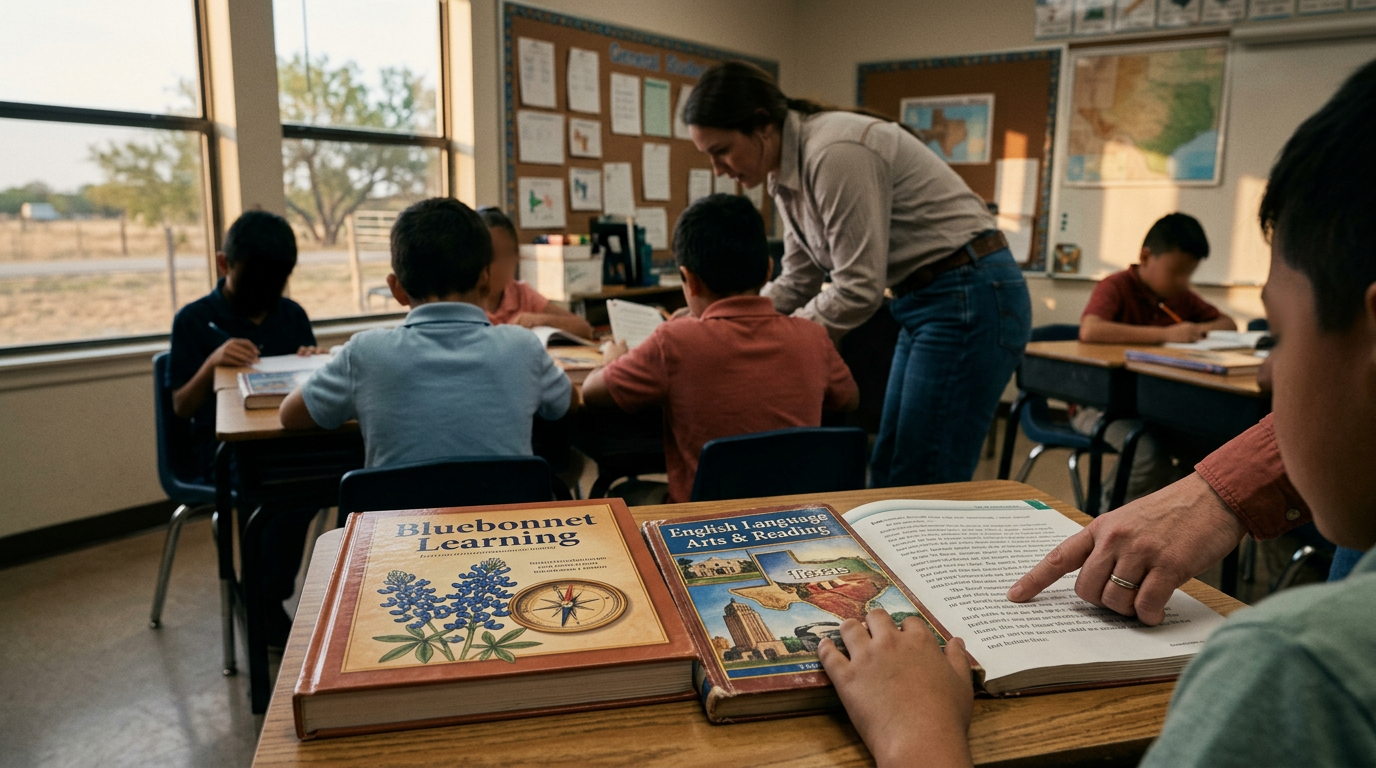
The Texas State Board of Education (SBOE) has officially greenlit a new elementary school English Language Arts and Reading (ELAR) curriculum known as Bluebonnet Learning. This state-developed instructional material incorporates traditional literary classics and historical documents alongside stories and parables from the Bible. The decision follows a lengthy period of public testimony and political debate regarding the intersection of religious texts and public education. The curriculum is designed for students from kindergarten through the fifth grade and is offered to school districts with a financial incentive for implementation. Historically, Texas has long been a battleground for educational content, from textbook revisions in the 1990s to more recent debates over library book policies. This move specifically targets literacy by using culturally significant religious narratives to build context for Western literature and art.
Texas relevance
This policy directly impacts nearly 1,200 school districts across the State of Texas and millions of families. Texas law now provides a financial incentive—amounting to approximately $60 per student—for districts that adopt these state-vetted materials. For many rural Texas districts struggling with budget constraints, the state-funded curriculum provides a pathway to high-quality materials without the heavy cost of private publishers. However, the adoption remains optional at the local level, preserving the Texas tradition of local control while providing a state-sanctioned framework for religious literacy.
The Financial Structure of Bluebonnet Learning
The implementation of the Bluebonnet Learning curriculum is tied closely to House Bill 1605, which was passed by the Texas Legislature to streamline instructional materials. Under this law, the state provides extra funding to districts that choose to use materials from the approved list. This 'incentivized' approach is intended to ensure that even the smallest Texas school districts have access to rigorous, open-source content that meets state standards without the administrative burden of vetting private vendors.
Each district that chooses to adopt the state-approved ELAR materials can receive a per-student allotment. Proponents argue this is a victory for taxpayers, as it reduces the reliance on expensive, ideology-driven materials from national textbook conglomerates. Opponents, meanwhile, suggest that the financial 'carrot' makes the choice less than voluntary for underfunded districts.
The State Board of Education has overseen the development of these materials to ensure alignment with the Texas Essential Knowledge and Skills (TEKS). While the biblical content has drawn the most headlines, the curriculum also covers a wide range of topics, including science, history, and geography, all designed to improve flagging literacy rates among Texas elementary students.
Biblical Literacy as a Foundational Tool
A central argument in favor of the new curriculum is the concept of 'cultural literacy.' The curriculum introduces students to figures like David, Goliath, and Moses within the context of their impact on art and common idioms. Proponents suggest that without this background, students find themselves at a disadvantage when encountering higher-level classical literature or analyzing historical speeches from figures like Abraham Lincoln or Martin Luther King Jr.
The lessons are structured to treat these stories in the same manner as Greek mythology or Aesop’s fables. By viewing them as building blocks of the English language, the curriculum seeks to bridge the gap between Modern English and the classical traditions that preceded it. This approach marks a shift in Texas pedagogy toward a more classical, knowledge-rich framework.
The SBOE members who supported the measure highlighted that the curriculum does not seek to convert students to a specific faith. Instead, they argue that the Bible is a primary source for the development of Western legal and moral codes. By understanding these stories, students gain a better grasp of the world around them and the historical foundations of their own state and country.
Addressing Concerns of Religious Neutrality
The curriculum's rollout has not been without controversy, leading to hours of public testimony before the SBOE. Critics from across the state expressed concerns that the focus on the Bible might alienate students from different religious backgrounds or no religious background at all. Some speakers argued that the lessons favored Christian perspectives over others, potentially violating the principle of religious neutrality in public institutions.
In response to these concerns, the Texas Education Agency (TEA) made several revisions to the materials prior to final approval. These changes included adding context for other world religions and adjusting the phrasing of certain biblical lessons to ensure they were presented as historically significant stories rather than absolute truths. Despite these edits, the core focus on Judeo-Christian narratives remains the primary point of contention.
Legal experts suggest that the curriculum will likely face challenges in court. However, supporters in the Texas Legislature believe that the curriculum is well within the bounds of Supreme Court precedent, which allows for the study of the Bible for its literary and historical qualities. The outcome of these potential legal battles will likely set a major precedent for other states considering similar educational reforms.
Implementation and Local District Autonomy
Ultimately, the decision to bring Bluebonnet Learning into the classroom rests with the local school boards across Texas. While the SBOE has approved the materials and the state provides the funding, individual districts can choose to stick with their current publishers or develop their own alternatives. This ensures that the diverse communities of Texas—from the Rio Grande Valley to the Panhandle—can choose the path that best fits their local values.
Early reports suggest that many districts are closely reviewing the materials before making a commitment. Factors such as teacher training, parental feedback, and existing resource allocations will determine how quickly these materials are adopted. The TEA has provided digital access to the materials so that parents and school staff can review the exact content taught in each grade level.
The flexibility of the program allows districts to adopt only specific modules or the entire K-5 sequence. This tiered approach is designed to mitigate the risks of a full-scale overhaul of the English department while still allowing students to benefit from the enriched cultural content provided by the state.
The Global and National Context of Curriculum Shifts
Texas is not alone in its pursuit of curriculum reform that emphasizes classical knowledge. Other states, such as Oklahoma and Louisiana, have recently passed or proposed measures aimed at increasing the presence of the Ten Commandments or the Bible in public schools. This trend reflects a broader national movement among conservative policymakers to move away from progressive educational models in favor of 'back to basics' instruction.
The Bluebonnet Learning initiative is seen by many as the gold standard for this movement because it integrates the content into the core ELAR standards rather than offering it as a separate elective. This integration ensures that the material is tested and assessed alongside basic reading and writing skills, giving it a level of academic weight that elective courses lack.
As Texas moves forward with this implementation, educators and researchers will be monitoring student outcomes closely. The state’s goal is to see a measurable increase in reading comprehension and critical thinking skills. If successful, the Texas model could serve as a roadmap for other states looking to harmonize academic excellence with traditional cultural virtues.
Analysis
OPINION: The adoption of Bluebonnet Learning is a strategic move to restore constitutional balance in the classroom. For decades, the secularization of education has stripped students of the cultural and linguistic tools necessary to understand the foundations of Western civilization. By reintroducing biblical parables not as theology, but as literary and historical touchstones, Texas is ensuring that the next generation can decode the references found in our founding documents and great works of art. Critics call it proselytization, but proponents rightly argue that you cannot understand the development of the American legal system or literature without understanding the Good Samaritan or the Sermon on the Mount.
Source attribution
This story was reported using a public release from the r/TexasPolitics. Keep TX Red rewrote the coverage independently and links to the official statement for verification.
Frequently Asked Questions
- Is the new Bible-based curriculum mandatory for all Texas students?
- No. The State Board of Education has approved the curriculum as an option for school districts. Local school boards retain the right to choose which instructional materials they use in their classrooms. However, the state provides additional funding to districts that choose to use the state-approved Bluebonnet Learning materials.
- Does the curriculum teach the Bible as a religious text?
- The curriculum is designed to treat biblical stories as literary and historical sources. It aims to provide students with the cultural background necessary to understand Western literature, art, and history. The goal is academic literacy rather than theological instruction or proselytization.
- What grades are covered by the Bluebonnet Learning curriculum?
- Currently, the state-vetted materials provided under the Bluebonnet Learning banner are designed for elementary school students from Kindergarten through the 5th Grade, specifically for the English Language Arts and Reading (ELAR) subject area.
- How much extra funding do schools receive for using these materials?
- Under the provisions of HB 1605, Texas school districts can receive approximately $40 to $60 per student to assist with the costs of acquiring and implementing the state-approved instructional materials.
Official Sources
Take the next step
Browse the Newsroom →Read more about Keep Texas Red → Our full guide to what Keep Texas Red means and why Texans support it.
Get Texas updates delivered weekly.
Independent Texas reporting on politics, policy, and daily life. One email a week. Unsubscribe anytime.
Keep TX Red Newsroom
The Keep Texas Red Editorial Staff produces nonpartisan explainers, policy breakdowns, and educational resources to help Texans understand how their government works. All content is reviewed for accuracy and updated regularly.
About Keep TX Red →