Fort Worth Data Centers: New Tech Projects Drive North Texas Economic Growth
A new surge in Fort Worth data center projects is reshaping the local tax base and power grid as developers eye rural Tarrant and Denton County sites.
Editorial disclaimer: Opinions and analysis on Keep TX Red are editorial content — not statements of fact. See our editorial standards.
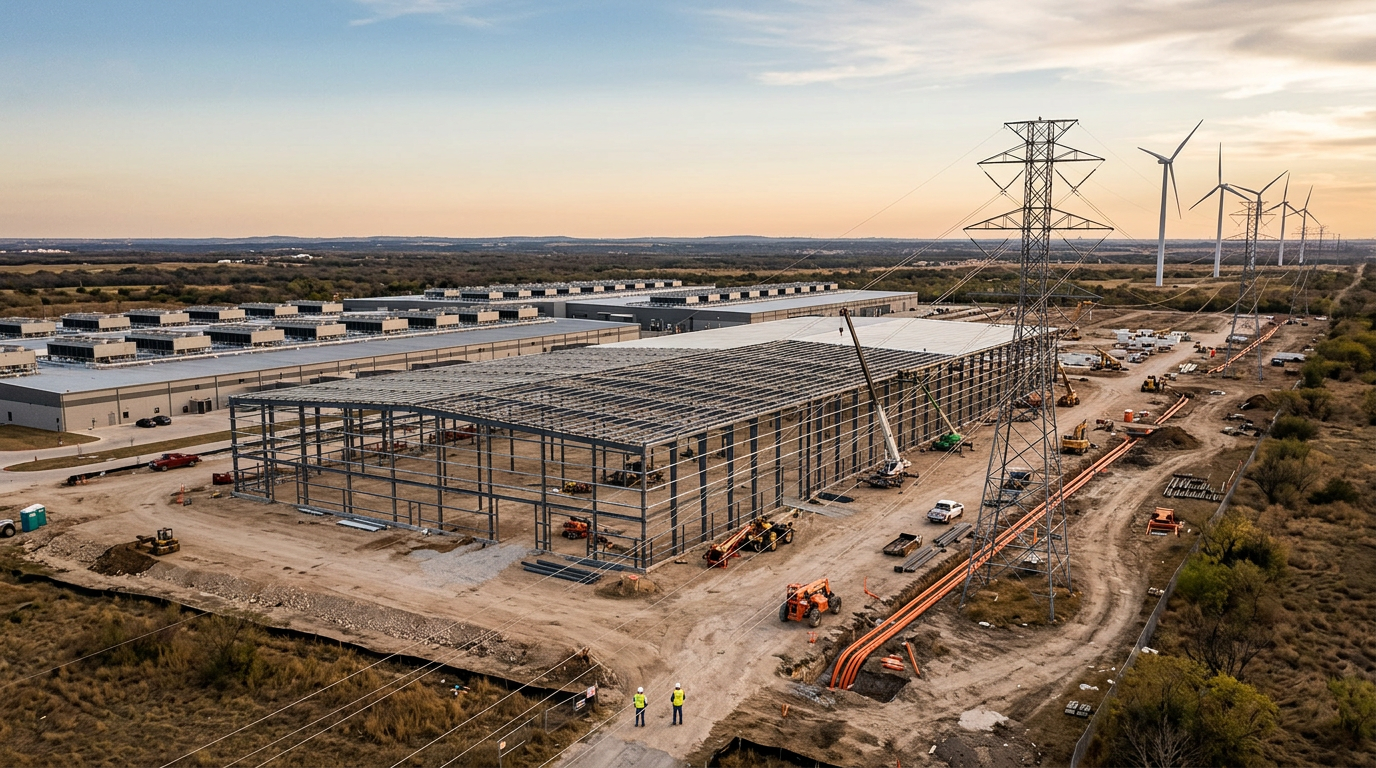
Large-scale technology infrastructure projects are rapidly transforming the physical and economic landscape of Fort Worth, with recent development reports highlighting a localized boom in data center construction. These massive facilities, which house the servers and networking hardware necessary for the modern digital economy, are no longer confined to traditional industrial hubs. Instead, developers are increasingly looking toward the periphery of the city, targeting areas with robust fiber-optic access and significant power capacity. This movement follows a decade of steady growth in the Alliance Texas corridor, which historically served as the primary anchor for the region's technological industrialization. The shift represents a critical juncture for North Texas as it balances the arrival of high-value tax assets against the logistical demands of heavy energy and water consumption. Historically, Texas has positioned itself as a premier destination for data centers by offering significant tax exemptions for larger facilities, a policy that was recently expanded under Senate Bill 1929. Fort Worth specifically has benefited from this state-level environment, attracting major players like Meta (formerly Facebook) to the North Fort Worth area. As these existing centers reach capacity or look to diversify their geographic footprint, the surrounding municipalities are seeing a wave of new permit applications and land acquisitions. The current expansion is fueled not only by the rise of cloud computing but also by the skyrocketing demand for artificial intelligence processing, which requires significantly more localized hardware than standard web hosting services.
Texas relevance
Texas is currently the second-largest market for data centers in the United States, and Fort Worth serves as the epicenter for this growth within the DFW Metroplex. The relevance to local residents lies in how these facilities impact property taxes and municipal services in Tarrant and Denton Counties. While these centers generate massive tax revenue for school districts and city coffers without putting a strain on the public education system—since they bring few new residents or students—they do place extreme demands on the Texas power grid. As Fort Worth continues to outpace many other Texas cities in population growth, the competition for reliable electricity and water cooling between residential neighborhoods and industrial data hubs has become a central point of debate for local city councils and state legislators.
The Strategic Geography of Data Hubs
The current layout of data centers in Fort Worth is not accidental but is dictated by the intersection of existing electrical high-voltage lines and subterranean fiber-optic backbones. Developers are currently focusing their efforts on North Fort Worth and the outskirts of the Westover Hills area, where the terrain allows for the massive horizontal footprints required for these campus-style developments. By analyzing current land use maps, it is evident that the Alliance corridor remains the most saturated, but new interest is creeping south toward Tarrant County’s rural borders.
Proximity to the Perot Field Fort Worth Alliance Airport has historically been a draw, but the new wave of developers is looking for 'edge' locations. These are areas close enough to population centers to reduce latency—the delay in data transmission—but far enough away to avoid the high land costs associated with residential urban infill. This balance is what has made Fort Worth more attractive than the land-locked areas of Dallas or the increasingly expensive suburbs of Plano and Frisco.
Energy Consumption and Grid Reliability
A primary concern for Fort Worth residents and state officials is the sheer amount of electricity required to run thousands of servers 24 hours a day. Data centers are 'always-on' facilities, meaning their demand for power is constant, unlike retail or residential areas that peak during the day and drop off at night. This steady load can be an advantage for grid stability, but the sheer scale of the new proposed projects is unprecedented, with some campuses requesting hundreds of megawatts of capacity.
In response to these demands, utility providers in North Texas are having to accelerate the construction of sub-stations and transmission lines. While these upgrades are paid for largely by the industrial users, they alter the visual landscape of the city. Furthermore, the heat generated by these servers often requires sophisticated liquid or air cooling systems. In a state like Texas, where water conservation is a recurring legal and social issue, the transition toward more water-efficient dry-cooling systems has become a mandatory part of the conversation between developers and the Fort Worth City Council.
Economic Impact Beyond Construction Jobs
While critics often point out that data centers do not employ thousands of full-time workers once they are operational, their economic contribution is measured differently. Once the construction phase—which does employ hundreds of local contractors—is complete, the facility becomes a massive source of personal property tax. In Texas, the 'business personal property' (the servers themselves) is taxed along with the real estate. Because servers are frequently upgraded, the tax base remains fresh and high-valued.
This revenue is vital for Fort Worth’s diverse local taxing jurisdictions. For example, the Eagle Mountain-Saginaw and Northwest Independent School Districts have seen significant budget benefits from the arrival of these facilities. This allows the districts to fund new school construction and teacher salaries while potentially lowering the tax rates for individual homeowners. This fiscal dynamic is a cornerstone of the 'Texas Model,' attracting capital-intensive projects that pay for public services without increasing the population density that leads to traffic and overcrowding.
The Rise of Artificial Intelligence Infrastructure
The shift in development interest toward Fort Worth is being accelerated by the global race for Artificial Intelligence. Unlike standard website hosting, AI training requires immense graphical processing power, which generates significantly more heat and consumes more energy. This has led to a brand-new design for data centers being built in the region, featuring specialized cooling and higher-density power racks. Fort Worth is seeing a specific type of developer—those focused on 'hyperscale' centers—entering the market.
These hyperscale projects are often secretive during the planning phases, listed under code names until all permits are secured. The involvement of major tech conglomerates ensures that these are long-term investments rather than speculative builds. For the city, these projects signify a shift from being a logistics and distribution hub for physical goods to becoming a central nervous system for the global digital economy. As more AI developers look to Texas for its favorable regulatory environment, Fort Worth stands as a primary beneficiary.
Land Use and Zoning Challenges
As the footprint of data centers expands, Fort Worth is facing new challenges regarding zoning and land use. Residents in suburban areas are voicing concerns about the aesthetics of these 'windowless monolithic buildings' that can span hundreds of thousands of square feet. In response, city planners are looking at new ways to integrate these structures into the landscape, including requirements for enhanced landscaping, noise-dampening walls for cooling fans, and exterior designs that better match the surrounding architecture.
There is also the matter of competing for land that could otherwise be used for residential housing. Fort Worth is one of the fastest-growing large cities in the nation, and the pressure to provide housing is immense. When a developer buys 500 acres for a data center, that land is permanently removed from the housing market. The city must carefully balance these technological investments against the need for rooftops to house the growing workforce that supports other sectors of the Tarrant County economy.
Regulatory Environment and State Incentives
The legislative environment in Austin plays a massive role in why Fort Worth remains a target for data center developers. Texas offers sales and use tax exemptions on electricity and equipment for facilities that meet certain investment and job-creation thresholds. This state-level support makes the DFW area significantly more competitive than neighboring states like Oklahoma or Louisiana. Fort Worth’s local government has also been proactive in streamlining the permitting process to ensure projects can move from the drawing board to groundbreaking as quickly as possible.
However, there is growing scrutiny at the state level regarding the impact of these facilities on the ERCOT grid. Legislative sessions are increasingly looking at whether data centers should be required to have their own on-site backup generation or participate in demand-response programs, where they temporarily reduce power usage during grid emergencies. These regulatory shifts will dictate the future pace of development in Fort Worth, as developers seek the most stable and predictable environments for their multi-billion dollar investments.
Analysis
The data center gold rush in Fort Worth is a double-edged sword for the conservative economic model in Texas. On one hand, these facilities are the ultimate 'tax positive' developments; they require minimal police, fire, or school services compared to the millions in revenue they generate. This helps keep the local property tax burden lower for homeowners. On the other hand, the sheer volume of power consumed by these sites tests the resilience of the ERCOT grid. Critics and residents often worry that during extreme Texas weather events, industrial users might compete with residential needs. However, the current momentum suggests that Fort Worth is doubling down on its identity as the 'Silicon Prairie,' prioritizing infrastructure that ensures the city remains globally competitive in the tech-driven 21st-century economy.
Source attribution
This story was reported using a public release from the r/fortworth. Keep TX Red rewrote the coverage independently and links to the official statement for verification.
Frequently Asked Questions
- Why are so many data centers moving to Fort Worth specifically?
- Fort Worth offers a combination of available land, existing high-capacity electrical infrastructure, and access to major fiber-optic lines. Additionally, Texas provides generous tax exemptions for data centers that invest heavily in the state, making North Texas a more cost-effective location than coastal tech hubs.
- How do these facilities affect my electricity bill?
- While data centers consume a large amount of power, they often pay for the necessary infrastructure upgrades themselves. However, their high demand puts overall pressure on the ERCOT grid. State officials are working to ensure that industrial growth does not lead to higher costs or lower reliability for residential customers.
- Do data centers create many jobs for locals?
- Data centers create hundreds of high-paying jobs during the construction phase. Once operational, they typically require a smaller staff of 30 to 50 specialized technicians and security personnel. Their primary benefit to the community is the massive amount of property tax they pay, which supports local schools and infrastructure.
Official Sources
Take the next step
Browse the Newsroom →Read more about Keep Texas Red → Our full guide to what Keep Texas Red means and why Texans support it.
Get Texas updates delivered weekly.
Independent Texas reporting on politics, policy, and daily life. One email a week. Unsubscribe anytime.
Keep TX Red Newsroom
The Keep Texas Red Editorial Staff produces nonpartisan explainers, policy breakdowns, and educational resources to help Texans understand how their government works. All content is reviewed for accuracy and updated regularly.
About Keep TX Red →