Fort Worth Property Rules: Building Commission Mandates New Renovation Standards
Fort Worth officials order immediate action on hazardous properties to improve city safety and address long-standing building code violations.
Editorial disclaimer: Opinions and analysis on Keep TX Red are editorial content — not statements of fact. See our editorial standards.
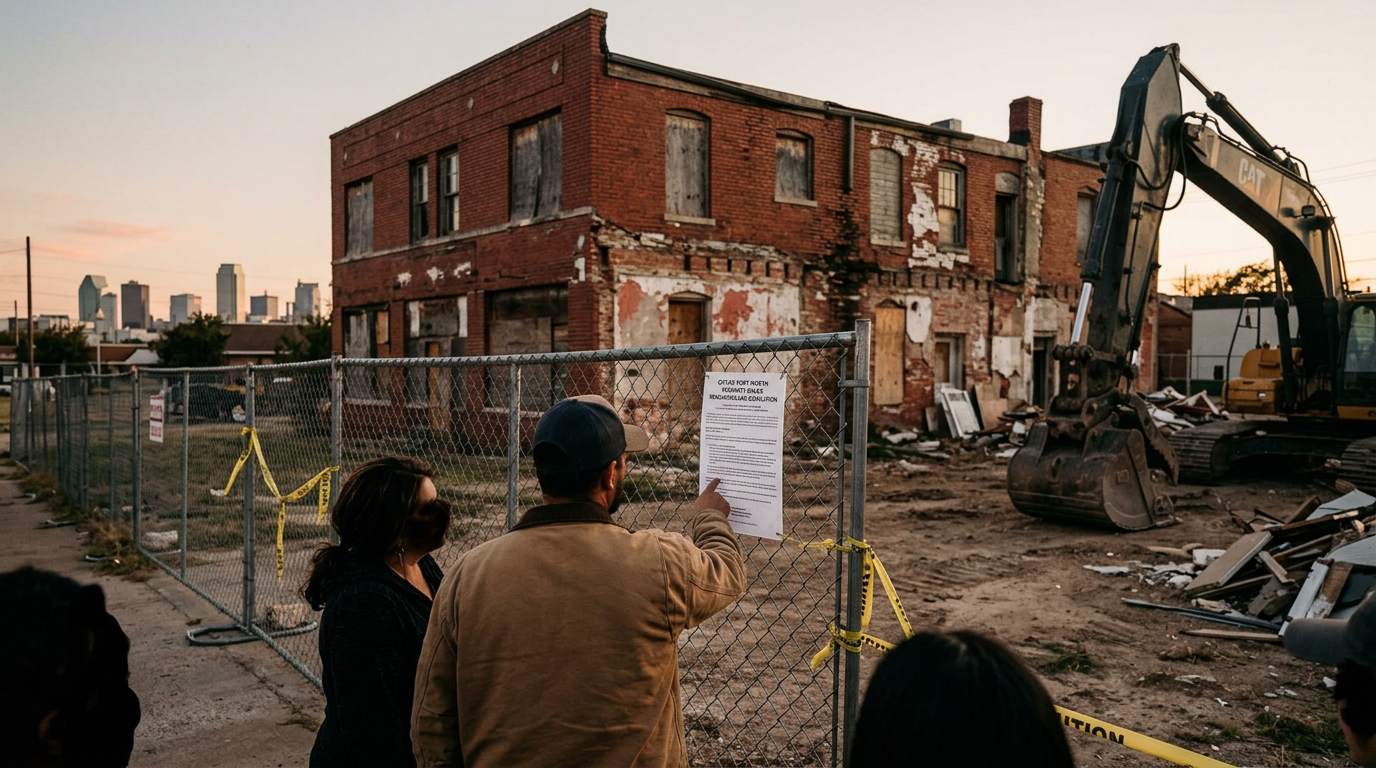
The City of Fort Worth Building and Standards Commission has recently issued a series of directives aimed at resolving safety hazards across several local properties. These orders mandate a combination of intensive structural repairs and, in the most severe cases, the complete demolition of buildings deemed beyond salvage. Historically, Texas municipalities have utilized these commissions to prevent urban blight and ensure that residential and commercial structures do not become magnets for crime or public health hazards. This current wave of enforcement reflects a localized effort to tighten oversight as the DFW metroplex continues its rapid expansion and face-lift. The properties in question had previously been flagged for numerous code violations ranging from electrical hazards to structural instability that posed a risk to both inhabitants and neighboring residents. By exercising these powers, the city is placing the burden of remediation on property owners while setting firm timelines for compliance. This action comes after years of similar precedents in other Texas metros where aging infrastructure has necessitated aggressive municipal intervention to preserve community standards.
Texas relevance
This administrative action is specifically situated in Fort Worth, Texas, the 13th-largest city in the United States and a central hub of the Tarrant County region. For Texans, these decisions highlight the balance between private property rights and the government's duty to maintain public safety. Throughout the state, local government codes grant cities the power to declare structures 'substandard' and ensure that the rapid growth seen across the Lone Star State is matched by a commitment to maintaining existing housing and business stocks. When properties in North Texas fall into disrepair, they can impact local school district assessments and property tax valuations for surrounding homeowners. Consequently, these commission meetings are vital for Fort Worth residents who are concerned about the long-term health of their neighborhoods and the efficacy of city-led enforcement mechanisms in high-growth corridors.
The Legal Framework of Texas Property Enforcement
In Texas, the authority to order the repair or demolition of a building is governed by the state’s Local Government Code. Specifically, Chapter 214 allows municipalities to establish procedures for a public hearing to determine if a structure meets certain criteria of danger or substandard habitability. These laws are designed to protect the general welfare while providing property owners with a specific process through which they can appeal or address the issues cited by code enforcement officers.
For Fort Worth, this process involves the Building and Standards Commission, a quasi-judicial body that listens to testimony from building inspectors, fire marshals, and the property owners themselves. Once a building is officially declared a public nuisance, the owner typically has a 30-day window to either present a plan for repair or begin the process of clearing the site. If the owner fails to act within the allotted timeframe, the city possesses the legal right to step in and perform the work, subsequently placing a lien against the property to recoup the costs involved.
This legal infrastructure is crucial for maintaining order in a state that prides itself on private ownership but also recognizes the dangers of fire risks and structural collapses. In many North Texas towns, these boards are the first line of defense against the deterioration of historic districts and established residential zones, ensuring that the visual and physical integrity of the city remains intact even as new construction booms on the outskirts.
Assessment of Safety Hazards and Risk Factors
The recent orders in Fort Worth targeted properties with a history of documented instability and neglect. Inspections uncovered a variety of concerns, including compromised foundations, exposed wiring, and roof failures that invited water damage and mold growth. Such issues are not merely aesthetic; they represent significant fire risks that could potentially spread to adjacent homes in densely populated urban neighborhoods. In some instances, these properties were found to be unsecured, allowing for unauthorized entry and potential criminal activity.
City officials prioritize buildings that have become 'attractive nuisances,' meaning they are likely to draw in children or vagrants who could be injured on the premises. The commission’s decision to move toward demolition for certain structures suggests that the cost of bringing these buildings up to current Texas safety codes is prohibitively high. When a structure is deemed a total loss, the priority shifts from preservation to removal to eliminate the immediate threat to the public.
The impact of these hazards extends beyond the physical walls of the buildings. High concentrations of derelict properties are often linked to lower property values for neighbors and a general sense of communal decline. By addressing these specific sites, the city aims to stabilize the micro-economy of each affected neighborhood, encouraging nearby property owners to maintain their own homes and businesses with the knowledge that the city will enforce a baseline of quality.
Economic Implications for Local Property Owners
For owners of the targeted buildings, the commission’s orders present a significant financial ultimatum. Repairing a building to meet modern standards can require tens of thousands of dollars in specialized labor and permits. In a market where supply chain disruptions and labor shortages are common, many owners find themselves unable to meet the strictly enforced deadlines. This can lead to a cycle of fines and legal fees that further drain the resources needed for actual renovations.
Demolition also comes with a heavy price tag. Clearing a lot, disposing of hazardous materials like asbestos, and leveling the land for future use can be an expensive endeavor. If the property owner cannot afford these services, the city will hire contractors and place a tax lien on the land. This often results in the property eventually being sold at a tax foreclosure auction, allowing new investors to take over the site and start fresh with new construction that may better serve the community's current needs.
However, there is an upside for the broader Fort Worth economy. As these blighted properties are cleared or repaired, the overall attractiveness of more than a dozen neighborhoods increases. This can lead to a rise in local tax revenue through increased property assessments, which in turn fuels the municipal budget for things like road repairs, police services, and park maintenance. The long-term economic health of the city is predicated on the idea that every piece of land should be productive and safe.
Public Hearing Process and Community Input
The Building and Standards Commission meetings serve as a public forum where neighbors can voice their concerns about specific properties. In many cases, it is the residents of Fort Worth themselves who initiate the process by reporting suspicious activity or visible decay to the city’s code compliance department. This grassroots involvement is a key component of how municipal governance functions in Texas, ensuring that the city is responsive to the needs of those living on the front lines of urban decay.
During these hearings, property owners are given the opportunity to present a 'scope of work' and proof of financial capability to fix the structures. The commission evaluates these plans based on their feasibility and the owner's past track record of compliance. If an owner has a history of broken promises, the commission is less likely to grant an extension, opting instead for a more permanent solution like a demolition order. This transparency is intended to ensure that all parties are treated fairly under the law while maintaining the city's standards.
Community input often highlights the human element of these property disputes. Neighbors frequently describe the stress of living next to a building that they fear might catch fire or collapse. This testimony provides the commission with a broader context than just the inspector's checklist, emphasizing that these decisions are not made in a vacuum but affect the daily lives and peace of mind of Fort Worth citizens across the city's diverse districts.
Future Outlook for Fort Worth Urban Renewal
As Fort Worth looks toward the future, the work of the Building and Standards Commission is expected to become even more vital. The city’s Master Plan emphasizes density and the redevelopment of older corridors. Clearing out 'dead weight' in the form of unsalvageable buildings is a prerequisite for the kind of reinvestment the city seeks. This proactive stance on property maintenance is part of a larger strategy to make Fort Worth more competitive with neighboring cities like Dallas and Arlington.
We are likely to see an increase in public-private partnerships where the city facilitates the clearing of derelict sites to pave the way for affordable housing or modern mixed-use developments. By aggressive management of substandard housing, Fort Worth can dictate the pace of its own renewal, ensuring that growth is not just confined to new suburban developments but also rejuvenates the historic heart of the city. The commission's recent orders are just one phase in a long-running effort to modernize the city’s infrastructure.
Ultimately, the goal is to create a more resilient urban environment. A city that rigorously enforces its building codes is one that is less susceptible to disasters and more attractive to families and businesses alike. While the process can be painful for individual property owners, the broader mission of the Fort Worth commission is to safeguard the future of the community by ensuring that the city of tomorrow is built on a foundation of safety and stability.
Analysis
OPINION: While the city views these orders as a necessary cleanup of hazardous sites, property rights advocates may see this as a heavy-handed approach by local government. The cost of mandated repairs in today’s inflationary market can often exceed the actual value of the property, effectively forcing owners into demolition by economic necessity. However, from a community standpoint, allowing derelict buildings to sit idle invites instability. The commission is essentially acting as a quality-control board for the city’s physical footprint. By choosing this path, Fort Worth is signaling to absentee landlords that neglect will no longer be tolerated in a city that is increasingly rebranding itself as a premier destination for business and residential investment.
Source attribution
This story was reported using a public release from the r/fortworth. Keep TX Red rewrote the coverage independently and links to the official statement for verification.
Frequently Asked Questions
- What happens if a property owner ignores a demolition order in Fort Worth?
- If a property owner fails to comply with a demolition order, the City of Fort Worth has the legal authority to hire a contractor to tear the building down. The cost of this work, along with administrative fees, will be placed as a lien against the property. This means the owner cannot sell the land or clear the title without first paying back the city for the demolition costs.
- Can a property owner appeal the commission's decision?
- Yes, property owners generally have a specific window of time to appeal the findings of the Building and Standards Commission to a district court. However, they must typically prove that the commission acted arbitrarily or that there was a significant legal error in the proceedings. It is usually advised to work with the commission directly to produce a viable repair plan before the final order is issued.
- How does the city decide which buildings are unsafe?
- Buildings are typically identified through reports from neighbors or routine patrols by code enforcement officers. Officials look for specific health and safety violations such as structural failure, lack of utilities, unsecured entrances, and hazardous accumulation of debris. A formal inspection is conducted, and a report is filed before the case is brought before the commission for a public hearing.
Official Sources
Take the next step
Browse the Newsroom →Read more about Keep Texas Red → Our full guide to what Keep Texas Red means and why Texans support it.
Get Texas updates delivered weekly.
Independent Texas reporting on politics, policy, and daily life. One email a week. Unsubscribe anytime.
Keep TX Red Newsroom
The Keep Texas Red Editorial Staff produces nonpartisan explainers, policy breakdowns, and educational resources to help Texans understand how their government works. All content is reviewed for accuracy and updated regularly.
About Keep TX Red →