Harris County Voting: Guide to Volunteer Deputy Registrar Training
Harris County remains Texas' largest voting bloc. As the registration deadline nears, officials seek more Volunteer Deputy Registrars to assist voters.
Editorial disclaimer: Opinions and analysis on Keep TX Red are editorial content — not statements of fact. See our editorial standards.
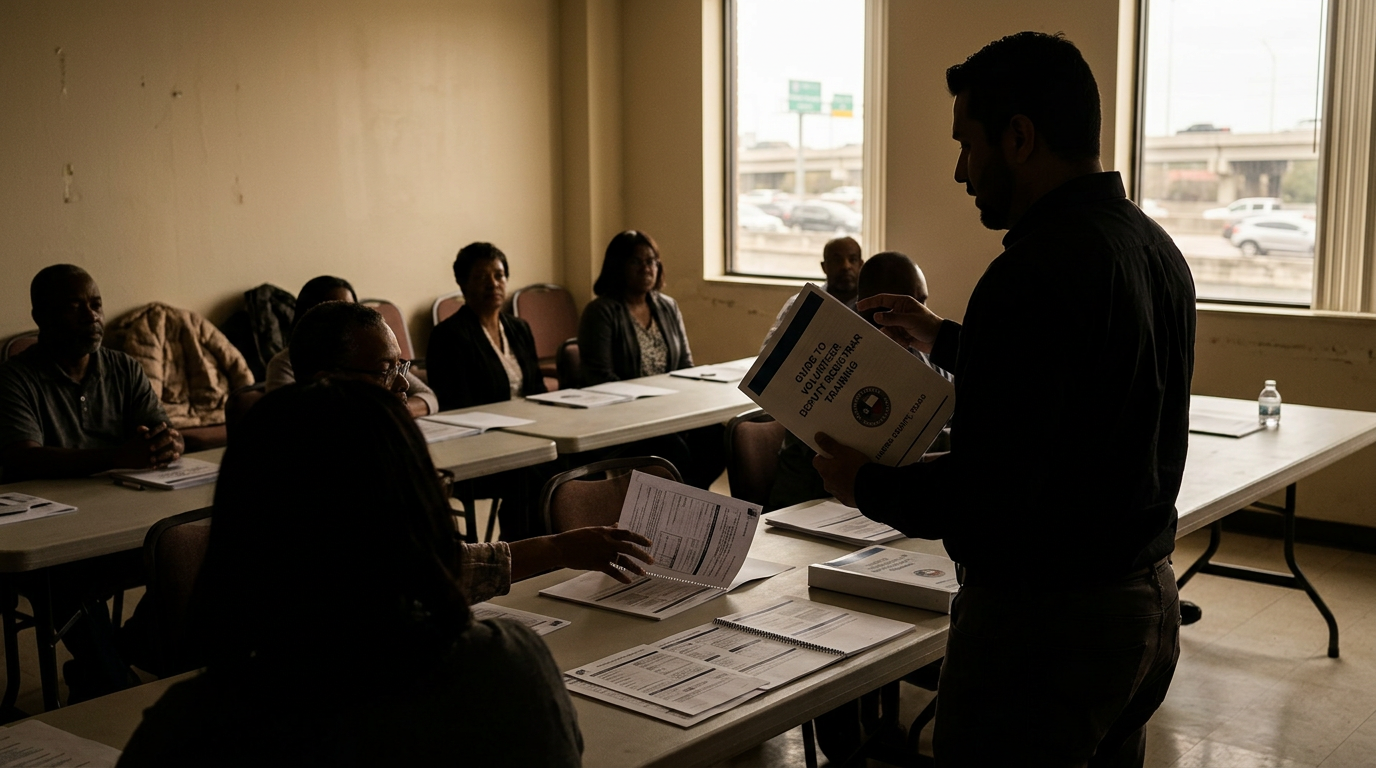
As the next major election cycle approaches, Harris County continues to hold its position as the most populous and electorally significant county in Texas. Despite topping the state in raw registration numbers, local data suggests a persistent gap between the number of eligible citizens and those actually on the voter rolls, as well as a disparity between those registered and those who participate in the democratic process. In response, local efforts are intensifying to recruit and train Volunteer Deputy Registrars (VDRs). These individuals serve as official, nonpartisan appointees tasked with facilitating the registration of eligible residents. This push reflects a broader historical trend in Texas where urban centers have struggled with turnout rates despite their growing demographic influence. The VDR program is specifically designed to bridge the logistical gap for residents who may not have easy access to online resources or traditional registering locations. By deploying these trained deputies into high-traffic areas, the county aims to streamline the process before the strict statutory cut-off dates mandated by Texas law. Historically, the VDR system has been a cornerstone of local civic engagement, allowing private citizens to take a direct hand in the administrative functions of the county clerk or tax assessor-collector’s office.
Texas relevance
Harris County is the primary engine of Texas electoral politics, housing over 4.7 million residents and representing a diverse cross-section of the state's economy and culture. Because Texas does not offer online voter registration for all residents, the physical presence of VDRs in Houston and surrounding suburbs is a critical component of the state's election infrastructure. Decisions made regarding registration processes in Harris County often set the precedent for how large-scale urban centers like Dallas, Bexar, and Tarrant counties manage their own voter outreach. The efficacy of the Houston-area VDR system directly impacts the total ballot count for statewide offices, making the administrative efficiency of these volunteers a matter of statewide interest. Furthermore, Texas law requires specific training for these volunteers, ensuring that all applications are handled with a high degree of security and legal compliance, maintaining the integrity of the state's voter database.
The Legal Framework for Volunteer Deputy Registrars
In Texas, a Volunteer Deputy Registrar is not merely a volunteer but an official appointee of the county. This role is governed by the Texas Election Code, which mandates that every county must offer training for those wishing to assist in the registration process. The training covers the essential legal requirements for completing an application, including verifying citizenship, residency, and the age of the applicant. Because Texas requires original ink signatures on paper forms, the VDR serves as a mobile intake officer, ensuring that these documents are collected and filed within a strict 5-day window of receipt.
The appointment lasts until the end of an even-numbered year, meaning recruiters must periodically renew their certification. This ensures that all deputies are up to date on any legislative changes passed during the biennial sessions of the Texas Legislature. The nonpartisan nature of the role is strictly enforced; while a VDR may be an activist in their personal time, they are legally prohibited from campaigning for a specific candidate or party while actively performing their duties as a registrar.
Training Requirements and Availability
To become certified in Harris County, residents must undergo a training session that typically lasts approximately one hour. These sessions are designed to be accessible, offering both in-person workshops at county annexes and virtual Zoom meetings for those with scheduling constraints. The curriculum involves a detailed review of the voter registration application, common errors to avoid, and the protocol for handling sensitive personal information. After completing the course, attendees must pass a short examination to demonstrate their competency in the state's election laws.
Once a volunteer passes the test and is sworn in, they receive a formal certificate and the necessary materials to begin their work. Harris County has made significant efforts to expand the frequency of these trainings as the election cycle nears peak intensity. This proactive approach aims to saturate the county with qualified deputies who can work at diverse venues, from shopping centers to community festivals, ensuring that no potential voter is left behind due to technical or logistical barriers.
The Disparity in Voter Participation
Despite having a record-breaking number of registered individuals, Harris County often faces questions regarding its actual turnout percentages. Factors such as transient populations, language barriers, and a lack of awareness regarding polling locations contribute to a situation where registration does not always translate into a cast ballot. The current push for more VDRs is part of a multi-faceted strategy to address the very beginning of the voting pipeline: the registration itself. By making the process more visible and convenient, officials hope to foster a culture of habitual participation.
Data from recent cycles shows that when registration occurs in a community setting—such as a church, school, or workplace—the likelihood of that individual following through on Election Day increases. The presence of a VDR provides an opportunity for immediate education on where and when to vote, which can be just as crucial as the registration form itself. This 'boots on the ground' strategy is tailored to the specific urban challenges of a sprawling metroplex like Houston, where many residents may feel disconnected from the central administrative offices.
Strategic Deployment in the Community
A key advantage of the VDR program is the mobility it grants. Trained deputies are encouraged to seek out 'captive audiences' where residents are already gathering. This includes high-traffic commercial zones like the Galleria or sporting events involving teams like the Houston Rockets. By integrating registration into the daily lives of citizens, the county reduces the friction associated with government interactions. This decentralized model is particularly effective in reaching younger voters and those who have recently moved to the area.
Local block parties, such as those held in the Montrose district or the Heights, serve as prime locations for these efforts. The casual environment of a neighborhood gathering allows for more in-depth conversations about the importance of being on the rolls. These efforts are not limited to large-scale events; VDRs often set up tables at smaller venues like public libraries and grocery stores, providing a constant and reliable presence of civic resources across Harris County's vast geography.
Navigating State Registration Deadlines
The urgency of the VDR recruitment drive is dictated largely by the calendar. Under Texas law, a voter must be registered at least 30 days before an election to be eligible to participate. This strict deadline creates a frantic period for election officials every October. By increasing the number of active VDRs throughout the summer and early fall, Harris County hopes to smooth out the typical last-minute surge of applications that can strain the resources of the Tax Assessor-Collector's office.
Furthermore, VDRs play a vital role in ensuring that the applications submitted are accurate. Incomplete or incorrect forms can lead to delays or rejections, potentially disenfranchising a voter right at the deadline. The training provided to deputies focuses heavily on identifying these potential issues before the form is ever submitted to the county. This quality control at the point of entry is essential for maintaining a clean and accurate voter roll for the state of Texas.
Impact on Southeast Texas Politics
The political landscape of Southeast Texas is often decided by the margins in Harris County. Because it is the largest county in the state, even slight shifts in registration or turnout can have ripple effects that influence the outcome of gubernatorial, senatorial, and presidential contests. The VDR program is therefore viewed as an essential utility for both parties and nonpartisan groups alike. The ability to mobilize a large force of registrars allows the county to keep pace with its rapid population growth, which continues to outstretch the capacity of static government offices.
Beyond just the numbers, the VDR initiative reflects a commitment to localized governance. By empowering residents to register their neighbors, the program fosters a sense of community ownership over the electoral system. As Houston continues to evolve as a global hub, the mechanisms ensuring that every eligible voice is heard remain a fundamental pillar of the region's stability and growth. The success of these volunteer efforts will likely be a primary factor in the final data snapshots of the upcoming election season.
Analysis
Opinion: While the push for more VDRs is framed as a nonpartisan effort to increase civic participation, it also highlights the ongoing debate over Texas election laws. Critics argue that the state's registration requirements are overly burdensome, while proponents of the current system suggest that the VDR process ensures accountability and prevents fraudulent entries. The emphasis on 'high-leverage' volunteer work in Harris County reveals a strategic recognition that in a state as large as Texas, ground-level, person-to-person interaction remains the most effective way to navigate the complexities of the current legal framework. By training hundreds of new deputies, Harris County is essentially creating an auxiliary workforce to manage the surge of paper applications that typically arrive in the weeks leading up to the deadline.
Source attribution
This story was reported using a public release from the r/houston. Keep TX Red rewrote the coverage independently and links to the official statement for verification.
Frequently Asked Questions
- What are the requirements to become a Volunteer Deputy Registrar in Texas?
- To be eligible, you must be 18 years of age or older, a United States citizen, and a resident of the state of Texas. You cannot have been convicted of a felony (unless you have completed your sentence, including parole and probation) or a crime involving identity theft. Once eligible, you must complete a training program provided by the county and be officially appointed to the role.
- Can I register voters in other counties if I am a VDR in Harris County?
- VDR certification is county-specific. While you are certified to register voters within Harris County, you must be officially appointed in any other Texas county where you wish to collect applications. Some counties offer reciprocal certification processes for VDRs already trained in neighboring jurisdictions, but you must check with each specific county's elections office first.
- Is a Volunteer Deputy Registrar allowed to help a specific candidate?
- While performing the duties of a VDR—specifically while handing out or collecting voter registration forms—you are strictly prohibited from campaigning for any candidate, wear political buttons/gear, or influencing a person's partisan choice. The role is intended to be purely administrative and nonpartisan to protect the integrity of the registration process.
Official Sources
Take the next step
Browse the Newsroom →Read more about Keep Texas Red → Our full guide to what Keep Texas Red means and why Texans support it.
Get Texas updates delivered weekly.
Independent Texas reporting on politics, policy, and daily life. One email a week. Unsubscribe anytime.
Keep TX Red Newsroom
The Keep Texas Red Editorial Staff produces nonpartisan explainers, policy breakdowns, and educational resources to help Texans understand how their government works. All content is reviewed for accuracy and updated regularly.
About Keep TX Red →