Texas US Senate Race: Fundraising Battle Intensifies for 2026 Election
New finance reports show James Talarico securing a significant fundraising advantage over Ken Paxton in the race for a critical seat in the U.S. Senate.
Editorial disclaimer: Opinions and analysis on Keep TX Red are editorial content — not statements of fact. See our editorial standards.
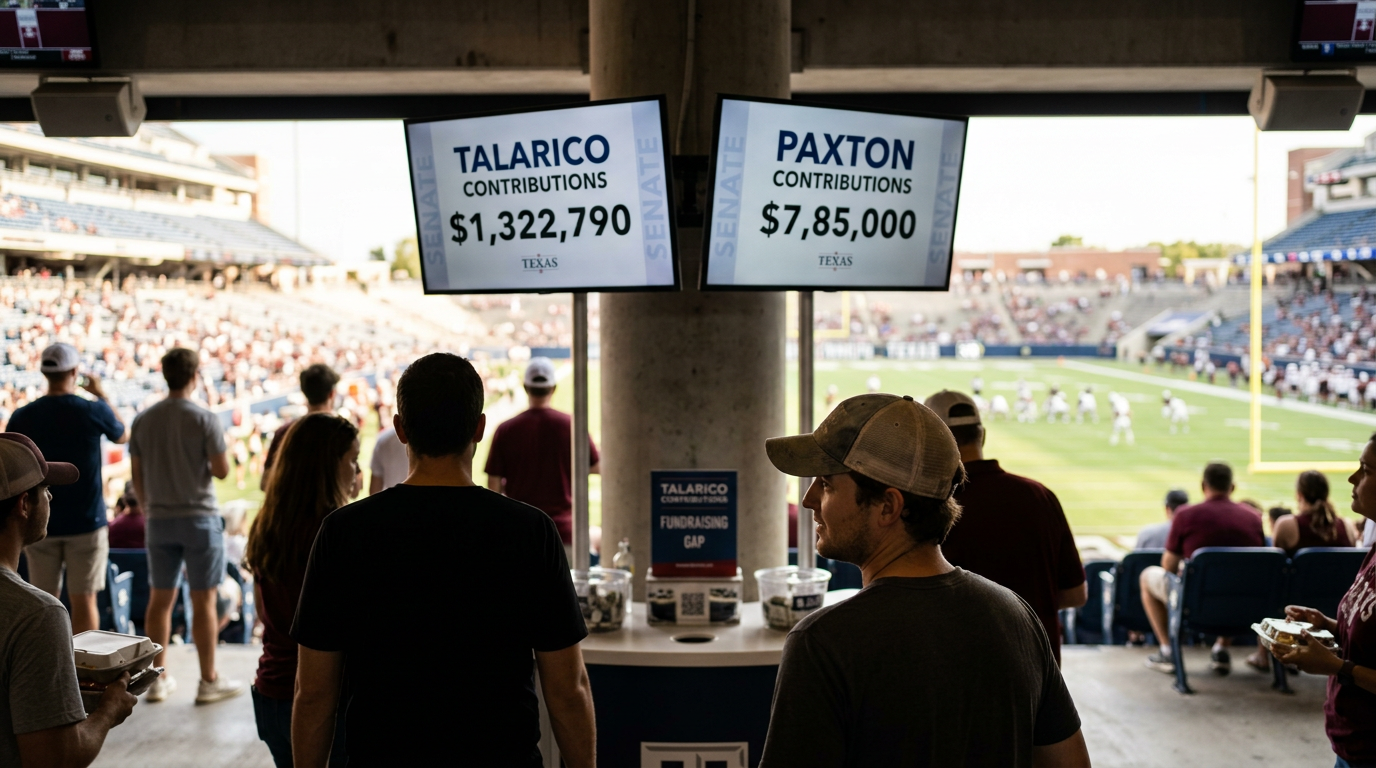
Recent financial disclosures from the 2026 election cycle indicate a widening gap in campaign contributions between two prominent Texas figures vying for a seat in the United States Senate. Representative James Talarico has reportedly surpassed Attorney General Ken Paxton in total funds raised during the latest reporting period. This shift marks a pivotal moment in the race, as both candidates seek to secure the resources necessary for a statewide media blitz and ground operations across Texas’s vast 254 counties. Historically, Texas Senate races have become some of the most expensive in the nation, often drawing national attention and significant out-of-state investments. The current data suggests that the momentum of individual donor contributions has favored Talarico, while Paxton continues to rely on a core base of established supporters despite the current numerical disadvantage in cash on hand. The context of this fundraising surge is rooted in the evolving political landscape of the Lone Star State, where traditional Republican strongholds are being challenged by shifting demographics and high-intensity voter mobilization efforts. In previous cycles, such as the 2018 and 2024 Senate races, Texas saw record-breaking financial hauls. The current 2026 trajectory appears to be following this trend, with both parties treating the seat as a national priority. Talarico’s ability to outpace Paxton in the early phases of the general election cycle indicates a highly competitive environment. This financial reporting comes at a time when grassroots organizations are beginning to pivot toward general election strategies, making the availability of liquid capital a primary concern for campaign managers overseeing the logistical challenges of a state as large as Texas.
Texas relevance
This fundraising development is of critical importance to all Texans as it dictates the visibility and reach of political messaging leading up to the 2026 election. In Texas, the sheer geographic size requires millions of dollars in spending just to achieve basic name recognition in major media markets like Dallas-Fort Worth, Houston, and San Antonio. The financial standing of these candidates will directly influence which issues get the most airtime, from border security and energy policy to local infrastructure and the state's economic future. Historically, the candidate with the larger war chest has a significant advantage in defining their opponent through television and digital advertising, a tactic that has historically influenced turnout in both urban and rural Texas precincts.
The Logistics of a Statewide Texas Campaign
Running a campaign for the U.S. Senate in Texas is often compared to running a national campaign in a smaller country. The state features 20 distinct media markets, each requiring a tailored approach to reach voters effectively. For candidates like Talarico and Paxton, the cost of a single week of television advertising across all these markets can reach into the millions. This financial requirement makes fundraising leads particularly significant, as they allow a campaign to reserve advertising space early, often at lower rates than those available closer to Election Day.
Beyond the airwaves, these funds are essential for building a robust 'ground game.' This includes opening field offices in key regions like the Rio Grande Valley, the Panhandle, and the growing suburban rings around Austin and Dallas. Staffing these offices with organizers and volunteers requires a steady stream of capital. A fundraising lead allows a candidate to hire top-tier consultants and data analysts who can identify likely voters and ensure they make it to the polls, which is often the deciding factor in close Texas elections.
Historical Precedent for High-Cost Texas Races
Texas has a long history of expensive Senate contests that serve as a bellwether for national political trends. Looking back at the 2018 race between Ted Cruz and Beto O'Rourke, the total spending surpassed $100 million, setting a new benchmark for the state. At that time, many analysts were surprised by the volume of grassroots donations that poured in from both inside and outside the state. The current 2026 race appears to be tapping into similar levels of donor intensity, with Talarico leveraging a digital-first fundraising strategy that mimics successful models from the past decade.
For Paxton, the challenge involves maintaining his hold on the traditional donor blocks that have supported his various statewide runs for Attorney General. While he has historically been a strong fundraiser, the demands of a federal race are significantly higher. The ability to pivot from state-level donor networks to a national fundraising apparatus is a hurdle that every Texas candidate must overcome if they wish to remain competitive in a cycle that is increasingly viewed through a national lens.
Donor Demographics and Small-Dollar Contributions
A closer look at the filing data reveals a stark difference in where the money is coming from. Talarico has reportedly seen a surge in small-dollar donations, which often indicates high grassroots engagement. These types of donors are valuable not just for the money they provide, but because they are more likely to volunteer and show up at the polls. This bottom-up approach to funding helps insulate a campaign from the influence of large political action committees, though both candidates still receive significant support from various advocacy groups.
Paxton’s financial structure typically relies on larger, individual contributions from high-net-worth donors and industry-specific groups. These donors often provide the 'seed money' needed to launch a campaign and sustain it through the primary process. However, in a general election where the focus shifts to a much larger electorate, the lack of a broad small-dollar donor base can be a liability. The current gap suggests that Talarico may be finding success in messaging that resonates with a wider cross-section of the Texas population.
Strategic Spending and Media Allocation
With a significant cash advantage, Talarico’s campaign has the luxury of choosing when and where to engage. Early spending can be used for 'biographical' ads that introduce the candidate to voters before his opponent can define him. In a state where many voters are still unfamiliar with Talarico’s record in the state legislature, these early impressions are vital. Having more money on hand also means the ability to respond quickly to 'attack ads' or breaking news events that could shift the narrative of the race.
Ken Paxton, despite the current deficit, is known for his aggressive and resilient campaigning style. His strategy likely involves targeted spending in conservative strongholds to ensure maximum turnout among the GOP base. By focusing his resources on digital platforms and talk radio—mediums that are often more cost-effective than traditional TV—Paxton may be able to close the visibility gap without matching Talarico’s total spending dollar-for-dollar. His campaign is expected to emphasize his record on state sovereignty and legal challenges against federal overreach.
The Role of National Interest in Texas
The fundraising lead also reflects the national stakes of the 2026 Texas Senate race. Democratic and Republican national committees view Texas as a key battleground that could determine the balance of power in Washington. As a result, much of the money flowing into the state is coming from national donors who want to see their respective party gain a foothold in the South. This influx of national cash can be a double-edged sword, as it provides the necessary resources but also allows opponents to frame the candidate as being beholden to 'outside interests.'
Texans have traditionally been wary of candidates who appear to be puppets of national party leadership. Both Talarico and Paxton will need to demonstrate that their funding reflects the desires of their constituents rather than the agendas of coastal elites or beltway insiders. How each candidate manages this perception while continuing to raise record-setting sums will be a major sub-plot of the 2026 campaign season. The financial reports are just the beginning of what is expected to be a long and expensive journey to the ballot box.
Analysis
While fundraising numbers do not always translate directly into votes, they serve as a powerful proxy for enthusiasm and institutional support. James Talarico’s current lead might suggest a broadening of his donor base, reaching beyond traditional partisan lines to attract small-dollar contributors. Conversely, Ken Paxton’s position remains formidable due to his deep-rooted name recognition and his history of surviving high-pressure political and legal challenges. Conservative voters in Texas have a long history of rallying behind candidates who they perceive as being targeted by national media narratives, which could lead to a late-cycle surge in support for Paxton. The outcome of this financial race will likely determine whether the 2026 contest remains a close battle or if one candidate can effectively drown out the other’s platform through sheer spending power.
Source attribution
This story was reported using a public release from the r/texas. Keep TX Red rewrote the coverage independently and links to the official statement for verification.
Frequently Asked Questions
- Why is fundraising so important in a Texas Senate race?
- Texas is geographically massive and contains several of the country’s largest and most expensive media markets. To reach over 30 million residents, candidates must spend tens of millions of dollars on advertising, staff, and travel. A fundraising lead allows a candidate to control the narrative and build the infrastructure needed to turn out voters on Election Day.
- Where does the campaign money usually go?
- The majority of campaign funds are spent on media buys, which include television commercials, digital ads, and radio spots. Remaining funds are used for campaign staff salaries, travel across the state’s 254 counties, polling and data analysis, and organizing grassroots events like rallies and door-knocking campaigns.
- Does having more money guaranteed a win in Texas?
- No, fundraising is not a guarantee of victory. While money provides the tools for a campaign, voter sentiment, candidate performance in debates, and national political trends play massive roles. However, a significant lack of funds can make it nearly impossible for a candidate to recover if they fall behind in the polls or face a barrage of unanswered negative advertising.
Official Sources
Take the next step
Browse the Newsroom →Read more about Keep Texas Red → Our full guide to what Keep Texas Red means and why Texans support it.
Get Texas updates delivered weekly.
Independent Texas reporting on politics, policy, and daily life. One email a week. Unsubscribe anytime.
Keep TX Red Newsroom
The Keep Texas Red Editorial Staff produces nonpartisan explainers, policy breakdowns, and educational resources to help Texans understand how their government works. All content is reviewed for accuracy and updated regularly.
About Keep TX Red →