Texas Property Tax Strategy: Understanding New School Finance Realignment
A deep dive into Lieutenant Governor Dan Patrick’s tax compression strategy and the shifting fiscal relationship between Austin and local school districts.
Editorial disclaimer: Opinions and analysis on Keep TX Red are editorial content — not statements of fact. See our editorial standards.
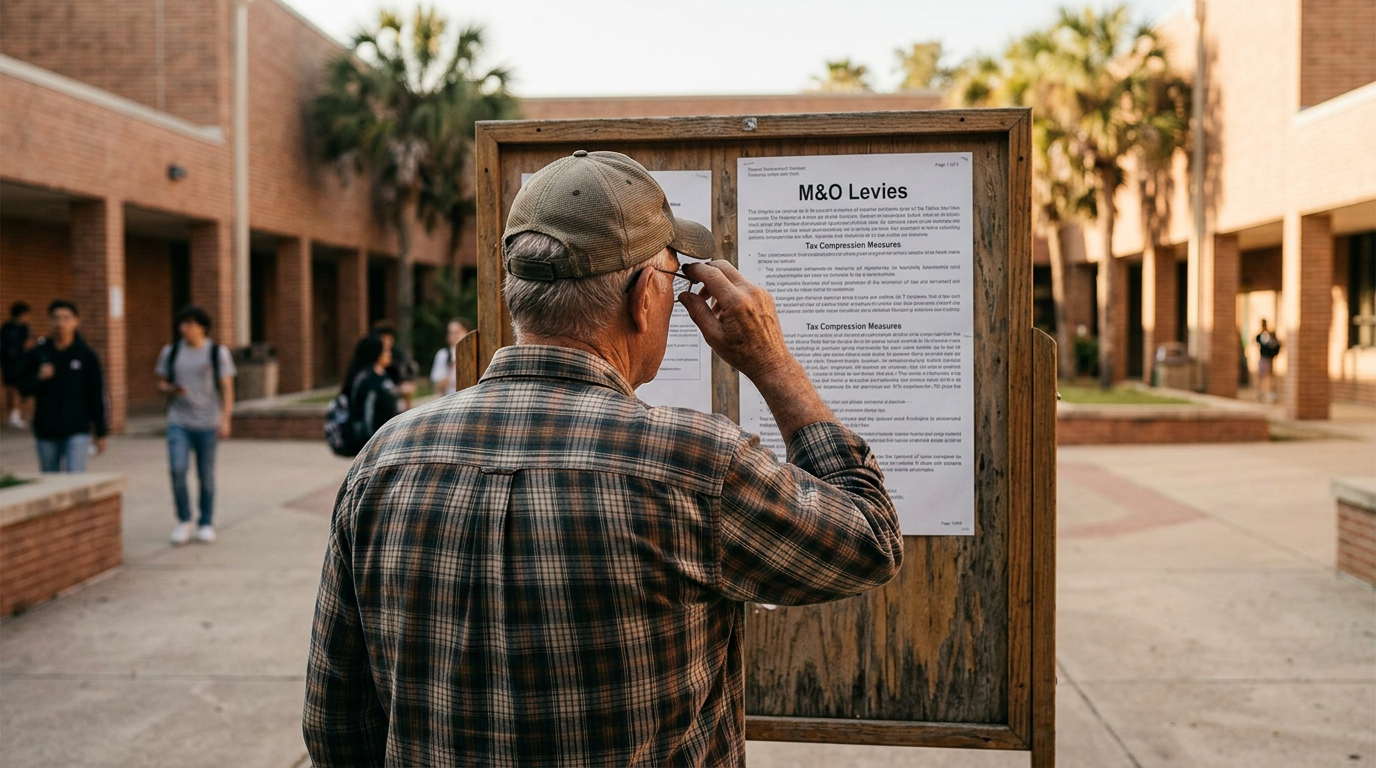
The fiscal landscape of Texas education is undergoing a fundamental transformation as state leaders push for more aggressive property tax compression strategies. Historically, local school districts in Texas have relied heavily on property taxes to fund daily operations through Maintenance and Operations (M&O) levies. However, under recent legislative trends championed by Lieutenant Governor Dan Patrick and others in the Texas Senate, the state is increasingly intervening to lower these local tax rates. This process, known as 'compression,' involves the state using surplus revenue—often from the Rainy Day Fund or general sales tax growth—to 'buy down' the tax rates that local districts can legally charge property owners. This transition shifts the primary burden of school funding from local property owners to state-level revenue sources, effectively altering the financial independence of independent school districts across the Lone Star State. Traditionally, the Texas model of school finance was built on a 'Robin Hood' system of recapture, but compression seeks to avoid tax hikes by capping the growth of local tax collections. As the state provides more dollars to fill the gap left by compressed rates, it also gains significant leverage over how those funds are distributed and managed. This evolution reflects a philosophical shift in Austin toward centralizing fiscal oversight to ensure tax relief for residents, even if it complicates the financial autonomy of local boards. The long-term trajectory of this policy suggests a move toward a model where local districts have less control over their primary revenue streams, placing greater significance on the funding formulas established by the state legislature during biennial sessions.
Texas relevance
This policy shift directly impacts every property owner and public school student across Texas, from the Rio Grande Valley to the Panhandle. In cities like Houston and Dallas, where property values have skyrocketed in recent years, tax compression serves as a critical mechanism to prevent residents from being taxed out of their homes. This is not merely an abstract legislative debate; it is a fundamental rewrite of the social contract between the Texas state government and its citizens regarding who pays for public services. For the average Texan, the success of this strategy determines whether their annual tax bill remains manageable or becomes a barrier to homeownership, while for school administrators, it determines the stability of their annual operating budgets.
The Mechanism of Property Tax Compression
Property tax compression is essentially a swap of tax sources. Instead of a school district charging a high rate on the assessed value of a home, the state legislature allocates billions of dollars from the state treasury to 'compress' that rate downward. This keeps the school district's budget whole while reducing the amount the individual homeowner owes at the end of the year. It has become a cornerstone of Republican policy in Austin to ensure the state's massive budget surpluses are returned to voters in the form of lower tax bills.
However, this mechanism creates a dependency. When local districts can no longer raise their own rates to meet local needs, they become entirely reliant on the state's willingness to continue funding the buy-down. If the Texas economy cools and state revenues drop, the state might face a choice between raising sales taxes, cutting school funding, or allowing property taxes to rise again. This cycle creates a permanent link between the state's economic health and the local classroom's resources.
Centralizing Authority Under the TEA
As the state takes over the primary funding role, the role of the Texas Education Agency (TEA) has expanded from a regulatory body to a central oversight entity. When a district fails to meet academic standards or faces financial mismanagement, the TEA has the authority to intervene, sometimes replacing elected school boards with state-appointed managers. This centralization ensures that state-wide standards are met, but critics argue it removes the 'public' from public education by disenfranchising local voters.
The synchronization of tax compression and state takeovers suggests a broader strategy of accountability. Proponents argue that if the state is providing a larger share of the money, it must have a larger say in how that money is spent. This includes influence over curriculum choices, teacher certifications, and administrative overhead. For many conservative lawmakers, this is a necessary step to ensure that Texas tax dollars are not used to promote ideologies that conflict with state-level policy priorities.
The Proposed Shift to Sales Tax Models
Lieutenant Governor Dan Patrick has floated the ambitious idea of eventually eliminating school property taxes entirely. Under this vision, the revenue lost from property taxes would be replaced by an increase in the state sales tax. Currently, Texas has no state income tax, making the property tax and sales tax the two biggest levers for funding governance. By shifting entirely to a consumption-based model, the state would theoretically reward investment and property ownership while taxing spending.
The logistical hurdles of such a shift are immense. To fully fund Texas schools without property taxes, some economists estimate the state sales tax would need to rise significantly, perhaps reaching double digits. This would make Texas one of the highest sales-tax states in the union. While this would eliminate the fear of losing one's home due to unpaid taxes, it would introduce new volatility into school funding, as sales tax revenue fluctuates much more sharply with the economy than property values do.
Impact on Local District Autonomy
Local school boards in Texas have historically enjoyed a high degree of autonomy, setting their own priorities for sports programs, arts, and specialized vocational training. The move toward compression limits their ability to increase spending for these 'extra' programs through local tax hikes. If a community wants a new stadium or a specialized technology wing, they must now navigate much stricter state-imposed caps on their ability to raise the necessary funds through M&O or Interest and Sinking (I&S) accounts.
This fiscal restraint is marketed as a win for the taxpayer, but it effectively standardizes the education experience across the state. While it helps poorer districts stay competitive with wealthier ones—a goal of the original Robin Hood plans—it also prevents wealthier or high-growth communities from investing additional local capital into their schools without clearing significant state-level hurdles. The result is a more uniform, state-managed education system.
Political Realities of the Rainy Day Fund
The sustainability of tax compression is heavily tied to the Economic Stabilization Fund, better known as the 'Rainy Day Fund.' Texas has benefited from record-breaking energy production and population growth, leading to historic surpluses. These billions are what make the current level of tax compression possible. However, the Rainy Day Fund is not a bottomless well; it relies on oil and gas severance taxes which are subject to global market volatility.
Policymakers are currently debating whether compression should be a one-time relief or a permanent structural change. If the state commits to permanent compression but the surplus disappears, the legislature would be forced to find new revenue. This underlying tension is why discussions of a 25% sales tax or other consumption taxes have entered the mainstream political discourse. The state is essentially trying to trade the stability of property taxes for the political popularity of tax cuts.
The Role of Homeowners and Voters
For the Texas homeowner, the immediate result of these policies is typically a lower-than-expected tax bill. In a period of high inflation, this relief is a major political talking point for the incumbent leadership in Austin. Voters have largely supported property tax relief measures at the ballot box, showing a clear preference for immediate savings over concerns about long-term district autonomy. This mandate gives the Lieutenant Governor and the Governor the political capital to continue squeezing local taxing authorities.
As we look toward future legislative sessions, the debate will likely shift from 'how much' relief is given to 'how' the system is fundamentally restructured. With state-led takeovers of districts like Houston ISD serving as a precedent, the path is cleared for a future where the TEA and the state legislature hold the purse strings and the policy pen for all 1,200+ school districts in Texas.
Analysis
While presenting as tax relief, the long-term move toward total compression represents a calculated consolidation of power within the state executive and legislative branches. By neutralizing the local district's ability to levy taxes, the state effectively muzzles local opposition to centralized curriculum or administrative mandates. If a school district loses its independent revenue stream, it forfeits its primary leverage against the Texas Education Agency (TEA). Furthermore, the proposed transition to a consumption-based tax model via higher sales taxes could insulate the state budget from property market fluctuations but places a larger burden on lower-income Texans who spend a higher percentage of their earnings on taxable goods. The political genius of the plan lies in its immediate popularity—direct tax cuts are hard to vote against—even if the long-term cost is the erosion of local governance.
Source attribution
This story was reported using a public release from the r/TexasPolitics. Keep TX Red rewrote the coverage independently and links to the official statement for verification.
Frequently Asked Questions
- What exactly is 'compression' in the context of Texas taxes?
- Compression refers to the state legislature lowering the maximum tax rate that a school district can charge for Maintenance and Operations. To prevent the school from losing money, the state 'buys down' the rate by providing state funds to the district to make up the difference. This effectively lowers the homeowner's bill without cutting the school's total budget in the short term.
- Why is the state taking over certain school districts?
- The Texas Education Agency has the legal authority to take over a district if it consistently fails to meet academic standards, fails to comply with financial regulations, or has a board that is deemed dysfunctional. By taking over, the state replaces the elected board with its own appointees to steer the district back toward state-defined success metrics.
- Will school property taxes actually be eliminated?
- While Lieutenant Governor Dan Patrick has discussed the goal of eliminating these taxes, it would require a massive restructuring of the entire Texas tax code. This would likely involve a significant increase in the state sales tax to replace the billions of dollars currently generated by property taxes. It remains a proposed long-term goal rather than an immediate reality.
- What is the M&O tax vs. the I&S tax?
- The Maintenance and Operations (M&O) tax covers daily costs like teacher salaries and utilities; this is the part the state is 'compressing.' The Interest and Sinking (I&S) tax is used to pay off debt from voter-approved bonds for buildings and infrastructure. Compression typically does not affect the I&S portion of your tax bill.
Official Sources
Take the next step
Browse the Newsroom →Read more about Keep Texas Red → Our full guide to what Keep Texas Red means and why Texans support it.
Get Texas updates delivered weekly.
Independent Texas reporting on politics, policy, and daily life. One email a week. Unsubscribe anytime.
Keep TX Red Newsroom
The Keep Texas Red Editorial Staff produces nonpartisan explainers, policy breakdowns, and educational resources to help Texans understand how their government works. All content is reviewed for accuracy and updated regularly.
About Keep TX Red →