Texas Delta-8 Ban: Hempstead Industry Faces Final Midnight Deadline on July 31
New Texas regulations will remove Delta-8 and similar hemp-derived products from shelves by July 31, leaving retailers and consumers in a legal limbo.
Editorial disclaimer: Opinions and analysis on Keep TX Red are editorial content — not statements of fact. See our editorial standards.
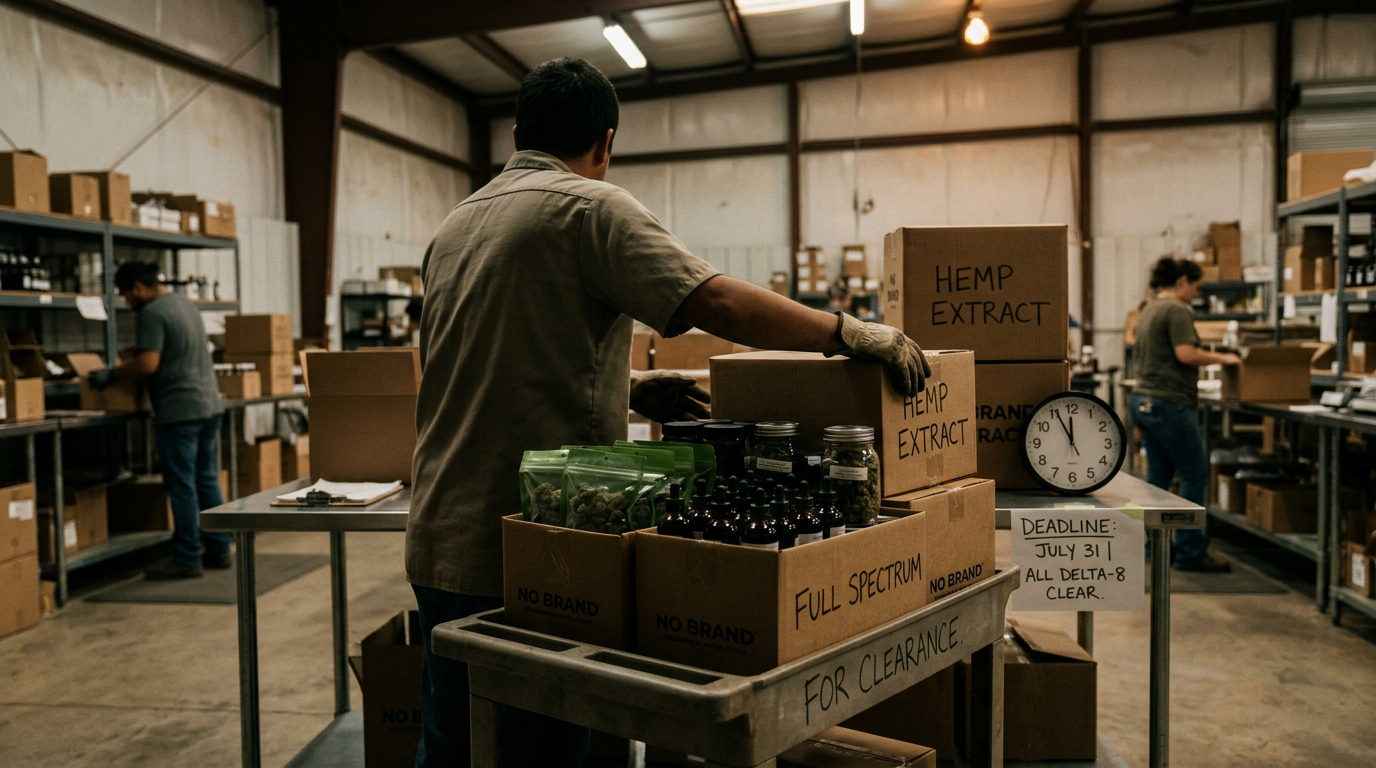
Beginning July 31, a significant shift in the legal landscape of the Lone Star State will occur as specific hemp-derived products, most notably Delta-8 THC, face an aggressive removal from retail inventory. This regulatory pivot follows years of legal maneuvering between state health officials and the burgeoning hemp industry. Historically, Texas followed the federal lead after the 2018 Farm Bill, which legalized hemp production as long as Delta-9 THC levels remained below 0.3 percent. However, state regulators at the Department of State Health Services (DSHS) have consistently argued that concentrated hemp derivatives with psychoactive properties were never intended to be accessible to the general public under those statutes. This conflict has culminated in a firm deadline that will see thousands of products transitioned from legal retail staples to prohibited substances overnight. The enforcement of this ban marks a decisive moment for thousands of small businesses across the state, ranging from dedicated CBD dispensaries to convenience stores and smoke shops. For years, these entrepreneurs operated in a 'gray market' created by the gap between federal definitions and state-level enforcement priorities. With the July 31 deadline looming, the state is signaling an end to the era of regulatory ambiguity. Local law enforcement agencies and state health inspectors are expected to begin monitoring compliance immediately, though questions persist regarding the severity of initial penalties and the logistical challenges of clearing existing stock from shelves in such a condensed timeframe.
Texas relevance
Texas has become one of the largest markets for hemp-derived cannabinoids in the United States, with an estimated multi-billion dollar economic footprint across major hubs like Houston, Austin, Dallas, and San Antonio. The local stake is immense; thousands of jobs are tied to the manufacturing, distribution, and retail sale of these products. Previously, Texas courts had issued temporary injunctions that allowed these sales to continue despite the state's objections. This latest move overrides that period of industrial growth, forcing Texas-based businesses to either pivot their business models entirely or face potential shuttering. The impact is felt most acutely in urban areas where specialized hemp boutiques have become as common as traditional pharmacies.
The Evolution of the Hemp Gray Market
The proliferation of Delta-8 and other isomers in Texas was an unintended consequence of the 2018 federal Farm Bill. That legislation sought to help traditional farmers by legalizing industrial hemp, defined by its low Delta-9 THC content. However, innovative labs found that they could chemically synthesize other forms of THC from CBD oil, which is abundant in hemp plants. This created a loophole where products with psychoactive effects were technically legal because they did not contain the specific 'Delta-9' molecule mentioned in the restrictive phrasing of the law.
In Texas, this led to an explosion of retail activity. Unlike other states that legalized adult-use cannabis and established strict licensing and testing frameworks, Texas saw a largely unregulated market emerge. Products appeared in brightly labeled packaging, often without standardized dosing or laboratory verification. Health officials grew increasingly concerned as reports of accidental ingestion and adverse reactions among minors began to climb. The upcoming July 31 enforcement is the state's most direct attempt to close this loophole and reassert control over the marketplace.
Retail Impact and Inventory Liquidation
As the deadline approaches, retailers across Texas are engaging in massive liquidation sales to recoup costs. Because the products will become illegal to possess for sale on August 1, business owners are faced with the prospect of total inventory loss if they cannot move their stock. This fire-sale atmosphere has raised additional concerns among community leaders regarding an influx of high-potency products being distributed at deep discounts to the public just before the prohibition begins.
The financial blow to these businesses is significant. Many shop owners report that Delta-8 and similar hemp derivatives account for 50 percent to 80 percent of their total monthly revenue. Without these high-margin items, the viability of many specialty stores is in jeopardy. While CBD products without psychoactive effects will remain legal, they often lack the consumer demand necessary to sustain a brick-and-mortar storefront on their own. This shift is expected to result in a wave of commercial lease defaults and job losses in the retail sector.
Consumer Confusion and Safety Concerns
For the millions of Texans who have used Delta-8 for therapeutic or recreational purposes, the July 31 ban brings significant confusion. Many consumers use these products as a legal alternative to marijuana for managing pain, anxiety, or sleep disorders. Without a state-sanctioned medical marijuana program that covers these conditions broadly, these individuals are now faced with returning to traditional pharmaceuticals or seeking products through illicit channels. The lack of a transition period for consumers has sparked backlash among advocacy groups who argue that the state is criminalizing a widespread habit overnight.
Furthermore, the ban does not necessarily address the issue of product safety. By removing regulated retailers from the equation, there is a risk that the market will simply move underground. In an unregulated illicit market, consumers have no way of knowing if the products they purchase are free of heavy metals, pesticides, or residual solvents used in the synthesis process. Public health experts are divided on whether a total ban is more effective than a robust state-level testing and age-verification framework.
Legal Framework and Future Litigation
The July 31 enforcement date is the result of a long-standing legal battle between the Texas Department of State Health Services and hemp manufacturers. Earlier court rulings had provided the industry with several 'stays,' preventing the state from classifying Delta-8 as a Schedule I controlled substance. The state's recent success in clearing these legal hurdles signals a shift in judicial receptivity to the state's arguments regarding administrative rule-making. However, industry attorneys have already indicated that more lawsuits are in the pipeline, seeking to stop the ban based on constitutional grounds and property rights.
The core of the legal debate centers on whether an administrative agency like DSHS has the authority to effectively create new criminal laws without a specific mandate from the Texas Legislature. If the courts ultimately decide that the agency overstepped its bounds, the ban could be overturned again. Until that happens, however, the July 31 deadline remains the law of the land, and business owners are advised to comply to avoid criminal prosecution or heavy administrative fines.
Economic Implications for the Lone Star State
The economic ripple effects of the ban will extend beyond the storefronts. Texas hemp farmers, who have slowly been building out the infrastructure to support domestic production, may find their primary buyers disappearing. If the demand for CBD used for THC synthesis vanishes, the market price for raw hemp could collapse, leaving farmers with crops they cannot sell at a profit. This creates a precarious situation for rural economies that were told hemp would be the next great Texas cash crop.
Tax revenue is another factor to consider. While Texas does not have a specific excise tax on hemp products, the sales tax generated by these multi-million dollar industries contributes to state and local coffers. The removal of these products will create a noticeable dip in sales tax infusions for cities that have branded themselves as pro-business. Policymakers will eventually have to weigh the ideological goals of the ban against the tangible loss of diverse economic activity and tax participation.
What Happens After July 31?
When the clock strikes midnight on July 31, Delta-8 will be treated similarly to other prohibited controlled substances in Texas. Law enforcement remains the biggest question mark. While some district attorneys in major metropolitan areas have already signaled that they will not prioritize low-level cannabinoid offenses, other more conservative jurisdictions may use the ban as a tool for aggressive enforcement. This creates a 'patchwork' of legality across the state, where a person's risk of arrest could depend entirely on which county line they cross.
The next key date for observers will be the start of the 89th Texas Legislative Session. Industry groups are expected to lobby heavily for a bill that clearly defines and regulates hemp derivatives rather than banning them outright. Conversely, lawmakers who support the ban will likely move to codify the DSHS rules into statute to prevent future legal challenges. For now, the Texas hemp industry is entering its most volatile era since the 2018 Farm Bill first opened the doors to legal production.
Analysis
From a policy perspective, this ban represents a classic clash between burgeoning free-market industries and the state's traditionalist approach to substance control. While proponents of the ban cite public safety and the lack of FDA oversight on synthetic cannabinoids, critics argue that the move undermines small business owners who invested millions in good faith. Politically, the ban aligns with the broader push by state leadership to tighten regulations on any substance that mimics the effects of marijuana, even as surrounding states move toward full legalization. The timing is also strategic, occurring before the next legislative session to establish a new status quo that lawmakers will then be forced to defend or dismantle under pressure from both industry lobbyists and public health advocates.
Source attribution
This story was reported using a public release from the r/TexasPolitics. Keep TX Red rewrote the coverage independently and links to the official statement for verification.
Frequently Asked Questions
- What specific products are banned starting July 31?
- The ban primarily targets hemp-derived cannabinoids that produce psychoactive effects, including Delta-8 THC, Delta-10 THC, and other similar isomers. While CBD-only products typically remain legal, any product synthesized to mimic the effects of marijuana is currently under the prohibition umbrella.
- Will possession of these products become a crime for individuals?
- Yes. Once the enforcement date passes, possession of these substances can be prosecuted under the Texas Controlled Substances Act. The severity of the charge often depends on the weight and volume of the product possessed, similar to other illicit substances.
- Is there any way for businesses to stay open?
- Many businesses plan to remain open by selling pure CBD products, hemp apparel, or other non-psychoactive botanical items. However, the loss of high-demand items like Delta-8 may force businesses with high overhead costs to reconsider their physical locations or transition to an online-only model for federally compliant goods.
Official Sources
Take the next step
Browse the Newsroom →Read more about Keep Texas Red → Our full guide to what Keep Texas Red means and why Texans support it.
Get Texas updates delivered weekly.
Independent Texas reporting on politics, policy, and daily life. One email a week. Unsubscribe anytime.
Keep TX Red Newsroom
The Keep Texas Red Editorial Staff produces nonpartisan explainers, policy breakdowns, and educational resources to help Texans understand how their government works. All content is reviewed for accuracy and updated regularly.
About Keep TX Red →