State Board of Education Faces Increasing Scrutiny Over Proposed Social Studies High School Curriculum
Critics argue the newly proposed Texas history and social studies curriculum lacks sufficient emphasis on free market values and American exceptionalism.
Editorial disclaimer: Opinions and analysis on Keep TX Red are editorial content — not statements of fact. See our editorial standards.
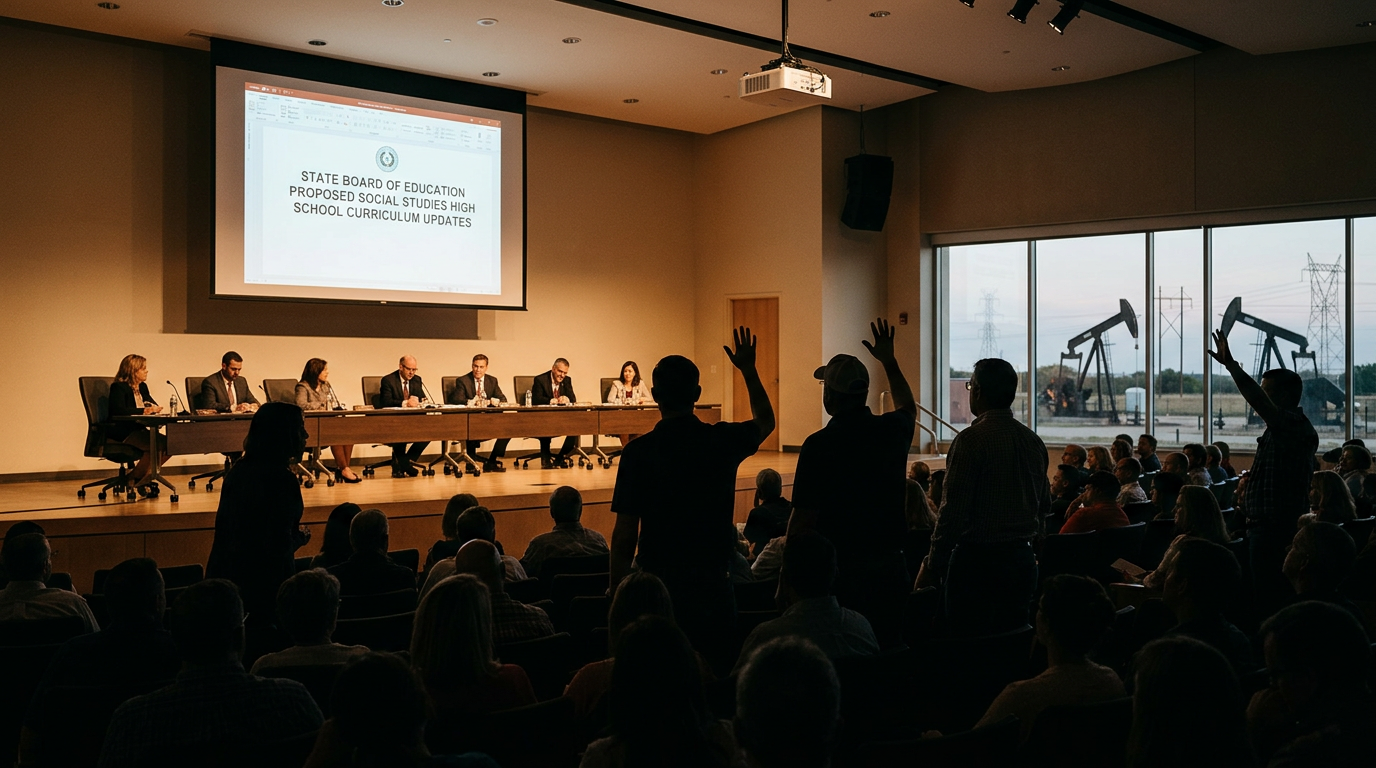
The Texas State Board of Education (SBOE) is currently navigating a period of intense public and editorial debate regarding the structure of the state’s social studies and history curriculum. Central to the controversy is the concern that the latest revisions do not sufficiently prioritize the advantages of the free enterprise system or the foundational importance of private property rights. Historically, Texas has been a battleground for educational content, with the 2010 curriculum updates serving as a previous flashpoint for debates over political bias. This latest iteration is being scrutinized by fiscal conservatives and advocates who believe the educational materials fail to provide a balanced view of historical economic systems versus the American model of capitalism. The process involves a complex cycle of revisions, public comment periods, and final votes that will determine what millions of Texas public school students will study for the next decade.
Texas relevance
As the second-largest purchaser of textbooks in the nation, Texas holds unmatched influence over the educational market. Decisions made by the SBOE in Austin don't just affect the classrooms of the Permian Basin or the Gulf Coast; they often dictate the content of textbooks sold across the United States. This specific controversy highlights a growing rift within the state's leadership between those who advocate for a traditionalist view of American history and those pushing for a more diverse, global perspective. For Texas parents and taxpayers, the curriculum defines the civic readiness of the next generation of the Texas workforce, making the inclusion of free-market principles a matter of both cultural and economic significance.
The Evolution of Texas Curricular Standards
The current debate is not an isolated incident but rather the latest chapter in a long-standing struggle over the Texas Essential Knowledge and Skills (TEKS) standards. These standards serve as the backbone for what is taught in every public school across the Lone Star State. In the past, the SBOE has been a focal point for national media attention due to its decisions regarding the inclusion of historical figures and the framing of the Civil War and the civil rights movement.
In this latest revision cycle, the focus has shifted toward economic literacy and the portrayal of international relations. Critics suggest that by failing to draw a sharp contrast between free-market capitalism and command economies, the curriculum inadvertently creates a sense of moral equivalence. This has led to calls for more explicit language regarding the role of entrepreneurship and the negative historical impacts of state-controlled economies.
Economic Principles and Classroom Instruction
A major point of contention involves how high school students are introduced to concepts such as supply and demand, competition, and profit motives. Advocacy groups are concerned that the proposed standards treat these concepts as mere academic variables rather than as the drivers of American prosperity. There is a push to ensure that textbooks clearly articulate how the free enterprise system facilitates individual liberty.
Furthermore, some observers have noted that the curriculum seems to spend more time on the critiques of capitalism—such as labor disputes and environmental concerns—than on the transformative power of innovation. This perceived imbalance has led to the 'textbook communism' label from some editorial boards, who argue that the curriculum is being used as a vehicle for progressive social engineering rather than historical instruction.
The Role of the State Board of Education
The State Board of Education consists of 15 members elected from districts across Texas. Because these are partisan positions, the board often reflects the political climate of the state. Currently, the board is composed of a majority of members who have campaigned on platforms of school choice, parental rights, and traditional values. However, the influence of non-partisan educational consultants and state agency staff frequently creates friction with these elected goals.
Public hearings in Austin have seen a surge in attendance as parents demand more transparency in how these standards are drafted. The board must balance the feedback from academic experts, who often emphasize a broader historical narrative, with the demands of constituents who want a curriculum that aligns with Texas values. This balancing act determines the final wording of the standards that textbook publishers must follow to receive state approval.
National Implications of Texas Educational Policy
Because of the sheer volume of students in Texas, publishers often find it more cost-effective to align their national editions with Texas standards rather than creating custom versions for smaller states. This means that if Texas requires a robust emphasis on the free market, students in states like Ohio or Florida may see the same content in their books. This 'Texas Effect' makes the SBOE one of the most powerful educational bodies in the world.
National advocacy groups on both sides of the aisle frequently deploy resources to influence the Texas curriculum process. Fiscal conservatives view Texas as a bulwark against what they see as a leftward shift in American academia. Conversely, critics of the Texas model argue that the state is using its market power to force a specific ideological viewpoint onto the rest of the country, leading to a perennial cycle of litigation and protest.
Evaluating the Claims of Educational Bias
Defining bias in history is notoriously difficult, as the selection of which facts to include is itself a subjective process. Those defending the new curriculum argue that it provides a more comprehensive view of world history by including the perspectives of marginalized groups and acknowledging the complexities of global trade. They contend that the goal is to produce critical thinkers who can evaluate different systems on their merits.
Opponents, however, argue that 'critical thinking' is often used as a euphemism for undermining foundational American beliefs. They point to specific omissions in the proposed text regarding the failures of 20th-century communist regimes. Without a firm grounding in why the American system was founded in opposition to centralized control, these critics fear that students will enter adulthood without a proper understanding of their own heritage.
Proposed Solutions and Future Revisions
In response to the outcry, several board members have proposed amendments that would re-insert specific language honoring the free enterprise system. These amendments aim to clarify that the United States is a constitutional republic with a market-based economy. There is also a push to include more primary source documents from the Founding Fathers that emphasize the right to property and the dangers of excessive government intervention.
The revision process is expected to continue through the end of the year, with a final vote looming. Education advocates are encouraging parents to review the proposed standards on the Texas Education Agency (TEA) website and submit formal comments. The outcome will likely serve as a litmus test for the current political strength of traditionalist movements within the state’s educational infrastructure.
Analysis
The pushback against the proposed curriculum reflects a broader national trend where education is the primary theater for ideological conflict. By labeling certain aspects of the curriculum as lacking in 'free market values,' critics are essentially calling for the SBOE to return to a pedagogical framework that explicitly champions the American economic model as morally and practically superior to alternatives like socialism or communism. While some educators argue for a 'warts-and-all' approach to history, the counter-argument maintains that a primary function of state-funded education is to instill a deep understanding and appreciation of the constitutional and economic systems that have allowed Texas to thrive. This tension suggests that the final version of the social studies standards will likely be a product of political compromise rather than academic consensus.
Source attribution
This story was reported using a public release from the Texas History Stories (Google News). Keep TX Red rewrote the coverage independently and links to the official statement for verification.
Frequently Asked Questions
- What is the SBOE and why does it matter?
- The State Board of Education (SBOE) is a 15-member body of elected officials responsible for setting the standards (TEKS) for Texas public schools. Their decisions dictate what students learn and which textbooks the state will fund, influencing the national education market.
- Why is the term 'textbook communism' being used?
- The term is used by critics to describe what they perceive as an ideological shift in the curriculum that minimizes the distinctions between free markets and state-controlled economies, allegedly failing to warn students about the historical failures of communist systems.
- How can Texas parents influence the curriculum?
- Parents can participate in the public comment periods during SBOE meetings in Austin or submit written feedback to the Texas Education Agency. The board is required to consider public input before the final adoption of new standards.
Official Sources
Take the next step
Browse the Newsroom →Read more about Keep Texas Red → Our full guide to what Keep Texas Red means and why Texans support it.
Get Texas updates delivered weekly.
Independent Texas reporting on politics, policy, and daily life. One email a week. Unsubscribe anytime.
Keep TX Red Newsroom
The Keep Texas Red Editorial Staff produces nonpartisan explainers, policy breakdowns, and educational resources to help Texans understand how their government works. All content is reviewed for accuracy and updated regularly.
About Keep TX Red →