Houston Advocates Demand Accountability Following Death of Lorenzo Araujo
A wide coaliton of labor and community groups in Houston is mobilizing following the tragic death of construction worker Lorenzo Salgado Araujo.
Editorial disclaimer: Opinions and analysis on Keep TX Red are editorial content — not statements of fact. See our editorial standards.
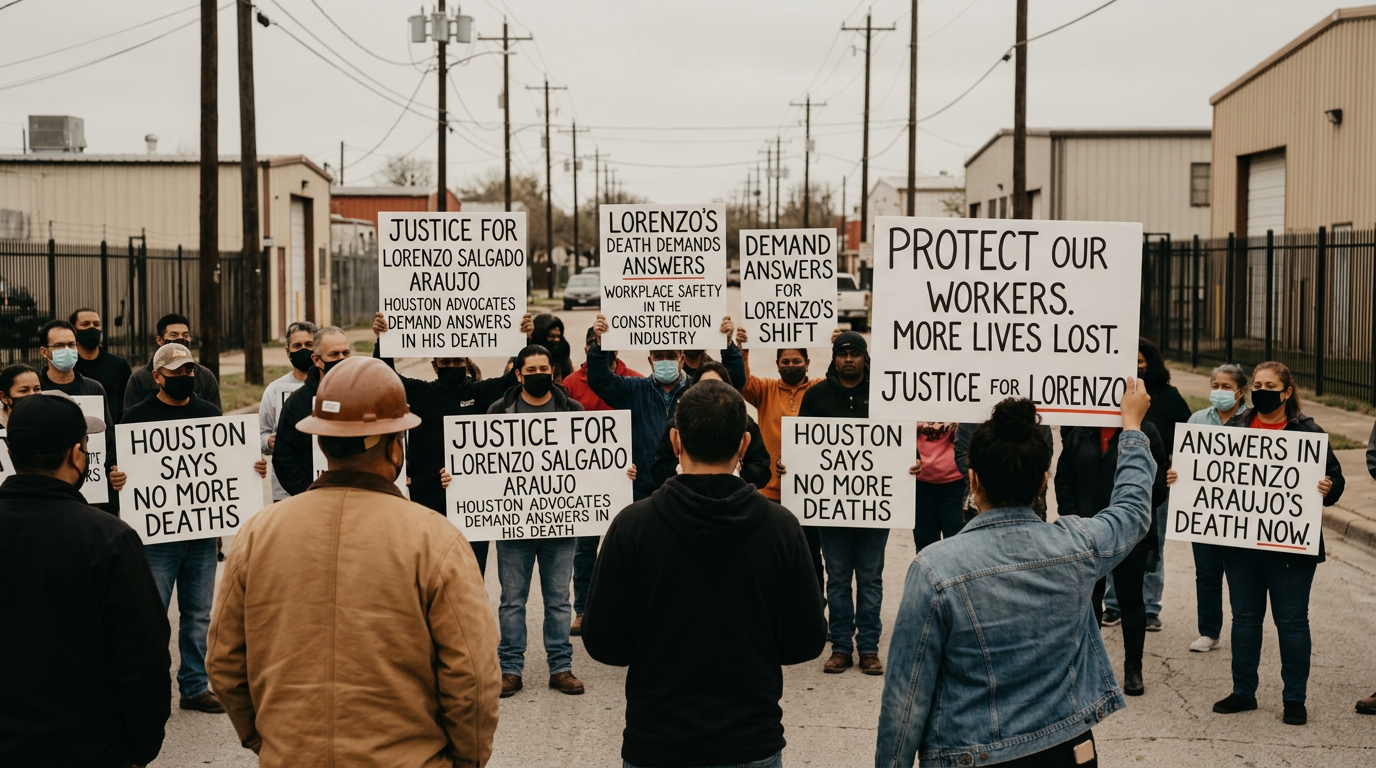
In the wake of a tragic workplace fatality involving Lorenzo Salgado Araujo, a diverse coalition of over 30 Houston-based organizations and labor groups has issued a call for an emergency protest. The mobilization aims to secure justice for the fallen worker and highlights systemic concerns regarding safety standards and worker protections within the region’s booming construction industry. Historically, Texas has navigated complex relationships between labor advocates and regulatory frameworks, often serving as a focal point for debates over workplace heat standards and safety oversight. This latest development follows a pattern of local activism gaining momentum in Harris County as community leaders seek greater accountability from private contractors and state regulators alike. The organized response reflects a growing urgency among local stakeholders to address what they characterize as a lack of transparency and a failure to protect vulnerable employees in high-risk environments.
Texas relevance
This situation is deeply rooted in Houston, Texas, a city that functions as a central hub for the state’s massive infrastructure and residential development sectors. As the largest city in Texas, Houston often sets the tone for labor relations and safety enforcement statewide. The outcome of these protests and the subsequent investigations will likely influence future safety legislation in the Texas Legislature and dictate how municipal leaders in Harris County interact with major construction firms. This story directly impacts the thousands of Texans employed in manual labor and the local organizations dedicated to their welfare.
The Circumstances Surrounding the Incident
The death of Lorenzo Salgado Araujo has sparked intense scrutiny over the conditions faced by construction workers in the Greater Houston area. While specific investigative details are often withheld during the early stages of such incidents, the rapid response from labor organizations suggests a level of frustration with current reporting and safety protocols. The coalition argues that every workplace death is preventable if the correct measures, including adequate hydration and equipment maintenance, are strictly enforced.
Local advocates emphasize that Araujo’s case is not an isolated incident but part of a broader trend in the Texas construction sector. By framing the protest as an 'emergency,' organizers are attempting to force a swift dialogue with both the construction company involved and local law enforcement. This approach aims to prevent the details of the case from being obscured through lengthy administrative delays.
Composition of the Coalition
The diversity of the groups involved in the protest call is noteworthy, ranging from established trades unions to smaller, community-focused grassroots outfits. This unified front indicates that the issue of worker safety transcends specific industries and has become a focal point for general social advocacy in Houston. Historically, these groups have worked independently, but the Araujo case has served as a catalyst for a unified platform demanding systemic change.
By pooling their resources, these thirty-plus organizations can command significantly more media attention and political leverage than any single entity could alone. Their demands include not only a full investigation into the specific events leading to Araujo's death but also a comprehensive review of the contractor's history and safety compliance records in the state of Texas.
Regulatory Oversight and Enforcement Challenges
In Texas, workplace safety is primarily overseen by the Occupational Safety and Health Administration (OSHA) at the federal level, though state laws play a significant role in liability and workers' compensation. Critics of the current system argue that OSHA is frequently understaffed in the Texas region, leading to infrequent inspections and a reactive rather than proactive approach to safety. The Houston coalition believes that municipal-level ordinances could provide an additional layer of protection that the state and federal government have not yet achieved.
The debate often touches upon the 'Death Star Bill' and other state-level legislation that limits the ability of cities like Houston to enact their own independent labor regulations. This legal friction creates a complex environment where advocates must balance their local demands against the constraints of Texas state law, making the role of public protest even more critical to their strategy.
The Economic Context of Houston Development
Houston continues to experience a period of rapid growth, with high-rise developments and infrastructure projects popping up across the city. This economic boom relies heavily on a workforce that frequently works in extreme weather conditions, particularly during the intense Texas summer months. Organizations participating in the protest argue that the speed of development should never come at the expense of human life and that the current pace of construction may be overwhelming existing safety safeguards.
Businesses and contractors, on the other hand, often point to the high standards of safety already in place and the economic benefits that the construction boom brings to Harris County. However, the coalition maintains that if the industry cannot guarantee the safety of its workers, the economic gains are built on an unsustainable and unethical foundation.
Public Reaction and Community Mobilization
The announcement of the emergency protest has resonated with many Houston residents who see it as a call for dignity in the workplace. Social media channels and local community centers have become hubs for organizing, with many residents expressing solidarity with the Araujo family. This public outcry puts pressure on local officials, including the Mayor’s office and the Harris County Commissioners Court, to address the concerns of the labor movement.
Beyond the protest itself, the coalition is expected to present a set of formal recommendations to the city council. These recommendations will likely focus on increased transparency regarding workplace injuries and deaths, as well as a more robust public reporting system that allows residents to identify which contractors are meeting safety standards and which are failing them.
Future Implications for Texas Labor Law
As the 2026 political landscape takes shape, the events in Houston could serve as a precursor to legislative pushes in Austin. If the coalition manages to sustain its momentum, it could influence the platform of candidates running for state-level offices. The focus on Lorenzo Salgado Araujo’s story provides a human face to the abstract policy debates surrounding labor rights and workplace regulation.
Ultimately, the goal of the organizers is to ensure that no other family has to endure a similar loss. By demanding justice for Araujo, they are seeking to create a precedent in Texas where worker safety is prioritized as a non-negotiable aspect of the state’s economic success. The coming weeks will be a test of the coalition’s resolve and the willingness of Texas institutions to engage with their demands.
Analysis
From an editorial perspective, this mobilization signals a strategic shift in how Houston labor groups utilize public pressure to influence policy. While Texas is known for its business-friendly environment and limited regulatory interference, the sheer scale of the 30-group coalition suggests that community-led initiatives are filling the gap where federal and state oversight is perceived as lacking. The push for 'justice' likely extends beyond a single investigation into a broader demand for mandatory heat breaks and stricter penalties for safety violations, issues that have been contentious topics in the Texas Capitol during recent sessions.
Source attribution
This story was reported using a public release from the r/TexasPolitics. Keep TX Red rewrote the coverage independently and links to the official statement for verification.
Frequently Asked Questions
- Who was Lorenzo Salgado Araujo?
- Lorenzo Salgado Araujo was a construction worker in the Houston area whose recent death on the job has become a rallying point for labor rights activists and community organizations demanding better workplace safety standards.
- What do the protesters hope to achieve?
- The protesters are calling for a full investigation into the circumstances of Araujo's death, more transparent safety reporting from contractors, and systemic changes to how workplace safety is regulated in Texas to prevent future fatalities.
- How does Texas law impact workplace safety regulations?
- While federal OSHA standards apply, Texas state law often limits the ability of individual cities like Houston to pass their own stricter labor or safety ordinances. This creates a legal environment where advocacy groups often rely on public protests and state-level lobbying to effect change.
Official Sources
Take the next step
Browse the Newsroom →Read more about Keep Texas Red → Our full guide to what Keep Texas Red means and why Texans support it.
Get Texas updates delivered weekly.
Independent Texas reporting on politics, policy, and daily life. One email a week. Unsubscribe anytime.
Keep TX Red Newsroom
The Keep Texas Red Editorial Staff produces nonpartisan explainers, policy breakdowns, and educational resources to help Texans understand how their government works. All content is reviewed for accuracy and updated regularly.
About Keep TX Red →