Governor Abbott Petitioning Federal Government for Major Disaster Relief in Wake of Historic Texas Flooding
Texas Governor Greg Abbott seeks federal aid for 28 counties following catastrophic flooding and severe weather events across the state.
Editorial disclaimer: Opinions and analysis on Keep TX Red are editorial content — not statements of fact. See our editorial standards.
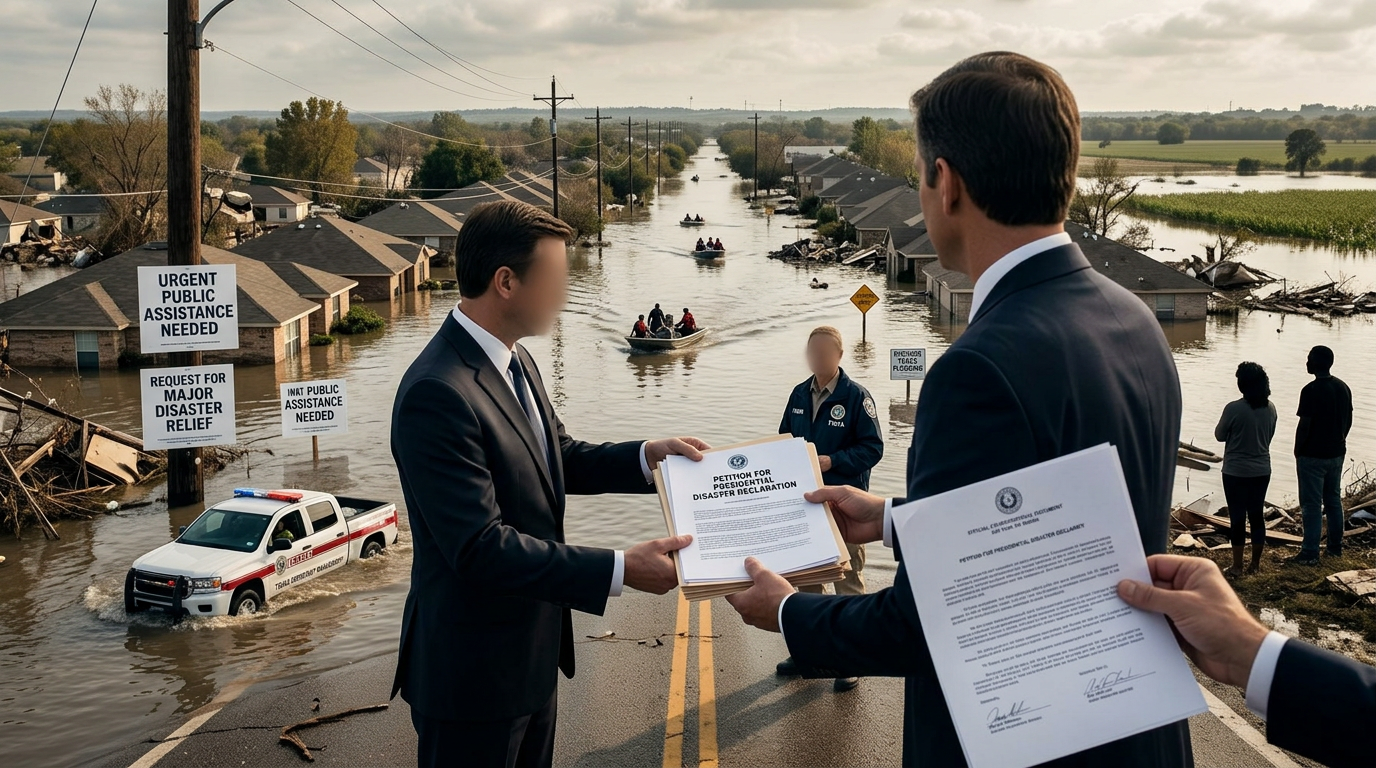
In direct response to a series of devastating storms that have saturated the Texas landscape, Governor Greg Abbott has officially requested a Presidential Disaster Declaration. This formal petition seeks to unlock federal resources to assist in the long-term recovery of communities ravaged by recent severe weather and historic flooding. Historically, Texas has navigated complex disaster recovery cycles, often relying on a mixture of state-level emergency funds and federal Public Assistance grants to rebuild essential infrastructure. The Governor's recent action highlights the severity of the current meteorological event, which has displaced residents and caused significant property damage across nearly thirty counties. During a targeted visit to Uvalde County, the Governor inspected the damage firsthand and met with local leadership to calibrate the ongoing state response effort. These types of declarations typically trigger individual assistance for homeowners and public assistance for local governments to repair roads and bridges.
Texas relevance
The flooding crisis directly impacts a vast geographic swath of the Lone Star State, stretching from Southwest Texas toward the heart of the Hill County. Uvalde County, which has faced a myriad of challenges over the last few years, remains a focal point of these recovery efforts. Texas residents in the 28 named counties are now waiting for federal validation of the state's request, which would determine the level of financial support available through the Federal Emergency Management Agency (FEMA). Historically, Texas has been a leader in emergency management through the Texas Division of Emergency Management (TDEM), but the sheer scale of modern flood events often exceeds the fiscal capacity of even the largest state rainy-day funds. The outcome of this request will dictate how quickly Texas families can return to normalcy and how fast damaged municipal systems can be restored to operational status.
The Strategic Visit to Uvalde County
Governor Abbott’s trip to Uvalde County was not merely a ceremonial gesture but a critical component of the state’s data-gathering mission. By meeting at the SSGT Willie de Leon Civic Center, state officials were able to synchronize their reports with boots-on-the-ground observations from local first responders. The Governor emphasized the resilience of the Uvalde community, recognizing that this region has been tested repeatedly by both man-made and natural tragedies.
The briefing included detailed maps of the hardest-hit areas and initial estimates of the costs associated with debris removal and public utility repairs. This personal involvement by the Governor is often a prerequisite for a successful federal petition, as it signals the state's total commitment to the situation. The presence of state emergency management experts during the tour provided a direct line of communication between local needs and the administrative machinery in Austin.
Scope of the 28-County Disaster Request
The request for federal assistance covers an initial list of 28 counties, representing a diverse array of Texas ecosystems and populations. These counties have experienced consistent rainfall that has led to riverine flooding and flash floods, compromising the structural integrity of residential dwellings and commercial districts. The inclusion of these counties is based on preliminary damage assessments conducted by the Texas Division of Emergency Management in the days immediately following the heaviest precipitation.
While 28 counties are currently on the list, the Governor's office has made it clear that this tally is non-exhaustive. As water levels recede and more property owners are able to report damage through the iSTAT (Individual State of Texas Assessment Tool), the state will likely amend its request to include any additional jurisdictions that meet the federal damage thresholds. This rolling assessment process ensures that no community is left behind as the true cost of the storm reveals itself.
The Role of Federal vs. State Relief
Under a Major Disaster Declaration, the federal government typically provides a variety of assistance programs, including Individual Assistance and Public Assistance. Individual Assistance helps homeowners and renters with grants for temporary housing, home repairs, and other serious disaster-related expenses not covered by insurance. This is often the most critical lifeline for Texas families who lack comprehensive flood insurance policies, which are often separate from standard homeowners' coverage.
Public Assistance, on the other hand, is geared toward the public sector. This includes the repair of power grids, sewage plants, and the extensive network of farm-to-market roads that define rural Texas commerce. By moving the burden of these costs to the federal level, the state can preserve its own disaster contingency funds for the next inevitable event, maintaining a higher level of overall fiscal readiness. The coordination between FEMA and TDEM is the backbone of this recovery structure.
Infrastructure Vulnerability and Long-Term Solutions
The catastrophic nature of this flooding event once again puts the spotlight on the vulnerability of Texas infrastructure. Many of the bridges and drainage systems in the affected 28 counties were designed decades ago, according to standards that did not account for the current frequency of 'hundred-year' flood events. The Governor’s push for federal aid includes a focus on mitigation, which involves rebuilding structures in a way that minimizes future risk rather than simply restoring them to their previous state.
This proactive approach toward infrastructure is vital for the Texas economy, as disrupted transportation routes can lead to significant losses in the agricultural and energy sectors. By securing federal backing now, the state can leverage those funds to implement modern engineering solutions such as larger culverts, elevated roadways, and improved levee systems. These improvements are essential for the long-term sustainability of Texas communities situated near major river basins.
Support Systems for First Responders
Throughout the crisis, Texas first responders have been on the front lines, conducting high-water rescues and managing emergency evacuations. Governor Abbott took the opportunity to publicly thank these individuals, whose efforts prevented a much higher casualty count. The state’s request for assistance also takes into account the costs incurred by local departments, such as overtime pay and equipment damage sustained during the height of the response.
Maintaining the morale and readiness of these local units is a priority for the state. By securing a federal declaration, the financial strain on small-town police, fire, and EMS departments can be alleviated through reimbursement programs. This ensures that these vital services remain funded and capable of responding to the next emergency without being bankrupted by a single seasonal storm event. The state’s support of its local guardians remains a cornerstone of the Governor’s emergency policy.
Next Steps for Affected Texas Residents
For residents living within the impacted 28 counties, the next steps involve careful documentation of all losses. State officials are urging citizens to maintain detailed records, including photographs and receipts for any emergency repairs. These records are the primary evidence required by FEMA to approve individual claims if the Presidential Disaster Declaration is granted. Residents should not wait for the declaration to begin their own recovery, but they must remain diligent in their reporting.
The Texas Division of Emergency Management continues to monitor weather patterns, as saturated ground makes the state susceptible to additional flooding even with moderate rainfall. The state's emergency website and local county offices are the primary sources for updates regarding the status of the federal request. As the process moves into the administrative phase in Washington, D.C., the people of Texas remain in a stage of focused recovery and vigilant preparation for the remainder of the storm season.
Analysis
The decision to request a Presidential Disaster Declaration is as much a logistical necessity as it is a political maneuver to ensure the burden of recovery is shared by federal taxpayers. Governor Abbott’s visit to the SSGT Willie de Leon Civic Center in Uvalde underscores a strategic focus on rural resilience, ensuring that smaller communities are not overshadowed by the needs of major metropolitan hubs during natural disasters. By emphasizing that more counties can be added to the list as assessments continue, the administration is keeping a wide door open for expanding aid, which is critical as late-season storm patterns remain unpredictable. The request also serves as a reminder of the rising costs associated with infrastructure maintenance in a state prone to extreme weather shifts, potentially influencing future legislative sessions regarding the Texas water and drainage policies.
Source attribution
This story was reported using a public release from the Office of the Governor. Keep TX Red rewrote the coverage independently and links to the official statement for verification.
Frequently Asked Questions
- What counties are included in the disaster declaration?
- The initial request covers 28 counties across Texas that have seen the most significant impact from flooding. These include Uvalde County and dozens of surrounding areas. The list is subject to updates as more data is collected by the Texas Division of Emergency Management.
- What kind of help can residents get if the federal request is approved?
- If the request is granted by the President, residents may be eligible for Individual Assistance. this includes grants for temporary bridge housing, home repairs, and low-interest disaster loans through the Small Business Administration to cover losses not fully reimbursed by insurance.
- How do I report damage to my home or business?
- Texas residents are encouraged to use the Individual State of Texas Assessment Tool (iSTAT) online. Reporting damage through this portal helps the state demonstrate the need for federal aid and speeds up the assessment process for your specific community.
- Will the state add more counties to the list?
- Yes, Governor Abbott has stated that more counties can be added to the disaster declaration request as ongoing assessments continue. If a county discovers significant damage after the initial filing, state investigators will review the evidence to include them in the federal petition.
Official Sources
Take the next step
Browse the Newsroom →Read more about Keep Texas Red → Our full guide to what Keep Texas Red means and why Texans support it.
Get Texas updates delivered weekly.
Independent Texas reporting on politics, policy, and daily life. One email a week. Unsubscribe anytime.
Keep TX Red Newsroom
The Keep Texas Red Editorial Staff produces nonpartisan explainers, policy breakdowns, and educational resources to help Texans understand how their government works. All content is reviewed for accuracy and updated regularly.
About Keep TX Red →