Governor Abbott Names Amarillo and Plano Locals to Texas State Board for Educator Certification
Governor Abbott appoints Cassidy Estes and Kathy Ward to the State Board for Educator Certification to oversee Texas teacher standards and ethics.
Editorial disclaimer: Opinions and analysis on Keep TX Red are editorial content — not statements of fact. See our editorial standards.
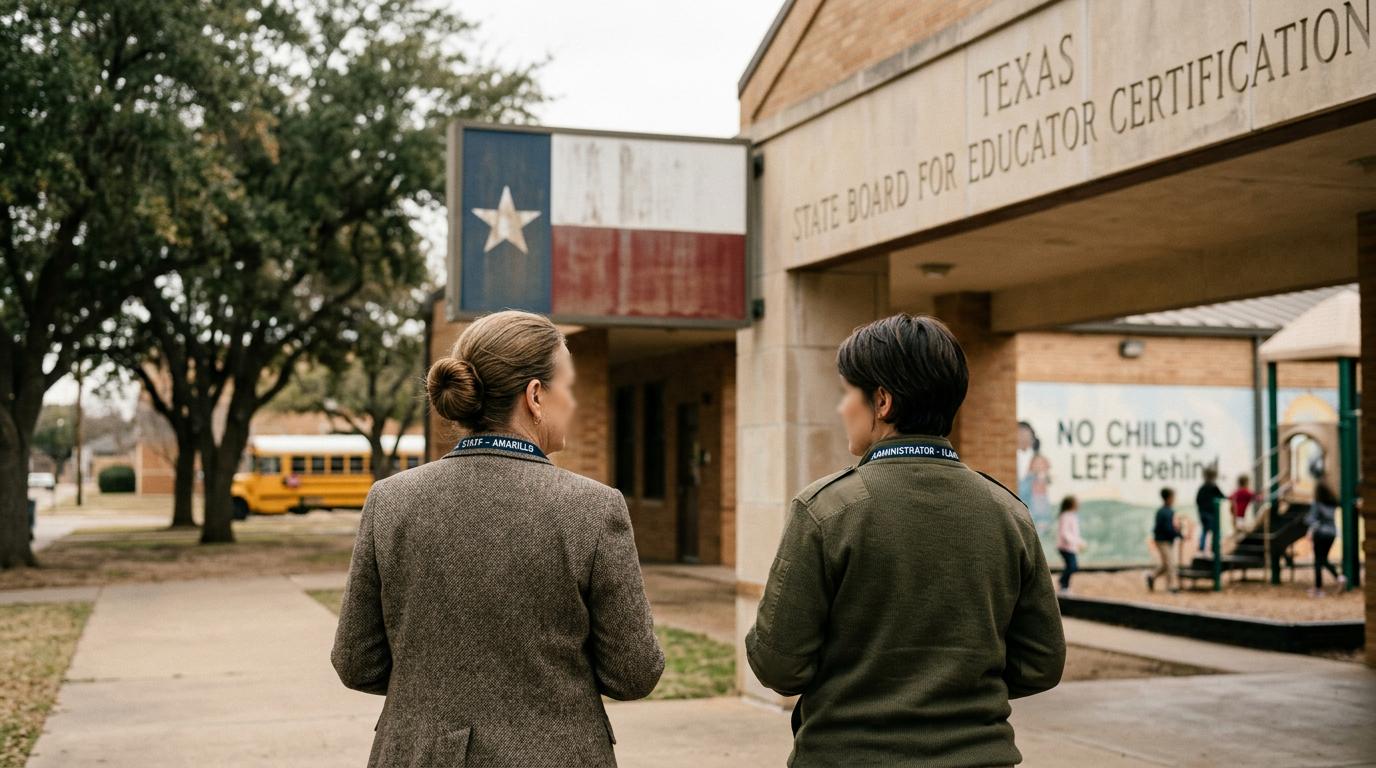
Governor Greg Abbott has announced the appointment of two qualified Texas residents, Cassidy Estes of Amarillo and Kathy Ward of Plano, to the State Board for Educator Certification (SBEC). These appointments come at a critical time for the state as the board manages the rigorous standards required for public school teachers, counselors, and administrators. Historically, the SBEC was created by the Texas Legislature in 1995 to shift the responsibility of educator standards from the state agency to the professionals themselves, ensuring that those in the field have a direct hand in shaping the ethics and development of their peers. Estes and Ward will fill roles that are vital to the oversight of the thousands of educators currently serving the millions of students enrolled in the Texas public school system. The terms for these newly appointed members are staggered, reflecting the board’s need for continuity and institutional knowledge. Cassidy Estes will serve a term set to conclude in February 2029, while Kathy Ward has been appointed for a term ending in February 2031. Both women bring a wealth of local experience from their respective regions, providing the board with perspectives from both the High Plains and the North Texas DFW Metroplex. Their responsibilities will include the enforcement of the Educator’s Code of Ethics and the approval of new educator preparation programs across the state, which is a process that remains under high scrutiny as Texas seeks to address teacher retention and recruitment challenges.
Texas relevance
This administrative move directly impacts every classroom in Texas, from the Rio Grande Valley to the Panhandle. Local school districts like Amarillo ISD and Plano ISD are the immediate homes of these appointees, but their decisions on the SBEC will dictate the licensing requirements for every single educator in the state. Because Texas education policy is increasingly focused on high standards and parental transparency, the individuals serving on this board act as the gatekeepers for who is allowed to instruct Texas children. For residents in Collin County and Potter County, having local representatives at the state level ensures that the unique needs of both major metropolitan suburbs and rural-adjacent districts are represented in Austin.
The Strategic Role of the SBEC in Texas Schools
The State Board for Educator Certification is not merely an advisory body; it is a regulatory powerhouse that holds the authority to issue, renew, and revoke teaching certificates. For the average Texas parent, the work of this board ensures that the person standing at the front of their child’s classroom has undergone vetted training and background checks. This oversight extends beyond the initial hiring phase, as the board also mandates continuing education requirements to keep Texas teachers at the forefront of academic excellence.
Furthermore, SBEC is responsible for overseeing the educator preparation programs (EPPs) that train the next generation of teachers. As Texas faces a shifting demographic and a growing student population, the board must ensure these programs are producing candidates who can meet the state’s rigorous testing standards. The inclusion of new members like Estes and Ward means fresh eyes on the data regarding teacher passing rates and the effectiveness of alternative certification routes, which have become increasingly popular in the state.
The board often works in tandem with the Texas Education Agency (TEA), though it maintains a level of independence in its decision-making. This structure is intended to prevent the over-politicization of teacher standards while maintaining a direct line of accountability to the Governor and the State Board of Education. By managing the professional discipline of educators, the SBEC plays a crucial role in maintaining the public’s trust in the integrity of the state’s multi-billion dollar education system.
Cassidy Estes: An Amarillo Perspective
Cassidy Estes brings a deep connection to the Amarillo Independent School District (AISD) to her new role on the state board. As an active educator in the Panhandle, she is uniquely positioned to understand the geographical challenges faced by districts that are hundreds of miles from the state capital. Her involvement with the Association of Texas Professional Educators (ATPE) and the AISD Consultation Committee highlights a commitment to professional advocacy and local collaboration that is essential for a statewide board member.
In addition to her professional work, Estes is deeply embedded in the Amarillo community through organizations like Elevate Amarillo and Saint Stephen Church. This local involvement is often a hallmark of Governor Abbott’s appointees, as it ensures that board members are well-rounded individuals who understand the community values of their specific regions. Her education at Texas State University also ties her back to one of the premier teacher-training institutions in the Lone Star State.
Her term, extending into 2029, will likely cover significant transitions in how Texas evaluates teacher performance. As the state moves toward more data-driven instruction, having a board member who is currently in a school building can provide a reality check on how these policies affect day-to-day operations. Estes will represent the interests of the High Plains while ensuring that the standards for Northern Texas remain as high as those in any other part of the state.
Kathy Ward: Judicial and Local Government Experience
Kathy Ward of Plano contributes a different, yet equally vital, set of skills to the board. Having served on the State Commission on Judicial Conduct, Ward is no stranger to the complexities of ethics investigations and professional accountability. This experience is particularly relevant for the SBEC, which must frequently review cases of educator misconduct and decide on the appropriate level of disciplinary action, ranging from formal reprimands to permanent certificate revocation.
Ward’s tenure as a Commissioner for Collin County Precinct 4 marks her as a trailblazer in local government, being the first woman to hold that specific seat. This experience in county-level governance means she understands the fiscal and administrative pressures that local districts face. Her background as a former special education teacher in Plano ISD further rounds out her resume, giving her firsthand knowledge of one of the most complex and regulated areas of modern education.
Her long-term appointment through 2031 suggests that the Governor intends for her to be a stabilizing force on the board for nearly a decade. Her familiarity with the Plano area—one of the fastest-growing regions in the state—allows her to bring insights into the needs of large, diverse suburban districts. Ward’s ability to navigate both the legal aspects of the board’s work and the practical realities of a special education classroom makes her a formidable addition to the state’s educational leadership.
The Disciplinary and Ethical Mandate
One of the most critical, yet often overlooked, duties of the SBEC is the investigation of ethical violations. In recent years, Texas has seen an increased focus on the safety of students and the professional boundaries between staff and children. The board is responsible for processing thousands of reports each year, ensuring that individuals who violate the Educator’s Code of Ethics are removed from the system quickly and effectively to protect the broader student population.
The board’s disciplinary proceedings are a matter of public record and serve as a deterrent for misconduct across the state. By appointing individuals with strong judicial and community ties, the Governor is reinforcing the idea that educator certification is a privilege, not a right. Estes and Ward will be tasked with weighing evidence and making tough decisions that affect the livelihoods of professionals while prioritizing the safety and success of Texas school children.
Texas law provides specific guidelines for these disciplinary actions, but there is often a degree of discretion required by the board. This is where the diverse backgrounds of the board members become crucial. A mix of current teachers and former legal commissioners ensures that the board’s rulings are both legally sound and practically applicable to the realities of school life in the 21st century.
Accountability and the Future of Texas Teachers
The future of the Texas workforce begins in the classroom, and the quality of that classroom is determined by the quality of the teacher. As the SBEC evolves, it is facing new pressure to streamline the certification process for military veterans and those coming from out of state. Texas has long been a destination for relocatees, and the board must balance the need for more teachers with the absolute requirement that these new arrivals meet the high standards set by the state legislature.
With Estes and Ward on the board, there is an opportunity to refine how Texas handles professional development. Rather than a one-size-fits-all approach, the board can look at how different regions like the Panhandle and North Texas utilize technology and local partnerships to keep their staff trained. Their long terms provide the stability necessary to see long-term projects through to completion, ensuring that Texas remains a leader in educational standards nationally.
Ultimately, these appointments are a reflection of the state's broader goals: local representation, high ethical standards, and a commitment to professional excellence. As the SBEC continues its work, the eyes of Texas will be on how these new members contribute to the mission of ensuring every student has a certified, competent, and ethical educator. These roles are essentially the foundation of the state's education policy, acting as the final checkpoint for quality control in our public schools.
Analysis
Opinion: These appointments represent a strategic balance between active classroom experience and administrative oversight. By selecting Cassidy Estes—a current educator in Amarillo—Governor Abbott is ensuring that the voices of those currently working in the trenches of the public school system are heard. Conversely, Kathy Ward’s background in judicial conduct and local government provides the regulatory muscle needed to handle the board's disciplinary functions. This 'dual-track' approach to appointments suggests the Governor's office is seeking to maintain a board that is both empathetic to the challenges of modern teaching and firm on the legal standards required of public servants.
Source attribution
This story was reported using a public release from the Office of the Governor. Keep TX Red rewrote the coverage independently and links to the official statement for verification.
Frequently Asked Questions
- What exactly does the State Board for Educator Certification do?
- The SBEC is responsible for overseeing the entire lifecycle of a teacher's professional certification in Texas. This includes setting the standards for initial certification, approving the curriculum for teacher preparation programs, mandating continuing education to keep licenses active, and enforcing the Educator's Code of Ethics through disciplinary hearings.
- How long are the terms for the new SBEC members?
- SBEC terms are staggered to ensure the board doesn't lose all its members at once. Cassidy Estes was appointed to a term that expires on February 1, 2029. Kathy Ward was appointed to a longer term that expires on February 1, 2031.
- Why is it significant that one of the appointees is from Amarillo?
- State boards in Texas often trend toward representatives from the larger hubs like Austin, Dallas, and Houston. Having an appointee from the Panhandle, like Cassidy Estes, ensures that the specific challenges of West Texas and High Plains school districts—such as teacher shortages in rural areas—are considered in statewide policy discussions.
- Does the Governor's appointment mean these members are officially in office?
- In Texas, gubernatorial appointments to boards like the SBEC typically require confirmation by the Texas Senate. Once confirmed, these members serve until their terms expire or they choose to step down, providing a consistent hand in the regulation of the state's teaching profession.
Official Sources
Take the next step
Browse the Newsroom →Read more about Keep Texas Red → Our full guide to what Keep Texas Red means and why Texans support it.
Get Texas updates delivered weekly.
Independent Texas reporting on politics, policy, and daily life. One email a week. Unsubscribe anytime.
Keep TX Red Newsroom
The Keep Texas Red Editorial Staff produces nonpartisan explainers, policy breakdowns, and educational resources to help Texans understand how their government works. All content is reviewed for accuracy and updated regularly.
About Keep TX Red →