Governor Abbott Issues State Disaster Proclamation to Fast-Track Emergency Response Across Texas
Governor Greg Abbott has signed a formal disaster declaration to mobilize state resources and provide immediate relief to affected Texas communities.
Editorial disclaimer: Opinions and analysis on Keep TX Red are editorial content — not statements of fact. See our editorial standards.
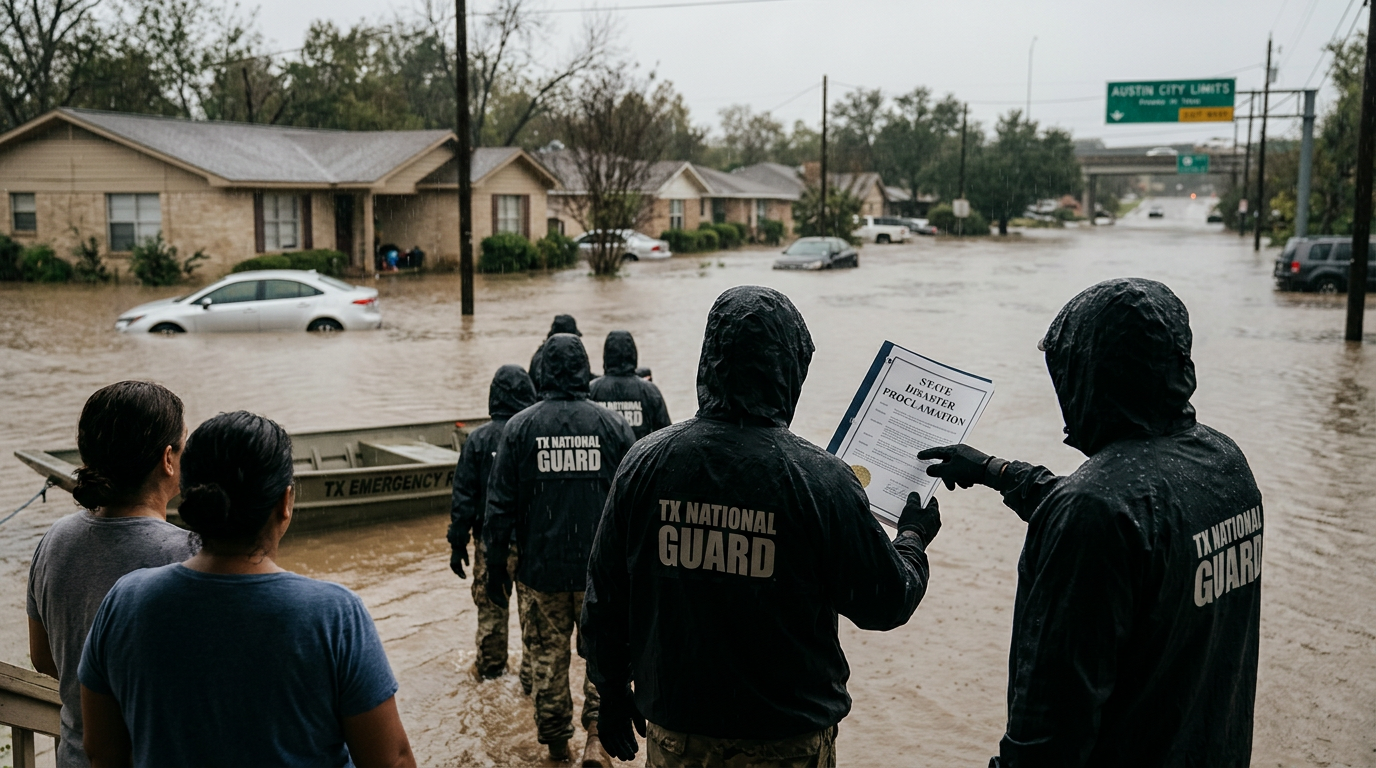
Governor Greg Abbott has officially executed a state disaster proclamation, a critical administrative maneuver designed to unlock a wide range of state-level resources and emergency powers. Historically, Texas governors utilize these declarations to bridge the gap between local municipal capabilities and the specialized logistics required during widespread crises. By formalizing this status, the state government can now bypass certain regulatory hurdles, allowing for the rapid deployment of personnel, equipment, and financial aid to the hardest-hit regions. This specific action follows a period of increasing pressure on local infrastructure, necessitating a unified response from state agencies under the direction of the Office of the Governor and the Texas Division of Emergency Management (TDEM). The declaration serves as a legal catalyst that activates the Texas State Emergency Management Plan. This framework is essential for coordinating cross-jurisdictional support, ensuring that rural counties with limited budgets receive the same level of protection and recovery assistance as larger metropolitan hubs. In past decades, such declarations have been instrumental in managing the aftermath of extreme weather, public health challenges, and systemic infrastructure failures. This most recent order underscores the administration's commitment to proactive governance, signaling to both residents and federal partners that the state is taking full responsibility for the safety and stability of its geographic territory.
Texas relevance
This disaster declaration is specifically tailored to the unique jurisdictional landscape of Texas, where 254 counties must often share a centralized pool of resources. The relevance to Texas residents cannot be overstated; it grants the Governor the authority to suspend certain state laws or administrative rules that might hinder a swift response. For example, it can streamline the procurement of essential goods or allow for the temporary waiver of transport regulations for emergency supplies. Residents in impacted areas will see a more visible presence of state troopers and National Guard units, as these entities are now legally empowered to assist local law enforcement in maintaining order and facilitating recovery efforts. This move also sets the stage for potential federal requests, as a state-level declaration is often a prerequisite for seeking a Presidential Disaster Declaration from FEMA.
The Mechanism of the Texas Disaster Act
The legal foundation for the Governor's recent action is rooted in the Texas Disaster Act of 1975. This legislation was designed to provide the state's chief executive with the necessary tools to respond to any 'imminent threat of widespread or severe damage, injury, or loss of life.' Under this act, the Governor is the commander-in-chief of state agencies and can issue executive orders that have the force and effect of law. This allows for a top-down approach that can cut through the red tape of local bureaucracy.
The declaration specifically mentions the activation of the State Emergency Operations Center (SOC). Located in Austin, the SOC acts as the central nervous system for the state’s response, housing representatives from diverse departments such as the Texas Department of Transportation, the Texas Department of State Health Services, and the Texas Parks and Wildlife Department. This multi-agency collaboration ensures that no facet of the emergency is overlooked, from road closures to environmental safety concerns.
Mobilizing the Texas Division of Emergency Management
A key component of this disaster proclamation is the direct involvement of the Texas Division of Emergency Management (TDEM). Led by Chief Nim Kidd, TDEM is responsible for the practical application of the Governor’s orders. The agency works closely with local mayors and county judges—who serve as the local emergency management directors—to assess damages and determine where resources like water, food, and medical supplies are most urgently needed.
TDEM's role also includes the training and deployment of specialized response teams. With the disaster declaration active, these teams can be moved across the state without the typical delays associated with inter-local agreements. This portability of expertise is a hallmark of the Texas emergency response model, which relies on the ability to concentrate force at a specific point of crisis while maintaining a high state of readiness elsewhere.
Economic Implications for Local Communities
Disaster declarations carry significant weight for the local economies within the affected zones. When the Governor declares a state of disaster, it often triggers the implementation of consumer protection laws, specifically those related to price gouging. Under the Texas Business and Commerce Code, it is illegal for businesses to sell necessities like fuel, food, or medicine at exorbitant prices during a declared emergency. This protection is a vital safeguard for Texas families who are already facing the stress of a crisis.
Furthermore, the declaration allows local governments to track expenditures for potential reimbursement. Because the costs of emergency response can quickly bankrupt a small county, the state's formal recognition of the event is the first step in a long process of fiscal recovery. By documenting every hour worked and every piece of equipment used, local leaders can eventually apply for state and federal grants that are reserved exclusively for declared disaster areas.
Suspension of Regulatory Statutes
One of the most consequential powers granted to Governor Abbott under this proclamation is the ability to suspend various state statutes. This is not a power used lightly, but it is essential for logistics. For example, the Governor can suspend rules related to the size and weight of trucks bringing relief supplies into the state. This ensures that massive shipments of lumber, generators, or non-perishable food can reach their destinations without being stopped for routine permits that would slow down the recovery timeline.
Additionally, regulatory waivers can be issued for healthcare providers. If a disaster puts a strain on local hospitals, the state can temporarily allow medical professionals from other jurisdictions to practice in Texas or permit the use of temporary medical facilities that would otherwise not meet standard zoning or licensing codes. This flexibility is what allows the Texas healthcare system to remain resilient even when individual facilities are overwhelmed by the demands of a state-wide emergency.
Infrastructure and Long-Term Recovery
The current disaster declaration is often just the beginning of a multi-year recovery process. While the immediate focus is on life-safety missions and the restoration of utility services, the Governor's office is also looking toward the long-term stabilization of Texas infrastructure. State engineers will be dispatched to assess bridges, dams, and electrical grids that may have been compromised. The data collected during the duration of this declaration will inform future legislative sessions and budget requests regarding the hardening of Texas assets.
Recovery also involves the human element. The state's response includes coordinating with non-profit organizations and volunteer units through the Texas Voluntary Organizations Active in Disaster (TXVOAD). By providing a formal structure through the disaster proclamation, Governor Abbott ensures that the outpouring of Texan generosity is channeled effectively, preventing a 'second disaster' of uncoordinated donations and ensuring that the most vulnerable populations receive the specific help they need.
Public Participation and Safety Protocols
Governor Abbott’s office has emphasized that the success of this disaster response depends heavily on the cooperation of the public. Residents are urged to follow the instructions of local officials and to stay informed through official channels like the Texas Department of Public Safety (DPS). The declaration often includes specific warnings about travel or the use of certain public resources, and adhering to these guidelines is essential for keeping first responders free to focus on the highest-priority rescues.
The state also encourages Texans to document any damage to their personal property. Through the Individual State of Texas Assessment Tool (iSTAT), residents can upload photos and descriptions of damages. This crowdsourced data is invaluable for the state as it builds a case for further assistance. By participating in these state-led initiatives, individual Texans play a direct role in the state's ability to demonstrate the severity of the situation and secure the necessary resources for a full recovery.
Analysis
From a policy perspective, Governor Abbott’s use of the disaster declaration highlights the 'Texas First' approach to crisis management. By leaning heavily on the authorities granted under the Texas Disaster Act of 1975, the administration is asserting its independence and operational capacity. This strategy is often viewed as a way to maintain state sovereignty over recovery efforts while ensuring that the fiscal burden of emergency response is managed efficiently through the state's rainy-day funds and disaster accounts. Critics and supporters alike often watch these declarations closely, as they become the benchmark for how effectively the executive branch can pivot from legislative priorities to immediate, boots-on-the-ground leadership during times of state-wide uncertainty.
Source attribution
This story was reported using a public release from the Governor Abbott — Video Moments (Google News). Keep TX Red rewrote the coverage independently and links to the official statement for verification.
Frequently Asked Questions
- What does a disaster declaration actually do for a normal citizen?
- For the average Texan, a disaster declaration means that more state resources are available to keep them safe. It often leads to faster restoration of power and water, better-coordinated law enforcement, and legal protections against businesses that might try to unfairly raise prices on essential items like gasoline and food.
- How long does a state disaster declaration last?
- Under Texas law, a disaster declaration issued by the Governor lasts for up to 30 days. However, the Governor has the authority to renew the declaration as many times as necessary if the emergency conditions persist. Many long-term recovery efforts in Texas have seen declarations extended for several months or even years.
- Does this mean the National Guard is coming to my town?
- It makes it possible. A disaster declaration gives the Governor the authority to deploy the Texas National Guard to assist with everything from debris removal and supply distribution to search and rescue operations. Their presence is determined by the specific needs reported by local officials to the state EOC.
- Is a state disaster declaration the same as a federal one?
- No. A state declaration is issued by the Governor and uses state-wide resources. A federal declaration is issued by the President of the United States. Usually, the Governor must first declare a state-level disaster and demonstrate that the situation is beyond the state's capacity before the federal government will step in with FEMA assistance.
Official Sources
Take the next step
Browse the Newsroom →Read more about Keep Texas Red → Our full guide to what Keep Texas Red means and why Texans support it.
Get Texas updates delivered weekly.
Independent Texas reporting on politics, policy, and daily life. One email a week. Unsubscribe anytime.
Keep TX Red Newsroom
The Keep Texas Red Editorial Staff produces nonpartisan explainers, policy breakdowns, and educational resources to help Texans understand how their government works. All content is reviewed for accuracy and updated regularly.
About Keep TX Red →