James Talarico Election: Victim’s Family Denounces Negative Campaign Tactics
A Texas family demands a halt to the use of their personal tragedy in political advertisements targeting State Representative James Talarico.
Editorial disclaimer: Opinions and analysis on Keep TX Red are editorial content — not statements of fact. See our editorial standards.
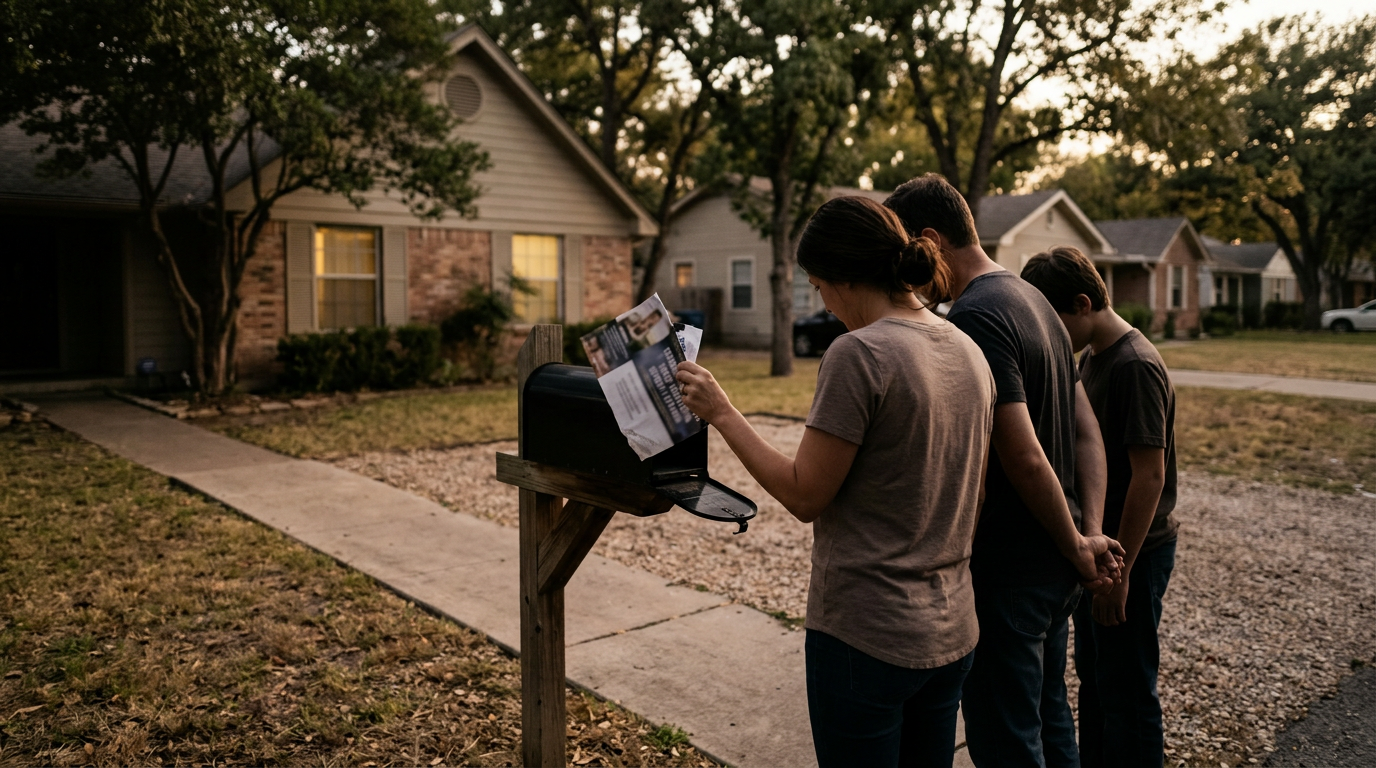
Recent political developments in the race for Texas House District 50 have taken a contentious turn as the family of a crime victim publicly voiced their frustration with third-party political advertisements. The controversy centers on campaign materials that utilized a family’s personal tragedy to criticize the legislative record of Representative James Talarico. The family expressed a desire to remain private and stated they felt exploited by political entities seeking to gain a partisan advantage. Historically, Texas elections have frequently seen the weaponization of criminal justice records, but it is less common for the victims’ immediate relatives to step into the media spotlight to demand a cessation of specific attack ads. The situation began when a series of mailers and digital advertisements began circulating through the district, linking Talarico to public safety policies that the ads claimed led to tragic outcomes. While political committees often use public crime data to build narratives against incumbents, this specific instance has drawn sharp rebuke because the family involved did not provide consent for their story to be featured. The family's public statement emphasized that their grief is being instrumentalized in a manner that does not reflect their views or their desire for public discourse. This clash highlights the tension between free political speech and the ethical boundaries of campaign messaging in the state of Texas.
Texas relevance
This story is deeply rooted in the Central Texas political landscape, specifically affecting voters in Round Rock and the northern Austin metroplex. Williamson and Travis Counties have become major battlegrounds for the direction of the Texas House of Representatives, where even narrow messaging shifts can determine the control of the chamber. This incident sets a precedent for how local families might push back against the 'outsourced' attack ads funded by statewide political action committees. It also reflects a broader conversation within the Lone Star State regarding the 'victim’s rights' movement and whether those rights include protection from being featured in involuntary political communication.
The Evolution of Negative Campaigning in Texas
Texas political history is replete with sharp-edged campaign tactics, ranging from the legendary 'LBJ' era to the modern age of digital micro-targeting. In recent cycles, the focus has shifted toward hyper-local tragedies used as proxies for broader policy failures. Political Action Committees (PACs) often believe that by attaching a human face to a policy critique, the message will resonate more deeply with undecided voters. However, as seen in the Talarico case, this strategy relies on the assumption that the 'human face' in question will remain a silent background element rather than an active participant in the debate.
The shift toward using specific incidents rather than aggregate statistics is a response to the shortening attention spans of the electorate. In a state as large as Texas, where thousands of residents compete for influence, the most shocking or emotional narrative often gains the most traction. This trend has created an environment where the private pain of Texas citizens is increasingly viewed as 'fair game' by consultants who are insulated from the local community by several layers of corporate and legal separation.
Stakeholders and the Mechanics of District 50
House District 50 serves as a unique microcosm of the changing Texas demographic. Encompassing parts of Williamson County, it is a region that has transitioned from a rural stronghold to a suburban hub defined by high-tech growth and an influx of new residents. Consequently, political messaging must balance traditional Texas values with the sensibilities of a more urbanized population. The use of aggressive attack ads is often a tool used by challengers to bridge the gap between name recognition and the incumbency advantage held by long-term representatives.
Representative James Talarico has positioned himself as an advocate for education and systemic reform, often drawing the ire of more conservative statewide organizations. These organizations view District 50 as a prime target for flipping the seat back to Republican control. The ads in question were designed to undermine Talarico's moderate-to-progressive image by portraying his legislative votes as detrimental to the physical safety of his constituents. The intervention of the family has essentially neutralized the primary emotional hook of that offensive strategy.
Ethical Boundaries and Legal Realities
Under current Texas election law, there are very few restrictions on the content of political advertisements, provided they do not violate specific libel or slander statutes. Political speech is granted the highest level of protection under the First Amendment, meaning that even if an ad is considered 'distasteful' or 'exploitative' by the subjects involved, it is rarely illegal. This legal leeway allows PACs to operate with a high degree of impunity, often choosing to prioritize the electoral outcome over the social cost of the messaging.
The family’s plea for privacy is an appeal to ethics rather than law. By speaking out, they are attempting to use the 'court of public opinion' to enforce a standard of conduct that the Texas Ethics Commission cannot. This highlights a gap in the regulatory framework of Texas elections, where the rapid-fire nature of digital ads makes it difficult for authorities or the public to hold groups accountable before the damage to a family’s privacy is already done.
The Role of Third-Party Political Action Committees
A critical component of this story is the role of 'dark money' and independent expenditure committees. Often, the candidate themselves does not produce the most aggressive advertisements; instead, these ads are funded by groups with names that do not immediately reveal their donors or specific agendas. This allows the candidate to maintain a 'clean' public image while the outside group handles the 'dirty work' of attacking the opponent. In the Talarico case, the family's frustration is directed not just at the message, but at the anonymous nature of the machinery behind it.
By the time a family identifies who is responsible for an ad, the mailer has likely reached thousands of homes. In Texas, the sheer volume of outside money entering local races has reached unprecedented levels. This influx provides the resources for high-frequency messaging that can overwhelm a local candidate’s ability to respond. The family in this instance took the unusual step of issuing a public press release to cut through that noise, effectively bypassing the PACs to speak directly to their neighbors.
Impact on Victim Advocacy in the Lone Star State
The fallout from this incident may have long-term implications for how victim advocacy organizations interact with the political process. Many non-partisan groups in Texas work to support those affected by crime, and they often struggle to keep their causes from being hijacked by partisan interests. This family’s refusal to be 'used' serves as a rallying cry for other victims who feel their stories have been manipulated to serve a specific legislative or electoral goal.
Furthermore, this event could prompt a discussion in the Texas Legislature regarding the 'Right to Publicity' or specific protections for crime victims in the context of political campaigning. While such legislation would face significant constitutional hurdles, the public nature of this dispute provides the political capital necessary for lawmakers to consider new standards of conduct for those participating in Texas elections.
Voter Perception and Future Campaign Strategies
As the 2026 election cycle approaches, both parties will be watching the resolution of this conflict closely. If the ads are seen as having backfired, it could lead to a 'cooling off' period where campaigns return to policy-based critiques rather than personal narrative attacks. Conversely, if the polling indicates that the attacks were effective despite the family’s protest, it could signal a further decline in the civility of Texas political discourse.
Voters in the Round Rock and Austin areas are generally characterized as highly engaged and informed. Historically, these voters have shown a distaste for overly aggressive tactics that seem insincere. The family's statement may serve as the definitive piece of evidence for these voters that the ads in question were not intended to help the community, but were instead a cynical exercise in power dynamics. The final measure of this impact will be seen on election night.
Analysis
The pushback from this family highlights a potential shift in voter tolerance for aggressive crime-related messaging. While 'tough on crime' rhetoric remains a staple of Texas political identity, the direct intervention of a victim's family suggests that there is a threshold of decorum that, when crossed, can backfire on the sponsors of the advertisements. For Representative Talarico, the family's statement provides a rare shield against standard public safety critiques. From a strategic standpoint, this development may force political consultants across Texas to reconsider the use of specific, identifiable tragedies in their media buys, as the risk of public condemnation from the grieving families themselves presents a significant PR liability.
Source attribution
This story was reported using a public release from the r/TexasPolitics. Keep TX Red rewrote the coverage independently and links to the official statement for verification.
Frequently Asked Questions
- What started the controversy in House District 50?
- The controversy began when a political advertisement used the details of a local crime to criticize incumbent Representative James Talarico. The family members of the victim portrayed in the ad stated they never gave permission for their tragedy to be used and described the move as exploitative.
- Who is James Talarico?
- James Talarico is a member of the Texas House of Representatives, currently serving District 50. He is a Democrat known for his focus on public education reform and has been a frequent target of conservative political action committees due to his influence in the legislature.
- Why can't the family sue to have the ads removed?
- Under the First Amendment and Texas's broad protections for political speech, it is very difficult to legally compel a group to stop an advertisement unless it meets the high bar of defamation. Since the ads typically use public records of crimes, the factual basis of the event is usually considered public information.
- What is the role of PACs in this specific dispute?
- The advertisements were largely funded by third-party Political Action Committees rather than the official campaign of Talarico's opponent. These groups operate independently, allowing them to run aggressive 'negative' campaigns while providing the candidates themselves with a level of deniability.
Official Sources
Take the next step
Browse the Newsroom →Read more about Keep Texas Red → Our full guide to what Keep Texas Red means and why Texans support it.
Get Texas updates delivered weekly.
Independent Texas reporting on politics, policy, and daily life. One email a week. Unsubscribe anytime.
Keep TX Red Newsroom
The Keep Texas Red Editorial Staff produces nonpartisan explainers, policy breakdowns, and educational resources to help Texans understand how their government works. All content is reviewed for accuracy and updated regularly.
About Keep TX Red →