Eagle Pass International Bridges Reopen Following Buoy Displacement During River Flooding
Two international bridges in Eagle Pass resumed operations after state-installed river barriers drifted during Rio Grande flooding on Thursday.
Editorial disclaimer: Opinions and analysis on Keep TX Red are editorial content — not statements of fact. See our editorial standards.
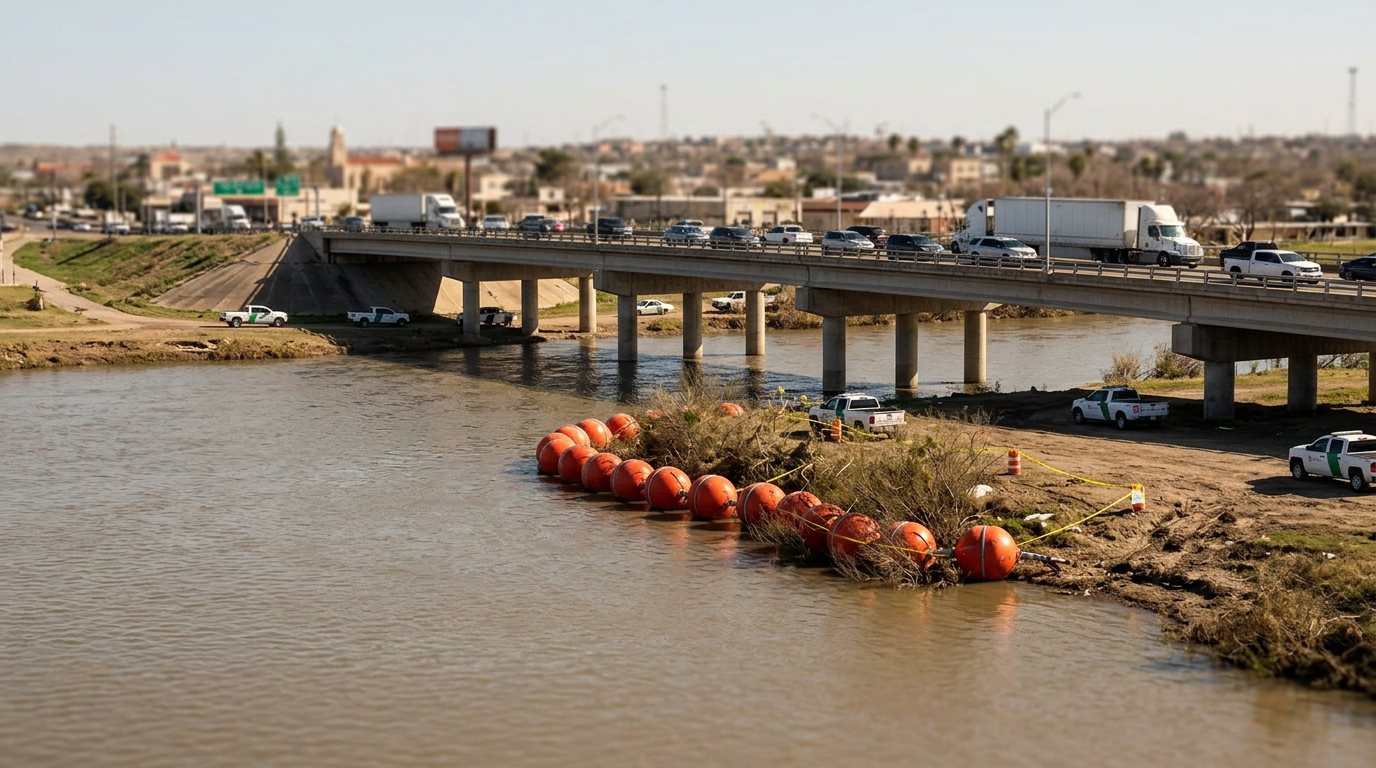
On Thursday, July 17, 2026, two international bridges connecting Eagle Pass, Texas, to Mexico were temporarily shuttered after heavy flooding in the Rio Grande caused state-owned marine barriers to drift from their original positions. The Texas Department of Public Safety (DPS) and U.S. Border Patrol officials managed the situation as high water levels displaced portions of the buoy system currently utilized for border surveillance and deterrence. The closures affected both International Bridge I and the Camino Real International Bridge, halting vehicle and pedestrian traffic for approximately three hours while crews worked to secure the drifting equipment and ensure the structural integrity of the bridges. Operation Lone Star personnel were deployed to recover the buoys and move them back into their designated areas once the immediate threat to the bridge supports subsided.
Texas relevance
This event directly impacts the community of Eagle Pass and the broader South Texas region, where international trade and daily commuting are heavily reliant on stable bridge operations. Texas has invested millions of taxpayer dollars into the buoy program as part of its statewide border security initiative, and the durability of these barriers during natural weather events like floods is a significant point of concern for state officials and residents. The incident underscores the logistical challenges of maintaining physical hardware in the volatile Rio Grande, which is prone to sudden rises in water levels due to upstream weather and dam releases.
Flooding Impact on River Infrastructure
The Rio Grande is known for its unpredictable surges, particularly during the summer storm season when heavy rainfall upstream can lead to rapid increases in water volume. On Thursday, these rising levels exerted enough pressure on the state's marine barriers to dislodge them. The buoys, which are tethered to the riverbed, were pushed downstream toward the bridge supports that connect Eagle Pass to Piedras Negras.
When buoyant objects of this size drift into the path of international bridges, authorities are required to halt traffic as a safety precaution. The primary concern during such events is the potential for large masses to strike bridge pilings, which could lead to structural damage or create hazards for vehicles traveling above. Texas officials monitored the flow carefully until the water stabilized and the barriers could be redirected.
Response from State and Federal Agencies
The Texas Department of Public Safety takes the lead on managing the physical barriers installed under state authority. In this instance, DPS teams were tasked with stabilizing the buoy chain and preventing it from further interfering with the bridges. This required coordination with federal partners at U.S. Customs and Border Protection, who oversee the actual operation of the ports of entry.
The three-hour closure was a collaborative effort to ensure that no debris or drifting equipment would hit the bridge foundations. Once the barriers were confirmed to be clear of the immediate transit zone, federal authorities gave the green light to resume normal processing of travelers. DPS remains the primary entity responsible for the continued anchoring and maintenance of these specific river assets.
The Logistics of Marine Barriers
Texas first installed these marine barriers as a supplementary measure to traditional fencing and patrolling. The system consists of large spherical buoys designed to prevent swimming across specific high-traffic segments of the river. Because the Rio Grande is a dynamic waterway, the anchors must be able to withstand significant currents, yet the sheer volume of water on Thursday surpassed the typical thresholds.
Maintaining these barriers requires specialized equipment and personnel who can operate in water. The state has previously faced legal and environmental challenges regarding the placement of these objects, but the physical durability remains a practical focus for the Texas Division of Emergency Management and DPS. This drifting incident will likely lead to an internal review of the anchoring mechanisms used in Eagle Pass.
Economic Consequences of Bridge Closures
Eagle Pass serves as a vital artery for the Texas economy, facilitating the movement of goods between the United States and Mexico. Even a three-hour closure can result in significant delays for the trucking industry and local retail businesses that depend on cross-border shoppers. International Bridge I and the Camino Real International Bridge are among the busiest crossings in the sector.
While the safety of the bridge is the top priority, the interruption of commerce is a recurring concern for South Texas leaders. State officials emphasized that the closure was a necessary temporary measure to protect the long-term viability of the bridge infrastructure. The rapid resolution of the situation minimized the potential for long-term economic damage to the local Eagle Pass market.
Future Reliability of Border Deterrents
As Texas continues to expand its border security footprint, the reliability of river-based deterrents during flooding is under a microscope. The state must balance the effectiveness of these barriers against the risks posed by natural disasters. Officials have noted that the barriers are designed to be mobile for maintenance, but unmanaged drifting during a flood presents an unintended logistical hurdle.
Moving forward, the Texas Department of Public Safety will likely assess whether additional reinforcements are needed for the buoy chains in Eagle Pass. Ensuring that these assets remain stationary during heavy rains is critical to avoiding future bridge closures. The state’s commitment to the program remains firm, provided the hardware can be managed safely alongside existing international transit routes.
Analysis
The temporary closure of these bridges highlights the ongoing tension between state-led border security infrastructure and the functional needs of international commerce. While the barriers are intended to deter illegal crossings, their movement during environmental events presents a unique maintenance challenge for the Texas Department of Public Safety. Critics and supporters alike will likely view this event as a test of the state's ability to maintain high-cost deterrents under extreme conditions. Furthermore, the rapid reopening of the bridges suggests that despite the physical displacement of the buoys, the local and federal authorities have established effective communication protocols to handle sudden disruptions to international ports of entry.
Source attribution
This story was reported using a public release from the Texas Tribune. Keep TX Red rewrote the coverage independently and links to the official statement for verification.
Frequently Asked Questions
- Why were the bridges in Eagle Pass closed on Thursday?
- The bridges were closed as a safety precaution after flooding in the Rio Grande caused state-installed marine barriers to drift toward the bridge supports. Authorities needed to ensure the bridges were safe and the barriers were secured before allowing traffic to resume.
- Which bridges were affected by the closure?
- Both International Bridge I and the Camino Real International Bridge in Eagle Pass were impacted by the temporary closure.
- How long did the disruption last?
- The closure lasted for approximately three hours on Thursday before officials deemed it safe to resume normal operations.
- Who is responsible for maintaining the river buoys?
- The Texas Department of Public Safety (DPS) is responsible for the installation and maintenance of the marine barriers as part of state border security efforts.
Official Sources
Take the next step
Browse the Newsroom →Read more about Keep Texas Red → Our full guide to what Keep Texas Red means and why Texans support it.
Get Texas updates delivered weekly.
Independent Texas reporting on politics, policy, and daily life. One email a week. Unsubscribe anytime.
Keep TX Red Newsroom
The Keep Texas Red Editorial Staff produces nonpartisan explainers, policy breakdowns, and educational resources to help Texans understand how their government works. All content is reviewed for accuracy and updated regularly.
About Keep TX Red →